
Free Classic Car VIN Decoder
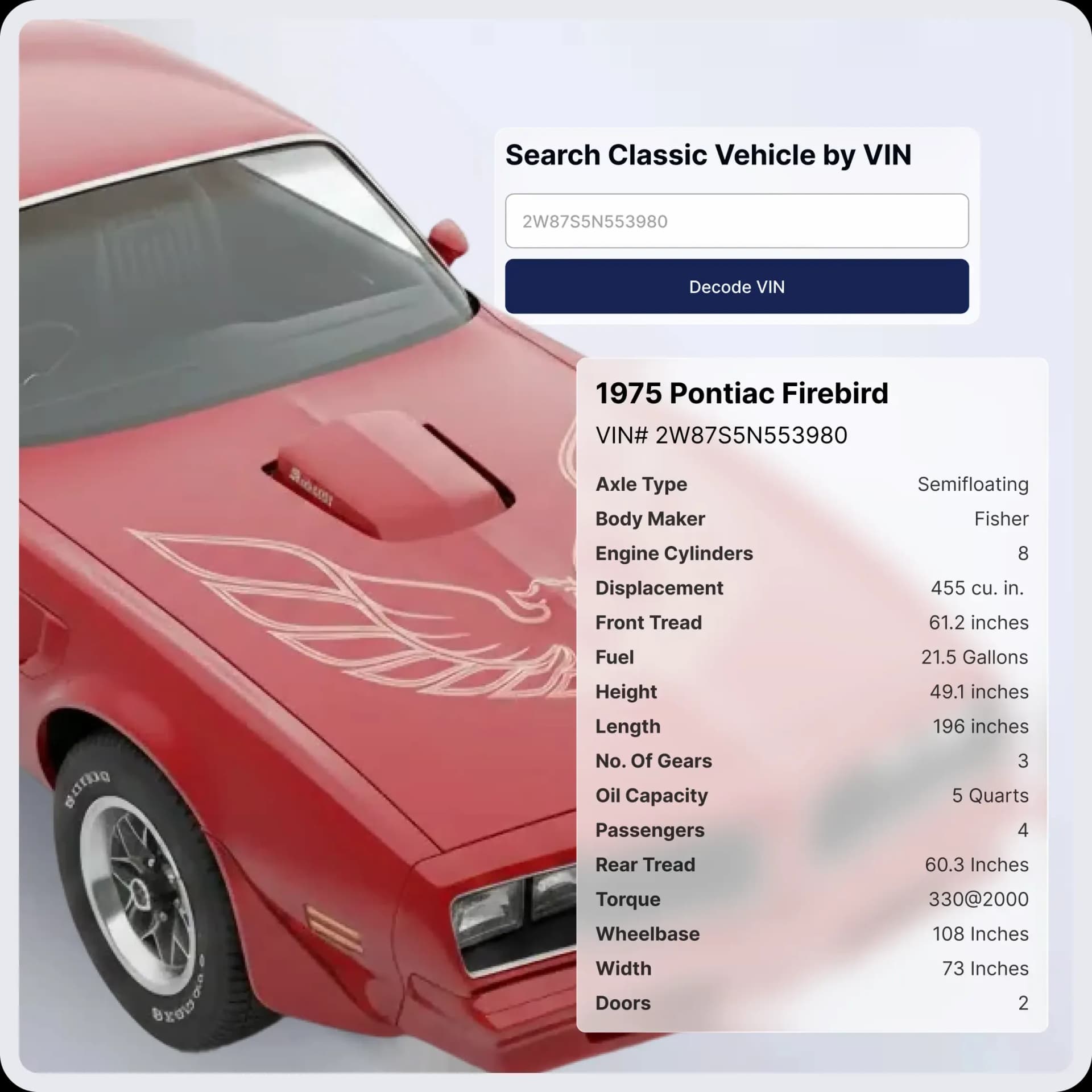
Classic VINs follow older, non-standard formats that most lookup tools cannot decode correctly. Use this free Classic Car VIN Decoder to quickly check any classic VIN and see what the vehicle was originally built as before you go any further.
No VIN?Use license plate|



What Is a Classic Car VIN?
A classic car VIN is the identification number assigned to a vehicle before VIN standardization began in 1981. These VINs usually range from 5 to 14 characters, depending on the manufacturer and model year. They were created for internal factory tracking, not for a universal or global system.
Some were short. Some were long. Some mixed letters and numbers in ways that feel random today. At the time, they made perfect sense to the factory.
What matters is this. A classic VIN identifies the car at birth. It tells you what it was meant to be when it left the assembly line.
Where to Find the VIN on a Classic Car?
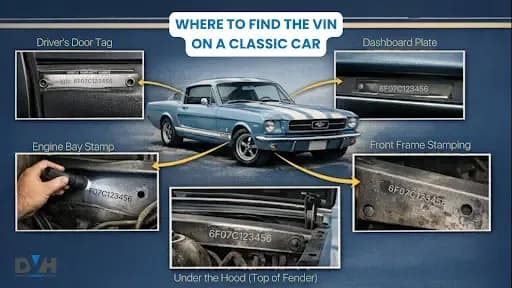
To find the classic VIN on the vehicle is almost the same as finding the VIN for a modern vehicle. Here are the locations where you can find the VIN on a classic vehicle:
Here is a simple VIN year chart to decode any car’s VIN on your hands:
Dashboard (driver’s side)
Usually stamped on a small plate and can be seen through the windshield.Driver’s Door Area
Check the door edge or the doorjamb for a factory-applied sticker.Engine Compartment
Some VIN plates are mounted in the bay alongside manufacturer codes and option details.Inside Cabin
Certain models may have the VIN marked on the firewall or beneath the steering column.Frame or Chassis Stamping
Frame stamps are often found near the front suspension, under the hood area, or along the frame rail.Trunk or Rear Body Areas
On certain models, VIN or body numbers can be found in the trunk area, near the spare tire well, rear panel, or inner body structure.Vehicle’s Paperwork
Check on the vehicle’s paperwork, like the registration or insurance papers, to find the VIN easily.
Where to Find a Classic Car's VIN?
How to Decode a Classic Car VIN: Step-by-Step Guide
To decode the classic car VIN, you just need to fill in the form above. Follow these instructions to get it done:
Step 1: Get the VIN
First of all, you need to find the VIN of the car you want to decode. You may ask the seller or find it on the vehicle's paperwork.
Step 2: Fill in the Form
Click on the form above and write in the VIN. Then, click the button to submit the form.
Step 3: Get the Report
Wait for seconds for the report to be generated. Once it's done, you can get the classic history report.
What Information does a Free Classic VIN Decoder Provide?
A free classic VIN decoder gives you a solid first look at what a vehicle was when it left the factory. It does not show full history records, but it does confirm core specifications that help you understand whether a classic car lines up with what you are seeing today.
Some information you can view for free includes:
Vehicle Identity and Model Information
The decoder confirms the vehicle’s make, model, and production year based on how the VIN was originally assigned. This helps verify that the vehicle description matches factory records, especially when listings rely heavily on seller claims.
Body Style and Build Details
Free VIN decoding can identify the original body style and number of doors. For many manufacturers, it also shows the bodybuilder or coachwork information used during production.
Engine and Powertrain Specifications
The decoder may display engine-related information such as cylinder count, displacement, engine type, and basic torque figures when available. This information helps confirm whether the vehicle was originally equipped with a base engine or a higher-performance option, which has a direct impact on value.
Transmission and Drivetrain Indicators
Basic transmission and axle information will also be included, such as the number of gears or axle type. While this does not confirm what is currently installed, it shows how the vehicle was originally configured at the factory.
Factory Dimensions and Chassis Specifications
With a classic car VIN decoder, you can view original physical specifications such as wheelbase, overall length, width, height, and track measurements. These figures are useful for restorations, transport planning, and verifying that the body and frame align with factory dimensions.
Mechanical Capacity Information
Fuel tank capacity, oil capacity, and other basic mechanical specifications may appear in the free results.
These details help owners understand original maintenance requirements and spot deviations from the factory setup.
Original Pricing Information
When available, the decoder may show the original manufacturer’s suggested retail price.
This provides historical context and helps compare how the vehicle was positioned when new versus its current market value.
Market and Auction Indicators
The free decoder indicates whether the vehicle has appeared in auctions or online listings in the past. It also shows whether photos, sale records, or damage notes exist without giving full details. These indicators help decide whether a full vehicle history report is worth reviewing.
Get Even More Information With a Full Check!
While a free check is good for research and comparing features of different vehicles, you need more than that to make an informed decision in the classic car market. With a full report, you are fully equipped to pick the best options at better prices.
Here’s what you’ll see with a paid classic car VIN lookup:
Ownership records help show how frequently the vehicle changed hands and whether it was kept long-term or passed along quickly.
Displays how many times the vehicle changed ownership, helping assess stability, collectability, and long-term care patterns.
Shows how long each owner kept the vehicle, which helps distinguish long-term ownership from frequent resales.
Identifies whether ownership was personal, dealer-based, or fleet-related, when this information is available.
Title and registration data confirms the legal standing of the vehicle and highlights issues that may affect resale or registration.
Indicates whether the vehicle carried a clean title or was branded salvage, rebuilt, or similar at any point.
Shows reported title changes, corrections, or reissued titles that may signal administrative or legal concerns.
Lists recorded registration updates over time, helping confirm consistent vehicle history and location changes.
This section highlights reported damage events that may impact safety, originality, or long-term value.
Shows accident records tied to insurance claims, official reports, or auction disclosures when available.
Provides available indicators showing whether reported damage was minor, moderate, or severe.
Highlights records suggesting structural or frame damage that could affect safety or collector value.
Mileage data helps identify inconsistencies that are common in older vehicles with long ownership timelines.
Displays mileage entries reported at different points, allowing comparison across ownership and registration periods.
Shows how mileage progressed over time, helping identify gaps, jumps, or irregular reporting patterns.
Flags mileage inconsistencies that may suggest rollback, replacement, or inaccurate odometer reporting.
Auction records provide insight into past sales activity and, in some cases, the vehicle’s visible condition.
Shows when the vehicle appeared at auto or classic car auctions, based on available historical records.
Provides up to 10 images from past auctions when available, offering visual reference for prior condition and presentation.
Lists reported auction sale dates, results, or listing outcomes tied to the vehicle.
This section checks whether the vehicle was ever reported stolen or later recovered.
Shows theft records linked to national or international databases when such reports exist.
Indicates whether a reported stolen vehicle was recovered and returned to circulation.
Financial records help identify claims that may affect ownership transfer or resale.
Shows reported liens or financial claims attached to the vehicle, including released liens when available.
Displays reported timelines for lien satisfaction or release, helping confirm clear ownership status.
Usage patterns can show how the vehicle was driven (personal, lease, rental, taxi, etc,), stored, or exposed over time.
Usage patterns can show how the vehicle was driven (personal, lease, rental, taxi, etc,), stored, or exposed over time.
Shows where the vehicle was registered, which may indicate climate exposure and environmental wear.
Highlights patterns such as frequent transfers, limited use, or long periods of inactivity when available.
Why VIN Decoding Matters for Classic Cars?
Classic cars are rarely simple. Decades of ownership changes, restorations, and modifications make it harder to know what is truly original. VIN decoding helps cut through that uncertainty by confirming the vehicle’s factory identity before assumptions take over.
Some reasons why you should decode a classic car VIN include:
Buyers
Confirm the Vehicle’s True Identity
VIN decoding verifies the factory model, body style, and engine configuration, helping buyers avoid misrepresented or cloned vehicles.Avoid Overpaying for Incorrect Builds
Incorrect trims or engines can inflate asking prices significantly, and VIN decoding helps spot these issues early.Identify Red Flags Before Inspection
VIN mismatches often signal title issues, undocumented modifications, or incomplete restoration histories.
Sellers/Dealers
Support Accurate Listings
Decoding the VIN allows sellers to describe the vehicle based on factory records rather than assumptions or past listings.Build Buyer Confidence
Clear VIN-backed details reduce skepticism and help serious buyers feel comfortable moving forward.Reduce Post-Sale Disputes
Accurate VIN information helps prevent disagreements about originality after the sale is complete.
Collectors
Verify Factory Specifications
Collectors use VIN decoding to confirm that vehicles align with original production specifications.Support Appraisals and Insurance
VIN-based documentation strengthens appraisals and helps insurers assess value accurately.Protect Long-Term Value
Knowing a vehicle’s true factory configuration helps preserve collectability and resale potential over time.
Case Study: How David Saved $13,000 on a classic car
He almost bought a 1967 Pontiac Catalina on the strength of its looks and low mileage. A classic VIN check changed everything.
David
The car looked incredible. Only 15,000 miles on a 1967 Catalina. I figured it had been garaged most of its life. The seller was asking $22,000 and it felt like a fair deal for a classic in that condition. Then I ran the VIN
What the Classic VIN Check Found:
Salvage title
Left rear impact with a ditch in Oliver Springs, TN. Tires flagged as a contributing factor. Vehicle was disabled and towed from the scene.Sold at salvage auction twice
First in Knoxville, TN for $5,000 in 2019. Then again in Chicago, IL for $3,500 in 2020. Both listings confirmed left-rear and left-side damage.
Sold at salvage auction twice
First in Knoxville, TN for $5,000 in 2019. Then again in Chicago, IL for $3,500 in 2020. Both listings confirmed left-rear and left-side damage.6 owners across 5 states since 1996
Kansas, Missouri, South Carolina, Tennessee, and Illinois. One owner held it for just a few weeks before passing it on.
David walked away from the deal. With the help of the classic VIN decoder, he found a cleaner Catalina two weeks later with no major issues. One VIN check made the difference.
- Seller's asking price$22,000
- Real market value~$7,500
- David saved~$13,000
Breakdown of a Classic VIN: 252677X172255
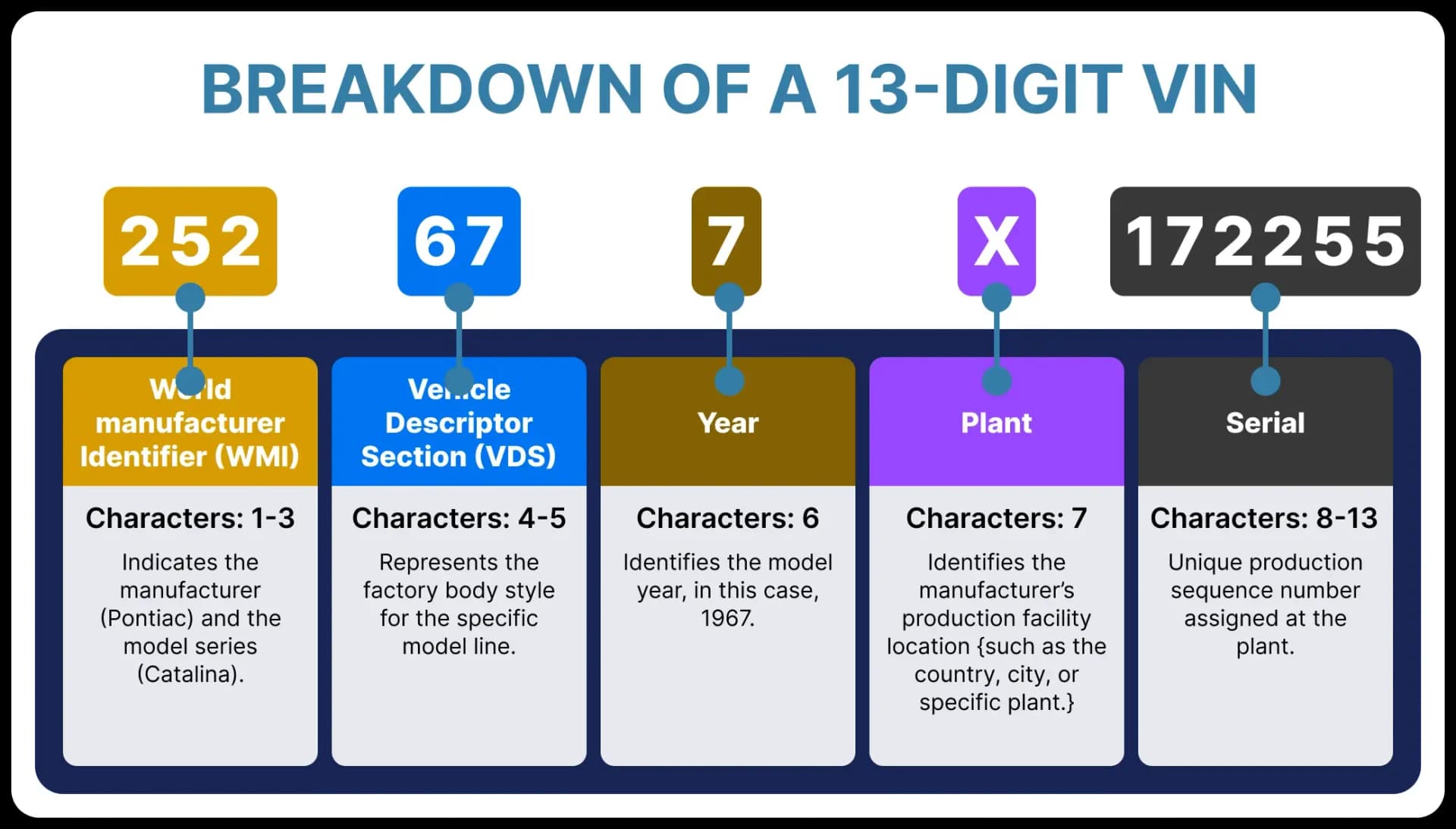
Classic VINs are not random strings, but they are also not universal. Each manufacturer defined its own patterns at the time. For a 1967 Pontiac Catalina, the VIN typically consists of 13 characters, with each group meaning something specific about how the car was built.
Here’s what each character represents:
1. World Manufacturer Identifier (WMI Equivalent)
Characters: 1 to 3 → 252
Classic cars did not use an official WMI system, but this section serves the same purpose.
- 2 identifies the Pontiac division
- 52 identifies the Catalina model series
Together, these characters confirm the vehicle is a Pontiac Catalina.
2. Vehicle Descriptor Section (VDS Equivalent)
Characters: 4 and 5 → 67
This section represents the factory body style. For 1967 Pontiacs, these digits distinguish between different Catalina body configurations.
3. Model Year Identifier
Character: 6 → 7
The digit 7 indicates the 1967 model year.
4. Vehicle Identifier Section (VIS Equivalent)
Assembly Plant Code
Characters: 7 → X
Identifies the factory where the vehicle was assembled.
Production Sequence Number
Characters: 8 to 13 → 172255
This is the vehicle’s unique production number assigned at the assembly plant.
Who Should Use the Classic VIN Decoder?
A vintage car VIN decoder is useful for many people because it helps them understand the actual history and the specifications of used vehicles.
Collectors
They use it to confirm the car's originality and make sure no parts were changed. This helps keep the value high.
Restorers
A VIN check guides restorers in finding the correct factory parts and details, making restoration more accurate and authentic.
Buyers and Sellers
It builds trust in the sale by showing accident history, mileage, or title brands before money is exchanged.
Museums
Museums use it to record rare vehicles with accurate data, ensuring cars on display match their historic background.
Insurers
Insurance companies can assess the real condition, past issues, and market value before offering the best coverage for a classic car.
Pro tip: Always verify the classic car's history before you make a purchase. Many classic cars have been restored, rebuilt, or even involved in accidents, and sellers don't always share those details.
Why Our VIN Decoder Stands Out for Classic Cars
Not all VIN decoders are built for older vehicles. Ours is designed to deliver clear, vehicle-specific details that make it easier to verify classic cars, vintage models, and other hard-to-check vehicles with confidence.
Accurate VIN-Based Results
Every result is matched to the exact VIN entered, helping reduce errors caused by generic data
Built for Classic and Older Vehicles
Supports standard 17-digit VINs as well as many older and non-standard formats used on classic cars, vintage trucks, motorcycles, and specialty vehicles.
Trusted and Update Data Source
Get up-to-date vehicle data from DMV, auctions, police, insurance, and proprietary online sales sources.
Clean, Readable Output
Information is shown in a structured format that is easy to scan. This makes it useful on both desktop and mobile.
Built for Everyday Use
Useful for buyers, sellers, and dealers who need reliable vehicle details.
24/7 Customer Support
If something looks unclear or you need help, customer support is available to assist with your VIN lookup.
Decode Classic VIN Decoder by Manufacturer
We support a wide range of vehicle types and manufacturers. Since classic VINs were never standardized, accurate decoding depends on using the right tool for the right vehicle. Choose any make below to get the VIN decoded:
AC
Acura
Alfa Romeo
Aston Martin
Allstate
AM General
AMC
Amphicar
Austin
Austin Healey
Autobianchi
Avanti
Auburn
Audi
Airstream
Backdraft Racing
Bugatti
Bentley
Beetle
BMW
BSA
Buick
Cadillac
Campagna
Chrysler
Chevy
Cushman
Datsun
Delahaye
De Tomaso
Desoto
Dodge
Ducati
Ferrari
Fiat
Ford
GM
Hudson
Hummer
International
Jaguar
Jeep
Lamborghini
Lancia
Land Rover
Lexus
Lincoln
Maserati
McLaren
Mercedes-Benz
Mercury
Mini
Mitsubishi
Morgan
Mazda
Mopar
Mustang
Oldsmobile
Nissan
Packard
Pontiac
Plymouth
Porsche
Renault
Rolls-Royce
Shelby
Subaru
Studebaker
Toyota
Triumph
Volkswagen
Winnebago
Willys
Yamaha
Customer Testimonial
Just what I needed
I had a potential customer ask me for a window sticker and a vehicle report on two 1930's vehicles. I used the chat section to correspond with an agent about my vehicles. I got an instant reply on my questions, which is great not having to wait for hours or a day. They got the information I needed immediately. I would definatly use them in the future. there is a fee but that's normal for anything.
lance hay
US•Mar 24, 2025
I was trying to look up a classic…
I was trying to look up a classic muscle car I had owned years ago. No other site offered as much information. I wanted to see how many owners the car had and where it ended up. I'm totally satisfied! Thanks!
Mike Rose
US•Mar 28, 2025
Very Helpful
I reached out for help getting records on older cars, something I had struggled with for a long time. The team was extremely knowledgeable and walked me through every step. They found exactly what I needed, and their communication made the whole process stress-free. If you’re looking for trustworthy help with older car history, this is the place to go.
I reached out for help getting records on older cars, something I had struggled with for a long time. The team was extremely knowledgeable and walked me through every step. They found exactly what I needed, and their communication made the whole process stress-free. If you’re looking for trustworthy help with older car history, this is the place to go.
Preosha Chambers
US•Sep 3, 2025
Decode Your Classic VIN With Confidence
Classic cars come from a different era, and their VINs reflect that. This free Classic Car VIN Decoder helps you work with those older formats instead of guessing. Check a pre-1980 VIN now and see what the vehicle was originally built to be.
FAQ About Classic VIN Decoder
A classic VIN is the identification number used on vehicles built before VIN standardization began in 1981. Unlike a modern VIN, which always has 17 characters, a classic VIN usually ranges from 5 to 14 characters and follows manufacturer-specific formats.
You can locate the VIN on a classic car in several places, depending on the make and year. Common locations include the dashboard near the windshield, the driver’s door jamb, the engine bay or firewall, and sometimes the frame or chassis rail.
On older vehicles, the VIN may also be stamped on the engine block or preserved in original paperwork.
Decoding a classic VIN is important because it helps verify the vehicle’s original identity. It can confirm whether the car started life as claimed, help avoid buying cloned or misrepresented vehicles, and support accurate restoration work.
For collectors, a pre-1981 VIN decoder also helps protect long-term value through proper documentation.
You can decode a classic VIN by using our tool designed specifically for pre-1981 vehicles. These tools understand older, non-standard VIN formats that modern decoders cannot read reliably. Manufacturer records, factory documentation, and historical references can also help confirm classic VIN details.
A clear chain of ownership proves that a vintage vehicle is genuine and legally clean. A well-documented provenance builds buyer confidence and can significantly raise the car's market value. Cars with celebrity or single-family ownership histories often sell for a premium at auction. Running DetailedVehicleHistory.com’s classic car VIN check is the easiest way to review full ownership records before buying.
Matching numbers means the engine, transmission, and body all carry their original factory-stamped codes. This is one of the biggest value factors in the classic car market today. A numbers-matching muscle car or vintage vehicle can be worth two to three times more than a non-matching version. Buyers use a classic car VIN lookup to confirm original parts and factory codes before making an offer. Originality is especially critical for rare American classics like Corvettes, Mustangs, and Camaros.
Yes, a detailed classic car history report may include documented restoration work, since official state records do not track every garage repair. Using a vintage car VIN decoder can reveal any reported restoration activity tied to that specific vehicle. Comprehensive records provide buyers with peace of mind and give sellers a stronger asking price.
Accident history is a major concern for classic car buyers, even for minor collisions. Past damage can affect structural integrity, paint originality, and long-term value, especially on sought-after American muscle cars and vintage imports. Cars with a clean accident record consistently command higher prices in the collector car market. Always run a classic car VIN check before purchasing to uncover any hidden damage history.
Yes, historical mileage can be tracked through older registration events and title transfers. Running a quick classic car VIN check allows you to see the odometer readings reported to the DMV over the lifespan of the vehicle. This helps you spot odometer fraud or rollbacks, which are common on older five digit clusters. Verifying the actual miles ensures you pay the correct market value.
Auction history gives buyers a real-world record of what a car has sold for over time. Repeated auction appearances may raise questions about why a car keeps changing hands. On the other hand, a strong sale price at a reputable auction can anchor a higher asking price for future sellers. Checking classic car auction records through a VIN lookup helps buyers understand true market value.
The title history is the ultimate proof of legal status and helps confirm a vehicle’s true identity. DetailedVehicleHistory.com’s premium vintage car VIN decoder lets you check for clean titles or negative brands such as salvage, flood, or junk. A branded title can instantly cut a vehicle’s value in half and make it very difficult to insure. Reviewing this history ensures the car is safe to buy and drive.
Yes, Service records are strong proof that a classic car received proper care throughout its life. Oil changes, tune-ups, brake work, and other maintenance records show a responsible ownership history that buyers value. Collector cars with complete service histories often sell faster and at higher prices. A classic car VIN history report combined with physical service records gives buyers the full picture.
Yes. You can use the Classic VIN Decoder App to decode classic VINs and chassis numbers for many vehicles manufactured before 1981. Simply enter or scan the available VIN or chassis number to access factory specifications, vehicle identification details, and other available information. Download the Classic VIN/Chassis Number Decoder App for Android on Google Play or the Classic VIN/Chassis Number Decoder App for iPhone & iPad on the App Store.