
Decode Lincoln VIN and Get Vehicle Details
Need a hand to decode the modern and classic Lincoln VIN? Use our Lincoln VIN decoder to get model year, trim, engine specifications, transmission setup, body style production details and many more.
Table of Contents:
What Will You Get from the Lincoln VIN Decoder
Our Lincoln VIN decoder tool can be used to see the complete information on the vehicle specifications. Be sure to check the VIN to run a quick background check before purchasing a used classic or modern Lincoln.
- Manufacturer and origin
- Model, trim, and package details
- Engine specifications
- Transmission setup
- Body style
- Model year
- Production plant
- Manufacturer Suggested Retail Price (MSRP)
- Market Value
How to Use the Lincoln VIN Decoder?
The Lincoln VIN decoder is a tool you can use to decode the VIN for both classic and modern vehicles. Follow these instructions to decode the VIN.
Step 1: Find the VIN
Locate the VIN on the driver’s side doorjamb or in documents such as the registration or bill of sale.
Step 2: Fill in the Form
Enter the VIN into the form above, then
Step 3: Check the Vehicle Specs
Check the full vehicle specification, like engine, transmission, trims, options, MSRP, and the updated market value.
Where to Find the VIN on a Classic and Modern Lincoln
Locating the VIN on both modern and classic Lincoln vehicles is essential before you begin decoding. VIN placement can vary between classic and modern models, so check the details below to find out where to locate the VIN on your Lincoln.
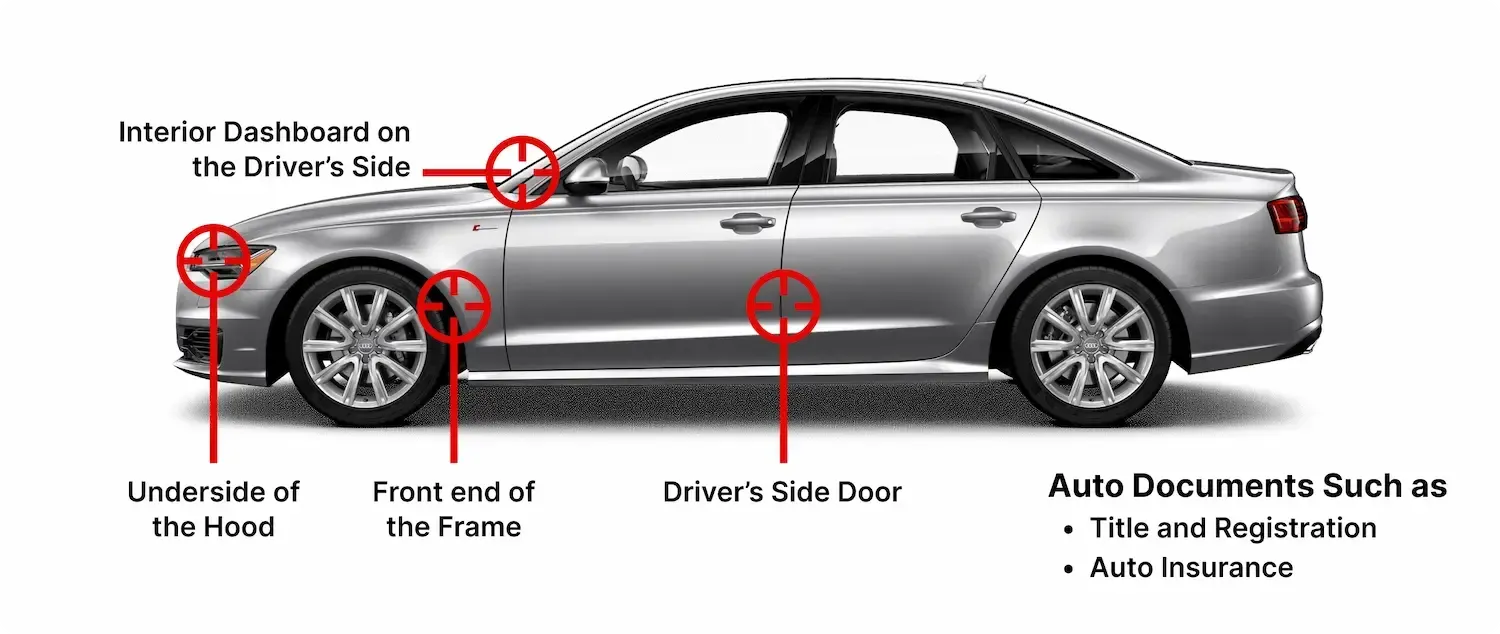
Lincoln VIN Location
The VIN is located in different spots on the vehicle itself and its official documents. Check these common areas to find the VIN on your Lincoln.
Driver’s Side Dashboard
Look through the windshield at the lower-left corner of the dashboard to find the VIN plate on modern Lincoln vehicles.
Driver’s Side Door Jamb
Open the driver's door and check near the latch area on the door frame for the VIN sticker or metal plate.
Engine Bay
In the engine compartment, you may find a stamped VIN on the engine block, along the bulkhead, or on other structural parts.
Documents
The VIN is also listed on official paperwork such as the vehicle registration, insurance card, or vehicle title.
Classic Lincoln VIN Location
For classic Lincoln models, the VIN can often be found in the same locations mentioned above. However, certain vintage models may have the VIN placed in multiple locations on the vehicle.
Under the Floor Mat
On some older Lincoln models, the VIN is stamped on the floor pan beneath the carpet, often near the passenger side.
Body Panels
Classic Lincolns may also have VIN tags located on various body panels, such as the hood, trunk lid, or fenders.
Who Should Use a Lincoln VIN Decoder?
A Lincoln VIN decoder is invaluable for anyone dealing with pre-owned or used luxury vehicles. By decoding Lincoln’s VIN, you can get the complete information about the car before you decide to take it home.
Buyers
When purchasing a used Lincoln, don’t judge a book by its cover. This is essential to detect potential problems like accident damage, mileage discrepancies, or imported vehicles that may not match the listing.
Sellers
Having accurate and verified details in your listing is key to attracting the right buyer. By decoding the VIN, sellers can present an honest history of the vehicle, helping to set the right price and establish trust with potential buyers. Transparency can help your Lincoln stand out in the marketplace.
Dealers
For dealers, VIN decoding helps manage inventory more efficiently and avoid common listing mistakes. With numerous trims, engine options, and regional variations in Lincoln models, having verified data ensures the vehicle is presented accurately and builds buyer confidence.
Daily Drivers and Owners
For current Lincoln owners, decoding the VIN provides a clear understanding of your vehicle’s original specifications and maintenance history. Whether you're looking to track its service history, prepare for future maintenance, or plan for resale, having this detailed information helps ensure a smoother ownership experience.
What is the Difference Between a Modern and Classic Lincoln VIN
The difference between modern and classic Lincoln VINs lies in their structure, consistency, and the amount of information they reveal. Newer Lincoln models follow a standardized format, while older vehicles may have simpler or less consistent identifiers.
VIN Length and Format
Modern Lincoln vehicles use a standardized 17-digit VIN introduced in 1981. Older Lincoln models, especially those produced in the early years, may have shorter VINs ranging from 5 to 14 digits, reflecting a lack of universal standardization at the time.
Data Availability
Both modern and classic Lincoln VINs provide valuable information such as engine type, trim level, and production data. For accurate decoding, make sure to use a reliable VIN decoding service like ours to get the maximum result.
Decoding Accuracy
Decoding modern Lincoln VINs is straightforward and reliable due to the consistent format and well-maintained databases. Classic Lincoln VINs can be more challenging to interpret, but using our VIN Decoder tool to get a vehicle history report makes the process easier.
Deciphering Lincoln’s VIN
A 17-digit Lincoln VIN follows a structured format that reveals essential details about the vehicle. It is divided into three main sections: WMI, VDS, and VIS. Each section contains specific information.
World Manufacturer Identifier (WMI)
Digit 1 to 3: 5LM
- 5 = Country of origin (United States)
- LM = Lincoln
Vehicle Descriptor Section (VDS)
Digit 4 to 9: 5J7WC3
- 5 = Engine type (3.5L EcoBoost twin-turbo V6)
- J = Body style (5-door SUV / Navigator platform)
- 7 = Drivetrain (All-Wheel Drive system)
- W = Trim level (Reserve / higher-end configuration)
- C = Series or equipment package (Navigator L / extended version)
- 3 = Check digit (used to validate the VIN)
Vehicle Identifier Section (VIS)
Digit 10 to 17: NGL19767
- N = Model year (2022)
- G = Assembly plant (Kentucky Truck Plant, Louisville, USA)
- L19767 = Production sequence number
Why Do You Need to Decode the Lincoln VIN?
Decoding a Lincoln VIN converts a string of characters into detailed vehicle information. It helps reveal key specifications, production details, and available historical records. Make sure to check everything thoroughly
Before Buying a Car
Before making a purchase, check the Lincoln’s VIN to confirm its specifications, ownership history, and overall condition. For older Lincoln models, verifying authenticity is crucial to make sure that the car matches the description.
Before Selling a Car
Use a VIN check to provide accurate and verified details in your listing. A comprehensive report builds buyer trust and reduces unnecessary back-and-forth questions. For classic Lincoln vehicles, it can help support claims of originality and enhance perceived value, especially for rare models.
Verify Vehicle Identity
Confirm that the VIN matches the vehicle’s make, model, and specifications. This step is vital in detecting mismatches, potential cloning, or fraud, especially with older Lincolns, where VIN details may not always follow a uniform format.
Check History and Records
Access detailed records like past ownership, accident history, title status, and more. For classic Lincoln models, historical data may be more limited, but you can use our service to check the car specifications and even the full history report.
Need More Information? Get the Lincoln History Report
The VIN decoder provides basic vehicle details, but if you need a deeper dive, consider getting the full vehicle history report. On the vehicle history report, you can get the full vehicle information that might not be shown.
Vehicle Specification
Access detailed specifications for both modern and classic Lincoln models in one report. This includes information like country of manufacture, engine type, transmission, fuel capacity, MSRP, and more. Ensure the car matches your needs and budget by reviewing these specifications before purchase.
Title Records
Check for any title issues that could affect the vehicle's safety and legal standing. Decoding the Lincoln VIN helps identify whether it has a salvage, rebuilt, or "lemon" status, or if the vehicle has undergone an odometer rollback or has been reported as stolen.
Odometer Reading
Review the vehicle’s recorded mileage over time to ensure accuracy. The report will detail the last recorded odometer reading, including the date it was recorded. This helps verify the vehicle’s true mileage before you buy it, avoiding potential fraud.
Accident and Damage History
A vehicle that’s been in an accident may have hidden risks. The VIN report will provide details on any accidents, including dates and locations. It also includes damage records from collisions, flooding, or other incidents, helping you assess the car’s safety and reliability.
Auction History
If the vehicle was sold at an auction, it likely sustained significant damage, which could pose safety risks. The report will include auction sale details, such as the date, location, final price, auction status, and even photos of the vehicle from the auction, so you can see its condition.
Ownership Information
Review detailed ownership records before buying. This includes information on previous locations, years of purchase, and the duration of each ownership. While the report won’t display private details like names or addresses, it gives you a clear timeline of the vehicle’s history.
Recalls Check
Verify if the Lincoln has any active or past recalls related to safety or mechanical issues. In this section, you can check the date of recall, causes, how the issues were handled, and the recall status (open/closed).
Engine Information
Identify the engine type and specifications for the Lincoln, including configuration and key features. Modern Lincolns typically feature turbocharged four-cylinder or V6 engines, while older models may have simpler naturally aspirated engines.
Check More Lincoln Information Using Our Tools
Remember, before you proceed to buy a used Lincoln, classic or modern, make sure to check everything thoroughly with our specialized tools.
Lincoln Recall Check by VIN
Need to make sure that the car was never recalled? Use the Lincoln recall check by VIN to find out in less than a minute.
Lincoln Window Sticker by VIN
Use our Lincoln window sticker by VIN service to get the original window sticker.
Check Any Lincoln Models by VIN Before You Buy
Thinking about purchasing a used Lincoln? Don't just go by the vehicle's looks or a smooth test drive. Check the VIN and get the full vehicle history report to uncover essential details.
Supported Modern Lincoln Models
Decode VINs for a wide range of modern Lincoln vehicles, including popular models like the Lincoln Navigator, Aviator, Corsair, MKZ, and more.
Supported Classic Lincoln Models
Our service isn't limited to just modern models; we can also decode VINs for classic Lincoln vehicles, helping you verify the history of vintage and rare cars.
Decode Any Vehicle’s VIN
Need to decode another car’s VIN? Use our VIN decoder service and check all makes!
Lincoln EV / Electrification Update
Lincoln has electrified vehicles, but the U.S. lineup is mostly PHEVs rather than full battery EVs. The main production plug-in model is the Corsair Grand Touring PHEV, while future EVs remain in concept stages.
Electrified Models
Corsair Grand Touring PHEV: Lincoln’s primary plug-in hybrid, offering an electrified drive in its crossover lineup.
Nautilus Hybrid: Available as a hybrid, but not a full EV.
Lincoln still frames its electrification around PHEVs and hybrids rather than fully battery-electric production models.
Full EV Roadmap
Lincoln Star concept: Signals the brand’s future EV direction, but there’s no full battery-electric Lincoln ly for sale in the U.S.
Decode Any Type of Lincoln VIN
Use our Lincoln VIN decoder and decode any kind of Lincoln VIN in less than a minute. Check the complete specifications, trim data, origin, MSRP, and even the updated market value by clicking on the button below!
FAQs About Lincoln VIN Decoder
Are classic Lincolns reliable?
Classic Lincolns, especially those from the 1960s to the 1990s, are renowned for their reliability and durability. These vehicles are often cherished for their powerful V8 engines, solid construction, and long-lasting performance when properly maintained. While they’re built to last, their age requires regular upkeep, with Town Car models particularly noted for reaching over 250,000 miles with proper care.
Can you decode a VIN with fewer than 17 characters?
Yes, it is possible to decode a VIN with fewer than 17 characters, though it comes with limitations compared to the modern 17-digit VIN. Vehicles made before 1981, along with some imports, trailers, and motorcycles, typically use shorter VINs or serial numbers.
How do I decode my classic Lincoln VIN number?
To decode a classic Lincoln VIN (pre-1981), find the 10-11 character plate located on the driver's door jamb, engine block, or registration documents. The VIN is typically broken down into: Year (1st digit), Assembly Plant (2nd digit), Body Series (3rd-4th digits), Engine (5th digit), and Production Sequence Number (final 6 digits).
Can you decode a VIN with fewer than 17 characters?
Yes, a VIN with fewer than 17 characters can be decoded, though its effectiveness depends on the vehicle's age and the decoding tool used. While 17 characters have been the standard since 1981, vehicles produced before that time (pre-1981) often feature VINs ranging from 5 to 13 characters.
What information can I find using a VIN decoder?
A VIN decoder provides detailed information about a vehicle’s identity and history, such as the manufacturer, country of origin, production year, engine type, trim level, and assembly plant. It is essential for verifying authenticity and understanding specifications. Additionally, it can disclose accident history, safety recalls, odometer discrepancies, and title status.
Where can I find my Lincoln VIN number?
Your Lincoln VIN can be easily found on the driver’s side dashboard near the windshield, on the driver’s side door jamb sticker, or on your registration/insurance documents. You may also find it on the engine bay firewall or within the Lincoln Way app.
What are the different levels of Lincoln?
Lincoln vehicles typically offer a three-tier luxury trim lineup: Premiere (entry-level), Reserve (mid-level with more comfort and tech), and Black Label (top-tier with exclusive design and service). Some models also offer Grand Touring (plug-in hybrid) trims.