
Decode Pontiac VIN and Get Vehicle Details
Planning to buy a used Pontiac? Don’t rely on looks or a quick test drive alone. Run a Pontiac VIN decoder to get model year, trim, engine specifications, transmission setup, body style, production details and many more.
Table of Contents:
Recent Update on Pontiac
Pontiac Closed Operation
Pontiac closed its operations in 2010 as part of the brand’s effort to restructure for bankruptcy.
What the Brand Was Like
Pontiac was an American GM brand known for sporty, performance-oriented cars like the GTO, Firebird, Trans Am, and Grand Prix.
Legacy
Throughout the 1960s and 1970s, Pontiac established itself as a performance-focused brand, producing iconic muscle cars.
What Will You Get From the Pontiac VIN Decoder
Decoding the VIN helps you confirm the vehicle matches its listing and fits your budget. It also supports smarter pricing decisions by showing accurate specifications, original MSRP, and key records that influence the car’s real value.
- Manufacturer and origin
- Model, trim, and package details
- Engine specifications
- Transmission setup
- Body style
- Model year
- Production plant
- Manufacturer Suggested Retail Price (MSRP)
- Market Value
How to Use the Pontiac VIN Decoder
To use the Pontiac VIN decoder , you just need to have the modern or classic VIN and then follow these simple steps.
Step 1: Find the VIN
Check on the driver’s side doorjamb, engine bay, or the vehicle documentation like bill of sale to find the Pontiac VIN.
Step 2: Enter the VIN
Click on the form above, then write down the classic or modern Pontiac VIN. Then, click on the button to submit the form.
Step 3: Check Full Pontiac Specification Information
Once its done, you can check the full Pontiac information like engine type, fuel type, country of origin, and the updated market value.
Where to Find the VIN on a Classic and Modern Pontiac
Before using the decoder, you’ll need to locate the VIN on your Pontiac. While newer models follow standard placement, older Pontiac vehicles may vary depending on the model year, assembly plant, and build style.
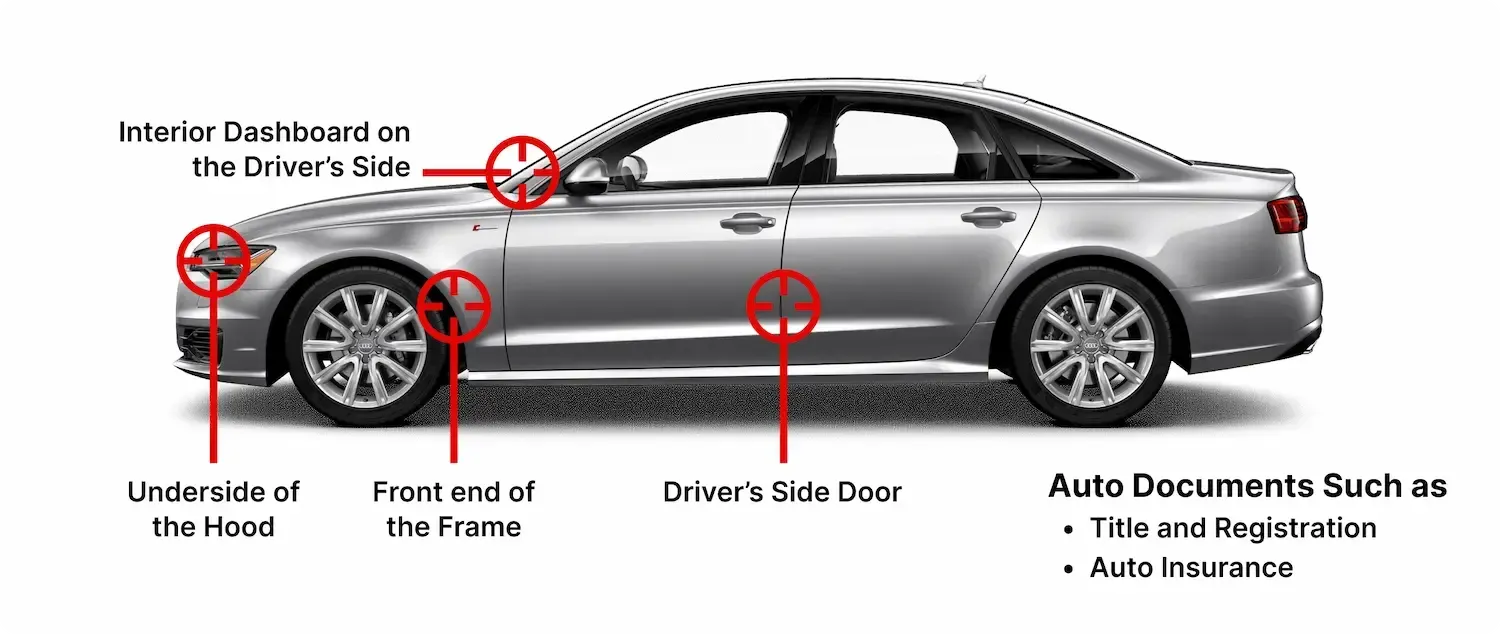
Pontiac VIN Location
The VIN can be found in several areas on the vehicle and within official documents. Check these common spots to make sure you’re using the correct number.
Driver’s Side Dashboard
Look through the windshield at the lower corner of the dashboard on the driver’s side. This is the most common VIN location for modern Pontiac vehicles.
Driver’s Side Door Jamb
Open the driver’s door and inspect the door frame or pillar near the latch. You’ll usually find a label or metal plate displaying the VIN along with manufacturing details.
Engine Bay
Check inside the engine compartment, typically near the firewall or inner fender. Some Pontiac models may have the VIN stamped directly onto structural components.
Documents
The VIN is also listed on official paperwork such as the registration, insurance card, and vehicle title. Always cross-check these with the VIN on the vehicle to confirm accuracy.
Classic Pontiac VIN Location
Classic Pontiac models may not always follow modern VIN placement standards. Identification numbers can sometimes be found in less obvious areas.
Under the Floor Mat
On some older models, the VIN or serial number may be stamped on the floor pan beneath the carpet, depending on how the vehicle was built.
Body Panels
Certain vintage Pontiac vehicles may have identification tags on removable panels like the hood, trunk lid, or fenders. These were often used for factory tracking and verification.
Who Should Use the Pontiac VIN Decoder
A Pontiac VIN decoder is a practical tool for anyone dealing with a Pontiac—whether it’s a classic GTO, a Firebird, or a later-era sedan. It helps confirm key details and reduces the risk of costly mistakes.
Buyers
Before committing to a purchase, review the Pontiac’s factory specs, past ownership, and overall condition. A VIN check helps confirm the vehicle matches the listing and can reveal hidden issues that are not obvious during a quick inspection.
Sellers
Present your vehicle with confidence by backing up your listing with verified data. Decoding the VIN confirms original specifications and available records, making your offer more transparent and appealing to serious buyers.
Dealers
For dealerships, VIN decoding is essential for managing inventory accurately. Pontiac models can vary widely by year, engine, and trim, so verifying details ensures listings stay consistent and trustworthy.
Collectors
Collectors and enthusiasts can use VIN decoding to confirm originality, production details, and rare configurations. This is especially important for classic Pontiac models, where authenticity plays a major role in long-term value.
What is the Difference Between Modern and Classic VIN
The modern and classic VINs have some differences. One of the most visible differences is the VIN length, as classic VINs only have 5 to 14 digits of code. Check the section below to see the differences between the classic and modern VIN.
VIN Length and Format
Modern vehicles follow a standardized 17-digit VIN system introduced in 1981. Older Pontiac models, however, often use shorter and less consistent VIN formats, which can vary depending on the production year and factory.
Data Availability
A modern VIN can reveal detailed information such as engine type, trim level, production year, and factory configuration. Classic Pontiac VINs may provide more limited data, as older records are not always complete or standardised.
Decoding Accuracy
Modern VINs are easier to decode due to consistent formatting and reliable databases. Classic VINs can be more complex, but our VIN decoder tool can help you to decode the classic Pontiac VIN accurately.
Pontiac VIN Breakdown
A Pontiac modern VIN is standardized into a 17-digit and each of the codes tells different information about the car. Globally, the VIN is classified into three different categories: WMI, VDS, and VIS.
World Manufacturer Identifier (WMI)
Digit 1 to 3: 2CK
- 2 = Country of origin (Canada)
- CK = Pontiac
Vehicle Descriptor Section (VDS)
Digit 4 to 9: DL33F8
- D = Model line (Torrent platform)
- L = Body style (4-door SUV)
- 3 = Series/trim level
- 3 = Drivetrain (Front-Wheel Drive)
- F = Engine type (3.4L V6 engine)
- 8 = Check digit
Vehicle Identifier Section (VIS)
Digit 10 to 17: 96212121
- 9 = Model year (2009)
- 6 = Assembly plant in CAMI Automotive Plant, Ingersoll, Ontario, Canada
- 212121 = Serial number
Need More Pontiac Information? Get a Vehicle History Report
A VIN decoder gives you the basics, but a full vehicle history report shows what really matters. For a Pontiac, especially a classic or performance-focused model, decoding the VIN is important to make sure the car matches the claims and your needs.
Vehicle Specification
See exactly how the Pontiac was built from the factory. From iconic V8-powered muscle cars like the GTO and Firebird to later-era sedans, you’ll get details on engine type, transmission, trim level, and original MSRP to confirm authenticity.
Title Records
Older Pontiac vehicles can carry complex histories. This section highlights critical red flags such as salvage titles, rebuild records, theft history, or mileage inconsistencies that could affect both value and legal standing.
Odometer Reading
Mileage plays a major role in a Pontiac’s condition and value. Track recorded readings over time to identify rollbacks, irregular gaps, or inconsistencies that may indicate more wear than advertised.
Accident and Damage History
Even well-kept Pontiacs may have a past. Check for reported accidents, structural damage, or environmental exposure like flooding—issues that can impact safety, performance, and long-term reliability.
Auction History
Many Pontiac models, especially classics, pass through auctions. Access previous sale records, including dates, locations, prices, and sometimes photos, so you can understand how the vehicle was presented and valued over time.
Ownership Information
Understand how the vehicle has been used and maintained. See the number of previous owners, general registration locations, and ownership duration—without exposing any private personal details.
Recalls Check
While Pontiac is no longer in production, recall records can still apply. Review when recalls were issued, what problems were identified, and whether those issues were resolved properly.
Engine Information
Confirm the engine tied to the VIN. Whether it’s a classic V8 or a later-generation setup, matching the correct engine is key to verifying originality, performance expectations, and protecting your investment.
Get More Information on Pontiac with Our Tools
Go beyond surface-level checks. With a full report, you can access detailed history, recall data, and even the original window sticker.
Pontiac Recall Check by VIN
Examine the complete recall check by VIN to make sure that the car has no recall history.
Pontiac Window Sticker by VIN
Get the complete Pontiac window sticker to see its features, options, warranty, and safety ratings.
Decode Any Modern and Classic Pontiac VIN
Thinking about buying a used Pontiac? Don’t rely on appearance or a quick drive alone. Decode the VIN first to confirm factory specifications, verify key details, and uncover records that could affect the car’s true value.
Supported Modern Pontiac Models
Decode VINs for later Pontiac models such as the G6, Grand Prix, Vibe, and G8. Make sure the engine, trim level, and features match what’s being advertised before making a decision.
Supported Classic Pontiac Models
Considering a classic Pontiac like a GTO, Firebird, or Trans Am? Our VIN decoder also supports older VIN formats, including shorter or non-standard identifiers, helping you confirm originality, factory specs, and collector value.
Decode Any Vehicle, Not Just Pontiac
Looking at more than one option? Our VIN decoder works across multiple brands, so you can compare vehicles, verify specifications, and access records—all in one place.
FAQs About Pontiac VIN Decoder
What is a Pontiac VIN number?
A Pontiac VIN (Vehicle Identification Number) is a unique 17-character code used to identify each vehicle. It became standard in 1981. This code works like a fingerprint, showing details such as the engine type, model year, and where the car was built. It is commonly used for registration, insurance, and vehicle checks.
Can I get the Pontiac Window Sticker by decoding the VIN?
Yes, you can get a Pontiac window sticker, or a replica, by using the 17-character VIN, usually for models made after 1981. By using a window sticker by VIN tool, you can see the original features, MSRP, engine details, and factory options of the car.
What is the most reliable VIN decoder?
One of the most trusted VIN decoders for basic specifications is the Detailed Vehicle History, which is free and uses trusted data. However, if you want more detailed information like history records, you can use a full VIN check service to get a complete report.
Is a Pontiac 350 the same as a Chevy 350?
No, a Pontiac 350 engine is not the same as a Chevy 350. Even though both are 350 cubic inch V8 engines made by General Motors, they are built differently. Pontiac engines are usually better for low-speed power, while Chevrolet engines are more focused on higher performance at higher speeds.
What is the most famous Pontiac car?
Pontiac produced many famous muscle cars, but the Pontiac GTO is often seen as the most iconic. Models from 1966 to 1969 helped start the muscle car era. Other well-known models include the Pontiac Firebird, especially the 1969 and 1977 Trans Am, and also the Pontiac Fiero, which had a unique design.