
BMW VIN Decoder – Cars, Moto, and Classic Ride
In the market to purchase a used BMW–be it from motorbikes, cars, or even classic vehicles? Use the BMW VIN decoder and get the vehicle history report to see its full specs, market value, and history.
|No VIN?Use License Plate
Table of Contents:
What Will You Get From the BMW VIN Decoder?
Decoding the VIN helps you to make sure the vehicle matches your needs and budget. Thus, it helps with avoiding mismatched listings and helps with setting the right price in accordance with its MSRP.
- Manufacturer and origin
- Model, trim, and package details
- Engine specifications
- Transmission setup
- Body style
- Model year
- Production plant
- Manufacturer Suggested Retail Price (MSRP)
- Market Value
How to Decode the BMW VIN
Now, you can decode all BMW VINs in one place. It does not matter if you have a 17-digit or 5 to 14-digit VIN, because we can get it done in one tool. Follow these simple steps to decode any BMW VIN.
Classic BMW VIN Decoder
If you are interested in purchasing a classic BMW, you can use our tool and get it to decode the VIN. With a classic history report, you can see the specs and complete past information to help you make a better decision.
Decoding BMW Motorcycle VIN
Our tool can be used to decode BMW motorcycles, classic and modern BMW VINs. On the motorcycle history report, you’ll find information on its specs and records, like auction, accident, and more!
Where to Find the VIN on a BMW
VIN placement may vary slightly by model and production year, but most BMW vehicles follow a consistent layout. Knowing the common locations makes it easier to find the VIN on both newer and older models.
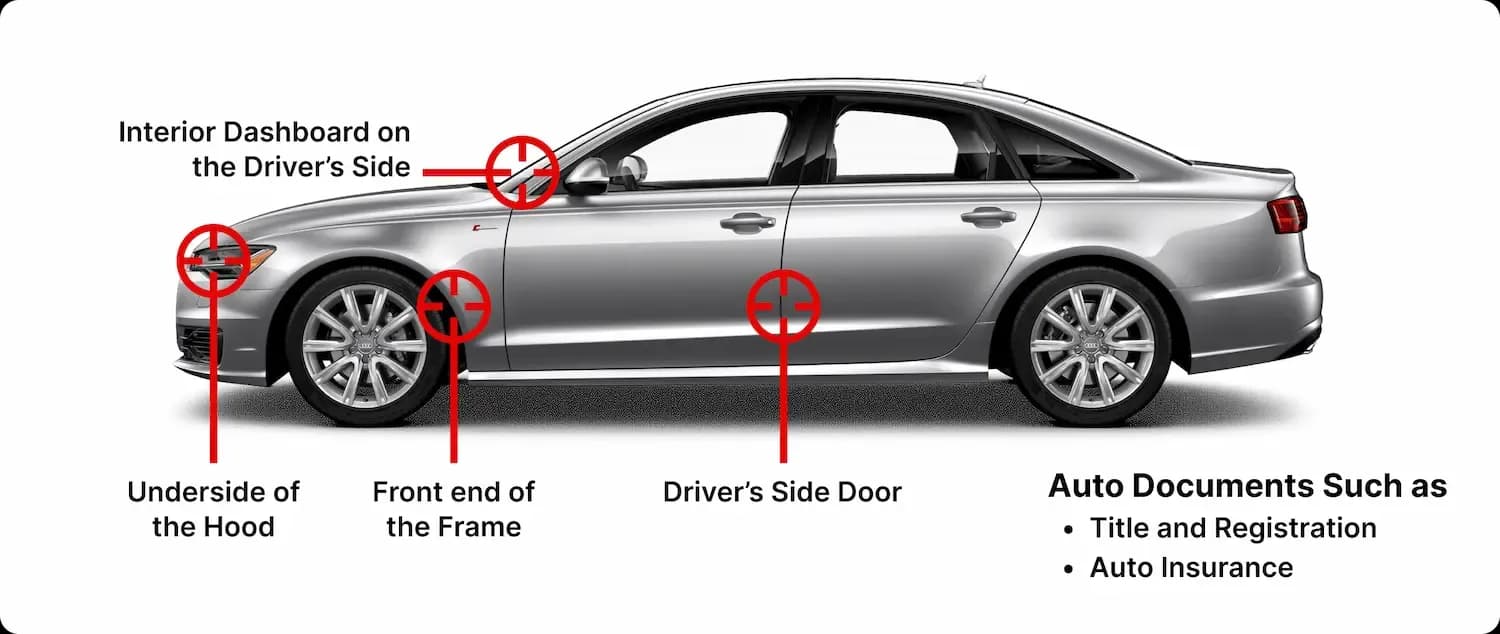
BMW VIN Location
The VIN can be found in several areas on the vehicle and its documents. Check the following locations to identify it.
Driver’s Side Dashboard
Look at the lower-left corner of the dashboard through the windshield from outside the vehicle.
Driver’s Side Door Jamb
Open the driver’s door and check for a sticker or plate near the latch or door frame.
Engine Bay
Inspect the engine compartment for a stamped VIN on the engine block or along the bulkhead.
Documents
The VIN is also listed on official documents such as the registration, insurance card, and vehicle title.
Classic BMW VIN Location
The VIN location on a classic BMW is pretty much the same as the modern BMW location. Check these spots for the VIN.
Under the Floor Mat
On certain models, the VIN may be stamped on the floor pan beneath the carpet, often on the passenger side.
Body Panels
Older vehicles may have VIN tags on parts such as the hood, trunk lid, or fenders, typically displayed on small plates or stickers.
BMW Motorcycle VIN Location
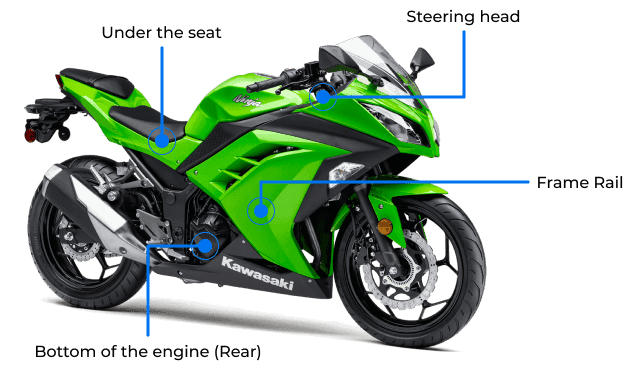
To find the VIN on a BMW motorcycle, check these locations.
Steering Head (Frame)
Commonly stamped into the metal on the right side of the steering head (frame neck).
Steering Head (Frame)
Commonly stamped into the metal on the right side of the steering head (frame neck).
Steering Head (Frame)
Commonly stamped into the metal on the right side of the steering head (frame neck).
Swing Arm
A VIN sticker may also be placed on the swing arm in some cases.
Who Should Use a BMW VIN Decoder
A BMW VIN decoder is useful for anyone dealing with a used or performance-focused vehicle. With multiple trims, engine variants, and option packages, checking VIN data helps confirm accuracy and avoid confusion before making a decision.
Buyers
BMW buyers often face variations in trims, engines, and packages like M Sport or xDrive. A VIN check helps confirm the exact configuration, ownership history, and past records so the vehicle matches what is being advertised.
Sellers
Sellers can use VIN data to present accurate and verified details in their listings. This helps reduce confusion around specs and options, supports fair pricing, and makes it easier for buyers to understand the vehicle.
Dealers
Dealers benefit from VIN decoding when managing BMW inventory. It helps verify configurations, reduce listing errors, and maintain consistent information across platforms, especially when handling multiple trims and model variations.
Collectors
Collectors can use the BMW VIN decoder tools to confirm specifications, production details, and originality. This is especially useful for older or limited BMW models, where documentation may be limited and accuracy plays a key role in valuation.
Classic vs Modern BMW VIN: What’s the Difference?
BMW VIN systems have evolved alongside the brand’s engineering and global production. Modern models follow a standardized format, while older BMWs use shorter or less uniform identifiers, which can affect how much detail you can retrieve.
VIN Length and Structure
Modern BMW vehicles use the standardized 17-character VIN introduced globally in 1981. Earlier BMW models often have shorter VINs, sometimes between 5 and 14 characters, reflecting older production systems and less structured identification methods.
Data Availability
Modern BMW VINs are supported by detailed digital records, including specifications, engine data, and production details. Classic BMW VINs may return limited information, depending on how well historical records were preserved or documented.
Decoding Reliability
Decoding modern BMW VINs is generally consistent due to standardized formatting and complete databases. Classic VIN decoding formats vary and some records may be incomplete; but, not with our services.
BMW VIN Breakdown
A BMW VIN decoder is a tool you can use to decode the VIN. A VIN consists of 17-digit alphanumeric digits that encode different information of the vehicle–from the country of origin to engine information. Check this section below to see how a VIN is broken down.
Sample VIN: WBA1F5C53EVV98969
WMI (World Manufacturer Identifier)
Digit 1 to 3: WBA
- W = Country of origin (Germany)
- BA = BMW
VDS (Vehicle Descriptor Section)
Digit 4 to 9: 1F5C53
- 1 = Model line (1 Series platform)
- F5C5 = Engine type, body style, and trim configuration
- 3 = Check digit
VIS (Vehicle Identifier Section)
Digit 10 to 17: EVV98969
- E = Model year (2014)
- V = Assembly plant
- V98969 = Production sequence number
Why Do You Need to Decode a BMW VIN
A BMW VIN is more than just an identification number–it can also be used to store crucial vehicle information like service, maintenance, or accident history. Here’s more reasons why decoding the VIN is crucial:
Before Buying a Car
BMW models come with different trims, engine options, and packages like M Sport or xDrive. Checking the VIN helps confirm the exact configuration, ownership history, and condition, reducing the risk of buying a car that does not match the listing.
Before Selling a Car
For sellers, clear and accurate details matter. A VIN check helps verify specifications and past records, making listings easier to understand while addressing buyer concerns about condition, mileage, and history.
Verify Vehicle Identity
Decoding the VIN ensures the vehicle matches its model, trim, engine, and drivetrain. This helps detect mismatches, incorrect listings, or potential fraud, especially when details are unclear or incomplete.
Check History and Records
Access records such as ownership history, title data, and reported events. This helps build a clearer picture of the vehicle’s background, even if available data is limited for certain AM General models.
Want More Info About Your BMW? Get A Vehicle History Report
A BMW vehicle history report gives you a clear view of the car’s build details and past records in one place. It helps confirm specifications, verify history, and assess whether the vehicle meets your expectations before buying or selling.
Vehicle Specification
Access factory details such as engine type, transmission, drivetrain (RWD, AWD/xDrive), trim level, and original MSRP. This helps confirm the vehicle matches the listing and ensures it fits your performance needs and budget.
Title Records
Check the title status for issues like salvage, rebuilt, lemon, or theft records. These can affect registration, legality, and resale value, making it important to verify before moving forward with any transaction.
Odometer Reading
Review mileage records over time to ensure consistency. This helps detect unusual changes or possible rollback cases, giving you a better understanding of how the BMW has been used and maintained.
Accident and Damage History
Check for reported accidents, structural damage, or environmental exposure such as flooding. This helps assess repair quality and whether the vehicle still delivers the performance and safety expected from a BMW.
Auction History
Find out if the vehicle has been sold at auction, including sale dates, locations, and final prices. Some records may include images, giving insight into the vehicle’s condition at the time of sale.
Ownership History
View the number of previous owners, general locations, and ownership duration. This helps you understand usage patterns and whether frequent ownership changes may impact reliability or long-term value.
Recalls Check
Identify any safety or performance recalls issued for the BMW. The report may include recall details and whether repairs were completed, helping you avoid unresolved issues.
Engine Information
Confirm engine type, configuration, and key performance details. This helps ensure the vehicle matches its original build and supports accurate comparisons when reviewing listings or checking for modifications.
Get More Information About Any BMW Using Our Tools
Need to get more information about the BMW before you decide to purchase? Use the BMW VIN decoder and get the vehicle history report to see complete details like specs and more!
BMW Recall by VIN
Check BMW recall history by using the VIN. Use the tool and make sure the vehicle has no open recall.
Get BMW Window Sticker by VIN
Need the original copy of the BMW window sticker? Use our BMW window sticker by VIN and get the sticker in less than a minute.
Decode Modern and Classic BMW Model by VIN
Our BMW VIN decoder supports both modern 17-digit VINs and older pre-1981 formats ranging from 5 to 14 characters. Use it to access key vehicle details and records across different production years.
Supported Modern BMW Models
Explore the BMW models compatible with our decoder. The tool works across a wide range of modern BMW vehicles, covering various trims, engines, and production years.
MM3Z3M5X5Z8Z4X3M6Alpina B7X6Z4M335d535 Gran Turismo550 Gran TurismoActivehybrid X6X5 MX6 M1 Series MActivehybrid 750Activehybrid 5640 Gran Coupe650 Gran CoupeActivehybrid 3Activehybrid 740X1328d328 Gran Turismo335 Gran Turismo535dActivehybrid 7I3I8M235M6 Gran Coupe428 Gran Coupe435 Gran CoupeAlpina B6 Gran CoupeM4X4330eM2X5 Edrive330 Gran Turismo340 Gran Turismo430 Gran Coupe440 Gran Coupe740eM240M760530e540d
Supported Classic BMW
Our service can be used to decode any pre 1981 VIN for BMW.
BMW 2002BMW E30 M3BMW 3.0 CSiBMW 507BMW M1BMW 635CSiBMW E9 3.0 CSBMW 2000CSBMW 327BMW 328
Supported BMW Motorcycle
Not only BMW modern and classic models, our tool can be used to decode any VINs from BMW motorcycles line.
BMW R Series:BMW R 1250 GSBMW R 1250 RTBMW R 1250 RBMW R 1250 RSBMW R nineTBMW R nineT ScramblerBMW R nineT PureBMW R nineT Urban G/SBMW K Series:BMW K 1600 GTBMW K 1600 GTLBMW K 1600 BBMW K 1600 Grand AmericaBMW S Series:BMW S 1000 RRBMW S 1000 XRBMW S 1000 RBMW F Series:BMW F 900 RBMW F 900 XRBMW F 850 GSBMW F 750 GSBMW G Series:BMW G 310 RBMW G 310 GSBMW C Series:BMW C 400 GTBMW C 400 XBMW C 650 GTBMW C 650 SportBMW Electric Motorcycles:BMW CE 04 (Electric Scooter)
Check All Vehicle’s VIN
Need to check other brands aside from Bentley? Use the VIN to get it done in seconds.
Acura
Alfa Romeo
AM General
Aston Martin
Audi
Bentley
BMW
Buick
Cadillac
Chevrolet
Chrysler
Daewoo
Dodge
Ferrari
Fiat
Fisker
Ford
Genesis
GMC
Honda
Hummer
Hyundai
Infiniti
Isuzu
Jaguar
Jeep
KIA
Lamborghini
Land Rover
Lexus
Lincoln
Lotus
Maserati
Maybach
Mazda
Mclaren
Mercedes Benz
Mercury
Mini
Mitsubishi
Nissan
Oldsmobile
Panoz
Plymouth
Polestar
Pontiac
Porsche
RAM
Rolls Royce
Saab
Saturn
Scion
Smart
Subaru
Suzuki
Tesla
Toyota
Volkswagen
Volvo
BMW EV Update
The BMW EV market has emerged since 2023 and began when BMW introduced the i5 sedan. In addition to that, BMW also aims to have at least 50% of its global sales be fully electric vehicles in 2030.
BMW EV Journey
BMW has fully committed to electrification, aiming for 50% of global sales to be electric by 2030. The brand has steadily expanded its EV offerings, blending performance, technology, and everyday usability across sedans and SUVs.
Expanded EV Lineups
Between 2023 and 2024, BMW strengthened its EV portfolio with the introduction of the i5 sedan and the continued growth of the iX SUV range.
Neue Klasse Platform
The BMW Neue Klasse platform debuted in 2025, promising up to 30% more range, faster charging, and improved efficiency. Early models on this platform are expected to arrive through 2025–2026, forming the backbone of BMW’s next-generation electric vehicles.
FAQs About BMW VIN Decoder
Yes, you can check a BMW VIN online for free to view basic specifications, options, and production details. Most tools require the full 17-digit VIN to return accurate information such as engine type, factory features, and original colour. Click on the form to begin!
Yes, a BMW VIN can identify the model, series, engine type, and even original factory options. Each of the 17 characters carries specific meaning, which can be decoded to reveal detailed build information.
Yes, decoding a BMW VIN before buying helps confirm factory specs, installed options, and production details. Many online tools provide this information, allowing you to verify that the vehicle matches the listing.
A BMW VIN is a 17-character code usually located on the driver-side dashboard, door jamb, or under the hood. It identifies the vehicle’s origin, model, engine, and production sequence, making it essential for verification and parts matching.
“Bimmer” is the commonly accepted nickname for BMW cars. While terms like “Beemer” or “Beamer” are often used, they originally referred to BMW motorcycles, making “Bimmer” the more accurate term for the brand’s cars.
Yes, a classic BMW VIN can indicate whether the car was built for the European or U.S. market. Specific characters reveal the production plant and destination market, helping confirm where the vehicle was originally intended to be sold.
Yes, a VIN can help identify major changes such as engine swaps or body modifications. By decoding it, you can compare the vehicle’s current condition with its original factory configuration and spot any inconsistencies.
Quick VIN Decoder
Get comprehensive vehicle history reports
Quick VIN Decoder
Get comprehensive vehicle history reports