
McLaren Modern and Classic VIN Decoder
Looking into a McLaren? Don’t rely on listings alone. Use our McLaren VIN decoder to get model year, trim, engine specifications, transmission setup, body style production details and many more.
Table of Contents:
What Will You Get from the McLaren VIN Decoder
Our McLaren VIN decoder gives you a detailed look into the car’s identity and background. From factory configuration to available history records, it helps you verify exactly what you’re dealing with. Here’s the information you’ll get from the McLaren VIN Decoder:
- Manufacturer and origin
- Model, trim, and package details
- Engine specifications
- Transmission setup
- Body style
- Model year
- Production plant
- Manufacturer Suggested Retail Price (MSRP)
- Market Value
How to Decode the McLaren VIN?
Decoding a McLaren VIN, whether from a modern supercar or an earlier model—is quick and easy with our service. Follow these simple steps to get it done in seconds.
Step 1: Find the VIN
Check common locations like the dashboard (visible through the windshield), driver’s side door jamb, engine bay, or official documents such as the registration or bill of sale.
Step 2: Fill out the Form
Enter the McLaren VIN into the form above. Double-check for accuracy, then submit it to begin the decoding process.
Step 3: Check the Vehicle Specs
Once processed, you’ll get access to detailed specifications such as engine configuration (often twin-turbo V8), transmission type, production details, and estimated market value.
Where to Find the VIN on a Classic and Modern McLaren?
Before decoding, you’ll need to locate the VIN on your McLaren. While modern McLaren models follow standard VIN placement, earlier or limited-production cars may have slight variations depending on how they were built.
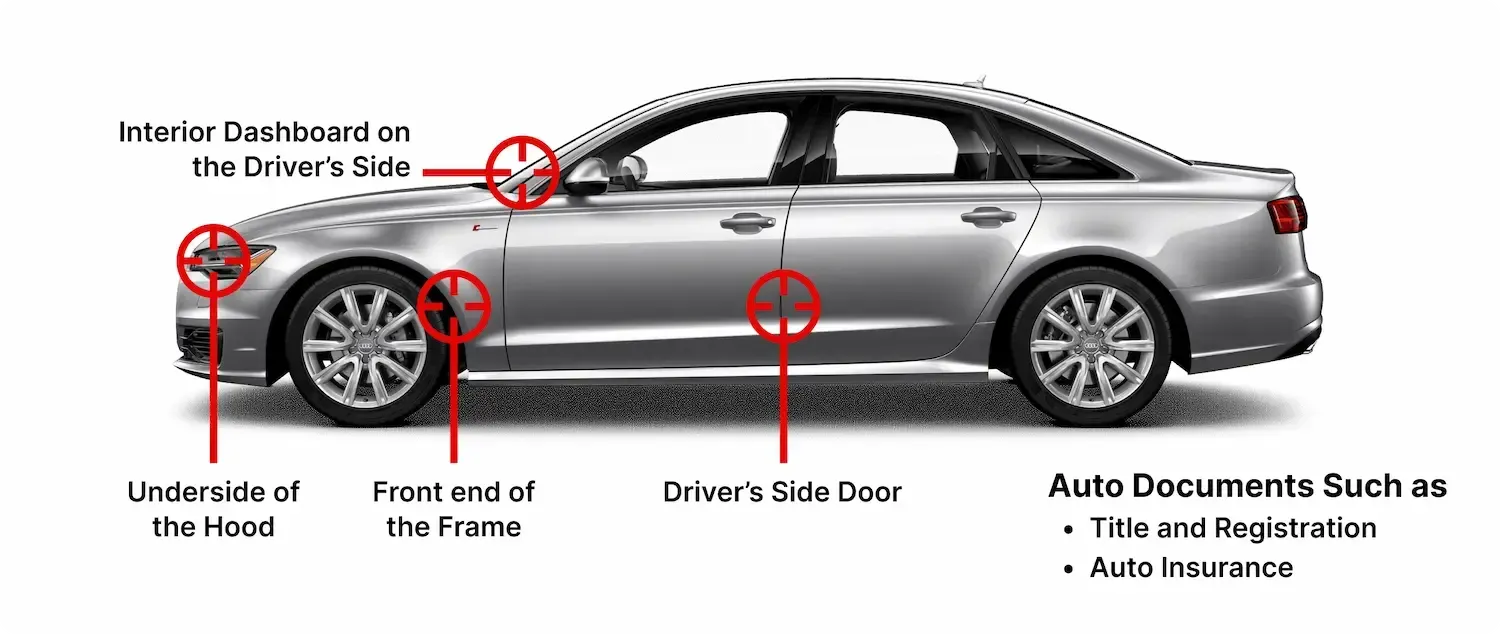
McLaren VIN Location
The VIN can be found in several key areas on the vehicle and within official documents. Check these locations to identify it correctly:
Driver’s Side Dashboard
Look through the windshield at the lower corner of the dashboard on the driver’s side. Most modern McLaren models display the VIN clearly in this position.
Driver’s Side Door Jamb
Open the driver’s door and inspect the door frame or pillar near the latch. Find a label or plate showing the VIN along with manufacturing details.
Engine Bay
Check the engine compartment or chassis area for a stamped VIN. In many McLarens, this may be located on structural components due to their carbon-fiber construction.
Documents
The VIN is also listed on official paperwork such as registration documents, insurance cards, and the vehicle title.
Classic McLaren VIN Location
Classic or early McLaren models, including limited-production cars, may not always follow modern VIN placement standards. Some identifiers may be placed in less obvious areas.
Under the Floor Mat
On certain older models, the VIN or chassis number may be stamped on the floor structure beneath the carpet, depending on the build.
Body Panels
Some McLaren vehicles may have identification labels on removable panels or structural parts. These are typically used for factory tracking and verification, especially on low-volume builds.
Who Should Use the McLaren VIN Decoder?
A McLaren VIN decoder is essential for anyone dealing with high-performance, low-production vehicles. Whether you’re buying, selling, or evaluating a McLaren, decoding the VIN helps verify authenticity and avoid costly mistakes.
Buyers
Check the McLaren’s factory specifications, ownership history, and overall condition before purchasing. A VIN lookup helps confirm the car matches its listing and can reveal risks such as prior damage, import history, or inconsistencies—critical when dealing with supercars.
Sellers
Provide accurate, verified details to strengthen your listing. A VIN check confirms original specs and available records, helping build trust with serious buyers. For McLarens, transparency can directly impact buyer confidence and final sale price.
Dealers
Dealers can use VIN decoding to quickly verify inventory and maintain precise listings. This is especially important for McLaren models, where variations in trims, options, and limited-production runs can significantly affect value.
Collectors
Collectors and enthusiasts can use VIN decoding to confirm originality, production details, and rare specifications. This is particularly valuable for limited-edition McLaren models and historically significant vehicles.
What is the Difference Between a Modern and Classic McLaren VIN?
The difference between modern and classic McLaren VINs lies in structure, consistency, and the level of detail available. Newer models follow a global 17-digit standard, while the older VIN format varies, but mostly around 5 to 14 digits.
VIN Length and Format
Modern McLaren vehicles use the standardized 17-digit VIN introduced in 1981, with a consistent global format. Earlier or low-volume models may have shorter or less standardized chassis numbers, reflecting their bespoke production nature.
Data Availability
Modern McLaren VINs provide detailed data, including engine specifications (typically twin-turbo V8), model designation, production details, and factory configuration. Classic models may return more limited information depending on available records.
Decoding Accuracy
Decoding modern McLaren VINs is generally reliable due to standardized formatting and better database coverage. Classic VINs can be more difficult to interpret because of limited records and unique build variations, but a proper decoding service, like our McLaren VIN decoder.
Decoding McLaren’s VIN
A 17-digit McLaren VIN follows a structured format that includes vehicle details. It is divided into three main sections: WMI, VDS, and VIS, each providing information about the manufacturer, vehicle attributes, and unique production identifiers.
World Manufacturer Identifier (WMI)
Digit 1 to 3: SBM
- S = Country of origin (United Kingdom)
- BM = McLaren
Vehicle Descriptor Section (VDS)
Digit 4 to 9: 13FAA2
- 1 = Model line (570S / Sports Series platform)
- 3 = Body style (2-door coupe)
- F = Engine type (3.8L twin-turbo V8)
- A = Trim level (standard/base configuration)
- A = Series or equipment package within the model range
- 2 = Check digit
Vehicle Identifier Section (VIS)
Digit 10 to 17: LW009121
- L = Model year (2020)
- W = Woking, Surrey, United Kingdom
- 009121 = Production sequence number
Why Do You Need to Decode the McLaren VIN?
Decoding a McLaren VIN turns a string of characters into verified, real-world vehicle data. For high-value supercars, this step helps confirm factory specs, uncover records, and make sure the car is exactly what it claims to be.
Before Buying a Car
Before committing to a McLaren, check the VIN to confirm its original specifications, ownership history, and condition. This is especially important for imported or pre-owned models, where undisclosed damage or spec mismatches can significantly impact value.
Before Selling a Car
Running a VIN check lets you present accurate, verified details in your listing. For McLaren vehicles, transparency matters; clear specs and history can increase buyer confidence and support your asking price.
Verify Vehicle Identity
Make sure the VIN matches the McLaren’s model, engine configuration, and build details. This helps detect mismatches, cloning, or potential fraud, especially important in the exotic car market.
Check History and Records
Access available records such as ownership history, accident reports, auction activity, and recall data. While not every detail is always recorded, these insights help you understand the car’s background and make a more informed decision.
Need More Information? Get a McLaren History Report
A VIN decoder is a solid starting point, but a full history report is where things come into focus. For a McLaren, that extra layer matters; it helps you see beyond the specs and understand how the car has actually been used, maintained, and handled over time.
Vehicle Specification
Get a detailed look at the car’s original build. This includes engine configuration (typically twin-turbo V8), transmission, MSRP, and the country of origin. It’s the easiest way to confirm the car still reflects its original specs.
Title Records
Review the title history to spot anything that could affect value or legality. Flags like salvage, rebuild status, theft records, or mileage discrepancies are especially important when dealing with high-end performance cars.
Odometer Reading
Mileage on a McLaren isn’t just a number; it can influence everything from service intervals to resale value. This section shows recorded mileage over time, including the last recorded mileage and the recorded mileage with the date.
Accident and Damage History
Check for reported accidents, structural damage, or environmental exposure like flooding. Even minor incidents can have a bigger impact on performance cars, so having visibility here can save you from expensive surprises.
Auction History
If the car has passed through an auction, you’ll see those records here. That may include sale dates, locations, hammer prices, and sometimes photos—giving you a snapshot of its past condition and how it was presented.
Ownership Information
Understand how the car has changed hands over time. You’ll see the number of owners, general locations, and how long each ownership lasted. It doesn’t reveal personal info, but it helps paint a clearer usage history.
Recalls Check
Stay on top of any recalls issued for the vehicle. You’ll be able to see what the issue was, when it was announced, and whether it has been resolved, important for keeping the car safe and road-ready.
Engine Information
Confirm the engine tied to the VIN, including configuration and more details. McLaren engines are a core part of the car’s identity, so making sure everything lines up is crucial for both performance expectations and long-term value.
Get More McLaren Information With Our Tools
Before you purchase a used McLaren, use our specialized tool to get more information on the vehicle, especially its recall history and the window sticker.
McLaren Recall Check by VIN
Use our McLaren recall check by VIN, and check the previous recall history and how it was handled.
McLaren Window Sticker by VIN
Get the original window sticker by VIN for any McLaren. Check features, options, trims, warranty, and more.
Decode Any McLaren Model by VIN Before You Buy
Planning to buy a used McLaren? Don’t rely on appearance or a quick drive alone. Run a VIN check first to understand the car’s true condition, verify its factory build, and uncover any records that could affect value.
Supported Modern McLaren Models
Decode VINs for a wide range of modern McLaren vehicles, including the McLaren 720S, McLaren 765LT, McLaren GT, and McLaren Artura.
Supported Classic McLaren Models
Our service also supports earlier McLaren models and limited-production cars. You can access available specifications, production details, and historical records.
Decode Any Vehicle’s VIN
Need to check another vehicle? Our VIN decoder works across multiple brands, helping you access specs, history, and key details all in one place.
Update on McLaren EV Car
McLaren has repeatedly stated that it won’t be fully electric any time soon. It is rather focused on hybrid performance rather than fully electric vehicles. The company also prefers to continue using electrified technology to enhance its overall performance, efficiency, and driving dynamics across all models.
Hybrid Performance Technology
McLaren's primary electrified model is the Artura, which combines electric power with traditional supercar performance. The hybrid system delivers improved responsiveness while allowing limited emissions-free driving.
These are the key features of McLaren Artura:
Artura plug-in hybrid supercar.
Twin-turbocharged V6 and electric motor combination.
Dedicated EV driving mode for short-distance travel.
Focus on performance, efficiency, and lightweight engineering.
FAQs About McLaren VIN Decoder
How to look up a McLaren VIN number?
To check a McLaren VIN, enter the 17-digit code into a reliable VIN decoder. This will return key details such as specifications, manufacturer data, and available history records. You can usually find the VIN at the base of the windshield, on the door pillar, or in registration documents.
How do I find McLaren specs by VIN?
To view McLaren specifications by VIN, simply input the 17-digit number into a VIN decoding tool. It can reveal details like engine configuration, transmission, exterior colour, and factory options, giving you a clearer picture of the car’s original setup.
What does a free McLaren VIN decoder provide?
A free McLaren VIN decoder can quickly show core vehicle information, including model year, engine type, production location, and body style. In many cases, it also highlights records such as accident history, theft status, title issues, and sometimes original equipment or configuration data.
Do classic McLarens always have a 17-character VIN?
No, classic McLarens do not always use a 17-character VIN. Vehicles produced before 1981 often rely on shorter, manufacturer-specific identifiers, commonly referred to as chassis numbers, which can vary in length and format.
What’s the difference between a VIN and a chassis number on a classic McLaren?
On a McLaren, the VIN (for post-1981 cars) is a standardized 17-character code that outlines manufacturer details, specifications, and a unique serial number. The chassis number, often part of or derived from the VIN, is the specific identifier tied directly to the car’s structure.
What does your Classic McLaren VIN number tell you?
A classic McLaren VIN acts as the vehicle’s unique fingerprint. It identifies the manufacturer, model, engine type, production details, and serial number. For collectors and buyers, it’s a key tool for confirming authenticity, model year, and original build information.