
Decode Modern and Classic Hummer VIN
Need to purchase either a classic or a modern Hummer VIN? Use our Hummer VIN decoder to get model year, trim, engine specifications, transmission setup, body style production details and many more.
|No VIN?Use License Plate
Table of Contents:
Hummer Information Updates
The Hummer has a unique history, evolving from a rugged military vehicle into a civilian icon and now an all-electric powerhouse. This timeline highlights the moments in its journey, from the original Humvee to the modern GMC Hummer EV.
- 1980s: AM General develops the military Humvee, the iconic off-road vehicle.
- 1992: Civilian Hummer H1 is launched by AM General, inspired by the Humvee.
- 1999: General Motors acquires the Hummer brand, making it a standalone GM brand.
- 2000–2006: GM expands the lineup with H2 and H3 SUVs, gas-powered and off-road capable.
- 2010: GM discontinues Hummer amid rising fuel costs and declining SUV demand.
- 2020: GM revives Hummer as the GMC Hummer EV, fully electric and sold under GMC.
What Will You Get From the Hummer VIN Decoder?
Decode the VIN to verify specs, avoid mismatches, and price with confidence using the original MSRP and market value. This is the information you’ll get from our Hummer VIN decoder tool.
- Manufacturer and origin
- Model, trim, and package details
- Engine specifications
- Transmission setup
- Body style
- Model year
- Production plant
- Manufacturer Suggested Retail Price (MSRP)
- Market Value
How to Use the Hummer VIN Decoder
The Hummer VIN decoder works for both modern and classic models, helping you access detailed vehicle information in seconds. Whether it’s an older H1 or a newer GM-era model, the process is quick and easy to do everywhere you like!
Decode Classic Hummer VIN
Buying a classic Hummer, especially early H1 models derived from military platforms, requires extra attention. Use our classic Hummer VIN decoder to access available records and confirm essential details. A classic VIN report helps assess the vehicle more carefully before making a purchase.
Where to Find the VIN on a Hummer
Before decoding, you need to locate the VIN on your Hummer. While most models follow standard VIN placement, differences can occur between military-based H1 models and later GM-produced H2 and H3 vehicles.
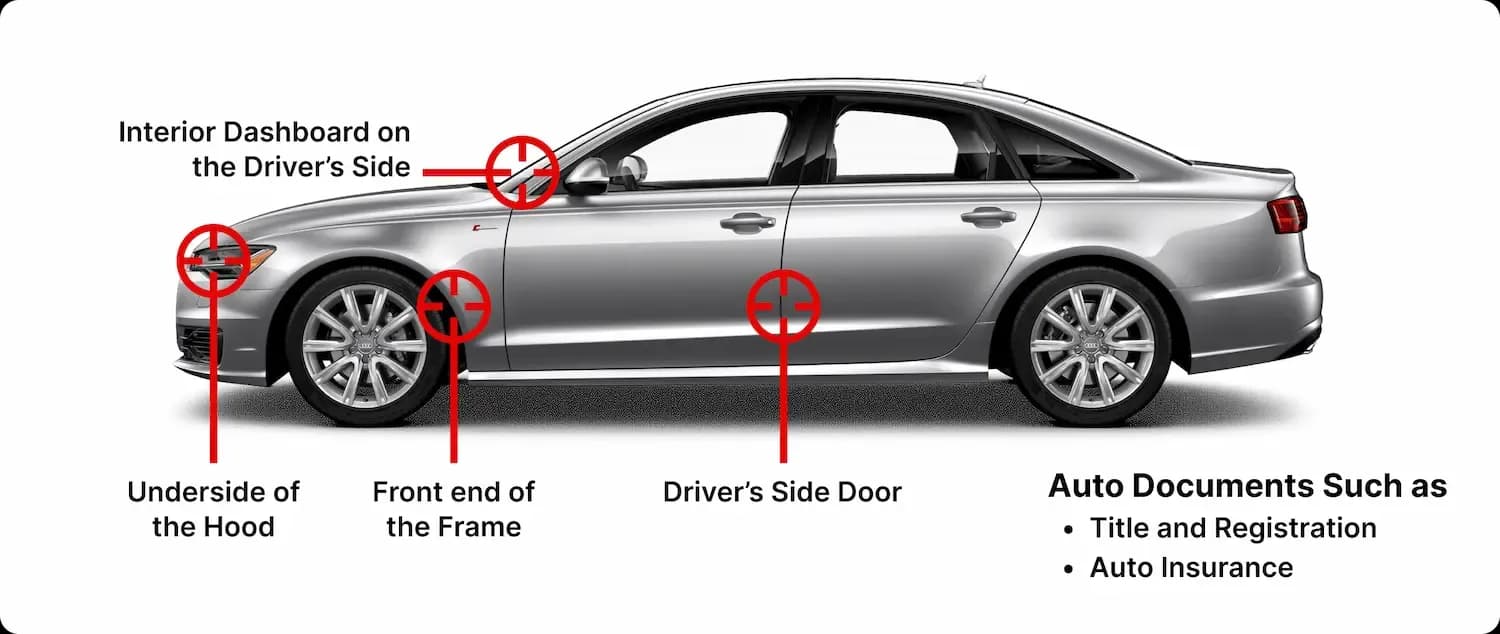
Hummer VIN Location
The VIN can be found in several common areas on the vehicle and within official documents. Check the following locations to ensure accuracy.
Driver’s Side Dashboard
Look through the windshield at the lower corner of the dashboard on the driver’s side to locate the VIN plate.
Driver’s Side Door Jamb
Open the door and inspect the frame or pillar near the latch for a sticker or metal plate displaying the VIN.
Engine Bay
Check the engine compartment for a stamped VIN, often located on the firewall, chassis frame, or near structural components, especially relevant for rugged, off-road-focused Hummer builds.
Documents
The VIN is also listed on official paperwork such as registration documents, insurance papers, or the vehicle title.
Classic Hummer VIN Location
Classic Hummer models, particularly early H1 units derived from military platforms, may have less standardized VIN placement depending on production year and configuration.
Under the Floor Mat
In some older Hummer models, the VIN may be stamped into the floor beneath the carpet, often on the driver or passenger side.
Body Panels
Certain Hummer vehicles may have VIN tags attached to panels such as the hood, rear compartment, or inner structure, typically displayed on metal plates or factory labels.
Who Actually Needs a Hummer VIN Decoder?
A Hummer VIN decoder is useful for anyone dealing with rugged, off-road, or specialty vehicles. With differences between military-derived H1 models and later GM-produced H2 and H3 units, verifying details through the VIN helps ensure accuracy, condition, and proper valuation.
Buyers
Hummer buyers should look beyond appearance. A VIN check helps confirm factory specs, engine type, ownership history, and usage records, ensuring the vehicle matches its listing, especially important for heavily modified or off-road-used units.
Sellers
For Hummer sellers, verified details improve trust. Using a VIN decoder allows accurate presentation of specifications and history, helping justify the asking price and making the listing more appealing to serious buyers.
Dealers
Dealers handling Hummer inventory need precise data to avoid errors. VIN decoding helps identify correct trims, engine setups, and model differences, ensuring listings remain accurate in a niche but competitive market.
Off-Road Enthusiasts
Hummer owners and off-road enthusiasts can use a VIN decoder to better understand their vehicle’s build and history. This helps with upgrade planning, maintenance decisions, and confirming whether the vehicle retains its original configuration.
What is the Difference Between Modern and Classic VIN
The difference between modern and classic VINs comes down to structure, consistency, and the level of detail they provide. Newer Hummer models follow the standardized 17-digit format, while older H1 units, especially those derived from military platforms, may use shorter or less uniform VINs, which can affect decoding accuracy.
VIN Length and Format
Modern Hummer vehicles, such as the H2 and H3, use a 17-digit VIN with a fixed global structure. Earlier H1 models and pre-1981 vehicles may have VINs ranging from 5 to 14 characters due to the absence of a universal standard at the time.
Data Availability
Modern VINs provide detailed information, including engine specifications, trim details, and production data. Classic Hummer VINs may return limited results, particularly for early H1 models, where records depend on manufacturer archives or military-based documentation.
Decoding Accuracy
Decoding modern Hummer VINs is generally consistent thanks to standardized formatting and complete databases. Classic VINs can be more complex due to inconsistent formats and limited records. No need to worry, our tool can safely decode the classic VIN models.
Breaking Down a Hummer VIN
A 17-digit Hummer VIN follows a structured format that reveals key vehicle details. It is divided into three main sections: WMI, VDS, and VIS. Each section represents specific information, helping identify the manufacturer, vehicle attributes, and unique production data.
Sample VIN: 5GRGN22888H101801
WMI (World Manufacturer Identifier)
Digit 1 to 3: 5GR
- 5 = Country of origin (United States)
- GR = Hummer
VDS (Vehicle Descriptor Section)
Digit 4 to 9: GN2288
- G = Vehicle line (HUMMER H2)
- N = Series/trim level
- 2 = Body style (Sport Utility 4-door)
- 2 = Restraint/safety system
- 8 = Engine type (6.2L V8)
- 8 = Check digit (used to validate VIN authenticity)
VIS (Vehicle Identifier Section)
Digit 10 to 17: 8H101801
- 8 = Model year (2008)
- H = Assembly plant
- 101801 = Production sequence number
Why Running a Hummer VIN Check Matters
Decoding a Hummer VIN goes beyond simple identification. It verifies specifications, usage history, and build details, which is especially important for vehicles known for off-road use, modifications, and military-derived origins.
Before Buying a Hummer
Hummer vehicles, particularly H1 models and off-road builds, can vary significantly in condition and configuration. A VIN check confirms factory specs, ownership history, and past usage, helping reduce the risk of relying only on listings or seller claims.
Before Selling a Hummer
Clear and accurate information makes a listing more competitive. Decoding the VIN allows sellers to present verified specifications and history, making the vehicle more trustworthy and supporting the asking price.
Verify Hummer Vehicle Identity
Many Hummers are modified for off-road performance or restoration projects. A VIN check ensures key details such as engine type, model, and production data align with original factory records.
Check History and Records
Review ownership timelines, accident reports, and title data to understand how the vehicle has been used. This is especially useful for identifying heavy-use history or potential damage from off-road conditions.
Want More Info About Your Hummer? Get a Vehicle History Report
Once the VIN is decoded and the report is generated, it provides detailed insight into the vehicle’s background and specifications. This is useful for both buyers and sellers to verify condition, confirm legality, and avoid unexpected issues, especially with rugged, off-road-focused Hummer vehicles.
Vehicle Specification
Access the vehicle’s for both classic and modern Hummer models in one report. This includes engine type, transmission, assembly origin, fuel system, MSRP, and trim information, helping confirm whether the vehicle matches its original configuration.
Title Records
Check for any title-related issues that may impact value or legality. This includes records such as salvage, rebuilt, theft, or inconsistencies that could affect registration or resale.
Odometer Reading
Review mileage history along with recorded dates to ensure consistency. This is especially important for Hummer vehicles, as usage can vary widely between daily driving and heavy off-road conditions.
Accident and Damage History
Identify any reported accidents, including dates, locations, and types of damage. The report may also include records of structural damage, flood exposure, or off-road-related wear that could affect safety and durability.
Auction History
See if the Hummer has been listed or sold at auction. The report may include auction dates, locations, final sale prices, and sometimes photos that show the vehicle’s past condition.
Ownership Information
Access ownership history, including the number of owners, regions, and duration of ownership. While personal details are not included, this helps assess how the vehicle has been used over time.
Recalls Check
Check for any safety recalls issued for the Hummer. GM-era models may include detailed recall data, while older H1 models may have limited records. Addressing recalls helps maintain safety and performance.
Engine Information
Confirm engine specifications, configuration, and key features. Hummer vehicles often include durable V8 engines designed for off-road performance, making this section important for verification and maintenance planning.
Get the Complete Hummer Information Using Our Tools
Before buying a used Hummer, check for recalls, past damage, and inconsistencies. Reviewing all available data helps avoid unexpected issues and ensures the vehicle meets your expectations.
Hummer Recall Check by VIN
Need to make sure the car was never recalled? Use our Hummer recall check by VIN to check any recall history.
Hummer Window Sticker by VIN
Use the Hummer window sticker by VIN service to secure the original copy of the window sticker!
Decode the Hummer Models by VIN Number
Need a tool that can be used to decode the classic and modern Hummer VIN number? Use our tool and get it done in less than a minute!
Supported Modern Hummer Models
Check the list below to see the complete Hummer models.
H1H2H2 SUTH2 SUVH3 SUVH3T
Supported Classic Hummer Models
Check the complete list of supported classic Hummer models with our tool!
H1H1 AlphaH2H2 SUTH3H3T
Check All Vehicles’ VINs in Seconds
Need to check another vehicle, but not a Hummer? Don’t worry, our service can be used to decode all vehicle makes. See the list below.
Acura
Alfa Romeo
AM General
Aston Martin
Audi
Bentley
BMW
Buick
Cadillac
Chevrolet
Chrysler
Daewoo
Dodge
Ferrari
Fiat
Fisker
Ford
Genesis
GMC
Honda
Hummer
Hyundai
Infiniti
Isuzu
Jaguar
Jeep
KIA
Lamborghini
Land Rover
Lexus
Lincoln
Lotus
Maserati
Maybach
Mazda
Mclaren
Mercedes Benz
Mercury
Mini
Mitsubishi
Nissan
Oldsmobile
Panoz
Plymouth
Polestar
Pontiac
Porsche
RAM
Rolls Royce
Saab
Saturn
Scion
Smart
Subaru
Suzuki
Tesla
Toyota
Volkswagen
Volvo
FAQs About Hummer VIN Decoder
Yes, a 17-digit VIN can help identify a vehicle’s engine type, size, and configuration. The 4th to 8th characters typically contain this information, with the 8th character often pointing to the exact engine code. This data can be checked using a VIN decoder or supporting documents like service records.
VIN decoding helps confirm the originality of a classic Hummer, especially the H1, by verifying key build details against factory records. For H1 models (1992–2006), decoding the VIN can reveal body style, engine type, such as the 6.5L diesel or Duramax variants, and confirm production under AM General.
Classic Hummer VINs, particularly from H1 and AM General production, may not always decode properly in standard databases. This is because they do not always follow typical passenger vehicle VIN structures, and many systems are built around later models produced under General Motors.
Yes, a Hummer’s engine and specifications can be checked using the VIN. Our Hummer VIN decoder can reveal engine type, size, and factory configuration through the VIN structure. H1 models may require more specialized tools, while H2, H3, and newer EV models are easier to decode using standard services.
Yes, there are free Hummer VIN decoders available online that can provide basic specifications, history details, and theft records. Many tools support a wide range of models, including H1, H2, H3, and newer electric variants.
Yes, Hummer vehicles are generally considered higher-maintenance compared to standard SUVs. Older models like the H1, H2, and H3 may involve higher repair costs, limited parts availability, and common wear issues. Newer models, such as the GMC Hummer EV, may reduce some mechanical concerns but can still involve higher upkeep due to weight, tires, and specialized components.
Quick VIN Decoder
Get comprehensive vehicle history reports
Quick VIN Decoder
Get comprehensive vehicle history reports