
Verify Vehicle Options by VIN
Check car options by VIN using Detailed Vehicle History to retrieve a vehicle's original trim, option packages, MSRP, and factory equipment. When available, the lookup uses the original manufacturer-issued window sticker to verify the vehicle's build information.



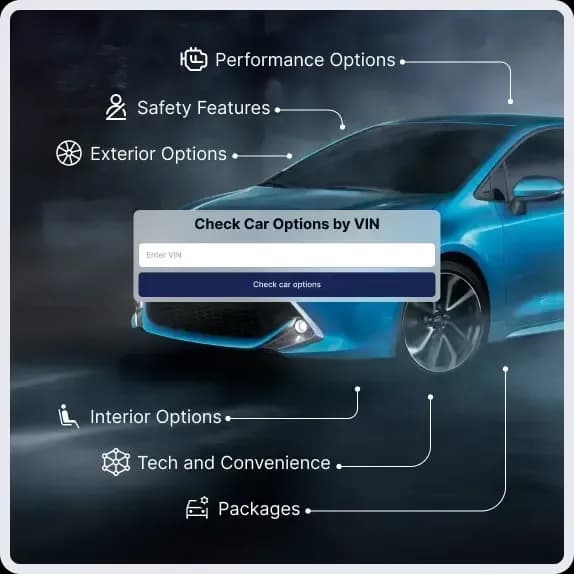
What Are Car Options and Packages?
Car options and option packages are related, but they are not the same thing.
Individual Car Options
Individual options are single factory-installed features added when the vehicle was built that are not included in the standard equipment. Examples include heated seats, a sunroof, premium audio, adaptive cruise control, or a power tailgate.
Factory Option Packages
Option packages combine multiple factory-installed features under a single package name, such as a Technology, Sport, Towing, or Winter Package. These packages typically group equipment that manufacturers commonly offer together, such as upgraded infotainment systems, suspension components, towing equipment, or cold-weather features.
Because used vehicle listings may not always reflect the original factory configuration, checking options by VIN with Detailed Vehicle History helps verify the equipment installed when the vehicle was built.
Examples of Common Car Options:
To give you a clearer picture, here are typical option categories buyers look for:
Performance Options
Turbocharged or supercharged engines.
Upgraded suspension systems.
Sport or off-road packages.
High-performance brakes.
Safety Features
Blind-spot monitoring.
Adaptive cruise control.
Lane-keeping assist.
Automatic emergency braking.
Exterior Options
Alloy wheels or custom rims.
Sunroofs or panoramic roofs.
Spoilers or aerodynamic kits.
Specialty paint finishes or wraps.
Interior Options
Premium leather seats.
Heated and ventilated seats.
Ambient lighting.
Upgraded sound systems
Tech and Convenience
Touchscreen infotainment systems.
Apple CarPlay or Android Auto.
Wireless charging pads.
Remote start systems.
Extended warranty.
Packages
Winter packages with heated seats.
Technology packages with advanced infotainment.
Towing packages with hitch and cooling systems.
Why Checking Car Options by VIN Number Matters?
Checking vehicle options by VIN lets buyers and sellers compare a vehicle's original factory configuration with the equipment shown in a listing. When available, Detailed Vehicle History uses original manufacturer records to verify the vehicle's build information.
Benefits for Buyers
Confirms original equipment
Identifies the features included when the vehicle left the factory, helping confirm its original equipment.
Helps Identify Listing Discrepancie
Compares the original factory configuration with the features advertised by the seller to help identify discrepancies.
Supports More Informed Pricing Decisions
Factory-installed options can affect a vehicle's value, helping buyers and sellers make more informed pricing decisions.
Reduces Purchase Risk
Helps buyers avoid paying for features the vehicle did not originally include, reducing purchase risk.
Benefits for Sellers
Verifies the Vehicle's Original Configuration
Identifies the factory-installed options assigned to the VIN, helping verify the vehicle's original configuration.
Supports More Accurate Pricing
Helps buyers evaluate the vehicle based on its original equipment and option packages for more accurate pricing.
Builds Buyer Confidence
Presents equipment details that match the original factory configuration instead of relying only on memory or trim badges.
Helps with Insurance and Financing Discussions
Accurate option details support smoother conversations with lenders and insurers when buyers are ready to move forward.
How the VIN Helps With Verifying Car Options?
When a car is made, its VIN gets linked to records that show what trim it was, what options were added, and which packages it left the factory with. That part matters. Badges fall off. Listings get copied. Memory gets fuzzy. The VIN doesn’t change.
You can usually spot the VIN at the bottom of the windshield or inside the driver’s door. If you’re not near the car, it’s on the title or insurance documents anyway.
When you check options using the VIN, you’re not relying on guesses or seller descriptions. You’re checking the car against how it was actually built. That’s why the VIN is used for things like parts matching, pricing, and verifying features.
VIN Breakdown and What It Tells You
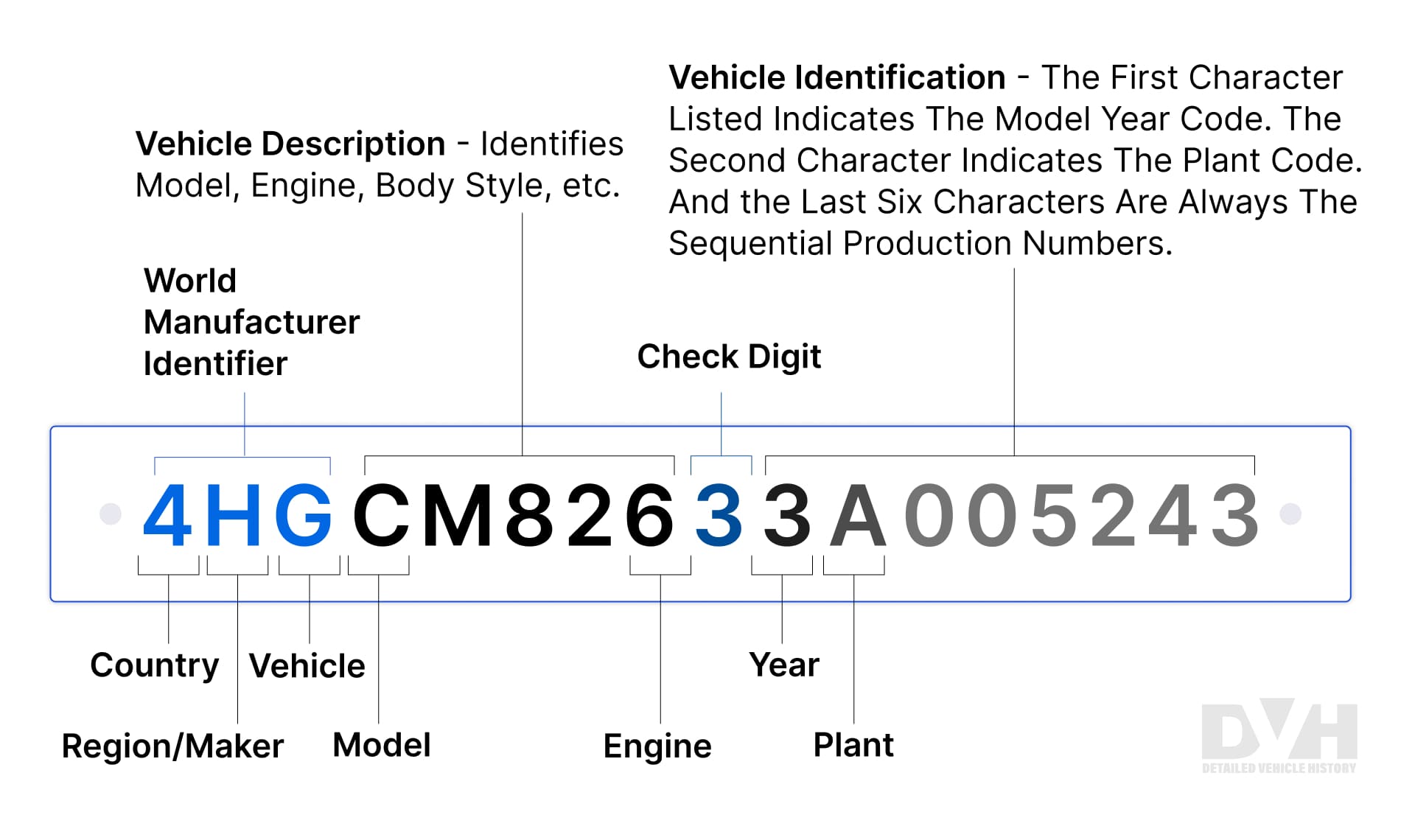
A standard 17-character VIN contains different sections, and each part plays a role in identifying the vehicle.
World Manufacturer Identifier (Characters 1–3)
These characters identify the manufacturer and the country where the vehicle was built. This helps narrow down which factory systems hold the option data.
Vehicle Descriptor Section (Characters 4–8)
This section describes the vehicle’s core configuration, such as body style, engine type, restraint system, and drivetrain. These details influence which options and packages were available from the factory.
Check Digit (Character 9)
Used to verify that the VIN is valid. While it does not describe options, it ensures the VIN is accurate before pulling records.
Model Year and Assembly Plant (Characters 10–11)
These characters confirm the model year and where the vehicle was built, which matters because available options and packages change by year and plant.
Serial Number (Characters 12–17)
This unique sequence ties the vehicle to its exact factory build record, including installed options and packages.
Why a Window Sticker Is the Best Way to See Car Options?
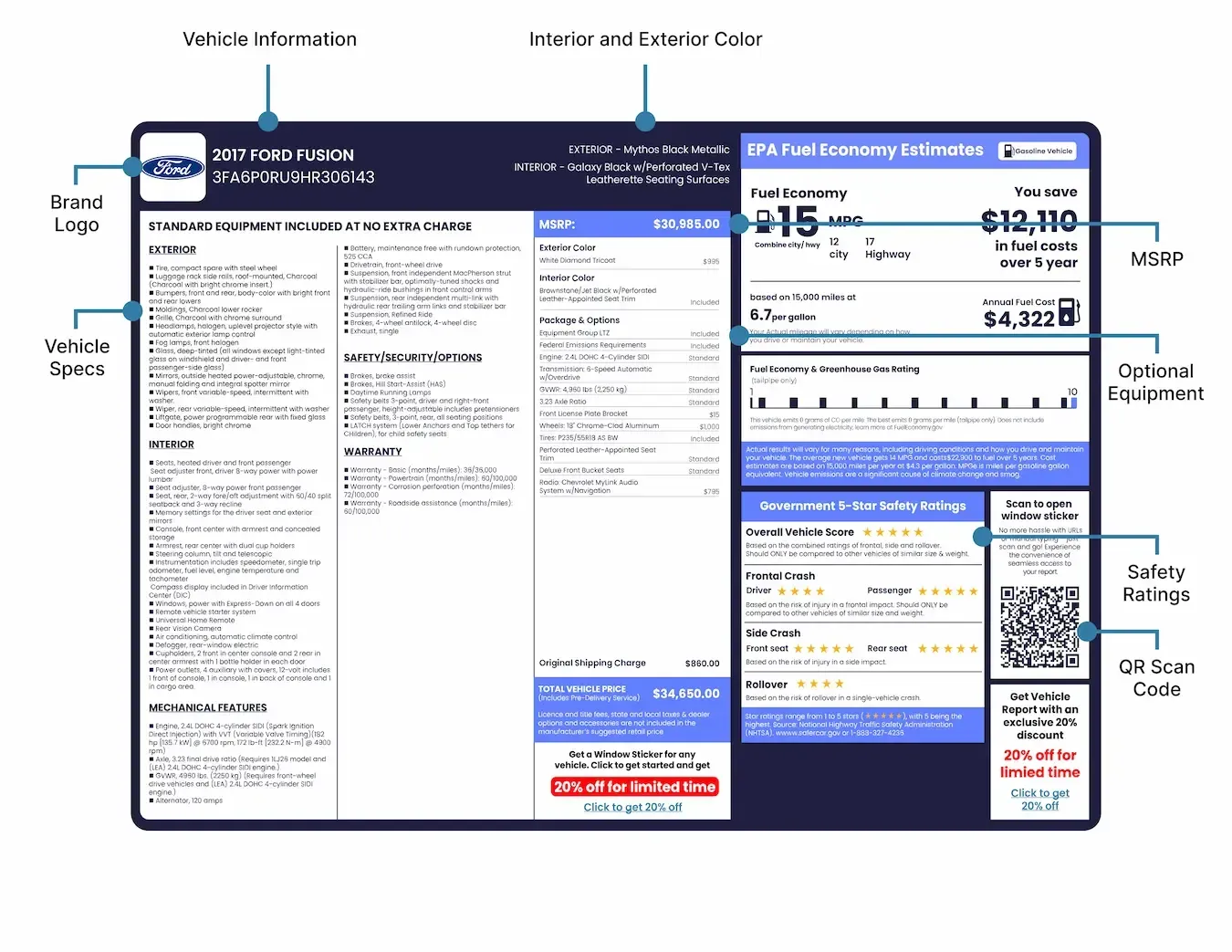
A window sticker is a reliable way to view a vehicle's factory options because it records the original factory configuration assigned when the vehicle was built, rather than relying on seller descriptions or memory.
Factory-installed options and packages.
Original trim level and standard equipment.
Individual option pricing and total MSRP.
Engine, drivetrain, and key specifications.
How to Check Options by VIN Using the Window Sticker?
To retrieve accurate information on a car’s options and other details like color, MSRP, fuel economy, warranty, and more, simply get the vehicle window sticker by VIN, or with the license plate, or the year, make, and model.
Ready to find options by VIN number? Follow these simple steps:
Step 1: Enter Your Vehicle Details
Enter the vehicle's VIN, license plate, or year, make, and model into the Detailed Vehicle History Options Lookup by VIN tool.
Step 2: Preview Basic Vehicle Information
Click “Search VIN,” “Search License Plate,” or “Search YMM” to view basic details for free, including the year, make, model, engine, and other key specifications.
Step 3: Generate the Original Window Sticker
After a small payment, you can generate the original window sticker as a PDF you can download or print. It includes all factory options, packages, MSRP, and build information.
Popular Factory Option Packages by Brand
The following are examples of factory option packages offered on selected Toyota, Ford, and Honda models. Package names and contents vary by model year and trim.
Toyota
Technology Package
Blind spot monitoring, rear cross-traffic alert, better screen setup. Available on selected RAV4, Camry, and Tacoma model years.
TRD Off-Road Package
Lifted suspension feel, skid plates, all-terrain tires, locking differential. Common on Tacoma, Tundra, 4Runner TRD trims.
Premium Package
Leather seats, power adjustments, moonroof, upgraded interior materials. Comfort-focused, not performance.
Ford
FX4 Off-Road Package
Off-road suspension, skid plates, locking rear diff, terrain drive modes. Mostly seen on F-150 and Ranger.
Max Trailer Tow Package
Extra cooling, factory trailer brake controller, tow hitch, towing tech. Built for higher tow ratings.
Technology Package
Adaptive cruise, navigation, larger displays, extra driver assistance. Exact features vary by model and year.
Honda
Honda Sensing Package
A factory group of safety features including collision mitigation braking, adaptive cruise control, lane keeping assist, and road departure mitigation.
Convenience Package
Adds everyday comfort features such as heated seats, power tailgate, remote start, and upgraded interior touches on models like CR-V and Pilot.
Black Edition Package
An appearance-focused package with blacked-out wheels, trim, and interior accents, combined with top-tier standard features.
FAQ About Car Options & Packages
What’s the difference between trim levels and option packages?
Trim levels are predefined versions of a car model, each with a set combination of features. Options, on the other hand, are the individual add-ons or upgrades you can choose to customize your car further.
Can I look up my car options by VIN?
Yes! The VIN (Vehicle Identification Number) acts like a bank for obtaining information specific to each car. By decoding the VIN, you can retrieve the original factory-installed options, trim level, and other manufacturing details.
How can I find the trim of my car by VIN?
Use our free VIN decoder to verify your car trim level. It’s a quick and easy way to identify the exact configuration of your car.
What packages are on my car by VIN?
To know what options and packages your car has, decode the car using our window sticker lookup tool. The VIN contains information about your vehicle, including its trim level and installed options, and all these and more are captured in the car window sticker.
How do I find out what optional extras my car has?
You can check for optional extras by getting a copy of the original window sticker by VIN, license plate or entering the year, make and model. This detail the factory-installed features and packages for your car.
Having this information at your fingertips can make all the difference when buying, selling or restoring your car.
What does a VIN tell you about a car’s options?
A VIN tells you how a car was originally built at the factory, including its trim level, original equipment, and which factory options or packages were available for that specific configuration. The VIN itself acts as the link to the manufacturer’s build records, which is where option details come from.
How can I see a full list of factory options by VIN?
You can see a full list of factory options by VIN by retrieving the original window sticker or factory build sheet of the vehicle. The mentioned documents are connected to the manufacturer records via the VIN and disclose the exact options, packages, and prices that were applied at production.
Does a VIN show dealer-installed options?
A Vehicle Identification Number does not usually show the options that the dealer installed. When a vehicle leaves the factory, the VIN has factory information.
If someone adds things to the vehicle, like accessories or new wheels, or if they do some aftermarket upgrades, these things are not part of the information that is connected to the Vehicle Identification Number.
Can I check car options by VIN for free?
Yes, you can definitely check car options by the Vehicle Identification Number for free. You can do this with the Vehicle Identification Number of the car to get all the details about the car options.
However, detailed factory option lists and package breakdowns typically require a window sticker, which is usually a paid service.
How can original factory options help verify a vehicle’s authenticity?
Original factory options listed on a window sticker by VIN give you a direct look at how a vehicle was built at the factory. Each option is tied to a unique 17 digit VIN, so you can confirm the car matches its official manufacturer records. If the options on the car do not line up with what the original window sticker shows, that is a clear sign something may have been changed or misrepresented.
Can original options help distinguish factory features from aftermarket modifications?
Yes. A factory window sticker lists every item installed on the vehicle directly by the manufacturer. This makes it easy to identify aftermarket additions that were added later and are not part of the original sticker. For example, if a seller claims a sunroof or premium package was factory-installed, you can verify that claim through DetailedVehicleHistory.com’s window sticker lookup. Knowing what is original versus what was added after the sale helps protect you from overpaying for factory options that were never there.
How are original options used in VIN decoding?
When you run a standard VIN decoder, it reveals basic details such as the engine type, assembly country, and model year. A full window sticker by VIN goes further, pulling factory build data linked to that specific vehicle. This includes the original trim level, factory-installed packages, standard equipment, and the original MSRP chosen at the time of production.
Do insurance companies use original options to determine vehicle value?
Insurance companies rely heavily on factory options to calculate the accurate replacement cost of a vehicle. Premium sound systems, advanced safety packages, and luxury upgrades significantly increase the overall market value. Missing these details on your policy could result in a much lower payout after an accident or theft. Having proof of these factory upgrades protects your investment and ensures you receive fair market pricing.
Why are original options important for classic and collector cars?
For rare collector cars, the specific combination of factory equipment determines the ultimate market worth. Rare engine packages or limited edition paint colors can double the value of a classic car at auction. Enthusiasts use original window stickers to prove the vehicle is a true survivor rather than a restored imitation. It serves as official documentation that preserves the historical integrity and long term investment value of the vehicle.