
Heavy & Semi Truck VIN Lookup
The truck VIN lookup helps you find detailed information on the truck's specifications and previous repairs, accident history, ownership details, make, model, engine, and more. Whether you are a buyer or seller, make sure you know the ins and outs of the semi and heavy truck through a truck VIN check!



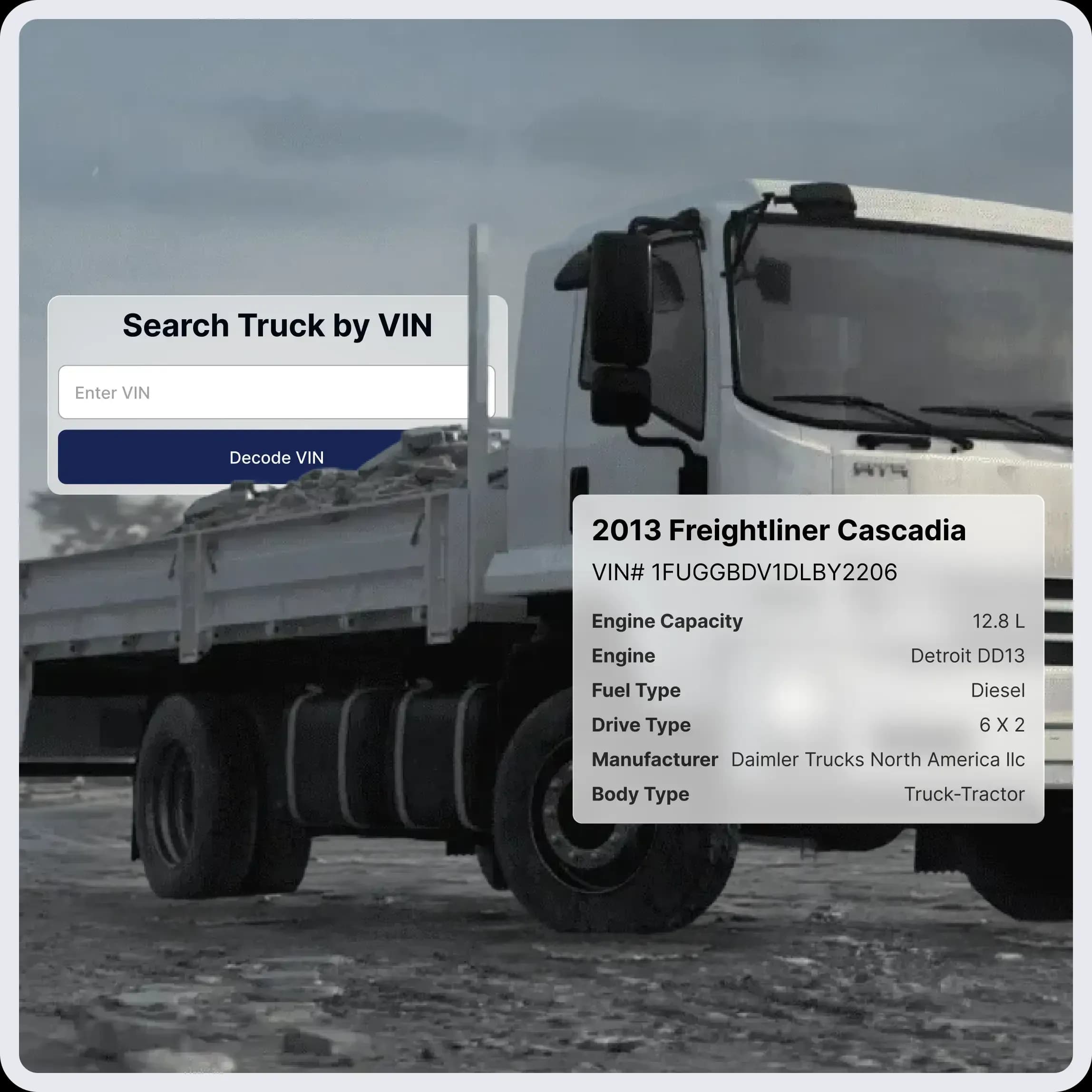
What is a Truck VIN Check?
A Truck VIN Check helps find important details about a truck by using its Vehicle Identification Number (VIN). A VIN is a unique code made up of 17 characters that identifies every vehicle. For older trucks made before 1980, the VIN may have 5 to 13 characters, but it still works as an ID that stores detailed information about the truck.
By looking up the VIN, you can be informed about the truck's make, model, engine type, and manufacturing year of a truck. It also helps with safety recalls, since manufacturers use the VIN to contact owners if a part needs replacement.
Doing a VIN lookup is very useful when buying a used truck. It can show details about ownership history, past accidents, and maintenance records that might not be easy to find elsewhere.
Where Can I Find the VIN on a Truck?
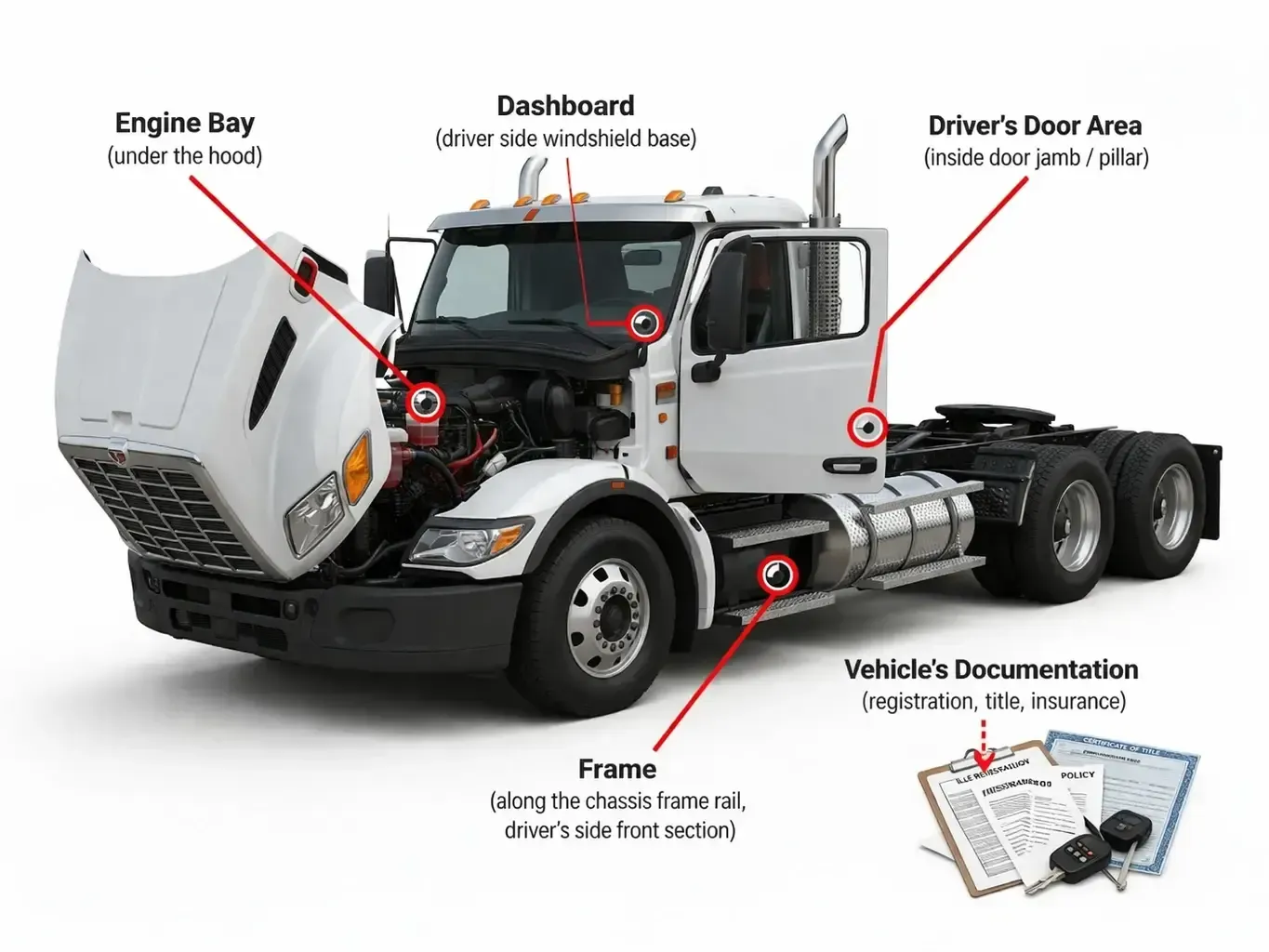
To find the VIN on a truck, you can examine the dashboard and the paperwork. Here's the location you should check to get the VIN:
Dashboard
Stand outside the truck and look through the windshield on the driver's side. The VIN is often shown on a small metal plate where the dashboard meets the glass.
Driver's Door Area
Open the driver's door and check the side pillar or the edge of the door frame. You'll usually find a sticker or metal tag with the VIN printed on it.
Engine Bay
Lift the hood and inspect the front part of the engine compartment or the engine block itself. In many trucks, the VIN is stamped directly onto the metal surface.
Frame
For some older trucks, the VIN can also be stamped on the driver's side frame rail. You might need to crouch down or use a lift to spot it clearly underneath the vehicle.
Vehicle's Documentation
Check on the truck's paperwork, such as the insurance or registration report, to find the VIN.
How to Decode a Truck VIN Number
Our truck VIN check service can be used to decode heavy trucks and semi-truck VINs. To decode the truck's VIN number, you just need to fill in the form and follow these instructions:
Find the VIN
To begin, find the truck VIN number that you want to decode. Check on the vehicle's documentation to get the VIN quickly.
Fill in the Form
Click on the form above, then write down the VIN on the form. After that, click on the button to submit the VIN.
Get the Report
Wait for a few seconds to get the full report generated. Don't forget to download the report to examine the truck's past record easily.
What You'll Find on a Truck VIN Report?
Once you check the VIN with our semi and heavy truck VIN lookup service, you'll receive a detailed vehicle history report that informs you about the full specifications and the past records, like auction and accident.
Here's what you will be able to see on the truck VIN report:
Vehicle Specifications
Get complete details about your truck's specifications. This includes the drive type, engine size, fuel type, transmission, number of doors, trim level, MSRP, truck type, and country of origin.
Title Check
Know the title status of the truck before you buy it. The report shows if the title is clean, salvage, junk record, rebuilt, fire, lemon brand, and more.
Odometer Reading
See how the truck's mileage has changed over time. The report lists the recorded mileage, the date, and the last reading before the truck was put up for sale.
Accident Records
Find out if the truck was ever in an accident. You can see when and where it happened, how serious the damage was, and if the airbags were deployed.
Damage Verification
Check if the truck has suffered from any damage that was caused by an accident (major/minor), fire, flood, salvage auction, structure alteration, and more.
Auction Records
Check previous auction listings to know more about the truck's past. Photos and sale details show when and where it was sold, its condition, and even the final sale price.
Recalls Check
See if the truck was ever recalled by the manufacturer. The report provides the recall reason, date, and whether the issue has been fixed or is still open.
Stolen Truck Records
Confirm the truck's legal status by checking if it was ever reported stolen. In this section, you will get to see the stolen date, location, and the stolen vehicle information.
Why Should I Run a Truck VIN Check?
Using a semi or heavy truck VIN lookup is important before buying any used truck. It helps you avoid hidden problems such as accident damage, odometer fraud, or theft, issues that could lead to big repair costs later on.
Check Truck Condition
A truck VIN check shows how well the truck was maintained and whether it received proper servicing from the previous owner.
Avoid Stolen Trucks
The report can reveal if the truck was ever reported stolen, helping you stay safe from legal trouble or financial loss. Always run the heavy truck VIN decoder to ensure that it's never been stolen.
Confirm Odometer Accuracy
See if the truck's mileage has been changed or rolled back through a semi truck VIN lookup. This makes sure you pay a fair price for the truck based on its real usage.
Check if it Fits Your Needs
By decoding the VIN, you can see the actual specifications, including engine size, weight, and trim, to decide if the truck suits your work or personal needs.
Review Accident Records
Find out if the truck has ever been in an accident. Knowing this helps you avoid trucks that might need costly repairs or have safety issues.
Avoid Fraudulent Deals
A semi truck VIN decoder helps you identify fake listings and dishonest sellers without needing to inspect every truck in person.
Semi Truck VIN Lookup
Our semi truck VIN lookup helps you find the detailed information about the semi truck you are interested in. With just the VIN, you can be informed about the truck's specifications and the past records that could cause problems in the future.
This lookup also helps you see if the truck has any hidden issues. You can find records of accidents, damage, recalls, or theft, which are all important to know before making a deal. It gives you a better idea of the truck's real condition and value.
Heavy Truck VIN Decoder
If you are planning to buy or sell a heavy truck, make sure you get enough information about the truck even before the buying process has begun. With the help of a heavy truck VIN decoder, you can do a self-background check at home.
Same as the semi truck VIN lookup, the heavy truck VIN decoder service allows you to dive down to the truck's complete specifications and past records; be it accident, auction, recalls, or damage–all covered in one single report.
Can You Run a Free Truck VIN Check?
Yes, a free truck VIN check gives limited information about the truck, both semi and heavy trucks. On our free semi truck history report, you will get the basic information of the trucks' specifications, covering the engine, up to the country of origin.
If you need more complete information, a paid semi truck VIN lookup is the better choice. It includes extra records like accident history, ownership details, title issues, and lien information that free tools usually don't show.
Features | Free Truck Decoder | Premium VIN Lookup |
|---|---|---|
VIN decoding | ||
Specifications | ||
History records | ||
Theft records | ||
Accident records | ||
Sales records | ||
Lien and title records | ||
Flood damage | ||
Recall information |
Lookup Popular Truck Brands
Look up the VIN Before You Buy Any Used Vehicle
Reviews & Trust Signals
This site is fantastic - I received the "original" window sticker for my vehicle! Great customer service as well - I had a small issue and "Richard Langridge" sorted it out right away! Thanks you - Thumbs up - will definitely use this site again!
Paul
US
Very HelpfulI reached out for help getting records on older cars, something I had struggled with for a long time. The team was extremely knowledgeable and walked me through every step. They found exactly what I needed, and their communication made the whole process stress-free. If you’re looking for trustworthy help with older car history, this is the place to go.
Preosha Chambers
US
I was researching an older vehicle and there was a bit of difficulty getting a copy of the window sticker. I was assured by the live agent, Sam it would come through in a couple hours. It did. Thanks, Sam!
Greg Stanko
US
Im very happy and the service is great!
Ella
US
FAQ About Truck VIN Check
Can I look up my truck specs by VIN number?
Yes, you can look up the truck's specifications by using the VIN number on the free truck VIN check service, like the Detailed Vehicle History.
How to check the VIN number on a truck?
To locate a truck's VIN, start by looking at the driver's side dashboard, right where it meets the windshield. You can also find it on a label inside the driver's door jamb. In some trucks, the VIN might be stamped on the frame rail, engine block, or under the hood. It also appears on the truck's title, insurance papers, or registration documents. Once you have the number, use a truck VIN check or a semi truck VIN lookup tool to decode it and learn more about the truck's history.
How do you read a VIN number on a truck?
To read a truck's VIN, first find the 17-character number on the driver's side dashboard or inside the driver's door jamb. Each part of the VIN has its own meaning. The first three characters show the country of origin and manufacturer.
The next six digits describe the truck's type and main specifications. The 10th character tells you the model year, while the last six digits act as a unique serial number for that specific truck.
What does the truck's VIN look like?
A truck's VIN is a 17-character code made up of numbers and capital letters. It works as the truck's unique identification number. You can usually find it on a label on the driver's side dashboard or inside the door jamb, but it also appears on the title and registration documents.
Can a truck VIN lookup help verify mileage and engine hours?
Yes, running a DetailedVehicleHistory.com’s commercial truck VIN lookup is the best way to verify the true usage of a vehicle. The generated report pulls official data from inspection stations and service centers. While engine hours are not always recorded by state agencies, you can easily compare the reported mileage history against what is currently on the dashboard to ensure everything matches up before you buy.
Can a truck VIN lookup reveal accident or frame damage history?
Yes. A detailed commercial truck vehicle history report will show if the truck was involved in any major accidents, frame or structural damage, or total loss incidents. The report pulls data from insurance companies, repair shops, state DMVs, and the national NMVTIS database. Running a used truck VIN search gives you a clear picture of what the vehicle has been through, ensuring you don’t pay full price for a truck with hidden crash records or a damaged frame.
How can I check if a used truck was previously part of a commercial fleet?
You can find this information instantly with a used truck VIN search. The history report tracks previous owners and registration types, clearly revealing whether the truck was used commercially, as part of a fleet, rental, or personal vehicle. This helps you understand how hard the truck was driven in its past life.
Can a truck VIN lookup help detect odometer fraud or mileage inconsistencies?
Yes, this is one of the most valuable things a DetailedVehicleHistory.com’s used truck VIN check can do for you. The report creates a timeline of the mileage every time the vehicle was sold, serviced, or inspected. If there is a discrepancy in reported mileage, such as a lower number appearing on a recent record than an older one, that is a major red flag. The report highlights mileage inconsistencies so you can spot odometer tampering immediately.
How do I find out if a truck has a salvage or rebuilt title?
Running a truck VIN number lookup is the fastest and most reliable way to check title status. A title check by VIN can reveal records such as salvage, rebuilt, flood, manufacturer buyback, and other branded title indicators. This matters because a salvage or rebuilt title can affect your insurance rates, your ability to secure financing, and the truck’s resale value in the future. Always check the title brand before purchasing any used truck.
Can a VIN report show signs of heavy-duty towing or overloading use?
While a truck VIN report cannot directly indicate the exact weight loads from the past, it does provide the factory specifications, including the gross vehicle weight rating. It also includes service and usage history. A truck history report may show whether the vehicle was used for fleet or commercial purposes, which often goes hand in hand with regular heavy hauling. If you notice frequent replacements of the transmission, brakes, or suspension in the records, it is a strong sign that the truck was used for intense towing or heavy hauling.
How can I check if a used truck has an active lien?
You can check for an active lien by performing a truck VIN number lookup. The final report scans active finance databases and state titling records. This ensures you can find if a bank or a lending company still holds a legal claim on the vehicle, preventing you from accidentally buying someone else's debt.
Can I see maintenance and service history records with a truck VIN check?
Yes. A truck VIN history report includes maintenance and service records collected from dealerships, repair shops, and inspection facilities across the country. You will be able to see routine oil changes, tire rotations, major engine repairs and more. Large gaps in a vehicle’s maintenance history suggest missed servicing or poor upkeep. This gives you a clear picture of how well the previous owner cared for the vehicle.