
Rolls-Royce Classic and Modern VIN Decoder
In the market, purchasing a used classic or modern Rolls-Royce model? Use our Rolls-Royce VIN Decoder to get model year, trim, engine specifications, transmission setup, body style, production details and many more.
|No VIN?Use License Plate
Table of Contents:
What Will You Get From the Rolls-Royce VIN Decoder
The Rolls-Royce VIN Decoder is a tool that you can use to decode the VIN from a classic (5 to 14-digit) to a modern (17-digit) format. Once you’ve decoded the VIN with our tool, you’ll get this information in seconds.
- Manufacturer and origin
- Model, trim, and package details
- Engine specifications
- Transmission setup
- Body style
- Model year
- Production plant
- Manufacturer Suggested Retail Price (MSRP)
- Market Value
How to Use the Rolls-Royce VIN Decoder
To use our Rolls-Royce VIN Decoder tool, follow these simple steps and get it done in less than a minute.
1
Step 1: Find the VIN
2
Step 2: Fill in the Form
3
Step 3: Check the Vehicle Specs
Decode Classic Rolls-Royce
Before you purchase a used Porsche? Use our Porsche VIN Decoder to decode any classic Porsche VIN to see complete specifications, engine, MSRP, and market value. Always check everything to ensure the car matches its claim.
Where to Find the VIN on a Classic and Modern Rolls-Royce
Before decoding, you’ll first need to locate the VIN on your Rolls-Royce. While modern models follow standard placement, older or heritage models may differ depending on the coachwork, production year, and bespoke build details.
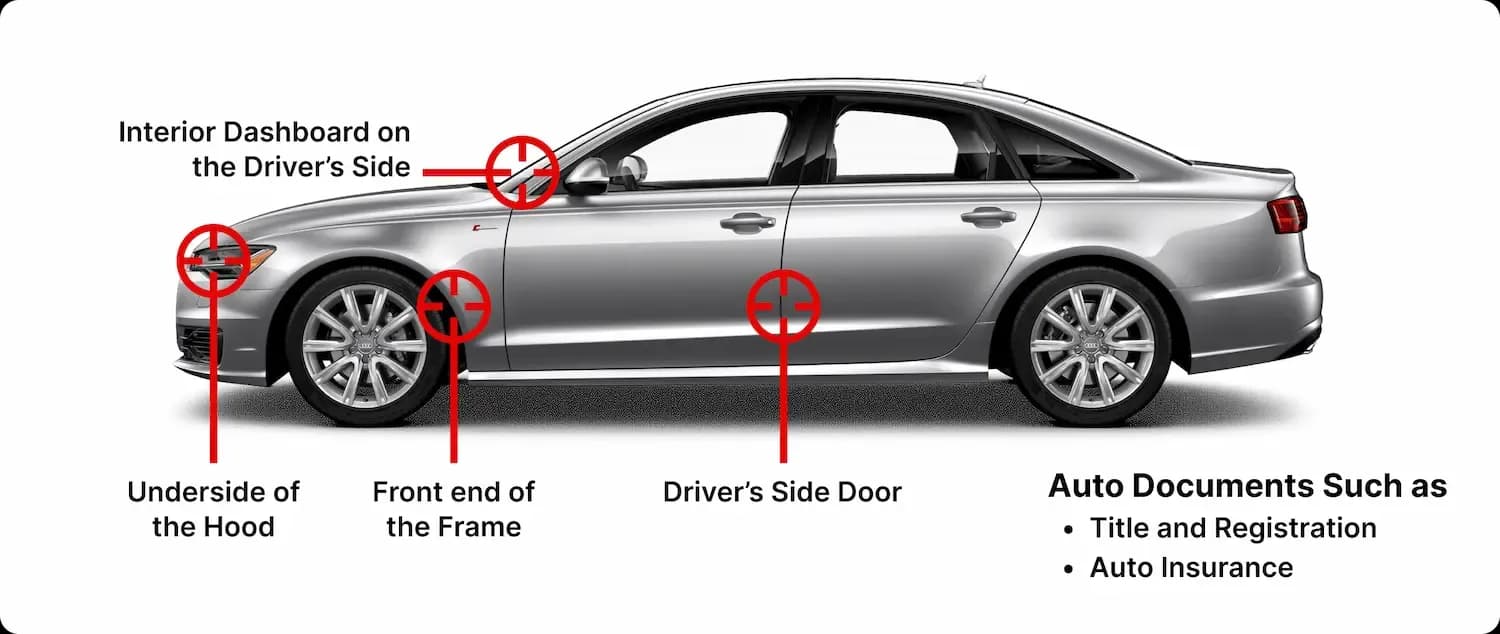
Rolls-Royce VIN Location
The VIN can be found in several key areas on the vehicle and within official documentation. Always double-check these locations to ensure you’re working with the correct number.
Driver’s Side Dashboard
Look through the windshield at the lower corner of the dashboard on the driver’s side. This is the most common location for modern Rolls-Royce models such as the Phantom, Ghost, Cullinan, and Wraith.
Driver’s Side Door Jamb
Open the driver’s door and inspect the door frame or pillar near the latch. You’ll typically find a plate or label displaying the VIN along with manufacturing and compliance details.
Engine Bay
Check inside the engine compartment. In many Rolls-Royce models, the VIN may be stamped onto structural components or placed on a metal plate within the bay, depending on the model and generation.
Documents
The VIN is also listed on official paperwork such as registration documents, insurance records, and the vehicle title. Always match these with the VIN on the vehicle to confirm authenticity.
Classic Rolls-Royce VIN Location
Classic Rolls-Royce vehicles, particularly those built before VIN standardisation, may not follow modern placement rules. Identification numbers can appear in more discreet or handcrafted locations.
Bulkhead or Engine Bay Plate
On many classic Rolls-Royce models, the chassis number is typically found on a plate mounted on the bulkhead (firewall) or within the engine bay. This was a common placement for handcrafted vehicles.
Body or Coachwork Panels
Some vintage Rolls-Royce cars may feature identification plates or stamps on body panels or coachbuilt sections. These were often used for internal tracking and verifying originality, especially on bespoke builds.
Who Should Use the Rolls-Royce VIN Decoder
A Rolls-Royce VIN decoder is a must-have tool for anyone dealing with these ultra-luxury vehicles. Whether you’re buying, selling, or preserving a Rolls-Royce, verifying its identity and history protects both your investment and expectations.
Buyers
Before committing to a purchase, review the vehicle’s factory specifications, ownership history, and condition. Decode the VIN and get the information to make sure that the vehcile matches the seller’s claim.
Sellers
Present your Rolls-Royce with confidence by backing it up with verified data. A decoded VIN confirms original specification, MSRP, and market value information, helping justify your asking price and build trust with serious buyers.
Dealers
For dealerships, VIN decoding ensures precision in listings and inventory management. Rolls-Royce vehicles often feature bespoke options and unique configurations, so accuracy is essential when presenting them to clients.
Collectors
Collectors and enthusiasts can use VIN decoding to confirm originality, production details, and rare bespoke features. This is especially important for classic Rolls-Royce models, where provenance and authenticity directly influence long-term value and desirability.
Rolls-Royce VIN Breakdown
The Rolls-Royce VIN consists of a 17-digit alphanumeric code, and each digit shows different information about the car. Globally, a VIN is classified into three categories: WMI, VDS, and VIS. Check this section below to see how a VIN is decoded.
Sample VIN: SCA664S5XFUX53018
WMI (World Manufacturer Identifier)
Digit 1 to 3: SCA
- S = Country of origin (United Kingdom)
- CA = Rolls-Royce
VDS (Vehicle Descriptor Section)
Digit 4 to 9: 664S5X
- 6 = Model line (Wraith platform)
- 6 = Body style (2-door coupe)
- 4 = Series/variant within the model range
- S = Engine type (6.6L twin-turbo V12)
- 5 = Trim/specification level
- X = Check digit
VIS (Vehicle Identifier Section)
Digit 10 to 17: FUX53018
- F = Model year (2015)
- U = Assembly plant in Goodwood Plant, West Sussex, United Kingdom
- X53018 = Production sequence number
Need More Rolls-Royce Information? Get a Vehicle History Report
A VIN decoder gives you a quick overview, but a full vehicle history report reveals what truly matters. For a Rolls-Royce, where craftsmanship, provenance, and condition define value, this deeper insight helps you avoid costly mistakes and invest with confidence.
Vehicle Specification
See exactly how the Rolls-Royce was built from the factory. From powerful V12 engines to bespoke interior finishes, you’ll get details on engine configuration, transmission, trim, handcrafted options, and original MSRP.
Title Records
Luxury vehicles can have complex histories, especially when imported or resold globally. This section highlights red flags such as salvage titles, rebuild records, theft history, or mileage inconsistencies that could impact both value and legality.
Odometer Reading
Mileage tells an important story, even for low-driven luxury cars. Track recorded readings over time to spot rollbacks, unusual gaps, or inconsistencies that may affect long-term reliability and resale value.
Accident and Damage History
Even a Rolls-Royce is not immune to past damage. Check for reported accidents, structural repairs, or environmental exposure such as flooding—issues that can significantly affect refinement, safety, and performance.
Auction History
Many Rolls-Royce vehicles pass through high-end auctions. Access past sale records, including dates, locations, prices, and sometimes photos, giving you a clearer picture of how the vehicle was previously presented and valued.
Ownership Information
Understand how the vehicle has changed hands over time. See the number of previous owners, general registration regions, and ownership duration, helping you assess how well the car has been cared for, without exposing private details.
Recalls Check
Stay informed about any recalls linked to the vehicle. This section outlines the issue, when it was issued, and the steps taken to fix the issue. Examine this information and make sure the recall status is closed.
Engine Information
Rolls-Royce models are known for their refined V12 engines, and confirming the correct configuration is crucial to maintaining originality, performance expectations, and long-term value.
Get More Information on Rolls-Royce Using Our Tools
Go beyond surface-level checks. With a full report, you gain access to detailed history records, recall data, and even the original window sticker to help you check everything before you take the vehicle home.
Rolls-Royce Recall Check by VIN
Check the complete recall history of any Rolls-Royce models. Make sure the issues were addressed and fixed.
Rolls-Royce Window Sticker by VIN
Get the original window sticker by VIN to see original specs, features, options, warranty, and more.
Decode Any Modern and Classic Rolls-Royce VIN
Thinking about buying a used Rolls-Royce? Don’t rely on appearance or a short inspection alone. Decode the VIN first to confirm specifications, verify provenance, and ensure the vehicle truly matches its prestige and price.
Supported Modern Rolls-Royce Models
Verify key details for modern models such as the Phantom, Ghost, Cullinan, and Wraith. Confirm the V12 configuration, bespoke features, interior finishes, and optional packages so everything aligns with what’s being advertised.
PhantomGhostCullinanWraithDawnSilver ShadowSilver SpiritSilver CloudSilver GhostCornicheCamarguePark Ward
Supported Classic Rolls-Royce Models
Considering a classic Rolls-Royce? Our VIN decoder also supports older chassis numbers and non-standard formats. It helps you confirm authenticity and check the original build's details.
Rolls-Royce Silver Ghost (1906–1925)Rolls-Royce Phantom I (1925–1931)Rolls-Royce Phantom II (1929–1935)Rolls-Royce 20/25 (1929–1936)Rolls-Royce Phantom III (1936–1939)Rolls-Royce Wraith (1938–1939)Rolls-Royce Silver Wraith (1946–1958)Rolls-Royce Silver Dawn (1949–1955)Rolls-Royce Phantom IV (1950–1956)Rolls-Royce Phantom V (1959–1968)Rolls-Royce Silver Cloud (1955–1966)Rolls-Royce Silver Shadow (1965–1980)Rolls-Royce Corniche (1971–1996)Rolls-Royce Phantom VI (1968–1990)Rolls-Royce Camargue (1975–1986)
Decode Any Vehicle, Not Just Rolls-Royce
Exploring multiple options? Our VIN decoder works across a wide range of brands, giving you access to specifications, history records, and essential details—so you can compare vehicles and make a confident decision in one place.
Acura
Alfa Romeo
AM General
Aston Martin
Audi
Bentley
BMW
Buick
Cadillac
Chevrolet
Chrysler
Daewoo
Dodge
Ferrari
Fiat
Fisker
Ford
Genesis
GMC
Honda
Hummer
Hyundai
Infiniti
Isuzu
Jaguar
Jeep
KIA
Lamborghini
Land Rover
Lexus
Lincoln
Lotus
Maserati
Maybach
Mazda
Mclaren
Mercedes Benz
Mercury
Mini
Mitsubishi
Nissan
Oldsmobile
Panoz
Plymouth
Polestar
Pontiac
Porsche
RAM
Rolls Royce
Saab
Saturn
Scion
Smart
Subaru
Suzuki
Tesla
Toyota
Volkswagen
Volvo
Rolls-Royce EV Update
The Spectre represents Rolls-Royce's first step into the electric vehicle market, bringing battery-electric technology to one of the world's most prestigious luxury automotive brands. Rolls-Royce is also exploring additional electric models as it expands its EV portfolio.
Spectre Electric Grand Tourer
The Spectre serves as Rolls-Royce's flagship electric vehicle, combining the brand's signature luxury, refinement, and performance with a fully electric powertrain.
- First production EV from Rolls-Royce.
- Fully electric grand tourer.
- Ultra-luxury interior and technology.
- Continued software and feature refinements.
Future Electric Models
Rolls-Royce continues developing its electric portfolio beyond the Spectre. Industry reports suggest additional EV models are being tested, including a larger electric SUV that could complement the existing lineup.
FAQs About Rolls-Royce VIN Decoder
A VIN decoder uses a 17-character Vehicle Identification Number to show important details about a car. It can identify the manufacturer, model, year, engine type, transmission, and assembly plant. It also helps check recalls, theft records, and accident history.
Some of the most popular free VIN decoders—also called VIN lookup or checker tools—include services like Detailed Vehicle History. With our free VIN decoder, you can quickly view key specifications such as engine, fuel type, country of origin, MSRP, and even an updated market value.
Decoding a 17-digit Rolls-Royce VIN means breaking it into three parts: WMI (first 3 digits), VDS (digits 4–9), and VIS (digits 10–17). These sections reveal details like model year, engine, and production sequence. You can use our Rolls-Royce VIN Decoder to get results in under a minute.
Rolls-Royce models built before 1981 do not follow the modern 17-digit VIN system. Instead, they use a chassis number, usually between 4 and 10 characters. To decode these, you need specialised tools or historical records that understand older formats.
A Rolls-Royce VIN or chassis number is extremely important because it acts like the vehicle’s unique fingerprint. It helps confirm ownership, track original specifications, verify service history, and reduce the risk of fraud—especially for high-value, bespoke vehicles.
Decoding a classic Rolls-Royce VIN depends on the year it was built. Since the 17-digit standard only started in 1981, older cars use chassis numbers with different formats. These are usually found on the dashboard, firewall, or driver’s door area.
Rolls-Royce cars are known for strong build quality and long-term durability. Many models can last for decades if maintained properly. However, they require careful servicing, and maintenance costs can be very high due to their luxury engineering and handcrafted parts.
Quick VIN Decoder
Get comprehensive vehicle history reports
Quick VIN Decoder
Get comprehensive vehicle history reports