
Decode Acura VIN and Get Vehicle Details
Plan to purchase a used modern or classic Acura? Don’t forget to run an Acura VIN decoder and get model year, trim, engine specifications, transmission setup, body style, production details and many more.
Table of Contents:
Information on Acura
Acura EV
In 2024, Acura released an EV named the Acura ZDX. However, it was discontinued in 2025.
Engine Type
Acura primarily utilizes Turbocharged 4-cylinder and V6 aluminum-alloy engines.
Factory Plant
Acura vehicles are built in North America, with component facilities based in Ohio.
What Will You Get From the Acura VIN Decoder?
Decoding the VIN helps you to make sure the vehicle matches your needs and budget. Thus, it helps with avoiding mismatched listings and helps with setting the right price in accordance with its MSRP.
- Manufacturer and origin
- Model, trim, and package details
- Engine specifications
- Transmission setup
- Body style
- Model year
- Production plant
- Manufacturer Suggested Retail Price (MSRP)
- Market Value
How to Use the Acura VIN Decoder?
The Acura VIN decoder can be used to decode classic and modern VINs to get the complete vehicle history report. To decode the VIN, you just need to follow these simple steps and get it done within seconds.
Step 1: Enter the VIN
Find the VIN on the driver’s side doorjamb or on the vehicle’s paperwork, like registration cards or the bill of sale.
Step 2: Click on the Button
Once you’ve entered the VIN, click on the button to submit the form.
Step 3: Check the Vehicle Specs
Check the preview page to see the complete vehicle’s specifications, like engine, transmission, model year, and country of origin.
Where to Find the VIN on a Classic and Modern Acura?
Finding a VIN on a classic and modern Acura is crucial before you begin the steps to decode the Acura VIN. The VIN placement between modern and classic Acura can be different; check this section to find out where the VIN is.
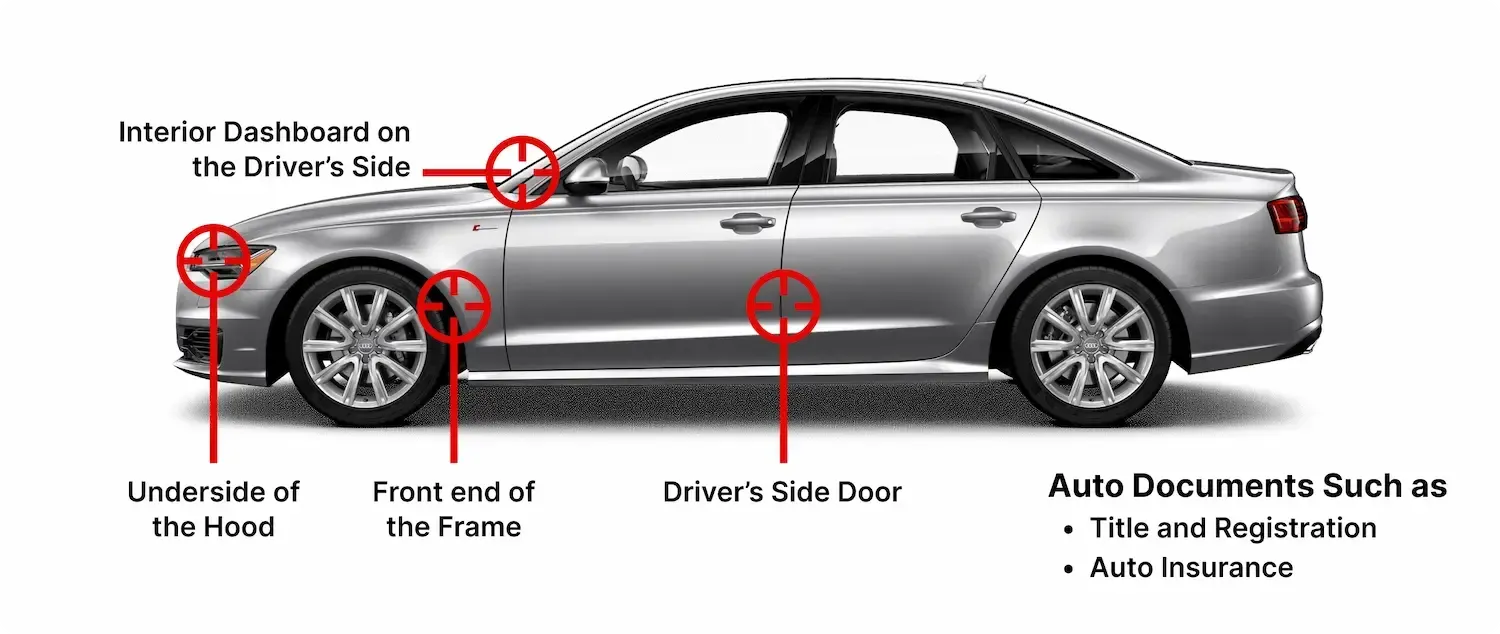
Acura VIN Location
The VIN is placed on a different spot on the vehicle and its paperwork. Check these locations to get their VIN.
Driver’s Side Dashboard
Check the lower-left corner of the dashboard by looking through the windshield from outside the car.
Driver’s Side Door Jamb
Open the driver’s door and find the white sticker near the latch or door frame.
Engine Bay
Look for a stamped VIN on the engine block or along the bulkhead inside the engine compartment.
Documents
The VIN is also listed on official paperwork such as the registration, insurance card, and vehicle title.
Classic Acura VIN Location
For classic Acura, the VIN can be found at the location above. However, on a few models, the VIN can be found in several locations of the vehicle.
Under the Floor Mat
On some models, the VIN may be stamped on the floor pan under the carpet, often on the passenger side.
Body Panels
Older models may have VIN tags on parts like the hood, trunk lid, or fenders, usually on small stickers.
Who Should Use the Acura VIN Decoder
The Acura VIN decoder can be used for everyone who has a plan to purchase a used modern or classic Acura. It does not matter whether you are a buyer, seller, dealer, or even a collector–everyone must decode the VIN and be informed beforehand.
Buyers
Check the Acura’s specs, ownership, and history before purchase. Always confirm the vehicle’s condition and avoid hidden issues. For older models, it can also help verify authenticity and basic identification details.
Sellers
Provide accurate vehicle details to support your listing and build trust with buyers. A VIN check helps confirm specifications and history. For classic models, it can support originality claims and improve buyer confidence.
Dealers
Use VIN decoding to verify inventory details quickly and maintain accurate listings. It helps reduce errors and ensures transparency. For classic vehicles, it also supports valuation and identification when records are limited.
Collectors
Confirm authenticity, production details, and key specifications before acquiring the vehicle. For classic Acura models, it is useful for identifying rare builds and verifying historical accuracy.
What is the Difference Between Modern and Classic VIN
The main differences between modern and classic VINs lie in structure, consistency, and the level of detail they provide. While newer vehicles follow a standardised 17-digit format, older models use shorter, less uniform VINs, which can affect how accurately they are decoded.
VIN Length and Format
Modern Acura vehicles use a standard 17-digit VIN with a fixed structure. Older models may have shorter VINs ranging from 5 to 14 digits. This difference exists because of the 1981 VIN Standardization, which introduced a universal format.
Data Availability
Modern VINs provide detailed information, including specifications, engine data, and production details. Classic VINs may return limited results, depending on available records. The level of information often varies by model year and manufacturer documentation.
Decoding Accuracy
Decoding modern VINs is generally consistent due to standard formatting and complete databases. Classic VIN decoding can be less precise, as formats vary and records may be incomplete; however, you do not need to worry about our service, as we have the complete database of classic cars.
Breaking Down an Acura VIN
A 17-digit Acura VIN follows a standard structure that shows details about the vehicle. Each section has a specific meaning, making it easier to identify the manufacturer, specifications, and unique production information.
World Manufacturer Identifier (WMI)
Digit 1-3: 19V
- 1 = United States
- 9V = Acura (Honda/Acura manufacturing)
Vehicle Descriptor Section (VDS)
Digits 4–9: DE1F31
- D = Model line (Acura ILX)
- E = Body Style (Sedan)
- 1 = Engine Type (2.0L inline-4)
- F = Restraint System/Transmission (Automatic, with airbags and ABS)
- 3 = Trim Level or Series
- 1 = Check digit
Vehicle Identifier Section (VIS)
Digits 10–17: FE006117
- F = Model year (2015)
- E = Assembly plant in Marysville, Ohio, USA
- 006117 = Serial number
Why Do You Need to Decode the Acura VIN
Decoding an Acura VIN turns a sequence of characters into clear vehicle information. It helps identify specifications, production details, and available records. Decoding the VIN helps with understanding the vehicle better.
Before Buying a Car
Check the Acura’s VIN to confirm its specifications, ownership history, and condition before purchase. This helps identify hidden issues and avoid costly mistakes. For older models, it also supports verifying authenticity and basic vehicle details.
Before Selling a Car
Use a VIN check to present accurate vehicle information and support your listing. Verified details can build buyer trust and reduce back-and-forth questions. For classic Acura models, it can help justify originality and improve perceived value.
Verify Vehicle Identity
Confirm that the VIN matches the vehicle’s make, model, and specifications. This step helps detect mismatches, cloning, or potential fraud. It is especially useful for older vehicles where identification details may not follow a consistent format.
Check History and Records
Access available records such as past ownership, accidents, and title data. This helps find a clearer picture of the vehicle’s background. For classic models, available history may vary, but even limited data can support buying decisions.
Supported Acura Models
Check which models you want to check with our service. We cover both modern and classic Acura VIN decoding to help you get the complete information.
Check Modern Acura History
Use our service to check the history of any models, trims, and years of modern Acura.
Check Classic Acura History Records
Not only modern Acura, but we also support the decoding of classic Acura VINs.
Want More Info About Your Acura? Get a Vehicle History Report
The VIN decoder might only give you the basic details of the vehicle. However, if you need more information, you can get the full vehicle history report. These are useful if you want to buy or sell a used Acura–to help you stay compliant, and the vehicle is fully legal.
Vehicle Specification
Check the complete specification of the classic and modern Acura in one simple report. Check the country of manufacture, engine, transmission, fuel capacities, MSRP, and more. Make sure the car matches your needs and budget.
Title Records
Check if the vehicle has any dangerous titles that could impact safety and security. Decode the VIN and make sure the vehicle wasn’t marked as salvage, rebuilt, lemon, odometer rollback, or even a stolen vehicle.
Odometer Reading
Check the recorded odometer before you buy. This section details the odometer along with its recorded date and the last recorded odometer reading. Examine the real odometer history before purchasing this vehicle.
Accident and Damage History
A car that was involved in an accident could be dangerous. Decode the VIN and find the date and location of the accident. In addition, you’ll see the recorded damage history from accidents, flooding, and more.
Auction History
If a vehicle was sold at an auction, it means the car has suffered sufficient damage that could be dangerous. Know the recorded date, location, final price, and auction status, and get up to ten pictures of the vehicle during the auction.
Ownership History
Check the detailed ownership information before you buy. See the previous location, year of purchase, and ownership duration. No private information, such as names and addresses, is shown in the report.
Recalls Check
Check if the Acura has any active or past recalls issued for safety issues. Modern vehicles often include detailed recall data, while classic models may have limited records. Addressing recalls helps avoid risks and prevents further mechanical problems.
Engine Information
Identify the engine used in the Acura, including configuration and key features. Modern models often include turbocharged four-cylinder or V6 engines with VTEC, while classic models may have simpler naturally aspirated engines with fewer recorded details.
Get More Acura Information With Our Tool
Need to get more information about the Acura before you decide to buy? Use our services to check the recalls and original factory specifications through the window sticker.
Check Acura Recalls by VIN
Be sure to check the Acura recall by VIN and secure the vehicle history report that shows the car recall history.
Acura Window Sticker
Secure the window sticker by VIN, and get complete factory information like engine, safety ratings, transmission, fuel economy, and more.
Check Any Vehicle, Not Just Acura
Acura is just the start. You can decode VINs for many other makes and models using the same tool. Always run a VIN check before buying a used vehicle to verify its background and details.
FAQs About Acura VIN Decoder
How do I check if my Acura has a recall?
To check for recalls, enter your Acura’s VIN and run a lookup. The report will show any past or active recalls, helping you confirm whether safety issues have been addressed before driving or purchasing the vehicle.
How can I find the exact specs on my car?
To find exact specifications, enter your VIN into a trusted decoder. You can also check the driver-side door jamb, window sticker, or owner’s manual. These sources help confirm engine details, trim, and factory-installed features.
How to read an Acura VIN number?
An Acura VIN is a unique 17-character code that identifies the vehicle. It includes details about the manufacturer, features, model year, and production plant. You can decode it online to access specifications and available history records.
Is VIN swapping a felony?
VIN swapping is a serious criminal offence in the United States. It involves altering or replacing a vehicle’s VIN to hide its identity, often linked to stolen cars. This practice can lead to severe legal consequences.
Can you create a fake VIN number?
It is possible to generate sample VINs for testing purposes, as long as they follow the correct format. However, using a fake VIN for any legal, commercial, or official activity is illegal and can result in serious penalties.
How to tell if a car is cloned?
To spot a cloned car, check that the VIN matches across the dashboard, door frame, and documents. Review the vehicle history for inconsistencies and look for signs of tampering or mismatched records from the seller.