
Decode Any Subaru VIN and Get Vehicle Details
Planning to buy a used Subaru; whether it’s a modern AWD daily or an older classic model? Use our Subaru VIN Decoder to get model year, trim, engine specifications, transmission setup, body style, production details and many more.
|No VIN?Use License Plate
Table of Contents:
What Will You Get From the Subaru VIN Decoder
Our Subaru VIN Decoder works with both classic and modern formats, from older, shorter VINs to the standard 17-digit codes used today. Once decoded, you’ll instantly see key details such as engine type (like BOXER engines), drivetrain (AWD/FWD), trim level, production data, and available records.
- Manufacturer and origin
- Model, trim, and package details
- Engine specifications
- Transmission setup
- Body style
- Model year
- Production plant
- Manufacturer Suggested Retail Price (MSRP)
- Market Value
How to Decode Subaru VIN
Our Subaru VIN decoder can be used to decode any classic and modern VIN number. To use our service, follow these steps and get it done in less than a minute.
1
Step 1: Find the VIN
2
Step 2: Fill Out the Form
3
Step 3: Check the Specifications
Decode the Classic Subaru VIN
In the market to buy a classic Subaru? Use a Subaru VIN decoder to see the complete information of the vehicle, such as engine type, country of origin, complete specifications, MSRP, and the updated market value to help you determine the right price.
Where to Find the VIN on a Classic and Modern Subaru
Before you decode the VIN, you need to locate it on your Subaru. Most modern Subaru models follow standard VIN placement, while older or classic models may have slight differences depending on the year and production style.
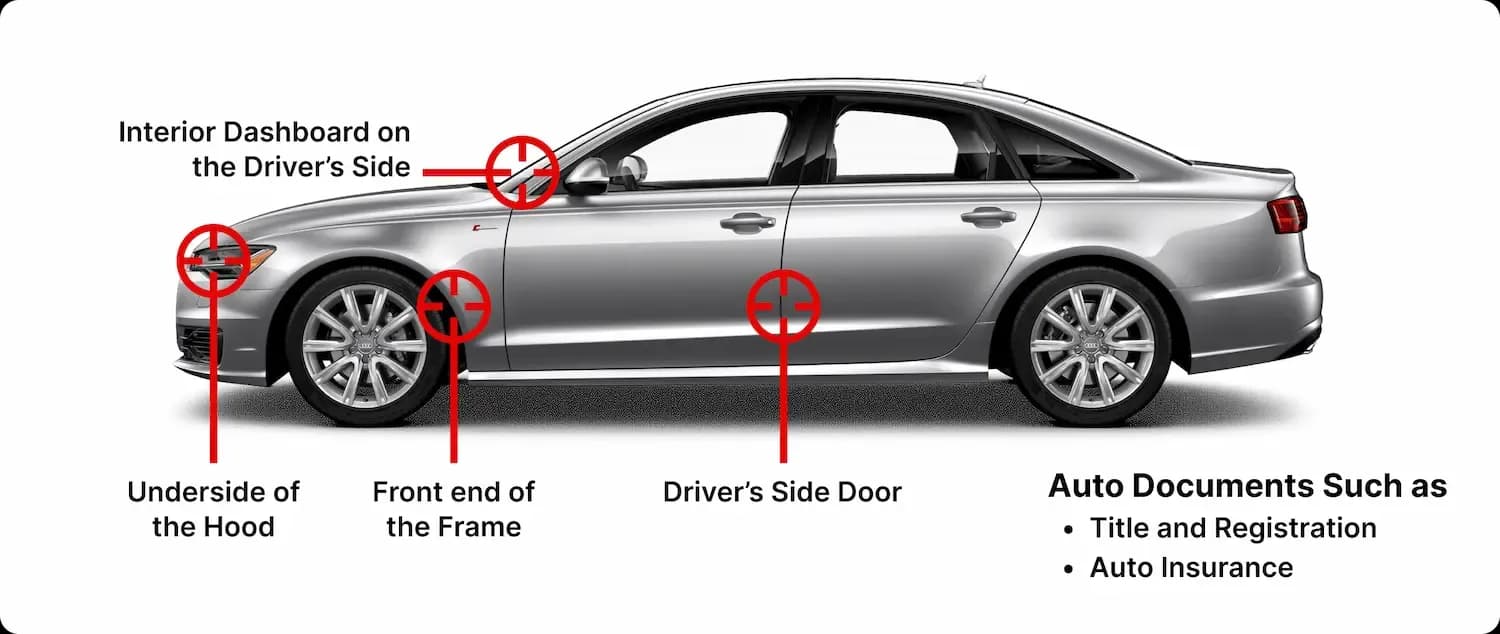
Porsche VIN Location
You can find the VIN in several common areas on the vehicle and in official documents. It is a good idea to check more than one place to make sure the number is correct.
Driver’s Side Dashboard
Look through the windshield at the lower corner of the dashboard on the driver’s side. This is the easiest place to spot the VIN on most modern Subaru models.
Driver’s Side Door Jamb
Open the driver’s door and check the door frame near the latch. You will usually see a sticker or plate that shows the VIN along with manufacturing details.
Engine Bay
In some Subaru vehicles, the VIN can also be found inside the engine compartment. It may be stamped on the firewall or on a metal plate attached to the body.
Documents
You can also find the VIN on documents like the registration, insurance papers, or vehicle title. Always match this with the VIN on the car to avoid mistakes.
MySubaru App
You can check the VIN on the MySubaru app. Once you’re signed in, your vehicle information such as VIN, nickname, or year/model/trim, will be visible in the top navigation bar. You can access or add a VIN through “Manage My Vehicles.”
Classic Subaru VIN Location
Older Subaru models may not follow the same VIN placement as modern cars. The number can appear in different spots depending on the model and year.
Under the Hood
On many classic Subaru vehicles, the VIN or chassis number is placed on a plate inside the engine bay, often on the firewall or inner panel.
Body or Frame Area
Some older models may have the number stamped directly onto the body or frame. This was common before VIN standards became the same worldwide.
Who Should Use the Subaru VIN Decoder
A Subaru VIN decoder is a practical tool for anyone buying, selling, or checking a Subaru. Whether it’s a daily driver, an AWD family SUV, or a used import, decoding the VIN helps confirm details and avoid costly mistakes.
Buyers
Before you buy, review the Subaru’s factory specs, ownership background, and overall condition. Don’t forget to use the VIN decoder tool to make sure that the vehicle matches the listing description.
Sellers
Support your listing with accurate and verified information. Decoding the VIN confirms original specifications, engine type (like BOXER engines), drivetrain, and available records, making your listing more trustworthy to potential buyers.
Dealers
For dealers, VIN decoding helps keep inventory accurate and consistent. Subaru models often vary by trim, engine setup, and AWD systems, so checking the VIN ensures listings reflect the correct vehicle details.
Enthusiasts or Collectors
Subaru enthusiasts can use VIN decoding to understand their car’s original configuration, including engine type, trim level, and factory features. This is especially useful for modifications, restorations, or verifying specific models.
What is the Difference Between Modern and Classic Subaru VIN
Modern and classic Subaru VINs are not the same. The biggest difference is the format and how much detail they can show. Newer VINs (after 1981) have 17-digit codes; on the other hand, the classic VINs only have 5 to 14 digits.
VIN Length and Format
Modern Subaru vehicles use the standardized 17-digit VIN system introduced in 1981. Older Subaru models, especially those built before this period, may have shorter VINs that vary in length and format depending on the production year and factory.
Data Availability
A modern Subaru VIN can reveal detailed information such as engine type (including BOXER engines), trim level, model year, drivetrain (AWD or FWD), and production details. Classic Subaru VINs may return more limited data, as older records are not always complete or digitised.
Decoding Accuracy
Modern VINs are generally easier to decode because they follow a fixed structure and are supported by complete databases. Classic Subaru VINs can be more difficult to interpret, but a reliable decoder can still provide useful identification and historical details.
Modern Subaru VIN Breakdown
The modern Subaru VIN has a 17-digit alphanumeric code–each of them represents something different about the vehicle’s complete information, such as the engine, trims, the manufacturer plant location, and the serial number.
Sample VIN: 4S4BSAEC6F3231127
WMI (World Manufacturer Identifier)
Digit 1 to 3: WP1
- 4 = Country of origin (United States)
- S4 = Subaru (U.S.-built Subaru)
VDS (Vehicle Descriptor Section)
Digit 4 to 9: BSAEC6
- B = Model line (Outback platform)
- S = Engine type (2.5L BOXER inline-4 engine)
- A = Body style (5-door wagon/crossover)
- E = Drivetrain (All-Wheel Drive – standard Subaru Symmetrical AWD)
- C = Trim level (Premium / mid-range configuration)
- 6 = Check digit
VIS (Vehicle Identifier Section)
Digit 10 to 17: F3231127
- F = Model year (2015)
- 3 = Assembly plant in Subaru of Indiana Automotive (SIA), Lafayette, Indiana, United States
- 231127 = Production sequence number
Need More Information? Get a Subaru History Report
A VIN decoder gives you a quick snapshot, but a full vehicle history report shows what really matters. Getting a vehicle history report is a crucial insight that helps you avoid hidden issues and purchase the car safely.
Vehicle Specification
See how the Subaru was originally built at the factory. From BOXER engine configurations to Symmetrical AWD systems, you’ll get details on engine type, transmission, trim level, production plant, and original MSRP to confirm everything matches.
Title Records
Used Subaru vehicles, especially imports, can carry hidden risks. This section highlights important red flags such as salvage titles, rebuild records, theft history, or mileage inconsistencies that may affect value and legal status.
Odometer Reading
Mileage gives insight into how the vehicle has been used. In this section, you can track the detailed information of the car’s odometer reading from the recorded date, along with the mileage and the last known mileage of the vehicle.
Accident and Damage History
Even dependable Subaru models can have past damage. Check for reported accidents, structural repairs, or environmental exposure like flooding, issues that may affect safety, handling, and long-term reliability.
Auction History
Some Subaru vehicles pass through auctions, especially fleet or imported units. Access past sale records, including dates, locations, prices, and sometimes photos, to better understand how the vehicle was previously presented.
Ownership Information
Understand how the vehicle has changed hands over time. You’ll see the number of owners, general registration areas, and ownership duration, helping you judge how consistently the car has been maintained.
Recalls Check
Stay updated on any recalls linked to the vehicle. This section shows what the issue was, when it was issued, and whether it has been resolved, helping ensure the Subaru remains safe and road-ready.
Engine Information
Confirm the engine tied to the VIN. Subaru vehicles are known for their BOXER engines, and verifying the correct setup is important for performance expectations, maintenance planning, and long-term value.
Get More Out of Your Subaru Using Our Tools
Access the detailed information on the vehicle’s recall hisotry and secure the window sticker to check the vehicle’s initial build.
Subaru Recall Check by VIN
Review the full recall history of any Subaru using the VIN. Check what issues were reported, when they were issued, and whether they have been properly resolved so the vehicle stays safe and reliable.
Subaru Window Sticker by VIN
Access the original window sticker to see factory specifications, trim details, features, options, warranty coverage, and MSRP. It’s one of the easiest ways to confirm how the Subaru was originally built.
Decode Any Modern and Classic Subaru VIN
Planning to buy a used Subaru? Don’t rely on looks or a quick test drive alone. Decode the VIN first to verify specifications, confirm condition, and make sure the vehicle matches what’s being advertised.
Supported Modern Subaru Models
Decode VINs for popular Subaru models such as the Outback, Forester, Crosstrek, Impreza, and WRX. Confirm engine type (including BOXER engines), AWD system, trim level, and features, so you know exactly what you’re getting before making a decision.
OutbackForesterCrosstrekImprezaWRXWRX STILegacyAscentBRZBajaXVTribeca
Supported Classic Subaru VIN
Need to decode the classic Subaru VIN? Use our Subaru VIN decoder tool to check the complete specifications, MSRP, and updated market value.
Subaru 360Subaru SambarSubaru R-2Subaru BRATSubaru LeoneSubaru XTSubaru LegacySubaru ImprezaSubaru SVXSubaru Outback (early models)
Decode Other Vehicles’ VIN
Exploring multiple options? Our VIN decoder works across a wide range of brands, giving you access to specifications, history records, and essential details.
Acura
Alfa Romeo
AM General
Aston Martin
Audi
Bentley
BMW
Buick
Cadillac
Chevrolet
Chrysler
Daewoo
Dodge
Ferrari
Fiat
Fisker
Ford
Genesis
GMC
Honda
Hummer
Hyundai
Infiniti
Isuzu
Jaguar
Jeep
KIA
Lamborghini
Land Rover
Lexus
Lincoln
Lotus
Maserati
Maybach
Mazda
Mclaren
Mercedes Benz
Mercury
Mini
Mitsubishi
Nissan
Oldsmobile
Panoz
Plymouth
Polestar
Pontiac
Porsche
RAM
Rolls Royce
Saab
Saturn
Scion
Smart
Subaru
Suzuki
Tesla
Toyota
Volkswagen
Volvo
Subaru EV Updates
Subaru's electric vehicle lineup has expanded significantly since the introduction of the Solterra. What began as a single EV offering has evolved into a growing family of electric SUVs, highlighted by the refreshed Solterra and the introduction of the all-new Uncharted EV.
Solterra Refresh
The 2026 Subaru Solterra received its most substantial update yet, bringing improvements in driving range, charging capability, and overall performance.
- Up to 288 miles of estimated driving range.
- Faster DC fast-charging capability.
- Standard Symmetrical All-Wheel Drive.
- Updated technology and driver-assistance features.
New Subaru Uncharted EV
Subaru expanded its EV lineup with the introduction of the 2026 Uncharted, a compact electric crossover designed to complement the Solterra.
- Up to 308 miles of estimated driving range.
- Available dual-motor AWD system.
- NACS charging compatibility.
- Compact crossover design for everyday practicality.
FAQs About Subaru VIN Decoder
To decode a Subaru VIN, first locate the 17-character code on the dashboard or driver’s door jamb. The first three characters show the manufacturer and country, while characters 4 to 8 describe the model and engine. The 10th digit shows the model year, and the 11th shows the assembly plant.
Yes, you can check detailed vehicle specifications by entering a 17-digit VIN into an online decoder. These tools usually provide information like engine size, transmission, production year, trim level, and recall data for most vehicles made after 1981.
To find your car’s trim level, you can check badges on the exterior, such as the trunk or rear area. You can also review the original window sticker or use the VIN in an online decoder for more accurate details.
Around 96% of Subaru vehicles sold in the past decade are still on the road today. This shows strong durability and long-term reliability, with models like the Forester often lasting many years with proper maintenance.
Decoding a pre-1980 VIN can be more difficult because there was no standard format before 1981. You may need to check the VIN on the door tag, frame, or engine area, then use brand-specific resources or classic car databases.
One of the rarest Subaru models is the Subaru Impreza S201, with only a very small number produced. Other rare versions include limited-production STI models, which are highly valued by collectors and enthusiasts.
Quick VIN Decoder
Get comprehensive vehicle history reports
Quick VIN Decoder
Get comprehensive vehicle history reports