
Check Warranty by VIN
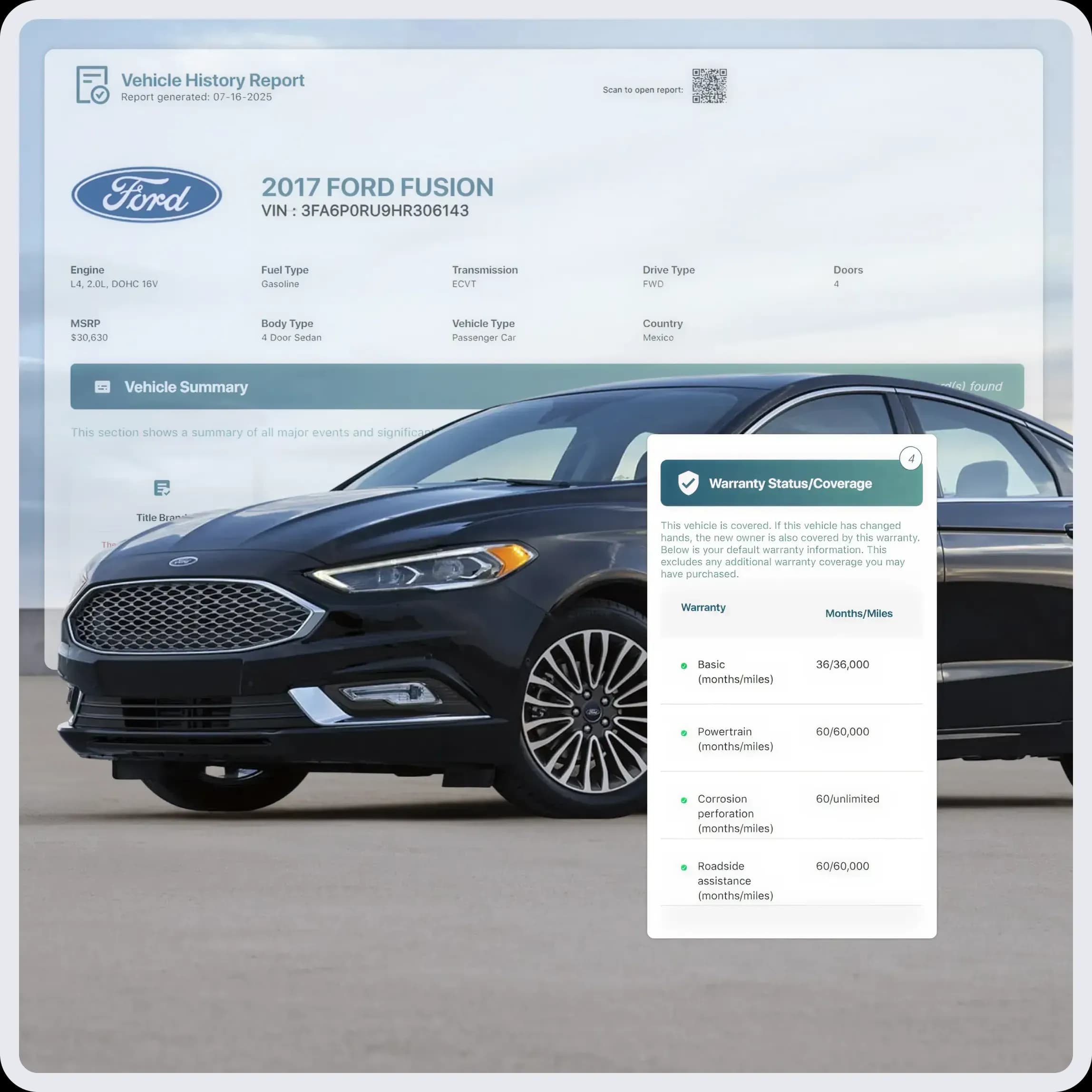
Wondering if your car is still covered by warranty? Just type in your VIN in our warranty check tool and get full warranty details like roadside assistance, corrosion protection, and manufacturer warranty on the vehicle report, all in seconds.



What is a VIN and Why Does It Matter for Warranty Checks?
A Vehicle Identification Number, or VIN, is a unique 17-character code that consists of a mixture of numbers and letters for every vehicle. It works like a fingerprint for the vehicle. The VIN is usually used to identify the vehicle's specifications and features; thus, it is also helpful to check the warranty period, track the recall history, and get car insurance.
The VIN itself is located in different areas of the vehicle, such as:
- On the dashboard, on the driver’s side, visible through the windshield.
- Inside the driver’s side door jamb or near the door latch.
- In the engine compartment, close to the front of the vehicle.
- On the underside of the hood.
- Inside or above the rear wheel well.
If you have a hard time finding the VIN on the car's area, you may check on its paperwork, such as the registration or insurance papers.
By looking up a warranty by VIN, it becomes easier to know if repairs are still covered, plan maintenance before the warranty expires, stay updated on recalls or coverage changes, and check the warranty coverage details before buying a used car.
How VIN Helps in Checking Warranty?
A Vehicle Identification Number (VIN) is one of the most reliable ways to check a car's warranty status. Both manufacturers and dealerships use it to track important details about warranty coverage and vehicle history, such as:
Warranty Period
Shows the start and end dates to confirm if the car is still covered.
Mileage and Time Limits
Reveals how long the warranty lasts based on distance or time.
Covered Parts and Services
Lists which repairs and components are included under warranty.
Recall History
Allows you to see if the vehicle has any past or pending recalls.
Running a car warranty check by VIN helps you understand the vehicle's protection level before buying or servicing the car.
How Can I Check if My Car is Still Under Warranty?
There's an easy way to check the warranty by VIN that you can do at home. Follow these easy steps so you know how to check a car warranty:
Step 1: Find the VIN
Before you begin to look up the warranty by VIN, you will need to find the VIN first. Check on the dashboard or the vehicle's paperwork to find the VIN.
Step 2: Fill in the Form
Click on the form above, then write down the VIN. After that, submit the form by clicking on the form.
Step 3: Download the Report
Check the preview page, then proceed to payment, and ensure to download the report to see if the vehicle is still covered by warranty.
Step 4: Review the Warranty Details
Once you’ve downloaded the report, check for important details, including:
When you've checked the warranty by VIN, the report also provides access to other important data, such as recall history, title status, service records, and accident reports.
What Information Do You Get in a Warranty Check by VIN?
A warranty check by VIN is one of the easiest ways to check if the vehicle is still covered by warranty and to obtain other important information about the vehicle. Here’s what information you’ll get from the vehicle warranty report:A warranty check by VIN is one of the easiest ways to check if the vehicle is still covered by warranty and to obtain other important information about the vehicle. Here’s what information you’ll get from the vehicle warranty report:
Type of Warranty
The check warranty by VIN tool helps you to check if the vehicle is still covered by warranty, such as bumper-to-bumper, powertrain, or roadside assistance. This helps you understand what repairs or services are still covered.
Warranty Duration
Once you've successfully looked up the warranty by VIN, you can see when the warranty started, when it will expire, and how long it lasts. This makes it easier to plan future maintenance or repair costs.
Mileage Limit
The warranty check by VIN shows you the mileage limit for warranty coverage, showing the exact point at which the warranty will no longer apply.
In addition to warranty information, a VIN check can also include:
Vehicle specifications
Ownership history
Vehicle usage details
Title information
Accident and damage records
Mileage records
Lien or loan records
Theft history
2014 Cadillac Escalade – The "Incredible Deal" David Found
David found a 2014 Cadillac Escalade listed for $35,000. Mileage: 67,948 miles. Clean look. Recently rebuilt. Dealer says fully restored and ready to drive and David was interested.
Original MSRP
$83,070
Listed Price
$35,000
What The Warranty Check Showed
At first glance, everything looked fine.
Basic Coverage: 48 months / 50k miles
Powertrain: 72 months / 70k miles
But It Also Revealed
Title Status: Salvage (Oct 2019)
Primary Damage: Storm damage
Current: Rebuilt/Rebuildable (as of Aug 2023)
The Critical Issue
On paper, warranty coverage exists. In reality, once a vehicle is declared a total loss and rebuilt, manufacturers typically void warranty protection.
What this means: A major transmission failure ($5K–$15K), engine problem, or electrical issue would not be covered.
David's Initial Thought
"$83K luxury SUV for $35K? That's a $48K savings. Sign me up."
After Warranty Check
"It's a rebuilt salvage vehicle and warranty is effectively void."
Real Value: $18k-$25k
$ 13,000 Saved
David used the report, negotiated the price down to $22,000 (fair market value) and planned for repairs upfront.
Know what’s actually covered and avoid expensive surprises.
Lookup Car Warranty by VIN from Other Sources
If you want to double-check whether the car is still covered by warranty, there are other ways to do it besides using an online VIN lookup tool. These methods can help confirm the warranty coverage directly from trusted sources like dealerships or manufacturers.
Contact a dealership
A local dealership can help you check the car’s warranty status and coverage by using information like the year, make, and model, and probably the VIN too. Many dealership offers various ways to get in touch with them, such as:
Call the Dealership: For a quicker response, you may have a call with the dealership to check if the warranty is still valid, or you may pay a visit to get the car checked so you can be sure if it’s protected by warranties.
Use the dealership online system: Many dealerships have online tools or portals that show service records, recalls, and warranty status. If not, check the manufacturer’s website instead.
Check your purchase documents: If you still have the sales papers, you can find warranty details there. Look at how long the warranty lasts and the mileage limit to see if it’s still active.
Check the Odometer
Look at your car’s mileage and compare it to the warranty limit. If your car has gone over the mileage cap, the warranty has likely expired.
Review the Owner’s Manual
The owner’s manual usually explains the warranty period, what parts are covered, and any conditions that apply. It’s a quick reference if you don’t have online access.
Contact the Manufacturer
You can find the standard warranty information through the manufacturer’s website. If it’s unclear and you need more information, you can find the manufacturer’s contact information to have direct contact with someone who will explain further about the warranty.
Types of Car Warranties
Car warranties are usually provided by the manufacturer, dealership, or third party to cover specific types of warranties. A car warranty helps protect you from paying for repairs within a certain time or mileage limit. Before you check what kind of warranty protects your car, it’s important to know the types of warranties.
Manufacturer's Warranty
The manufacturer's warranty is a warranty that comes with the vehicle once it's out of the factory to protect the car from factory defects. The warranty usually consists of two coverages: bumper-to-bumper and powertrain warranties.
Bumper-to-bumper warranty covers most parts of the car, such as the air conditioning, electronics, and other systems, while the powertrain warranty focuses on major components like the engine, transmission, and axles.
Extended Warranty
An extended warranty starts right after the manufacturer's warranty has expired. The extended warranty can be bought from a car maker, dealership, or other company. The extended warranty aims to cover repair costs for an extra time.
Certified Pre-Owned Warranty
A certified pre-owned (CPO) warranty is a manufacturer-supported plan that extends coverage for used cars meeting strict inspection standards. It usually protects major systems such as the engine, transmission, and electrical components, and can add one to two extra years to the original warranty.
The coverage begins from the vehicle's original in-service date rather than the purchase date.
Emissions Warranty
An emission warranty covers the repair or replacement of parts that control a vehicle's emissions, as required by the U.S. Clean Air Act. It includes two types: a Performance Warranty for vehicles that fail an emissions test, and a Design and Defect Warranty for faults in emission control parts.
For most light-duty vehicles, coverage lasts at least two years or 24,000 miles for performance issues, and up to eight years or 80,000 miles for major components like the catalytic converter and ECU.
Roadside Assistance Warranty
Roadside assistance is a type of warranty that could help when the car breaks down or has an emergency on the road. This warranty is usually included in the manufacturer’s warranty or offered as an option, and the coverage usually includes services like towing, jump-starting a dead battery, delivering fuel, changing a flat tire, or unlocking the car when the keys are locked inside.
Rust Warranty
A rust protection warranty covers repairs or replacements for car body panels that rust through. It's usually offered by the manufacturer or a third-party company. Factory warranties often include corrosion coverage for a few years, such as five years with unlimited mileage, but they don't cover surface rust.
Third-party plans may have different rules, like yearly inspections or extra protection after the manufacturer's warranty ends.
What Does My Car Warranty Cover?
A car warranty helps protect you from paying for certain repairs or parts replacement. The coverage depends on the type of warranty your car has, but here are the most common ones:
Bumper-to-Bumper Warranty
The most complete coverage that includes most car parts and systems, such as the electrical system, air conditioning, and audio components.
Powertrain Warranty
Covers the main parts that make the car move, like the engine, transmission, drive systems, drive shaft, and transaxle.
Rust and Corrosion Warranty
Protects against rust-through on body panels and sometimes surface corrosion caused by defects.
Federal or Emission Control Warranty
Covers emission-related components, with extra protection for vehicles in some states, like California.
Hybrid Battery Warranty
Applies to hybrid or electric vehicles, covering the traction battery and related parts.
Roadside Assistance
Offers help for flat tires, towing, and emergency fuel delivery.
Can I Void My Car Warranty?
Of course, you can void the car's warranty if you do not follow the rules that the car's manufacturer sets. One thing that could void the warranty is mainly not following the maintenance schedule, modifying the vehicle, or misuse.
Checking the warranty by VIN does help you find out if it's still protected by warranty and informs you about its validity. However, this does not always mean the warranty will still apply. If certain terms have been broken, the coverage can be denied even if the warranty period has not expired.
Here are some common reasons a car warranty can be voided:
Lack of maintenance
Skipping routine services like oil changes or not following the maintenance schedule can lead to warranty cancellation. Manufacturers expect proper care before covering major repairs.
Improper use
Using a vehicle beyond its purpose, like taking a small sedan off-road or using a pickup for racing, can void the warranty.
Salvage or rebuilt title
If a car has been declared a total loss in an accident, the warranty is no longer valid.
Aftermarket parts or modifications
Installing non-original parts or making performance upgrades may cancel coverage if they cause damage.
Odometer fraud
Rolling back or changing the odometer is illegal and will automatically void the warranty.
Environmental damage
Damage caused by natural disasters like floods, fires, or hail isn't covered under a manufacturer's warranty.
What is the Meaning of Each Warranty Terms?
Warranty terms can be different depending on the vehicle's manufacturer or the company that provides the warranty. Make sure you know the meaning of each term to understand what it means.
Active:
This means the warranty is still valid, and the vehicle can get repair or service coverage.
Expired:
The warranty period has already ended, so the vehicle no longer gets warranty service unless extra coverage was bought.
Limited Warranty:
This type of warranty only covers certain parts or systems of the vehicle for a specific time or mileage. It usually has some rules or things that are not included.
Powertrain Warranty:
This warranty covers the main parts of the car, like the engine, transmission, and drivetrain. It usually lasts longer than other types of warranties.
Extended Warranty:
This is extra protection that a person can buy to make the warranty last longer after the original one ends.
Transferable Warranty:
This warranty can be given to a new owner when the car is sold. It can make the car more valuable when selling it.
What if My Warranty Expired?
If your vehicle's warranty has already expired, you still have another option to protect yourself and your vehicle from high-cost repairs.
Here are some options you can consider:
Third-party extended warranties
Companies such as Endurance, CarShield, or American Dream Auto Protect provide extended coverage that works much like a factory warranty. Depending on the plan, it can include basic powertrain protection or full bumper-to-bumper coverage.
Vehicle service contracts
These are similar to warranties but often have different rules. Many dealerships and third-party providers sell them, so it's important to read the terms carefully before signing.
Certified pre-owned (CPO) warranties
When buying a used car from a dealer, choosing a certified pre-owned vehicle can give added peace of mind. These cars often come with limited warranties supported by the manufacturer.
Repair savings account
If you prefer not to buy extra coverage, setting aside money each month for future repairs is another practical option.
Mechanical breakdown insurance (MBI)
Some insurance companies offer MBI as an optional add-on to cover repair costs for major parts like the engine and transmission.
Mistakes to avoid when checking warranty coverage
Checking the warranty by VIN might seem like an easy task; however, you will need to be careful before you run the service, so you can be informed with the right data.
Here's a list of things you should avoid:
Waiting too long
Don't wait until your car breaks down to check or activate the warranty. Coverage must be active before any issue starts.
Falling for scams
Ignore calls or messages claiming it's your "final notice" to renew a warranty. These are often fake.
Skipping comparisons
Warranty plans can differ in price and coverage. Always compare a few options before deciding to purchase an additional warranty.
Buying too much coverage
Some cars may not need full bumper-to-bumper protection. Choose a plan that matches the car's value and condition.
Fun Facts About a Car's Warranty
The first car warranties were only 90 days long!
Back in the 1950s, automakers only guaranteed cars for about three months. Today, most new cars come with warranties lasting 3 to 5 years.
Some electric cars have battery warranties that last up to 10 years.
EV makers like Toyota and Hyundai offer long coverage for hybrid or electric batteries since replacing them can be very expensive.
FAQ About Warranty by VIN
Should I get an extended warranty?
Actually, it depends on a few things: your financial situation, how long you'll keep the vehicle, and its reliability. An extended warranty can be helpful if you plan to keep the car for a long time, can't afford unexpected repair costs, or are buying a used vehicle with uncertain reliability.
However, if the car is known for being dependable and you can handle occasional repairs, it might not be worth the extra cost.
What is the difference between a factory warranty and an extended warranty?
A factory warranty comes with a new vehicle and covers problems caused by manufacturing defects for a set period. An extended warranty, on the other hand, is an optional plan you can buy to extend that coverage or include more types of repairs after the factory warranty ends.
Do extended warranties start after the factory warranty?
Yes, in most cases, an extended warranty begins once the original factory warranty ends. However, certain third-party plans may take effect right away, starting from the date you buy the coverage. The specific start time usually depends on who provides the warranty and the conditions outlined in the agreement.
How long is a factory warranty good for?
Most new cars come with a factory warranty that usually lasts around three years or 36,000 miles for bumper-to-bumper coverage, and about five years or 60,000 miles for powertrain protection, whichever happens first. Still, the exact length can differ based on the car's make, model, and warranty type. Some brands even offer powertrain warranties that stretch up to 10 years or 100,000 miles.
Can I look up my warranty with my VIN?
Yes, you can look up the car's warranty by VIN, but the method might be different for each vehicle. The most direct way to check a car warranty is to contact the dealership of the make.
Can I check the car warranty by VIN for free?
Yes, it's possible to check warranty by VIN. The easiest way is to contact a dealership that sells the same car brand or reach out to the manufacturer.
Some car brands also have websites where you can log in and check your warranty by entering the VIN. In some cases, vehicle history report sites also show warranty details.
Does Carfax show warranty information for a car?
Carfax only gives an estimation; it is better to call the dealer or the manufacturer to confirm what warranty is left. This is because changes in ownership or title could mean the coverage is not valid anymore.
Use our check warranty by VIN to access the full report on the vehicle's warranty coverage, and its limit, including the months and mileage. With this, there's no need to contact a dealer or manufacturer to find out how much warranty is still active.
What kinds of warranties are available, and what does a car warranty cover?
A car warranty is a contract. This contract covers problems with mechanics and electronics if they are caused by a mistake in the manufacturing process. The popular types are "bumper-to-bumper" and the more limited "powertrain" warranty. Rust, emissions, and corrosion are also covered by different warranties.
Extended warranties can be purchased to make the coverage longer than the original one. What is not covered is usually normal wear, improper use, or accidents.
Can warranty records show major engine or transmission repairs?
Yes, a car warranty check by VIN reveals major engine repairs and transmission work covered under the factory warranty. Since big fixes are expensive, dealerships document them carefully to get paid by the manufacturer, so the records are reliable and easy to verify. If you’re considering a used car, checking warranty repair history by VIN helps you spot costly past repairs before you buy. It’s one of the smartest steps in any used car buying checklist.
Can a VIN warranty report reveal repeated mechanical problems?
Yes, checking the vehicle history report through a warranty lookup can spotlight recurring mechanical issues. If the same part keeps failing and going back to the shop, the service history will show those repeated claims. This is a great way to spot a troublesome vehicle that might cause you headaches down the road.
Will warranty records show completed or outstanding recalls?
Yes, a VIN report will show both completed and open recalls on a vehicle. If a recall repair was done under warranty, it will appear in the service history records. Dealerships log this information directly into the manufacturer database so owners can keep their vehicles safe.
How do warranty records help verify dealer-maintained vehicles?
Warranty records require official dealership documentation to remain valid under factory terms. When you look up the vehicle service history, you can easily verify if the previous owner followed the required maintenance schedule at an authorized service center. This proof of consistent care greatly increases the resale value of the car.
Can warranty history help identify potential lemon or buyback vehicles?
If a vehicle was repaired multiple times for the same defect under warranty, it may qualify as a lemon under state lemon laws. Manufacturers sometimes buy back these vehicles and resell them. A lemon law buyback VIN search can uncover this history, helping you avoid purchasing a problem car.
Does a warranty VIN check include EV battery warranty information?
Yes, an electric vehicle VIN check outlines the remaining coverage for the battery pack. In the United States, federal law requires EV batteries to be covered for at least 8 years or 80,000 miles. A used EV VIN lookup confirms how much battery coverage is left, protecting you from a costly out‑of‑pocket replacement later on.
Can warranty records reveal expensive component replacements?
Yes, running a used car VIN check will uncover expensive component replacements like hybrid systems, steering racks, or touchscreen modules. Since these parts are fully covered under the original bumper to bumper factory warranty, the dealership logs every replacement. Seeing these details helps you understand what major parts are already brand new.