
Classic Auburn VIN Decoder
Use the Classic Auburn VIN Decoder to know what your car really is. See the factory specifications, current value, and the record history. It's simple and made for classic Auburn fans.
Table of Contents:
What is a Classic Auburn VIN
A VIN (Vehicle Identification Number) is a unique ID for a car. On classic Auburns, that ID was not the modern 17-character format. It's often shorter and uses an older, Auburn-specific structure (you'll also see “chassis number” used a lot), ranging between 5 and 14 characters. That's normal for pre-1981 vehicles, and it's exactly what our Auburn VIN decoder is built for.
With Detailed Vehicle History, you can decode shorter Auburn VIN numbers and pull a classic report. If you're restoring, selling, or buying, this helps you match the car to its original build and spot red flags early.
You'll also see market value ranges, auction and sales records (when available), and other useful checks you can't get from a simple brochure.
Where to Find the VIN in a Classic Auburn Car?
On vintage Auburns, the VIN is typically stamped/engraved in multiple locations on the vehicle. You can take a look here:
- Cowl/firewall ID plate: Often on the passenger or driver side of the engine bay.
- Chassis rail: Look along the frame near the front suspension (stampings can be faint).
- Steering column or body plate: Some cars carry a small tag near the column or on the inner body panels.
- Engine: Lycoming engines have their own serial numbers, useful for numbers-matching” checks.
- Paperwork: Old registrations, titles, and service books can help confirm what you see on the metal.
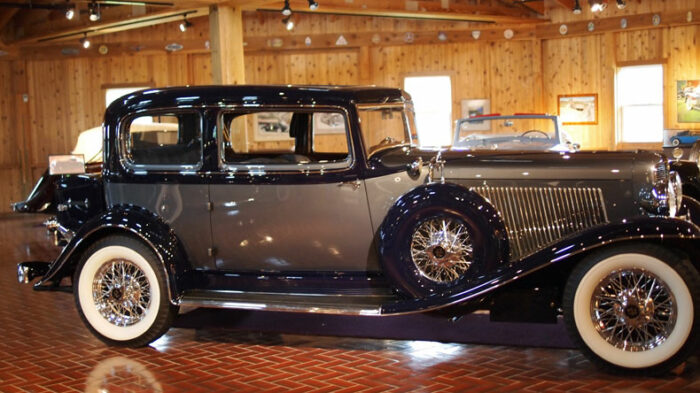
Make sure to clean the surfaces and look closely, as age or paint can make the digits hard to see.
Why Check Classic Auburn VIN?
If you love Auburns, whether for the beauty, the prestige, or the long-term value, you want to be sure you're looking at the right year, the right model, the right story. The simplest way to do that? Run a classic car VIN check. It pulls the key specs and past records so you're not guessing. Honestly, it's peace of mind before money changes hands.
Restoration
Helps you match parts and trim correctly, such as axle ratios, supercharger details, paint and interior codes, so things fit the first time and you don't waste weekends (or cash).
Resale & Value
Use facts that buyers can check to support pricing. Proof is more reliable than promises.
Stolen or Tampered Cars
Flags restamped plates or odd history fast, so you don't inherit a headache.
Safety & Legal
Verified the title brands, liens, and theft records, and keeps paperwork clean and avoids headaches.
What Information Can You Get From Classic Auburn VIN Decoder?
Decode an Auburn, and you don't just get numbers; you get the car's story. Our classic Auburn VIN report pulls together specs and records so you can judge originality, condition, and fair value with a clear head.
Here’s a snippet of what you will be getting through our classic Auburn VIN decoder:
Vehicle's Specifications
Verify the body style (e.g., Speedster, Phaeton, Sedan, and so on), engine type (e.g., Lycoming straight-eight or V-12), transmission, axle setup (including Dual Ratio notes), paint/trim when available, and the parts that prove what the car should be. This is gold for restorers and anyone checking “numbers-matching.”
Odometer Readings
With an older Auburn classic vehicle, the odometer may have been changed, reset, or simply stopped working years ago. The vehicle history report includes any captured mileage entries that show up with dates, so you can spot jumps or rollbacks. On older Auburns, these entries may be sparse, but even a few data points help you track the car's life.
Accident & Damage Records
The accident & damage records section checks whether the Auburn classic vehicle has ever been involved in recorded crashes or serious damage events. By using the Auburn VIN decoder, the report looks through insurance and damage databases for total-loss claims, big impacts, or structural repairs.
Auction History & Market Value
If the Auburn crossed an auction block, you'll see dates, locations, sale outcome, and up to ten available photos from the event. Pair that with market value ranges to set expectations before you buy or sell.
Theft Records
Classic marques like Auburn can be tempting targets for thieves and VIN cloners, especially rare or limited-production cars. The Theft Records section checks whether the Auburn VIN has ever been reported stolen and, where available, whether it was later recovered, with dates and sources.
Title Brand Checks
The title brand checks part of the Auburn VIN decoder looks at how authorities have labelled the car on its official paperwork. Depending on the country or state, an Auburn classic vehicle might be labeled as salvage, rebuilt, flood, or junk. Clean paperwork keeps future headaches small.
Lien or Loan Records
The lien/loan records section focuses on any outstanding finance that might still be tied to the Auburn classic vehicle. A lien means a bank, finance company, or private lender may have a legal claim over the car, even if the seller says it is “paid off.” By checking the Auburn VIN, the report can flag active or historic liens that could complicate ownership.
Service and Maintenance Records
This section will show you any available records of oil changes, regular services, brake work, clutch or gearbox repairs, and major rebuilds over the years. Even if you're new to classic cars, this part helps you see whether the Auburn has been cherished and cared for, or just kept running until something broke.
How to Use the Classic Auburn VIN Decoder?
To get the Classic Auburn report, follow the quick steps:
Step 1: Find the VIN
Check the firewall/cowl plate, frame rail near the front suspension, or your paperwork. If the stamping is faint, clean it gently.
Step 2: Fill in the Form
Enter the VIN (or chassis number) on our Classic Auburn VIN Decoder page. Make sure you don't mistype it.
Step 3: Get the Report
You’ll see a preview. If it looks right, grab the full classic report to view specs, value data, auction/sales history, title/theft checks, mileage, and more.
Brief History of Classic Auburn
If you've ever seen an Auburn boattail speedster and wondered where it came from, the roots go back to a carriage shop. The brand evolved from the Eckhart Carriage Company into a full-fledged carmaker, later reshaped by E.L. Cord into part of a mini empire that also included Lycoming and Cord.
- Early origins – Auburn began as the Eckhart Carriage Company, moving into automobile production in Auburn, Indiana, in 1900.
- 1924 – In 1924, entrepreneur E.L. Cord took over and reorganized the business under what became the Cord Corporation, giving Auburn fresh direction and investment.
- Late 1920s–1930s – Auburn produced a variety of cars through the late 1920s and 1930s, using engines supplied by Lycoming, another Cord-affiliated company.
- The lineup included eight- and twelve-cylinder models, positioning Auburn as a maker of powerful, stylish cars in the premium segment.
- Several early 1930s models used a two-speed (dual-ratio) rear axle, improving flexibility and performance without needing more gears in the transmission.
- 1937 – The economic downturn of the 1930s hit hard, and Auburn ceased automobile manufacturing in 1937, ending the brand's production run.
- The former administration building in Auburn, built in 1930, now houses the Auburn Cord Duesenberg Automobile Museum and has been listed as a National Historic Landmark since 2005.
Supported Classic Auburn Models
You can now successfully decode VINs for these classic Auburn models:
Decode Classic VIN by Manufacturer
Need to verify another classic before sending payment? Select the manufacturer, enter the VIN, and quickly see its configuration and available history.
FAQ About Classic Auburn VIN Decoder
Do Auburns have 17-character VINs?
No. Auburn stopped producing cars in 1937, long before the 17-character VIN was standardized in 1981. You'll see shorter chassis/VIN formats and engine numbers, and our decoder is built to read those older styles.
What does your Classic Auburn VIN number tell you?
The classic VIN number of any classic Auburn can reveal factory-style specs (body style, engine, gearbox, axle notes) to help confirm originality. Then, history items when available: title brands and liens, mileage entries, damage/accident records, theft checks, plus auction/sales history and market value indicators.
What’s the best way to decode a short Auburn VIN?
Enter the chassis/VIN as it appears on the plate or frame. Our Classic VIN Decoder supports fewer-than-17-character formats and maps them to Auburn-specific fields. If you need deeper documentation, you can add a build sheet (when available) for color/trim and equipment details.
Where can I find the VIN/chassis number on a classic Auburn?
To find the VIN/chassis number on a classic Auburn, see the common spots, including the firewall/cowl plate, frame rail near the front suspension, and period paperwork. Engine serials (Lycoming) are separate but useful for “numbers-matching” checks.
How reliable is an antique Auburn?
The reliability of old and classic Auburn vehicles depends on the car's condition, restoration quality, and maintenance rather than the badge. Many Auburns run smoothly with a healthy cooling system, good ignition, and a clean fuel setup. Parts and expert mechanics do exist, but they're not on every corner.
Get a pre-purchase inspection, keep up with routine care, and plan for occasional tinkering. Do that, and regular weekend driving is very doable.