
Classic Window Stickers by VIN for Vintage Cars
Buying or selling a classic car? Get full access to classic standard specifications, original base price, colors with codes, options, packages, build specs, and more with a classic window sticker. Enter the VIN to view original specs instantly.



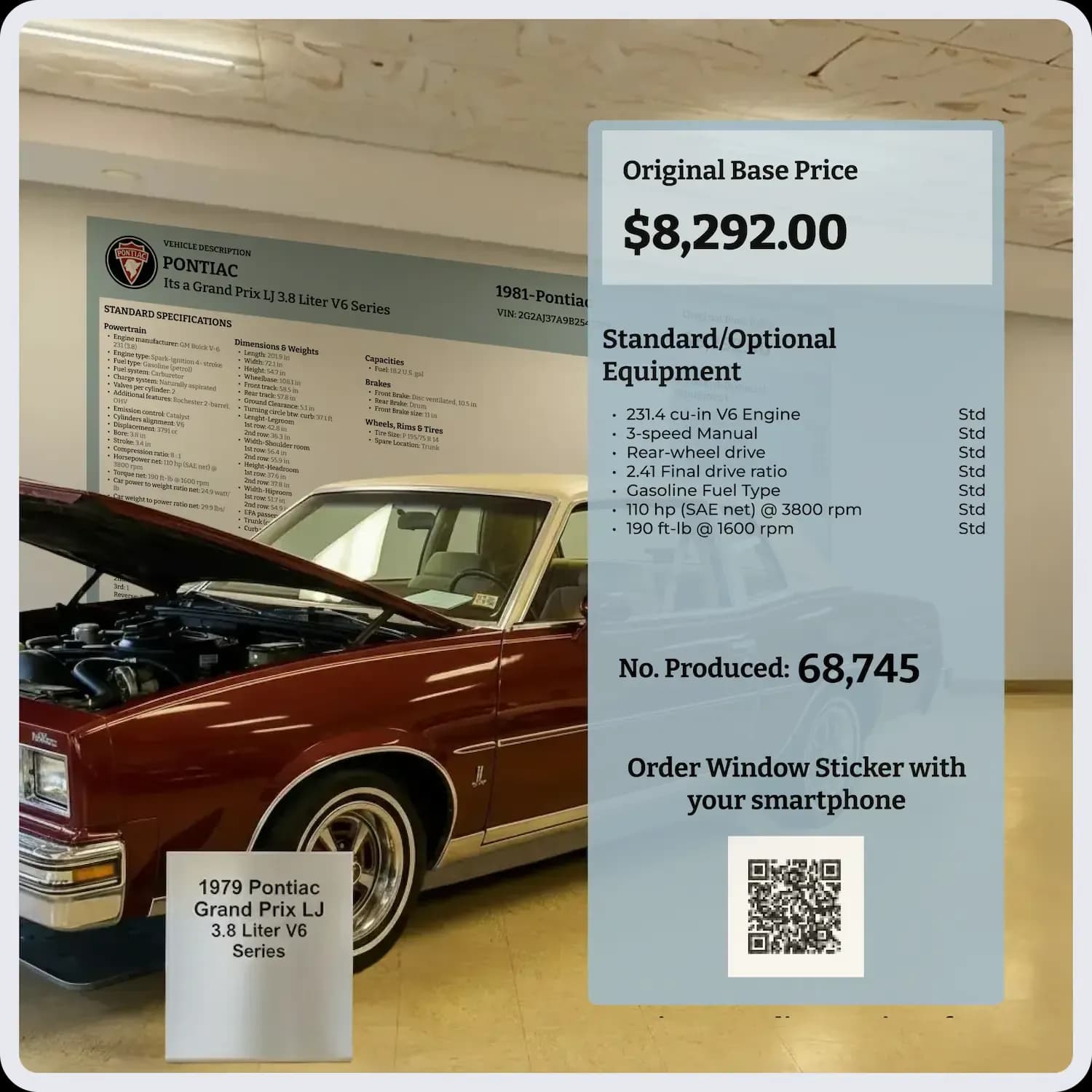
What Is a Classic Window Sticker?
Original window stickers are one of the first things lost in a classic car’s life. Dealers removed them, owners discarded them, and very few people thought to save them. As a result, most classic cars today are missing that piece of factory documentation.
A classic car window sticker recreates that missing piece. It uses the VIN to pull factory data and lays it out in a way that mirrors what buyers would have seen at the time. Modern cars call this a Monroney sticker but for classic cars.
What Information You’ll See on a Classic Window Sticker?
A classic car window sticker pulls together factory information that is often scattered across manuals, old paperwork, and seller descriptions. Instead of guessing, you can see how the vehicle was originally built, equipped, and priced, all in one place.
Here’s what you’ll find on a vintage car window sticker:
Vehicle Description
This section confirms the vehicle’s true identity as it left the factory. It helps eliminate confusion caused by similar models, midyear changes, or later modifications that can make classic cars difficult to verify.
Make, Model, and Year
Shows the official manufacturer name, model designation, and production year as recorded by the factory.
VIN or Chassis Number
Displays the vehicle’s VIN or serial number, often decoded to show year, plant, and production sequence.
Series and Body Style
Identifies the exact series or trim level and body configuration, such as coupe, convertible, or sedan.
Original Base Price and Factory Pricing
This section shows how the vehicle was priced when it was new, before market trends, inflation, or collector demand changed its value. It provides historical context that many buyers and collectors find especially interesting.
Factory Base MSRP
The original base price assigned by the manufacturer for the vehicle in standard factory configuration.
Standard Factory Specifications
This section outlines the mechanical and physical specifications that defined the vehicle when it rolled off the assembly line. These details are especially useful for restorers aiming to return a vehicle to factory-correct condition.
Body and Dimensions
Includes wheelbase, length, width, height, curb weight, and basic body construction details.
Interior and Exterior Features
Shows standard interior fittings, trim, exterior details, and basic comfort features that came from the factory.
Engine Specifications
Lists engine type, displacement, cylinder count, compression ratio, horsepower, torque, and bearing count.
Fuel and Lubrication Systems
Details carburetor type, fuel delivery system, lubrication method, and oil capacity.
Factory-Installed Optional Equipment
This section shows which upgrades were chosen during production rather than added later. Factory options often play a big role in originality and long-term value.
Individual Factory Options
Includes optional features such as automatic transmission, power steering, power brakes, heater systems, radios, and other upgrades selected at the factory.
Optional Packages
Shows grouped option packages that combined multiple factory upgrades into a single configuration at the time of order.
Transmission and Drivetrain Configuration
This section explains how engine power was delivered to the wheels. It helps confirm whether major drivetrain components still match the vehicle’s original setup.
Transmission Type
Indicates whether the vehicle came with a manual or automatic transmission, along with gear count and related details.
Drivetrain Layout
Shows the drive configuration, such as rear-wheel drive, and includes differential information when available.
Suspension, Steering, and Brakes
These components shape how the vehicle rides and handles. For classic cars, originality in this area can affect safety, value, and restoration quality.
Suspension Setup
Details the front and rear suspension design, including spring type and suspension layout.
Steering System
Identifies the steering system used and whether power steering was included from the factory.
Brake System
Lists brake type, size, and configuration, such as drum or disc systems.
Wheels, Rims, and Tire Information
This section helps confirm whether the vehicle’s rolling components match factory specifications, which is often overlooked during restorations.
Wheel and Rim Specifications
Shows the original wheel type, material, and size supplied by the manufacturer.
Tire Size and Type
Lists the factory-specified tire dimensions and construction.
Spare Tire Location
Indicates where the spare tire was stored, such as the trunk or rear compartment.
Capacities and Fluid Requirements
These specifications are still useful today and help ensure the vehicle is serviced correctly.
Fuel Tank Capacity
Shows the total amount of fuel the tank was designed to hold.
Cooling System Capacity
Lists radiator type and coolant volume based on factory specifications.
Other Fluid Capacities
Includes oil, transmission fluid, and differential capacities as originally specified.
Production Numbers and Rarity Details
This section adds historical context and helps explain why certain models or configurations are harder to find today.
Total Production Figures
Shows how many vehicles were produced within that series or configuration.
Assembly or Production Notes
May include plant identifiers or notes tied to the vehicle’s VIN.
Exterior Colors and Factory Paint Options
Paint information helps confirm whether a vehicle still wears its original color or has been refinished at some point during its life.
Available Factory Colors
Lists exterior and interior paint colors offered for that model year.
Special or Two-Tone Finishes
Notes availability of special finishes or two-tone paint combinations when offered by the manufacturer.
Fuel Economy
Fuel economy details on a classic window sticker show how the vehicle was expected to perform when it was new. While testing standards were different at the time, manufacturers still provided mileage information for general comparison.
City and Highway Fuel Economy
Shows estimated fuel usage for city and highway driving based on period testing methods.
Combined Fuel Economy
Some stickers include an average fuel economy figure that blends city and highway driving.
Fuel Type Requirements
Lists the recommended fuel type, such as regular or premium gasoline.
Fuel Economy Notes
May include brief notes explaining that actual mileage can vary depending on driving and conditions.
Why Classic Window Stickers Matter?
Classic window stickers are more than reference documents. They help people make clearer decisions by showing how a vehicle was originally built, equipped, and priced, using factory-based information instead of assumptions.
Over half of classic cars are no longer factory correct
Industry estimates suggest more than 60 percent of classic vehicles have been modified, repainted, or reconfigured over time.
Factory options can change value by thousands
Original engines, transmissions, and factory packages can add $5,000 to $50,000 to a classic car’s value, depending on rarity.
Documented classics often sell for 10–30% more
Auction results regularly show higher prices for classic cars with verified factory documentation compared to similar undocumented vehicles.
Classic Car Buyers
Buyers use classic car window stickers to confirm details before committing to a purchase, especially when originality and condition can significantly affect value.
Verify Factory Options
Confirms whether claimed options and features were actually installed at the factory.
Avoid Misrepresented Listings
Helps spot incorrect or exaggerated seller claims before money changes hands.
Understand Original Configuration
Shows what the car looked like when new, making it easier to judge restorations and modifications.
Sellers and Dealers
Sellers use vintage window stickers to support their listings with clear documentation and reduce buyer hesitation.
Build Buyer Trust
Provides factory-backed details that make listings feel transparent and credible.
Support Asking Price
Helps justify pricing by showing original equipment, options, and historical value.
Answer Questions Upfront
Reduces repeated buyer questions about specs, options, and originality.
For Owners and Collectors
Long-term owners and collectors use window stickers to preserve history and maintain accurate records.
Document Vehicle History
Creates a clear record of factory specifications tied to the VIN.
Preserve Originality Records
Helps track what is factory correct versus later changes.
Strengthen Provenance
Adds supporting documentation for insurance, appraisal, or future resale.
When a Classic Window Sticker Is Especially Useful!
There are moments when having this document makes a real difference:
Buying a classic car.
Verifying a restoration.
Preparing a vehicle for sale or auction.
Supporting an insurance appraisal.
Entering judged car shows.
Passing documentation to the next owner.
Where is the VIN Located on a Classic Vehicle?
VIN and chassis numbers were not placed in one standard location on older vehicles, so classics often have them in different spots depending on the manufacturer and year. If you are unsure where to look, start with these common locations:
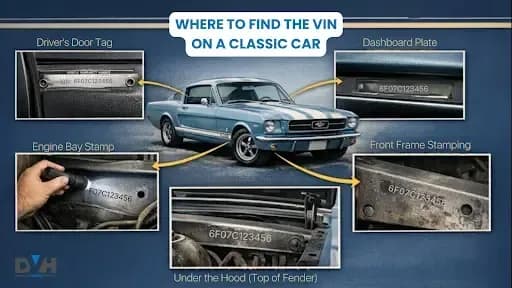
Dashboard or Windshield Area
Many people start here. A metal plate or stamped VIN number may be visible on the driver’s side of the dashboard through the windshield.
Driver’s Door Jamb or Door Frame
Open the driver’s door and check along the door frame. Some classics have a plate or stamped number near the latch or hinge area.
Engine Bay or Firewall
Under the hood is another common place. Look along the firewall, radiator support, or inner fender panels.
Frame or Chassis Rail
On older vehicles with a separate frame, the VIN may be stamped directly into the frame rail itself.
Trunk or Rear Compartment
Certain classic cars include an identification plate or stamped number inside the trunk, near the spare tire well or rear body panel.
Vehicle Paperwork
Titles, registrations, insurance documents, and old service records often list the VIN or chassis number and are sometimes the easiest place to confirm it.
Get a Classic Window Sticker in 3 Simple Steps!
Getting your old car window sticker is straightforward and does not take much time. The steps to follow are:
Step 1: Find the VIN or Chassis Number
Locate the VIN number on the vehicle itself or in official paperwork such as registration, title, or insurance documents.
Step 2: Enter the VIN into the Lookup Tool
Type the VIN into the window sticker lookup tool on this page to begin generating factory-based details for the classic vehicle.
Step 3: View and Download Your Window Sticker
Once the report is ready, you can view your vintage window sticker online and download it in PDF format for printing or record keeping.
Not Sure What a Classic Window Sticker Looks Like?
If you have never seen a classic window sticker before, the layout and level of detail might surprise you.
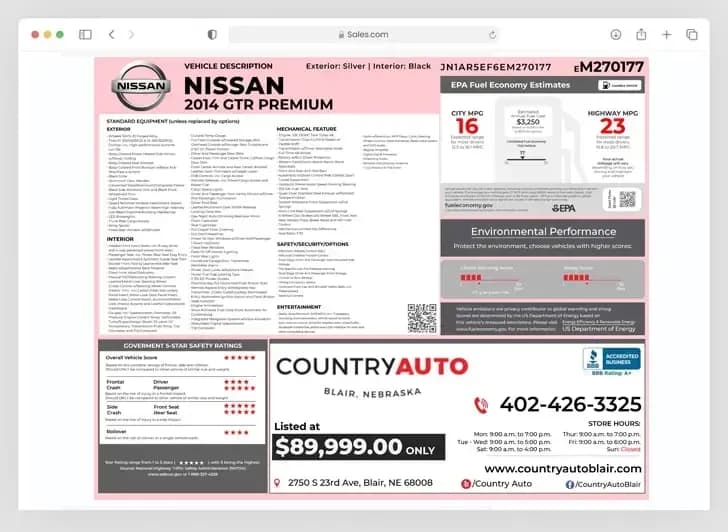
The samples below show how factory specifications, options, and pricing are presented for real vehicles, making it easier to know what to expect from your own sticker. Check them out!
Why Our Classic Window Stickers Stand Out?
Not all window sticker tools work well with classic vehicles. Older VIN formats and incomplete records can confuse generic systems. Our tool is designed specifically with classic cars in mind.
Here’s why we stand out:
Accurate and Verified Data
Each old car window sticker is created using reviewed records and VIN based research to reflect factory specifications.
Support ALL Classic Manufacturers
Coverage includes major classic brands and many lesser-known manufacturers across different eras.
Easy Window Sticker Generation
Enter the VIN and generate your classic window sticker in just a few simple steps.
Custom Classic Window Sticker Options
Bulk and customized classic window stickers are available for dealers, collectors, and events.
Clear and Readable Sticker Format
Stickers are designed to be easy to read and print, making them suitable for records, listings, or display.
24/7 Customer Support
Help is available at any time if you need assistance with VINs, orders, or questions.
Custom Classic Window Stickers for Dealers and Collectors
Custom window stickers help you present your inventory in a clear, professional way while keeping your branding consistent. They make it easier for buyers to understand vehicle details and help your listings stand out without looking overdone.
You can generate classic window stickers that include your dealership name, logo, and branding across all vehicles in your inventory.
This works well for showrooms, auctions, private collections, and online listings where presentation and trust matter. Make a request now to get yours!
Classic Window Stickers Available For All Brands
We cover a wide range of classic vehicle manufacturers, from well-known American brands to rare and early automotive names. Check the list below to see some car brands we cover:
FAQs About Classic Window Stickers
How can I get the original classic window sticker?
For most classic cars, the original window sticker no longer exists. These stickers were usually removed by dealers and were never preserved for decades. Manufacturers also do not keep public records for many older vehicles.
The most reliable option today is to generate a recreated window sticker for classics using the VIN or chassis number. Our tool rebuilds the original factory details, options, colors, and pricing using historical records, giving you a clear view of how the car was originally sold.
Did they have stickers in the 60s?
Yes, vehicles sold in the 1960s did include factory price and equipment disclosures, even though the formats were different from modern stickers. The Monroney Act became law in 1958, which required manufacturers to provide pricing and equipment information at the point of sale.
Can I get a classic window sticker if the original is lost?
That is the case for most classic cars. These stickers were never meant to last sixty years. The usual way people access that information now is through a recreated window sticker. By decoding the VIN or chassis number, factory records can be used to show how the car was originally built and equipped.
Does a classic window sticker increase vehicle value?
A classic window sticker does not change the car itself, but it can support value. Documented factory options, original specifications, and verified pricing help buyers understand what makes a vehicle desirable. Cars with clear documentation often attract more interest and stronger offers than similar vehicles without factory records.
Is this the same as a Monroney sticker?
Yes, a classic window sticker or retro car window sticker is the same as a Monroney sticker, as it serves the same purpose. The only difference is monroney stickers are commonly used to refer to modern vehicles and not classics.