
Don't buy a problem, check it's history!
Get Full Vehicle History with a Trusted VIN Check
Get a fast and accurate vehicle history report with a VIN lookup. Check for accidents, title brands, salvage or theft records, sales & auction history, open recalls, and more, which helps you feel sure about any used vehicle purchase or sale.



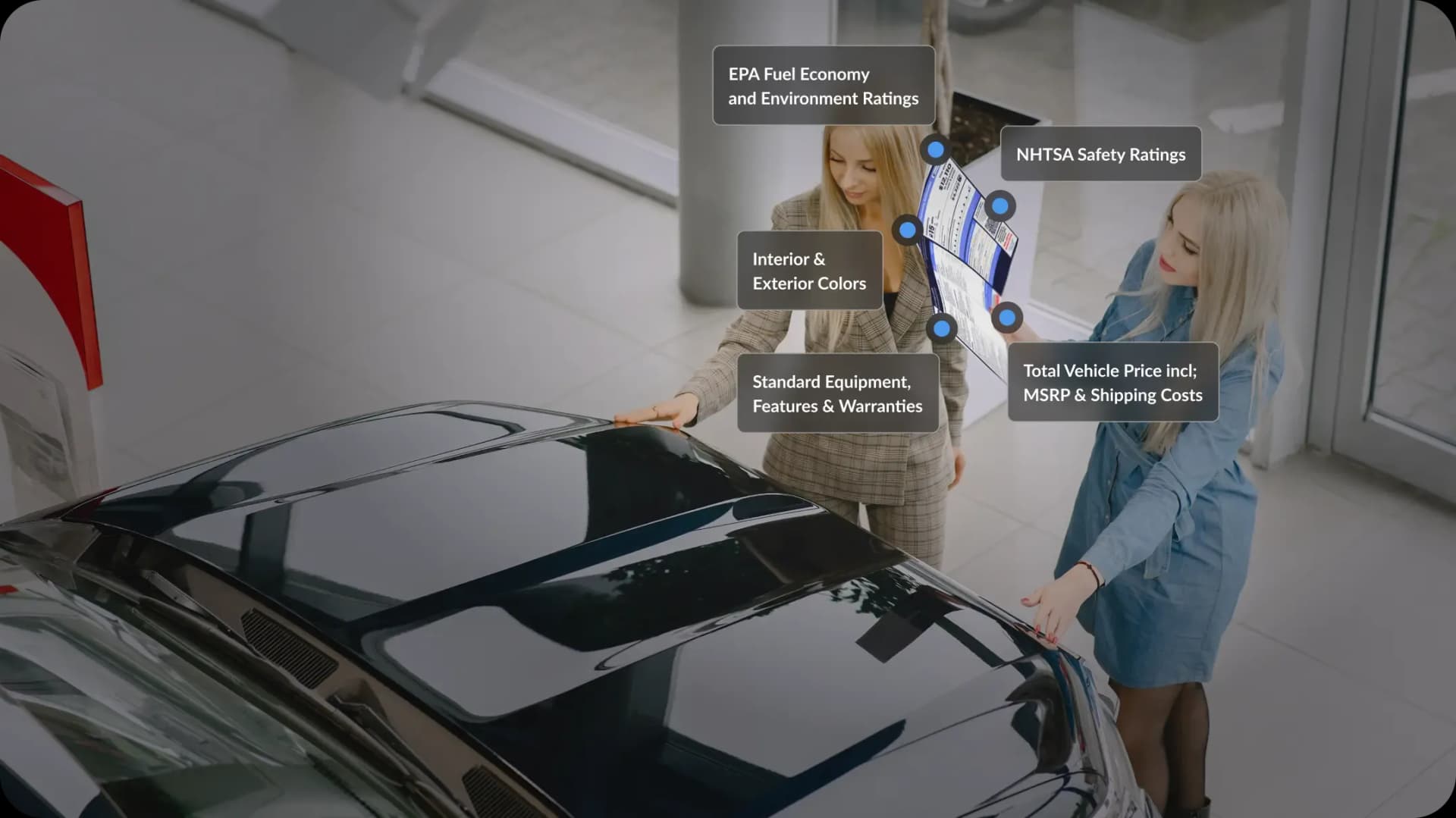
Want to learn about vehicles features, options & packages? Window Sticker Lookup
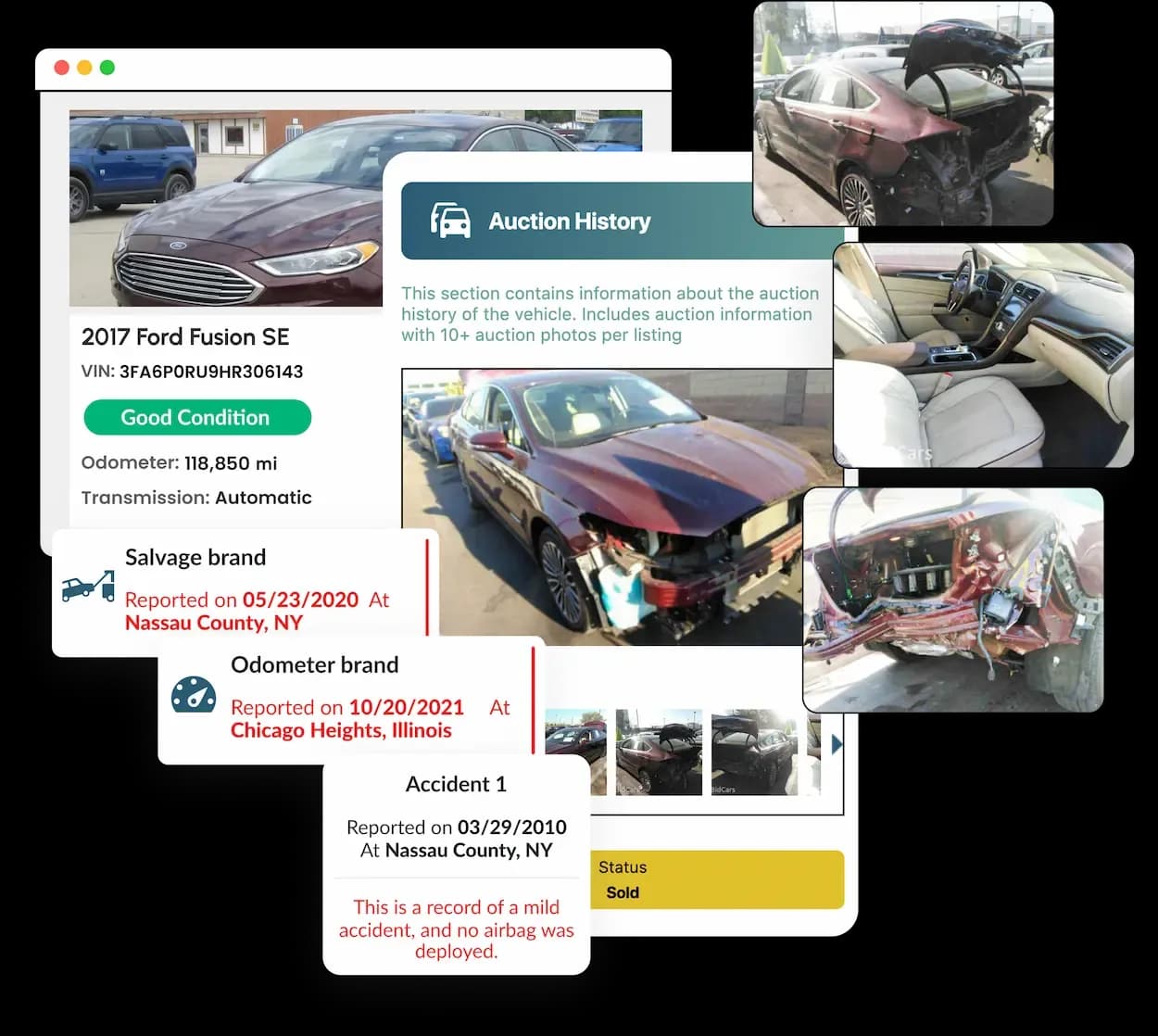
More detailed than a Carfax at a fraction of the cost Compare the reports below
CARFAX report
$44.99

56%Cheaper
DVH
$19.99
What Are the Common Risks When Buying a Used Car?
Buying used cars always carries risk, especially if the seller doesn't disclose the vehicle's true condition and history. Some common risks are:
Hidden Damages
Mechanical Problems
Title Fraud & Branded Titles
Mileage Fraud
Pending Loans or Even Stolen
Undisclosed Recalls
How Our Vehicle Reports Help Avoid Used-Car Risks?
Many car buyers miss damages, accidents, flood titles, salvage titles, theft records, and more. They end up not being able to verify the true condition of a vehicle. With our comprehensive vehicle history reports, they remain protected and can make the right choices.
For Buyers
- Identify hidden damages before purchase.
- Verify ownership and spot stolen records.
- Be sure that a vehicle has been maintained properly.
- Have better negotiations and get more value.
- Spot scams and walk away from risky deals.
- Avoid costly repairs after purchase.
For Sellers
- Be transparent with past records and have faster sales.
- Cars with history reports can sell for up to 15% more.
- Justify a car's asking price with accurate vehicle history.
- Providing a window sticker (factory options and MSRP) builds buyer trust.
- Make it easier for car buyers to compare several vehicles.
- Verify a vehicle’s value and condition before a trade-in.
What Information Is Included in a Vehicle History Report?
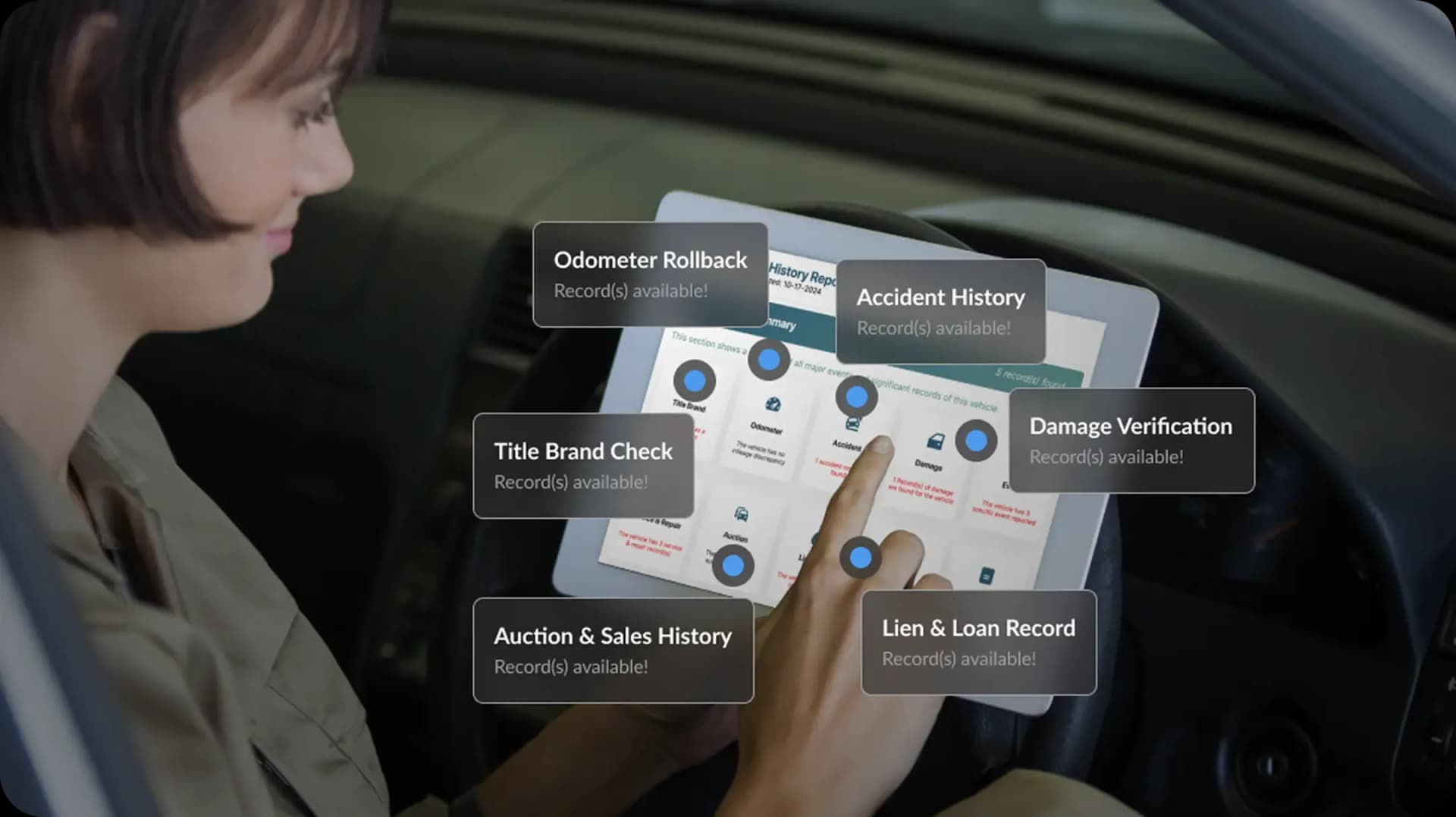
A vehicle history report shows everything that has happened in a vehicle's lifetime, including title records, accidents, odometer readings, ownership records, thefts, maintenance records, and more. Here’s what you can find in a vehicle history report:
A vehicle's title history shows how it has been classified over time and whether it ever carried serious warnings. This section helps you understand the legal and structural background of the vehicle.
Branded Title Detection:
We identify all branded titles such as salvage, rebuilt, junk, lemon, flood, fire, and other warnings that indicate major past issues.Complete Title History Timeline:
You can review every title event, including when the title changed hands or shifted across states or regions.State and Region Title Insights:
The report shows where each title was issued, giving useful context about the vehicle's movement and previous regulations.
Wonder if the car has been in any accident or has damage reported throughout its life? See all accident records and severity of damages with a detailed vehicle history report.
Reported Accident Details:
You can see accident entries from insurers, police, and inspection agencies, including the type of incident and the reporting source.Damage Severity and Impact:
Each event includes a severity level that helps you understand whether the damage was minor, moderate, or significant.Airbag and Structural Damage Indicators:
Airbag deployments and structural issues are highlighted to help you assess deeper safety concerns.
With a detailed vehicle history report, you can verify the mileage reading on the odometer at different points in time and check if it has been tampered with before sale.
Mileage History from Multiple Sources:
Readings collected from inspections, services, auctions, and registrations form a complete mileage timeline.Rollback Detection and Alerts:
The system checks for suspicious changes, such as decreases or unusual jumps in the recorded mileage.Annual Usage Patterns:
Mileage trends give you insight into how the vehicle was used over the years and whether that use aligns with its age.
Personal car? Taxi? Rental? Multiple owners? Find out the vehicle usage history of your vehicle as well as the previous number of owners, location of owners, and duration of the ownership.
Count of Previous Owners:
You can see the number of prior owners, which often reflects how consistently the vehicle was maintained.Ownership Duration and Timeline:
Each ownership period is listed so you can tell whether owners kept the vehicle briefly or for long stretches.Usage Type Identification:
The report shows whether the vehicle was for personal, rental, fleet, commercial, taxi, or government use.Registration Locations:
You can track all the regions where the vehicle was registered, which can help you understand its environmental exposure.
Get recall information on any car issued by the manufacturer or NHTSA and be sure if a vehicle is in roadworthy condition or not. This section gives you clear insight into past problems and whether the necessary repairs were completed.
Open Recall Information:
Active recalls are displayed with details about the affected components and the type of repair required, helping you judge how urgent the fix may be.Completed Recall Events:
If a recall was resolved, the report shows when the repair was completed and often includes notes about the work performed by the dealer or manufacturer.Manufacturer and Safety Agency Notices:
You may also see recall notes issued by the manufacturer or national safety authorities, offering helpful background on potential risks or known defects.
Do you know if a vehicle has stolen records? A report shows if a vehicle was stolen in the past and if it was recovered. Avoid getting legal charges and losing your car and money.
Stolen Status Check:
The report checks the VIN (or license plate) against databases such as the National Insurance Crime Bureau (NICB) and other regional registries to see if the vehicle was ever reported stolen.Recorded Theft Incidents:
If the vehicle was reported stolen, you will see the number of theft records, plus dates and locations linked to those incidents (when available).
See if the used vehicle has been serviced and maintained properly in the past. Be sure it's in great condition before payment.
Recorded Service Visits:
Entries include routine maintenance like oil changes, inspections, tire rotations, and brake service.Parts Replacement and Repair Notes:
You may see information about replaced or repaired components such as batteries, suspensions, belts, or major mechanical parts.Service Frequency Overview:
Frequent service entries suggest steady care, while gaps can hint at neglected maintenance.
Verify if the vehicle you are interested in has no lien or loan records that may affect you after purchasing any vehicle you are interested in.
Lien Record Identification:
If a lien exists, the report shows it clearly, indicating that a financial institution once held interest in the vehicle.Date and Location Details:
Each entry includes the exact event date and where it was recorded, such as "05/09/2002, Baytown, TX."Verified Data Source:
The record displays the source, such as Federal Motor Vehicle Records, confirming the information is backed by an official authority.
Our vehicle history report shows if a car went through auctions and what its condition looked like in available photos. You can also see its sales history, including dates, locations, listing frequency, and recorded prices.
Auction Listings and Images:
If the vehicle was sold at auction, the report may include photos from the auction platform, showing visible condition and damage at the time of sale.Historical Sale Prices:
Where available, you can see what the vehicle sold for, giving context to its market value over time.Frequency of Listings:
Multiple listings in a short time can indicate problems or a vehicle that struggled to find a buyer.
Get Your History Report by VIN in 3 Easy Steps!
Getting a vehicle report by VIN is a breeze! Just enter the VIN to access car facts, including accident history and more.
Step 1: Enter Your VIN
Provide the VIN to begin the process or search by US license plate number.
Step 2: Submit The Form
Click “Search VIN” to submit the form and start your instant search.
Step 3: Receive Your Report
Make the necessary payment to access a detailed and easy-to-read vehicle history report.
Now you know how to get a vehicle history report! No phone calls or paperwork. We give you all the vehicle information you need with just a few clicks.
Why We Are the Best Choice: A Comparison with Competitors
Choosing the right report service matters, especially when you want reliable car information. Here is what makes us stand out and why more buyers trust our reports for accuracy, value, and the complete picture every time:
Worldwide VIN Coverage
Detailed Auction Insights
Trusted & Update Data Source
Report Format in Digital PDF
24/7 Customer Support & Live Chat
100% satisfaction guaranteed.
Feature Comparison
Carfax
$44.99
Single Report
Sales listing with photos
Auction records with photos
Market value data
Detailed vehicle specifications((Limited))
Window stickers
Support for classic vehicles
Maintenance recommendation
Ownership history
Accident history
Damage check
Branded title check
Salvage title check
Ownership history map
Recalls
Supports for heavy duty trucks, ATVs, trailers & motorcycles
Mobile & desktop applications
BEST VALUE
Detailed Vehicle History
$19.99
Single Report
Sales listing with photos
Auction records with photos
Market value data
Detailed vehicle specifications
Window stickers
Support for classic vehicles
Maintenance recommendation
Ownership history
Accident history
Damage check
Branded title check
Salvage title check
Ownership history map
Recalls
Supports for heavy duty trucks, ATVs, trailers & motorcycles
Mobile & desktop applications
Autocheck
$29.99
Single Report
Sales listing with photos
Auction records with photos
Market value data
Detailed vehicle specifications((Limited))
Window stickers
Support for classic vehicles
Maintenance recommendation
Ownership history
Accident history
Damage check
Branded title check
Salvage title check
Ownership history map
Recalls
Supports for heavy duty trucks, ATVs, trailers & motorcycles
Mobile & desktop applications
| Carfax$44.99 | BEST VALUEDetailed Vehicle History$19.99 | Autocheck$29.99 | |
|---|---|---|---|
| Sales listing with photos | |||
| Auction records with photos | |||
| Market value data | |||
| Detailed vehicle specifications | |||
| Window stickers | |||
| Support for classic vehicles | |||
| Maintenance recommendation | |||
| Ownership history | |||
| Accident history | |||
| Damage check | |||
| Branded title check | |||
| Salvage title check | |||
| Ownership history map | |||
| Recalls | |||
| Supports for heavy duty trucks, ATVs, trailers & motorcycles | |||
| Mobile & desktop applications |
See why thousands choose Detailed Vehicle History over expensive alternatives.
Get More than just History Reports!
We provide more than just vehicle history reports! With our suite of tools, car buyers and sellers can easily learn everything they need to know about any vehicle and make informed decisions.
Original Window Sticker by VIN
Instantly get the factory window sticker by VIN and view the car's original MSRP, color, standard features, options, fuel economy, warranty, and more
Build Sheets for Classic Vehicles
You can get build sheets by VIN for classic or vintage vehicles with our build sheet lookup tool for classic vehicles. View build specs, features, color, pricing & more.
U.S License Plate Lookup
No VIN? No problem! Enter a U.S. license plate (and state) to retrieve the vehicle’s records, including ownership changes, title status, theft history, and accidents.
Reviews That Speak for Themselves
Hearing from real customers always says more than any feature list. These honest reviews show how our reports helped people feel confident, avoid bad deals, and choose the right vehicle with fewer worries:
DETAIL VEHICLE HISTORY WAS SUPER DUPER GREAT, FAST, EASY 1st TIME USER AND DEF NOT LAST. What impressed me most was after I made purchase I still had Q&A in need and SAM CHAT assisted me within minute...
Jett Sy
As a used car dealer, being able to display an original window sticker builds value to prospective buyers. In addition to being able to see all the options the vehicle came with, they can see exactly...
Parker Hanson
I got a super detailed report that shows information that wasn't in Autocheck or Carfax and an original window sticker for $30. Such a bargain. The window sticker didn't show some of the options origi...
Gavin Moran
Lookup History Report for All Vehicle Types
We offer reports for all vehicle types, from vehicles manufactured after 1981 to classic car history checks, get detailed reports for motorcycles, trucks, trailers, RVs and more.
Classic Cars
This classic car has a branded title, one accident, two damage records, and two auction records.
Motorcycles
This motorcycle has a branded title, a mileage discrepancy, one accident with damage, two lien or loan records, four event reports, and was previously listed for sale online.
ATVs
This ATV has a title brand record, damage records, auction records, sales records, and two lien or loan records.
Heavy-Duty Trucks
This truck has a branded title, one accident with damage, 13 open recalls, two lien or loan records, two event reports, and one auction record.
RV
This RV has a branded title, one damage record, one lien or loan record, two event reports, and one auction record.
Trailers
This trailer has a branded title, three accidents, two damage records, one lien or loan record, and one event report.
Latest from our Blog
Stay updated with the latest guides, tips, and news about vehicle ownership, buying and selling safely, and vehicle history.


Featured by Trusted Brands
More than 100,000 customers across 100 plus countries trust our reports for clear, reliable data.




Avoid Costly Mistakes – Get Your Vehicle History Report Now!
Know what you are buying before you commit. A quick report gives you the facts you need to shop with confidence. Start your check today and feel sure about every step you take.
Frequently Asked Questions
A Vehicle Identification Number (VIN) is a unique 17-character code assigned to every vehicle. It serves as the vehicle's fingerprint, providing essential information about its make, model, year, and manufacturing details.
A VIN report is a document that details the vehicle’s history, compiled from its 17-digit VIN. The VIN report provides you with information like specifications, past accidents, service history, odometer readings, and ownership history. Buyers can use the VIN report to assess the car’s actual condition before deciding to buy.
To get a free vehicle history check, all you need to do is enter the VIN or license plate number into the form on this page. You will instantly review vehicle specifications and history records for free. Note that, to receive a full vehicle history report, you will need to make a payment.
Reports from Detailed Vehicle History are comprehensive, accurate, and verified by multiple sources, offering the most reliable insight.
Detailed Vehicle History is a strong alternative because it offers reliable data, clearer auction insights, and lower pricing. Many car buyers and sellers prefer it when they want accurate information without paying high report fee.
Yes. A VIN check can show reported collisions, structural damage, airbag deployments, and other events linked to the vehicle. This helps you understand what the car has been through before you decide.
We offer broad international coverage with VIN checks supported across North America, Europe, Asia, Africa, the Middle East, and several Latin American regions. Our database includes dozens of countries, such as Canada, the UK, Germany, Saudi Arabia, South Africa, Mexico, and many others. If the vehicle has a valid VIN, we can provide a full history report.
Yes. You can view a sample report directly on the website. It gives you a clear idea of what information is included and what the final report will look like.
Yes. We provide reports for a wide range of vehicles, including trucks, RVs, motorcycles, trailers, and more. If it has a valid VIN, you can usually check its history.