
Decode Plymouth VIN and Get Vehicle Details
Looking into a Plymouth? Whether it’s a classic muscle car or a later-era model, use our Plymouth VIN decoder to get model year, trim, engine specifications, transmission setup, body style, production details and many more.
Table of Contents:
Plymouth Brand Information
Brand Objective
The brand was created by Chrysler in 1928 to provide affordable transportation options.
Ceased Operation
Plymouth closed its operation in 2001 because Chrysler wanted to streamline its portfolio.
Legacy
Plymouth remains an important part of American automotive history. It produced legendary models such as the Barracuda and the Road Runner.
What Will You Get from the Plymouth VIN Decoder
From original factory specifications to available history records, this tool helps you confirm a vehicle’s true identity. It’s especially valuable for Plymouth models, where engine choices (like Slant-6 or V8 powertrains), trim variations, and production differences can greatly impact performance, collectability, and overall value.
- Manufacturer and origin
- Model, trim, and package details
- Engine specifications
- Transmission setup
- Body style
- Model year
- Production plant
- Manufacturer Suggested Retail Price (MSRP)
- Market Value
How to Use the Plymouth VIN Decoder
Using the Plymouth VIN decoder is quick and straightforward. In just a few steps, you can uncover key details about the vehicle and make more confident decisions before buying or selling.
Step 1: Find the VIN
Locate the VIN on the vehicle or its documents. Common spots include the driver’s side door jamb, dashboard (visible through the windshield), engine bay, or paperwork such as registration or the bill of sale.
Step 2: Enter the VIN
Type the VIN into the decoder form carefully. Double-check each character to avoid errors, then submit it to start the decoding process and retrieve accurate vehicle data.
Step 3: Review the Full Specifications
Once processed, you’ll get a detailed breakdown of the Plymouth’s specifications, including engine type, fuel system, production details, and even an estimated market value to guide your decision.
Where to Find the VIN on a Classic and Modern Plymouth
Before you can use the tool, you’ll need to find the Plymouth VIN. While newer models follow standard placement, older Plymouth vehicles can vary depending on the year, factory, and production style.
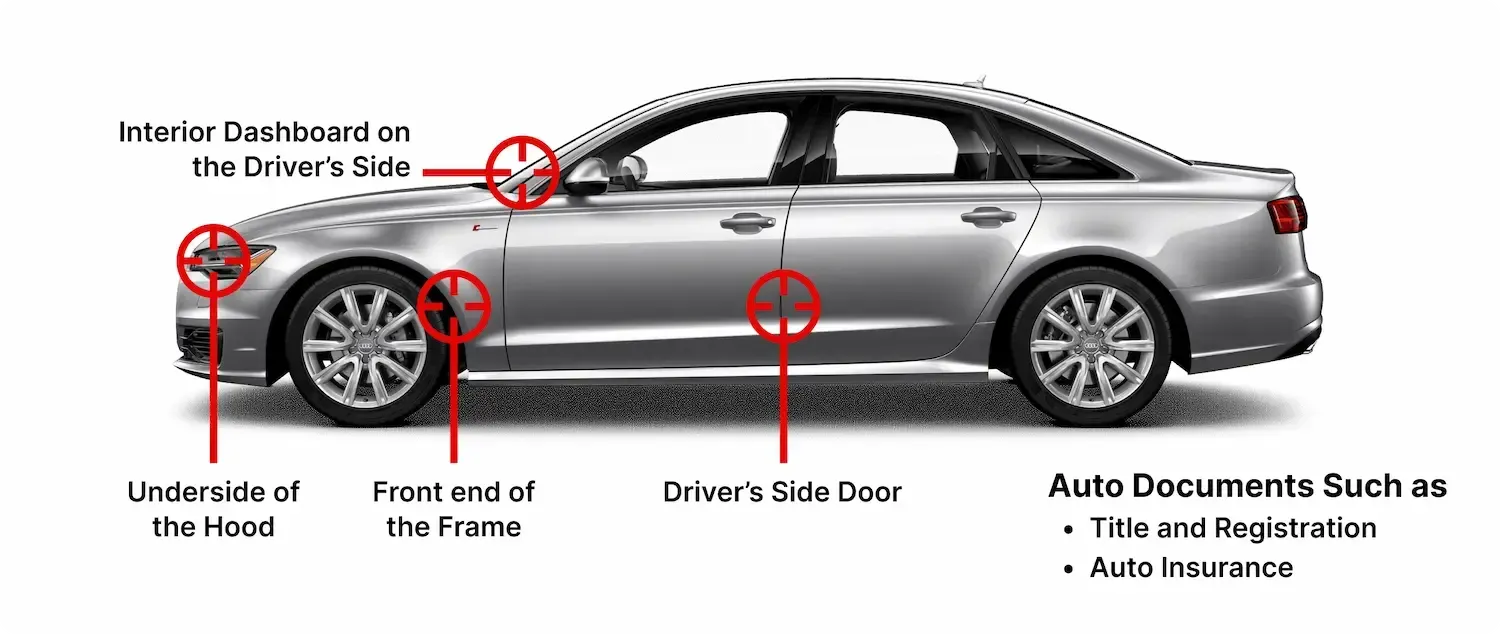
Plymouth VIN Location
The VIN can appear in several areas on the vehicle and in official paperwork. Check the following spots to ensure you’re using the correct number.
Driver’s Side Dashboard
Look through the windshield at the lower corner of the dashboard on the driver’s side. This is the most common location for later-model Plymouth vehicles.
Driver’s Side Door Jamb
Open the driver’s door and inspect the door frame or pillar near the latch. You’ll typically find a label or metal plate displaying the VIN along with manufacturing details.
Engine Bay
Check inside the engine compartment, often near the firewall or inner fender. Some Plymouth models have the VIN stamped directly onto structural components.
Documents
The VIN is also listed on official documents such as the registration, insurance card, and vehicle title. Always cross-check these with the VIN on the vehicle.
Classic Plymouth VIN Location
Classic Plymouth models may not always follow modern VIN placement standards. Identification numbers can sometimes be found in less obvious areas.
Under the Floor Mat
On certain older models, the VIN or serial number may be stamped on the floor pan beneath the carpet, depending on the vehicle’s build.
Body Panels
Some vintage Plymouth vehicles may include identification tags on removable panels like the hood, trunk lid, or fenders, often used for factory tracking.
Who Should Use the Plymouth VIN Decoder
A Plymouth VIN decoder is useful for anyone buying, selling, or evaluating a vehicle from the brand. Whether it’s a classic muscle car or a practical older sedan, decoding the VIN helps confirm details and avoid costly surprises.
Buyers
Review the Plymouth’s specifications, ownership background, and condition before purchasing. A VIN lookup helps confirm the vehicle matches the listing and can highlight issues that are not immediately visible.
Sellers
Present accurate, verified details in your listing. Decoding the VIN helps confirm original specifications and available records, making your listing more credible and appealing to buyers.
Dealers
Dealers can use VIN decoding to verify inventory quickly and maintain accurate listings. This is especially important for Plymouth vehicles, where model variations and condition can significantly affect value.
Collectors
Collectors and enthusiasts can use VIN decoding to confirm originality, production details, and key specifications. This is particularly valuable for classic Plymouth models where authenticity directly impacts collectability.
What is the Difference Between Modern and Classic VIN
The difference between modern and classic VINs mainly comes down to structure and the level of detail available. Newer vehicles follow a global standard, while older Plymouth models often use shorter, less consistent identifiers.
VIN Length and Format
Modern vehicles use a standardized 17-digit VIN introduced in 1981. Classic Plymouth models, especially those built before this period, may have shorter VINs that vary in length and format.
Data Availability
Modern VINs can reveal detailed specifications, engine information, production data, and factory configuration. Classic VINs may return more limited details, depending on historical records and documentation.
Decoding Accuracy
Decoding modern VINs is generally reliable due to standardized formatting and comprehensive databases. Classic VINs can be more challenging to interpret, but a proper decoding service can still uncover valuable historical and identification details.
Plymouth VIN Breakdown
The Plymouth VIN consists of 17-digit alphanumeric code that shows different information of the vehicle. The VIN is classified into three different categories: WMI, VDS, and VIS. Check the section below to see of a VIN is broken down.
World Manufacturer Identifier (WMI)
Digit 1 to 3: 1P3
- 1 = Country of origin (United States)
- P3 = Plymouth
Vehicle Descriptor Section (VDS)
Digit 4 to 9: EW65G2
- E = Model line (Prowler platform)
- W = Body style (2-door roadster)
- 6 = Series/trim level
- 5 = Engine type (3.5L V6 engine)
- G = Restraint system / safety features
- 2 = Check digit
Vehicle Identifier Section (VIS)
Digit 10 to 17: 1V700300
- 1 = Model year (2001)
- V = Assembly plant in Conner Avenue Assembly Plant, Detroit, Michigan, United States
- 700300 = Serial number
Need More Plymouth Information? Get a Vehicle History Report
A VIN decoder gives you a snapshot, but a full history report reveals the full story. For a Plymouth, especially a classic or muscle-era model, this deeper insight helps you avoid hidden issues and buy with confidence.
Vehicle Specification
Understand how the Plymouth left the factory. From classic Slant-6 engines to powerful V8 setups found in models like the Plymouth Road Runner or Plymouth Barracuda, you’ll see engine details, transmission, trim, and original MSRP.
Title Records
Older Plymouth vehicles can carry complicated histories. This section helps you identify red flags such as salvage titles, rebuild records, theft history, or mileage discrepancies that could impact both value and legality.
Odometer Reading
Mileage on a Plymouth, especially a classic, can be misleading if not verified. Track recorded readings over time to detect rollbacks, inconsistencies, or unusual gaps that may signal excessive wear.
Accident and Damage History
Even well-maintained Plymouths may have past damage. Check for reported accidents, structural repairs, or environmental exposure like flooding, all of which can affect safety, performance, and long-term value.
Auction History
Many classic Plymouth models pass through auctions. View past sale records, including dates, locations, prices, and sometimes photos, giving you a clearer picture of how the car was previously valued and presented.
Ownership Information
Get insight into how the vehicle has been used over time. See the number of owners, general registration locations, and ownership duration. No private information like names and addresses asre shown in this section.
Recalls Check
Although Plymouth is no longer in production, some models may still have unresolved recalls. Check when recalls were issued, what issues were involved, and whether they were properly addressed.
Engine Information
Verify the engine linked to the VIN. Whether it’s a reliable inline-6 or a sought-after V8, confirming the correct setup is essential for authenticity, performance expectations, and protecting your investment.
Get More Information on Plymouth Using Our Tools
Go beyond the basics with our full suite of tools. Access detailed vehicle history, recall data, and even the original window sticker to see how the Plymouth was built—all in one place, within minutes.
Plymouth Recall Check by VIN
Use the Plymouth recall check by VIN to examine the complete information on the car’s recall history.
Plymouth Window Sticker by VIN
Get the original Oldsmobile window sticker by using the VIN.
Decode Any Modern and Classic Plymouth Model by VIN
Thinking about buying a used Plymouth? Don’t rely on looks or a short test drive alone. Decode the VIN first to confirm factory specifications, verify key details, and uncover records that could impact value.
Supported Modern Plymouth Models
Decode VINs for later-era Plymouth vehicles and make sure the engine, trim, and features match what’s being advertised before you commit.
Supported Classic Plymouth Models
Looking into a classic Plymouth? Our VIN decoder also supports older VIN formats, including shorter or non-standard identifiers. It helps you confirm originality, factory specs, and overall value.
Decode Any Vehicle, Not Just Plymouth
You can decode VINs for many other makes and models using the same tool. Decode the VIN and get the complete vehicle specifications in seconds.
FAQs About Plymouth VIN Decoder
How do I decode my 1969 Plymouth model?
Decoding a 1969 Plymouth requires reviewing its 13-character VIN alongside the fender tag. Together, they reveal the car’s original series, body style, engine, and factory options. The VIN is typically found on the driver’s side dashboard or door pillar.
How long are classic car VIN numbers?
Classic car VINs built before 1981 are not standardised and usually range from 10 to 13 characters. Unlike today’s fixed 17-digit format, older VINs vary by manufacturer, making proper decoding tools essential for accurate identification.
How to check Plymouth history?
Researching “Plymouth” history can refer to different things, so context matters. It may relate to the Plymouth car brand, or places like Plymouth in the U.S. or U.K., each requiring different archives, records, or historical sources.
How much is a 1970 Plymouth GTX worth today?
A Plymouth GTX from 1970 typically ranges from around $40,000 to over $100,000 today, with well-kept examples averaging $70,000–$80,000. Rare versions—especially those with the 426 HEMI—can exceed $150,000 or more.
What if my VIN reads “invalid”?
If a VIN shows as “invalid,” it’s often due to a simple input error. Characters like “I,” “O,” and “Q” are never used, and a mismatch in key positions can also cause issues. Always double-check the VIN on the dashboard or door label.
Are Plymouth cars reliable?
Plymouth vehicles are generally regarded as dependable, particularly classic models from the 1940s to 1970s and select 1990s cars. Engines like the Slant-6 and 318 V8 earned a reputation for durability, while later models offered solid everyday reliability despite some inconsistencies.