
Porsche Modern and Classic VIN Decoder
Planning to buy a used Porsche, whether it’s a modern 911 or a classic model? Don’t rely on looks or a quick drive. Use our Porsche VIN Decoder to get model year, trim, engine specifications, transmission setup, body style, production details and many more.
Table of Contents:
What Will You Get From the Porsche VIN Decoder
Decoding the VIN helps you confirm that the Porsche truly matches your expectations and budget. It allows you to verify factory specifications, avoid misleading listings, and understand the vehicle’s real value based on its original build and features.
- Manufacturer and origin
- Model, trim, and package details
- Engine specifications
- Transmission setup
- Body style
- Model year
- Production plant
- Manufacturer Suggested Retail Price (MSRP)
- Market Value
How to Use the Porsche VIN Decoder
You can use our Porsche VIN decoder to decode the VIN to see the complete information on the specifications and market value.
Step 1: Find the VIN
Check the driver’s side doorjamb or vehicle documentation, like registration paper and bill of sale.
Step 2: Fill in the Form
Click the form above, then write the VIN. After that, click the button to submit the form.
Step 3: Check the Full Specifications
Check the preview page to see the complete specifications, like engine, transmission, trims, MSRP, and market value.
Where to Find the VIN on a Classic and Modern Porsche
Before you can decode the VIN, you need to locate it on your Porsche. Most modern models follow standard placement, but older or classic Porsche vehicles may vary depending on the model, production year, and factory build.
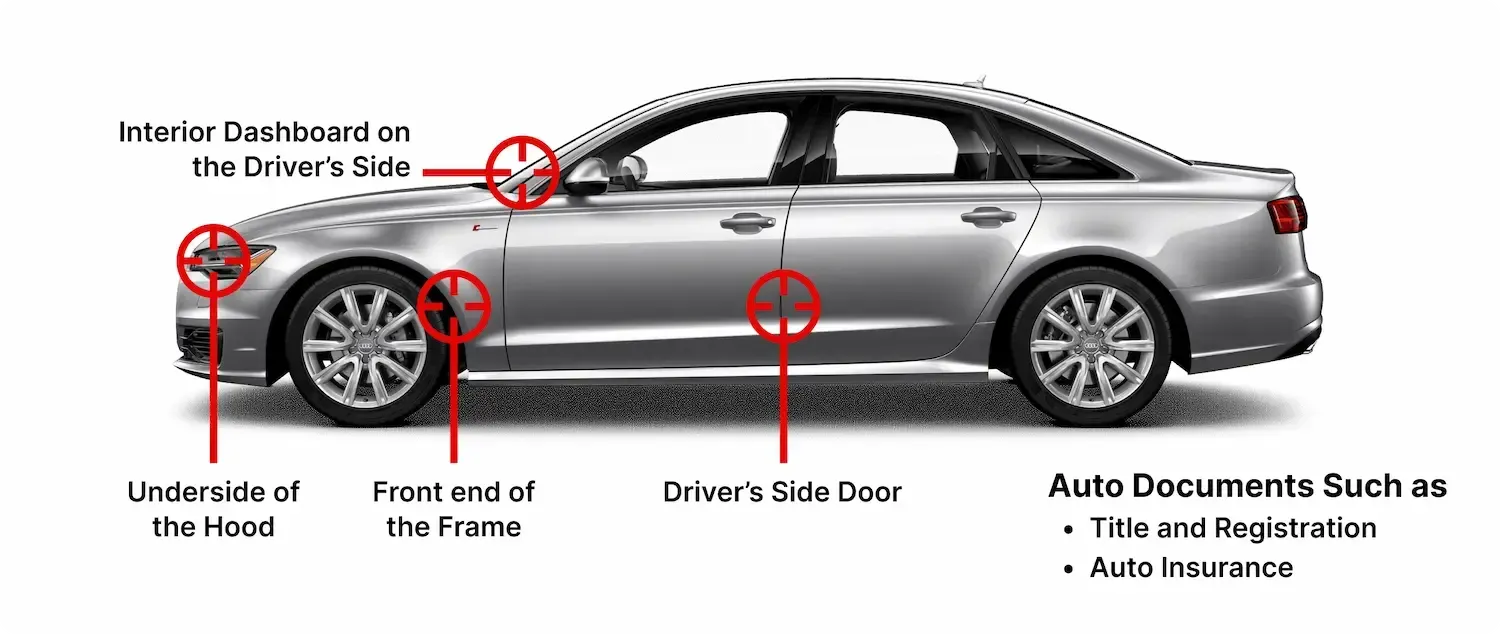
Porsche VIN Location
The VIN is placed in several key areas on the vehicle and within official documents. Check these common spots to make sure you are using the correct number.
Driver’s Side Dashboard
Look through the windshield at the lower corner of the dashboard on the driver’s side. This is the most common VIN location on modern Porsche models like the 911, Cayenne, and Macan.
Driver’s Side Door Jamb
Open the driver’s door and inspect the door frame or pillar near the latch. You will usually find a sticker or metal plate displaying the VIN along with manufacturing details.
Engine Bay
Check inside the engine compartment. Depending on the Porsche model, the VIN may be stamped near the firewall, inner fender, or chassis structure—especially on performance-oriented builds.
Documents
The VIN is also listed on official paperwork such as the registration, insurance documents, and vehicle title. Always cross-check these with the VIN on the car to confirm accuracy.
Classic Porsche VIN Location
Classic Porsche models, especially air-cooled generations, may not follow modern VIN placement standards. Identification numbers can sometimes appear in less obvious areas.
Front Trunk Area
On many classic Porsche models, such as older 911s, the VIN is often stamped in the front trunk area (near the fuel tank or inner body panel).
Body Panels
Some vintage Porsche vehicles may include identification plates or stamps on structural components or removable panels. These were used for factory tracking and authenticity verification.
Who Should Use the Porsche VIN Decoder
A Porsche VIN decoder is essential for anyone buying, selling, or evaluating a Porsche. Whether it’s a modern performance SUV or a classic sports car, decoding the VIN helps confirm authenticity and avoid expensive mistakes.
Buyers
Before purchasing, review the Porsche’s factory specifications, ownership history, and overall condition. A VIN check helps confirm the car matches the listing and can reveal issues that may not be visible during inspection.
Sellers
Strengthen your listing by providing verified information. Decoding the VIN confirms original specs and available records, helping you build trust and justify your asking price—especially important in the premium car market.
Dealers
For dealerships, VIN decoding ensures accurate inventory management. Porsche models often come with various trims, engine options, and packages, so verifying details helps maintain reliable listings.
Collectors
Collectors and enthusiasts can use VIN decoding to confirm originality, production details, and rare configurations. This is crucial for classic Porsche models, where authenticity impacts long-term value.
What is the Difference Between Modern and Classic VIN
Modern and classic VINs differ in structure, consistency, and the level of detail they provide. Understanding these differences is important, especially when dealing with older Porsche models.
VIN Length and Format
Modern Porsche vehicles use the standardized 17-digit VIN system introduced in 1981. Classic Porsche models may have shorter VINs, typically ranging from 5 to 14 characters, depending on the production era.
Data Availability
A modern VIN can reveal detailed information such as engine type (flat-4, flat-6, or turbocharged variants), trim level, production year, and factory configuration. Our database has the complete information about the classic and modern Porsche models, so you do not need to worry about the data.
Decoding Accuracy
Modern VINs are easier to decode because of standardized formatting and complete databases. Classic VINs can be more complex, but you can decode any classic VIN with our tools.
Porsche VIN Breakdown
A modern Porsche VIN consists of 17 characters, and each section provides specific information about the vehicle. The VIN is divided into three main parts: WMI (World Manufacturer Identifier), VDS (Vehicle Descriptor Section), and VIS (Vehicle Identifier Section). Each shows details about the car’s origin, specifications, and production.
World Manufacturer Identifier (WMI)
Digit 1 to 3: WP1
- W = Country of origin (Germany)
- P1 = Porsche (SUV division)
Vehicle Descriptor Section (VDS)
Digit 4 to 9: AE2A2X
- A = Model line (Cayenne platform)
- E = Engine type (3.6L V6 engine)
- 2 = Body style (4-door SUV)
- A = Drivetrain (All-Wheel Drive)
- 2 = Trim level (standard / base configuration)
- X = Check digit
Vehicle Identifier Section (VIS)
Digit 10 to 17: HLA73757
- H = Model year (2017)
- L = Assembly plant in Leipzig Plant, Germany
- A73757 = Production sequence number
Need More Porsche Information? Get a Vehicle History Report
A VIN decoder gives you the basics, but a full vehicle history report shows all the information you need to know. For a Porsche, especially a high-performance or collectible model, this deeper insight helps you avoid hidden risks and make a confident, well-informed decision.
Vehicle Specification
See exactly how the Porsche left the factory. From flat-6 engines in the 911 to turbocharged setups in models like the Cayenne and Macan, you’ll get details on engine type, transmission (PDK or manual), trim level, and original MSRP to confirm authenticity.
Title Records
Used Porsche vehicles can sometimes have complex backgrounds. This section highlights important red flags such as salvage titles, rebuild history, theft records, or mileage inconsistencies that may affect value and legal standing.
Odometer Reading
Mileage plays a major role in a Porsche’s condition and resale value. Track recorded readings over time to identify rollbacks, unusual gaps, or inconsistencies that may suggest more wear than advertised.
Accident and Damage History
Even well-maintained Porsche models may have past damage. Check for reported accidents, structural repairs, or environmental exposure like flooding—factors that can affect performance, safety, and long-term reliability.
Auction History
Many Porsche vehicles, especially performance and collector models, pass through auctions. View past sale records, including dates, locations, prices, and sometimes photos, to understand how the vehicle was previously presented and valued.
Ownership Information
Understand how the Porsche has been used over time. See the number of previous owners, general registration locations, and ownership duration, without exposing any private personal information.
Recalls Check
Stay informed about any recalls issued for the vehicle. This section shows what the issue was, when it was announced, and whether it has been resolved, helping ensure the Porsche remains safe and roadworthy.
Engine Information
Confirm the engine linked to the VIN. Whether it’s a naturally aspirated flat-6, a turbocharged variant, or a hybrid setup, matching the correct engine is essential for verifying originality, performance expectations, and long-term value.
Get More Information on Porsche Using Our Tools
Go beyond basic checks. With a full report, you can access detailed vehicle history, recall data, and even the original window sticker to check Porsche's complete build information.
Porsche Recall Check by VIN
Run a full recall check using the VIN to see if any safety issues have been reported for the vehicle.
Porsche Window Sticker by VIN
Access the original Porsche window sticker to view factory-installed features, options, colors, MSRP, and warranty details.
Decode Any Modern and Classic Porsche VIN
Thinking about buying a used Porsche? Don’t rely on looks or a quick test drive alone. Decode the VIN first to confirm everything!.
Supported Modern Porsche Models
Make sure the engine type, transmission (PDK or manual), trim, and optional packages match what’s being advertised before making a decision.
Supported Classic Porsche Models
Looking at a classic Porsche, such as an air-cooled 911 or early Boxster? Our VIN decoder also supports older VIN formats, including shorter or non-standard identifiers, helping you confirm originality, factory specifications, and collector value.
Check Any Vehicle, Not Just Porsche
Considering multiple options? Our VIN decoder works across many brands, giving you access to specifications, history records, and key details—so you can compare vehicles and make the right choice in one place.
Porsche EV Update
The Porsche electrification strategy is not focused on expanding its EV lineup while maintaining flexibility through hybrid and traditional powertrain vehicle selection. The brand continues investing in electric vehicles, led by the famous Taycan, Macan, and upcoming Cayenne electric edition.
EV Product Development
Porsche continues refining its electric vehicle portfolio through performance, efficiency, and charging improvements. Recent updates have focused on enhancing the driving experience while preserving the brand's performance-oriented identity.
EV Lineup
Porsche's battery-electric portfolio now covers multiple vehicle segments, from sports sedans to luxury SUVs.
These are the EV models owned by Porsche:
Taycan electric sports sedan.
Macan Electric luxury SUV.
Upcoming Cayenne Electric.
Multiple performance-focused EV variants.
FAQs About Porsche VIN Decoder
Do classic Porsche cars have different VIN numbers?
Classic Porsche vehicles do have unique VINs, often called chassis numbers. However, the format changes depending on the model year. Before 1981, these numbers were shorter and less consistent, typically ranging from 5 to 14 digits.
What if my Porsche VIN is less than 17 digits?
If a Porsche VIN has fewer than 17 characters, it usually means the car was built before 1981. That’s when the standardised 17-digit VIN system was introduced. Earlier models, including air-cooled 911s and the 356, used shorter chassis numbers instead.
Are Porsche cars reliable?
Porsche is widely regarded as a reliable brand, especially considering its high-performance focus. Many models are built to last well beyond 100,000 miles, although ownership costs can be higher due to maintenance and parts.
Are Porsche vehicles only known for their performance?
Porsche is not only about speed and performance. The brand is also known for build quality, everyday usability, and strong engineering, which makes many of its cars suitable for both daily driving and long-term ownership.
Do classic Porsche cars have different VIN numbers?
Classic Porsche models come with unique chassis numbers that identify each car. These numbers vary by year and model, with pre-1981 vehicles typically using shorter formats between 6 and 10 digits.
What is a Porsche VIN number?
A Porsche VIN is a 17-character alphanumeric code used for vehicles built from 1981 onwards. It acts as the car’s identifier and contains key details such as origin, model year, engine type, and production sequence. You can usually find it on the dashboard, door jamb, or official documents.