
Vehicle Recall Check by VIN For All Brands
With over 30 million vehicles recalled in 2025 and 25% still unrepaired, skipping a recall check puts you at real risk. Enter the VIN or license plate into our vehicle recall check tool to avoid dangerous defects before you buy.



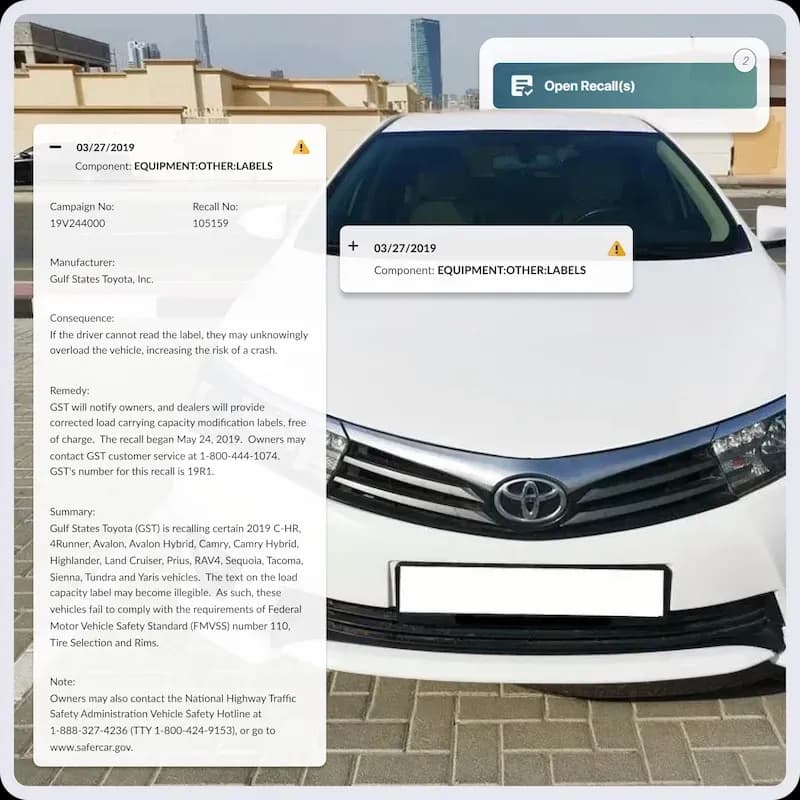
What are Vehicle Recalls?
A vehicle recall happens when a car manufacturer or the National Highway Traffic Safety Administration (NHTSA) finds that a vehicle or one of its parts does not meet basic safety standards. This could involve parts like airbags, tires, brakes, or other important components.
A recall can cover a whole group of vehicles that share the same make or model. When a defect puts drivers and passengers at risk, the manufacturer is required to fix the problem at no cost to the owner.
Why Should You Run a Vehicle Recall Check?
A vehicle recall check helps you stay safe and make smarter decisions. It gives buyers, owners, and sellers the information they need before it is too late.
Buyers
Buying a used car comes with risks. A recall lookup by VIN helps you know exactly what you are getting into before you spend your money.
Know What You Are Buying
A recall check tells you if the car has any open safety issues that the seller may not know about or may not tell you.
Avoid Paying for Someone Else's Problem
An unfixed recall can cost money to repair. Knowing about it before buying helps you negotiate a better price or walk away completely.
Keep Your Family Safe on the Road
Some vehicle recalls involve serious safety defects. Checking before you buy makes sure you are not driving home in a car that could put lives at risk.
Owners
Owning a car with an open recall is a safety risk you may not even know about. A quick check gives you peace of mind.
Find Out if Your Car Is Affected
Recalls are not always announced loudly. Running a check helps you find out if your specific vehicle has an open recall right now.
Get It Fixed for Free
Most recalls are repaired at no cost to the owner. Checking for recall by VIN means you can take advantage of a free fix before the offer expires.
Stay Safe on the Road
An open recall can affect your brakes, airbags, or steering. Finding out early and getting it fixed keeps you and your passengers safe every time you drive.
Sellers
Selling a car with an open recall can slow down the process and reduce trust. A recall check helps you sell with confidence and honesty.
Build Trust With Potential Buyers
Buyers feel more confident when a seller can show a clean recall record. It makes your listing stand out and speeds up the sale.
Avoid Legal Complications
Selling a car with a known open recall without disclosing it can create legal problems. A recall check by VIN helps you stay on the right side of the law.
Get the Best Price for Your Vehicle
A car with no open recalls is worth more to a buyer. Showing a clear recall history gives you a stronger position when negotiating the final price.
Why Recall Check Matters: 2025 Open Recall Facts and Figures
1 in 4
Vehicles on US Roads have open safety recalls
950+
Separate recall campaigns were recorded in 2025
85%
70 - 85% of cars exported to Albania from the US have a Salvage title.
What You Will Find Inside Your Recall Check Report
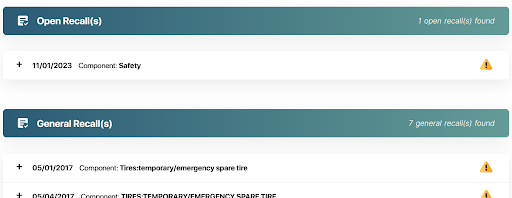
A recall check report puts together information from manufacturers and the government to show if a car has any safety problems, what needs to be fixed, and what steps are being taken to fix it. Here’s what to expect:
Recall Date
The day when the car maker or government officially announced the recall due to a safety problem with the car.
Affected Components
This tells which parts of the car have a problem and are included in the recall.
Campaign Number
This is a special number the car maker uses to keep track of the recall and make sure the right cars get fixed.
Recall Number
This is the number the government gives to a recall so they can find it and keep records of it.
Remedy Description
This explains what will be done to fix the problem, like replacing a broken part, repairing it, or others.
Summary and Note
This explains what the problem is, why it is dangerous, and any other important details.
Other Records to Expect in Our VIN Check Report
Besides recall information, our report also shows the full history of a car. You can find out who owned it before, whether it was ever in a crash, and much more. Here’s what is included:
Vehicle Usage Records
Shows how the car was used before, like personal, a rental, a taxi, or used for business.
Ownership History
Tells you how many people have owned the car before, which state it was registered in, and how long each person kept it.
Title Brand Check
Checks if the car has a branded title, like "salvage," "flood," or "rebuilt." This signals serious damage or legal problems in the past.
Accident Records
Shows if the car was ever in a crash. It includes details like how bad the crash was and whether the airbags went off.
Mileage Records
Checks the odometer readings at different times, making sure no one changed the number to make the car look less driven than it really was.
Lien / Loan Records
Tells you if someone still owes money on the car. If there’s an unpaid loan, the new buyer could end up being responsible for the debt
Theft Records
Checks if the car was ever reported stolen. Buying a stolen car, even by accident, can get you into serious legal trouble.
Sales Listing History
Shows how many times the car was put up for sale before, what price it was listed at, and how often it appeared in listings.
Auction Records
Tells you if the car was ever sold at an auction, especially a salvage auction. Cars sold this way often had major damage.
How to Perform a Recall Lookup by VIN
Running a recall lookup by VIN is quick and simple. Just follow these three easy steps to get your results.
Step 1: Enter the VIN
Type the 17-character VIN (Vehicle Identification Number) into the form at the top of this page. You can also check by entering the license plate number and selecting your US state.
Step 2: Search VIN
Click the "Search VIN" button to pull up a preview of the vehicle. You will instantly see details like the year, make, model, trim, engine type, and more.
Step 3: Get the Full Recall Report
Proceed to payment to access the full recall details and the complete vehicle history report. Your report is available for download as a PDF so you can share and refer to it for future reference.
Case Study: How a Buyer Paid $15,000 for a RAV4 the Seller Wanted $19,000 For
Ryan found a 2017 Toyota RAV4 Ltd listed at $19,000, and the seller said it was a clean lease return with no accidents and nothing outstanding. Ryan liked the car a lot, but used our vehicle recall check tool before agreeing to the price.
What the Report Found
1 open recall record
1 accident record
1 lien or loan record
2 auction records with photos showing front-end damage
Lease usage records
Possible Past Incidents and the Car's Condition
The auction photos told the clearest story. The front end had taken a serious hit at some point. An open recall meant a known fault was still sitting unfixed, and the seller had mentioned none of it.
How Ryan Saved $4000
Ryan put the report in front of the seller and negotiated hard. He bought the RAV4 for $15,000, saving $4,000 off the asking price. The recall check by VIN gave him every reason to push for a fairer deal.
List of Supported Make
No matter what you drive, our tool has you covered. Choose your vehicle brand below to perform a recall lookup by VIN within a minute.
Explore More VIN Search Tools
We offer more than just recall lookups. Browse our other VIN search tools and find exactly what you need, like car window stickers, license plate lookup, and more.
Free VIN Decoder
Decode any VIN for free to view specs like the year, make, model, engine, and more.
VIN Check
Get an affordable VIN lookup for complete vehicle history, including ownership, accidents, thefts, and more.
Window Sticker Lookup
Find out how a car originally left the factory. Get details like MSRP, options, standard features, and more.
License Plate Lookup
No VIN, no issues. Look up any vehicle’s detailed history using the license plate number.
Classic Build Sheet
Find any classic car factory build options & equipment. View engine specs, colors, base price, and more
Motorcycle VIN Check
Lookup any motorcycle VIN to access detailed bike specs, history, and more.
FAQ About Car Recall Check by VIN
Why do you need to run a recall check?
A recall check helps you find safety problems in your car, like bad airbags or faulty brakes. Over 50 million vehicles have open recalls right now. Checking your VIN keeps you and your family safe on the road.
How often should I check for recalls on my car?
It’s recommended to check for recalls at least once a year, or whenever you hear about a potential recall in the news. However, if you purchase a used car or if the manufacturer releases a new recall notice, you should check right away. Additionally, it’s good practice to check your car’s recall status every time you take it in for service, as mechanics often have updated recall information.
What information do I need to check for recalls?
To check if your vehicle has a recall, you’ll need your car’s Vehicle Identification Number (VIN). This 17-character code is unique to your car and can be found on the dashboard (on the driver’s side, near the windshield) or on the driver’s side door frame, on a label inside the car door. Having this number will allow you to quickly look up the most accurate and detailed recall information for your specific vehicle.
How do I know if a used car has a recall?
When buying a used car, it’s essential to check whether it has any active recalls. You can do this by asking the seller for the car’s VIN and using a recall lookup tool to verify its status. If the car is already registered, you can also check with the manufacturer or look up recall history through government databases. Be sure to ask for proof that any previous recalls have been addressed and fixed before purchasing the car.
Can I still drive my car if there is a recall?
It depends on the nature of the recall. If your car is subject to a recall related to a safety issue (such as faulty airbags, brakes, or tires), it is not advisable to continue driving it until the recall is addressed. Some recalls may be minor or non-urgent, but it's always better to check with your car manufacturer or dealer for guidance. If a recall is issued, they will provide instructions on how to get the problem fixed, often at no cost to you.
How long do I have to get a recall fixed?
In most cases, manufacturers are legally required to fix recall issues within a reasonable time frame, and you may be eligible for free repairs. There is no strict deadline to have a recall fixed, but it’s important to address the issue as soon as possible, especially if it affects your safety or the vehicle’s performance. Manufacturers often send notices with deadlines for repair or replacement, so it’s wise to act promptly. Some recalls may have a specific time window for repairs, especially if the parts are limited.
How to look up recalls on my car?
To look up vehicle recalls, simply use our VIN check tool by entering the VIN (Vehicle Identification Number). The process also allows you to view the complete vehicle history to access records like accidents, ownership, title checks, mileage verification, and more.
What can vehicle recall records by VIN reveal about a vehicle?
DetailedVehicleHistory.com’s recall check by VIN can reveal important safety issues reported by the manufacturer. It shows whether your car has any open or completed recalls related to defective parts or systems. It shows you the exact defect description, the potential safety risks on the road, and the required fix. This VIN recall lookup helps buyers and owners make safer decisions.
Can recall records include airbag, brake, or steering defects?
Yes, a VIN recall search can show airbag recalls, brake system defects, and steering problems reported by the manufacturer. These are among the most common and serious safety issues found in recall databases. These reports routinely uncover dangerous situations like faulty airbags that might fail to deploy or deploy with too much force. You will also see critical failures in the stopping power from faulty brakes or loss of driver control due to steering glitches. Finding these faults early prevents major accidents on the road.
Can a recall VIN check reveal fire risks or electrical problems?
Yes, a recall check by VIN number can flag vehicles with known fire hazards or electrical system failures. Many factory notices involve faulty wiring or computer errors that could trigger sudden engine stalls while you drive. A VIN check for recalls will clearly warn you about short circuits that create immediate fire hazards.These issues may not show visible signs until serious damage occurs. Checking this data keeps you and your family safe from unexpected electrical hazards.
Does a vehicle recall report include EV battery recall information?
Yes, a recall report can include electric vehicle battery recalls and related charging system defects. As EV ownership grows in the USA, battery fire risks and range loss issues have led to several major recalls. Running an EV recall check by VIN helps owners stay informed about battery safety notices from manufacturers. Many electric car recalls involve software updates or physical battery replacements at no cost. This makes a VIN based recall check especially valuable for anyone who owns or is buying a used electric vehicle.
Can unresolved recalls affect a vehicle’s resale value or safety?
Yes. Open recalls can lower a car's resale value and create serious safety concerns. Driving a car with unresolved defects significantly increases the risk of a sudden crash. Furthermore, a permanently unresolved recall discourages buyers and reduces the resale price. Fixing these issues promptly protects your investment and ensures peace of mind.
Are recall repairs free through the manufacturer or dealership?
Yes, recall repairs are completely free for the vehicle owner in the United States. The manufacturer is required by law to fix any safety defect covered under a recall at no charge. You simply take your vehicle to an authorized dealership with your VIN and they handle the repair. This applies to both new and older used vehicles as long as the recall is still open. Running a free recall check by VIN first helps you confirm which repairs are pending before your dealership visit.
Can a VIN recall check reveal serious safety problems?
Yes. A VIN recall lookup reveals serious safety defects that put drivers and passengers at risk. The report highlights severe manufacturing flaws that fail to meet basic federal safety standards. These issues can range from sudden engine failure to parts that may detach while driving at highway speeds. Using a free recall check by VIN ensures you do not drive a hazardous car.
Will a vehicle recall report show completed and unresolved recalls?
Yes, a full vehicle recall report shows both fixed recalls and open recalls still waiting for repair. A used car recall history check helps you understand what work was done and what still needs attention. Some vehicles may have multiple recalls, so reviewing the full recall history by VIN gives you a complete picture.