
Modern and Classic AM General VIN Decoder
Before you purchase a modern or classic AM General, it is important to check everything thoroughly. Decode the VIN and get model year, trim, engine specifications, transmission setup, body style production details and more.
Table of Contents:
AM General Updates
and Hummer EV SUV (2023) are the flagship civilian electric vehicles tied to AM General’s heritage.
AM General officially unveiled the HUMVEE Charge Hybrid Electric Vehicle (HEV) Concept at the Association of the United States Army (AUSA) conference in 2023.
By 2026, AM General’s future messaging was still heavily military-focused
What Will You Get From the AM General VIN Decoder
The AM General VIN decoder can help you get the full details on the vehicle’s information, MSRP, and market value. Make sure to decode the VIN to run a quick background check to minimize costly mistakes. Here’s what you’ll be getting from the AM General VIN Decoder.
- Manufacturer and origin
- Model, trim, and package details
- Engine specifications
- Transmission setup
- Body style
- Model year
- Production plant
- Manufacturer Suggested Retail Price (MSRP)
- Market Value
How to Use the AM General VIN Decoder
Our AM General VIN decoder can be used to help you decode the VIN of any modern & classic vehicles. Follow these steps and get it done in less than a minute.
Step 1: Find the VIN
Check on the vehicle’s dashboard or documentation to find the VIN.
Step 2: Fill Out the Form
Click on the form, then write down the VIN. After that, click on the button to submit the form.
Step 3: Check the Vehicle Specs
Check the full vehicle’s specifications, like engine, transmission, country of origin, and the car’s market value.
Where to Find the VIN on an AM General
Locating the VIN on both classic and modern AM General vehicles is essential before decoding it. VIN placement can vary by model and production year, so knowing where to check will save time.
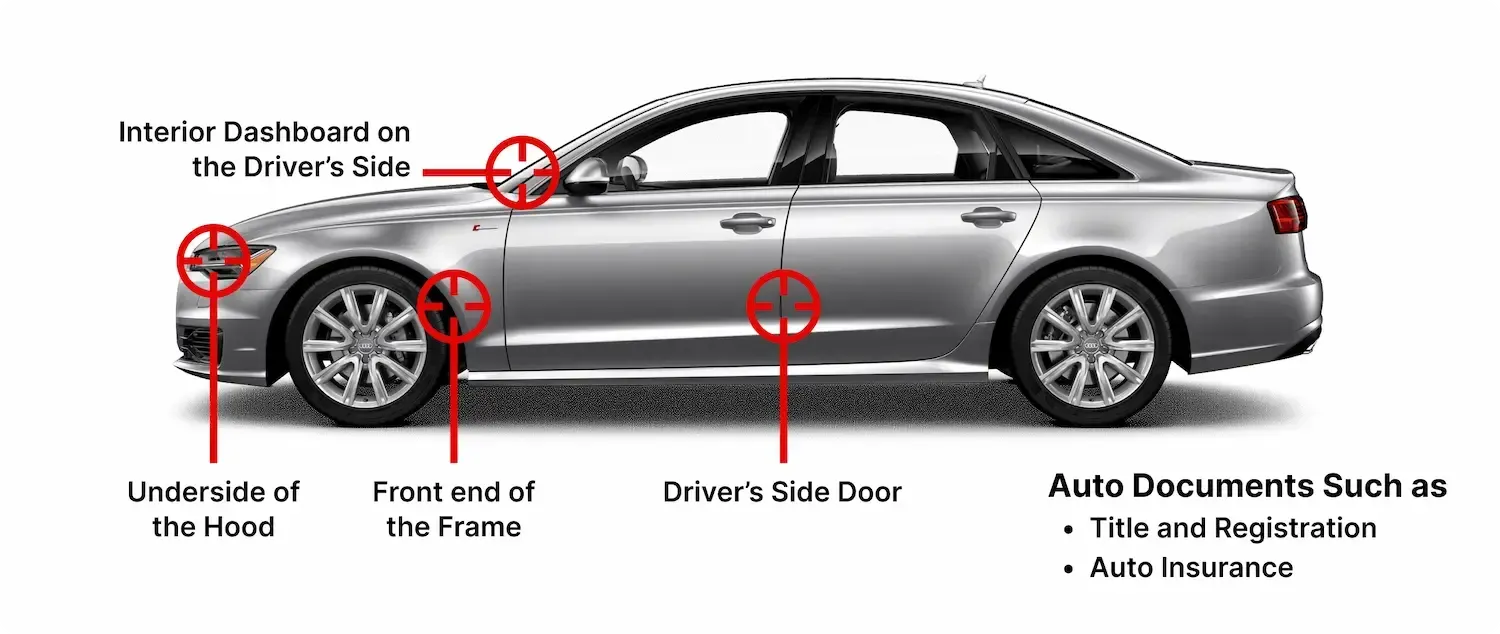
AM General VIN Location
The VIN can be found in several areas on the vehicle and its documents. Check the following locations to identify it.
Driver’s Side Dashboard
Look at the lower-left corner of the dashboard through the windshield from outside the vehicle.
Driver’s Side Door Jamb
Open the driver’s door and check for a sticker or plate near the latch or door frame.
Engine Bay
Inspect the engine compartment for a stamped VIN on the engine block or along the bulkhead.
Documents
The VIN is also listed on official documents such as the registration, insurance card, and vehicle title.
Classic AM General VIN Location
Classic AM General vehicles may follow similar VIN placement, but some models include additional or less common locations depending on the year and build.
Under the Floor Mat
On certain models, the VIN may be stamped on the floor pan beneath the carpet, often on the passenger side.
Body Panels
Older vehicles may have VIN tags on parts such as the hood, trunk lid, or fenders, typically displayed on small plates or stickers.
Who Should Utilize an AM General VIN Decoder
An AM General VIN decoder is useful for anyone handling a used or classic vehicle. It helps confirm specifications, check records, and avoid costly mistakes, whether you are buying, selling, managing inventory, or collecting.
Buyers
Buyers can use VIN decoding to confirm specs, ownership records, and past usage before committing. This reduces the risk of hidden issues and ensures the vehicle matches the listing, which is especially important for older or heavily used AM General vehicles.
Sellers
Sellers can present accurate and verified information in their listings by using a VIN check. This helps reduce buyer hesitation, supports pricing, and makes it easier to answer questions, especially when selling older or specialty AM General vehicles.
Dealers
Dealers benefit from faster inventory checks and more accurate listings across platforms. VIN decoding helps reduce listing errors, supports transparency with customers, and simplifies managing both modern and older AM General units in stock.
Collectors
Collectors can verify authenticity, production details, and key specifications before acquiring a vehicle. This is especially useful for identifying rare AM General models and confirming originality when documentation is limited or incomplete.
Modern vs Classic AM General VIN: Key Differences
VIN formats have changed over time, affecting how much information can be retrieved. Modern AM General vehicles follow a standardized system, while older models use shorter and less consistent formats, which can limit decoding results.
VIN Length and Format
Modern AM General vehicles use a standardized 17-character VIN with a fixed structure. Older models may have shorter VINs, typically between 5 and 14 characters, depending on the production year and the manufacturer’s format at the time.
Data Availability
Modern VINs usually provide detailed information, including specifications and production data. Classic VINs may return limited results, depending on how well records were preserved and whether the data was digitized or made accessible.
Decoding Accuracy
Decoding modern VINs is generally consistent due to standard formatting and complete databases. Classic VIN decoding can be less reliable, as formats vary and historical records may be incomplete, making verification more challenging in some cases.
AM General VIN Breakdown
The VIN is not a random mixture of numbers and letters, but it has the complete information of the vehicle, like the serial numbers, engine types, manufacturer plants, and more. Here's the basic information on how AM General VINs are broken down into three main categories.
World Manufacturer Identifier (WMI)
Digit 1 to 3: 137
- 1 = Country of origin (United States)
- 37 = Manufacturer identifier
Vehicle Descriptor Section (VDS)
Digit 4 to 9: ZA84361
- Z = Model or series: Likely Open Top or Utility variant
- A = Body or restraint system
- 8 = Engine: Likely 6.5L V8 Diesel
- 4 = Body type: 4-door
- 3 = Trim level or series
- 6 = Transmission
- 1 = Check digit
Vehicle Identification Section (VIS)
Digit 10 to 17: 1E191177
- 1 = Model year (2001)
- E =Manufactured at AM General's Mishawaka, Indiana, plant
- 191177 = Serial number
Why Decoding the AM General VIN is Crucial
A VIN conveys crucial information about the vehicle that can be deciphered–it also collects information like accidents, auctions, and even its maintenance and recall history. That is why it is crucial to decode the VIN and get the vehicle history report.
Before Buying a Car
Check the VIN to confirm specifications, ownership history, and overall condition before purchasing. This helps you spot hidden issues early and avoid costly mistakes, especially when dealing with older or less documented AM General vehicles.
Before Selling a Car
Use a VIN check to present accurate and verified details in your listing. This reduces buyer hesitation, supports your asking price, and helps create a smoother selling process, particularly for classic or specialty AM General models.
Verify Vehicle Identity
Make sure the VIN matches the vehicle’s make, model, and configuration. This step helps detect mismatches, cloning, or fraud, which is important when records are limited or inconsistent across older AM General vehicles.
Check History and Records
Access records such as ownership history, title data, and reported events. This helps build a clearer picture of the vehicle’s background, even if available data is limited for certain AM General models.
Decode Any AM General’s Models Using VIN
Before you purchase a used modern/classic AM General, make sure you check everything thoroughly. Use our service to decode the VIN and check its complete specs, market value, and much more!
Supported Modern AM General
We support all models and trims of the AM General. Check which one is yours.
Supported Classic AM General
You can decode any VIN from classic AM General models.
Want More Info About Your AM General? Get a Vehicle History Report
Once you decode the AM General VIN, the report provides a breakdown of the vehicle’s background and build details. It helps buyers identify risks early and gives sellers verified information to support accurate and transparent listings.
Vehicle Specification
View factory-issued details such as engine setup, transmission type, fuel system, production origin, and original MSRP. This section helps confirm the vehicle matches its listing and ensures it fits your intended use, expectations, and overall budget.
Title Records
Check the title status for issues like salvage, rebuilt, lemon, or theft records. These factors can affect legality, safety, and resale value, making it important to confirm before completing any transaction involving the vehicle.
Odometer Reading
Review mileage records across different dates to ensure consistency. This helps identify unusual changes, gaps, or possible rollback cases, giving you a clearer picture of how the vehicle has been used over time.
Accident and Damage History
Look into any reported accidents, structural damage, or environmental exposure such as flooding. These records help you evaluate repair quality, current condition, and whether the vehicle is suitable for long-term use.
Auction History
Check if the vehicle has been sold through auctions, including details like sale dates, locations, and final prices. This section will also include images that show the vehicle’s condition at the time of sale.
Ownership Information
See how many owners the vehicle has had, past location, and ownership duration. This helps you understand usage patterns and whether frequent ownership changes may have impacted the vehicle’s condition.
Recalls Check
Find out if the AM General vehicle has been subject to safety or performance recalls. The report may include recall dates, causes, and whether corrective actions were taken to address the issue.
Engine Information
Confirm engine type, configuration, and performance-related details. This helps ensure the vehicle still matches its original build and supports accurate comparisons when reviewing listings or checking for possible modifications.
Get More AM General Details Using Our Tools
Need to get more detailed information about the vehicle? No worry, use our services to get more information easily.
AM General Recall Check
Check any AM General recall history by using the VIN. Make sure every problem is addressed and fixed.
AM General Window Sticker by VIN
Check the AM General factory information by using our window sticker by VIN tool. Get the original AM General window sticker copy.
Run a VIN Decoder on Any Make, Anytime
Our tool works across a wide range of brands and models, giving you quick access to key vehicle details and records. Always check the VIN first to avoid surprises and make a more informed purchase.
FAQs About AM General VIN Decoder
Is there a free AM General VIN decoder?
Yes, free AM General VIN decoders are available. The National Highway Traffic Safety Administration (NHTSA) VIN decoder is the official option for checking specs, build plant, and country of origin. Other free tools also provide additional details.
Can you use the license plate to get the vehicle history report?
Yes, you can use a license plate and state to pull a vehicle history report. Many services convert the plate into a VIN, allowing access to records such as accidents, title status, ownership history, and maintenance data.
Can AM General VIN decoding help me verify a real AM General vs. an altered build?
Yes, decoding an AM General VIN can help confirm whether a vehicle is genuine. It allows you to verify factory details like model year, engine type, and production data to ensure they match the vehicle’s actual features.
Is AM General the same as AMC?
AM General is separate from American Motors Corporation (AMC), although it originated from it. Established in 1971 from AMC’s General Products Division, it later became an independent company after being sold in 1983.
Can VINs be swapped?
Yes, VINs can be swapped, but it is illegal. Known as VIN cloning, this practice involves placing a valid VIN from one vehicle onto another, often to disguise stolen or heavily damaged cars.
What do the first 3 digits of a VIN mean?
The first three characters of a 17-digit VIN are called the World Manufacturer Identifier (WMI). They indicate the country of origin, the manufacturer, and the vehicle type or division, helping identify the source of production.