
Classic and Modern Volkswagen VIN Decoder
Use the Volkswagen VIN decoder to decode any classic and modern Volkswagen’s VIN. Click on the form below to see the complete vehicle information, such as engine, trim, and model year, MSRP, and the updated market value.
Table of Contents:
What Will You Get from the Volkswagen VIN Decoder
On the Volkswagen VIN decoder, users can access detailed vehicle information completely free of charge. Results are delivered in under a minute, providing all the essential data without delays. Here’s what the tool reveals:
- Manufacturer and origin
- Model, trim, and package details
- Engine specifications
- Transmission setup
- Body style
- Model year
- Production plant
- Manufacturer Suggested Retail Price (MSRP)
- Market Value
How to Decode the Volkswagen VIN
Our Volkswagen VIN decoder checks the complete information of the car, including the detailed specifications, MSRP, and market value.
Step 1: Find the VIN
Check the dashboard on the driver’s side doorjamb, engine bay, or on the paperwork like the registration card or bill of sale.
Step 2: Fill Out the Form
Click the form and write the classic or modern Mazda VIN. Then, click the button to submit.
Step 3: Check the Vehicle Specs
Once it is done, you’ll see the complete vehicle specification, like engine type, transmission type, country of origin, and updated market value.
Where to Find the VIN on a Classic and Modern Volkswagen
Before decoding, the VIN must be located on the vehicle. Most modern Volkswagen models follow standardised placement, while classic vehicles may vary depending on the production year and factory origin. The sections below outline the most common locations.
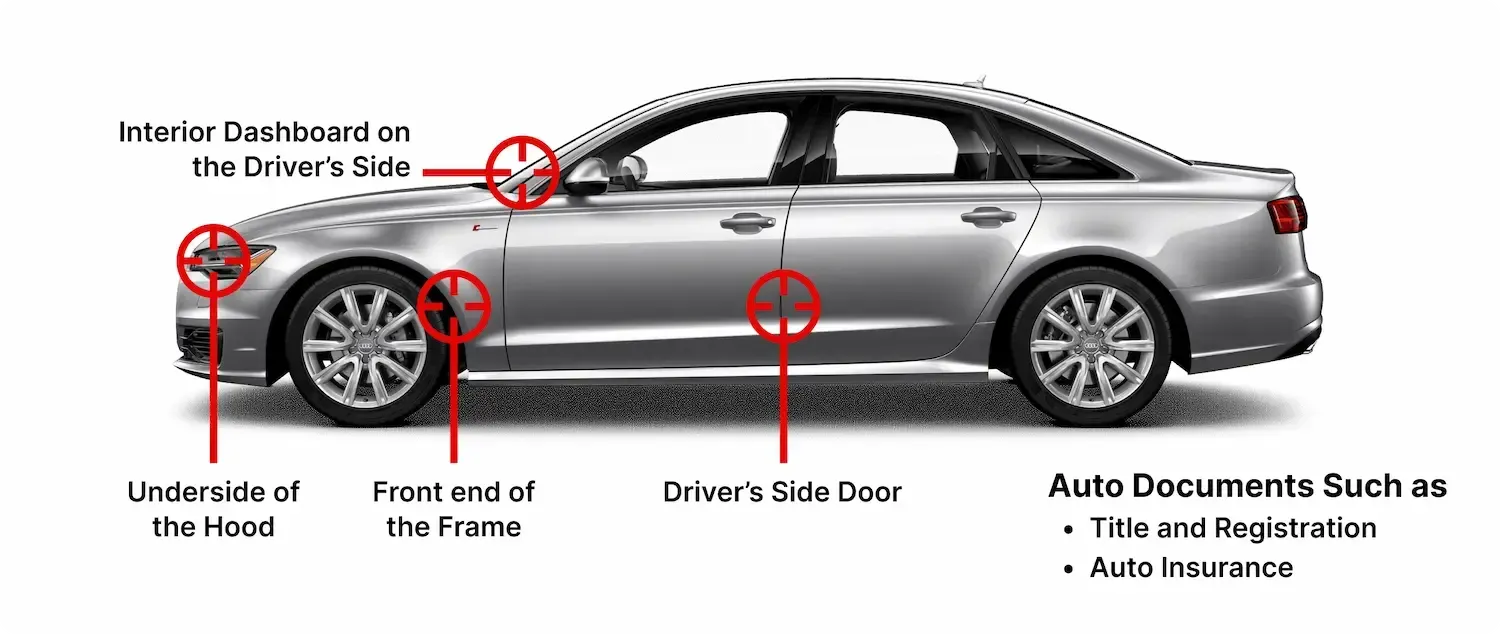
Volkswagen VIN Location
The VIN can be found in multiple areas on the vehicle and within official documentation. It is important to verify each location to ensure the number matches across all sources.
Driver’s Side Dashboard
Check the lower corner of the dashboard on the driver’s side, visible through the windshield. This is the most common VIN placement on modern Volkswagen vehicles.
Driver’s Side Door Jamb
Open the driver’s door and inspect the door frame or pillar near the latch. A label or plate typically displays the VIN along with manufacturing details.
Engine Bay
Look inside the engine compartment, usually near the firewall or stamped onto structural components. Some Volkswagen models feature the VIN etched directly onto the chassis.
Documents
The VIN is also listed on official records such as registration papers, insurance documents, and the vehicle title. These should always match the VIN found on the vehicle.
Classic Volkswagen VIN Location
Classic Volkswagen vehicles may not follow modern VIN standards. Depending on the model and production era, the VIN or chassis number can appear in less conventional locations.
Under the Floor Mat
In some older Volkswagen models, the VIN or chassis number may be stamped onto the floor pan beneath the carpet, often on the passenger side.
Body Panels
Certain classic Volkswagen vehicles include identification tags on panels such as the hood, trunk lid, or fenders.
Who Should Use the Volkswagen VIN Decoder
A Volkswagen VIN decoder is essential for anyone looking to buy, sell, insure, or verify a vehicle. With global production across Europe, North America, and Asia, Volkswagen models often vary by market.
Buyers
Check a Volkswagen’s exact specifications, factory features, and history before committing to a purchase. A VIN lookup helps confirm the car matches the listing and may reveal market-specific differences, imports, or hidden issues not visible during inspection.
Sellers
Present accurate and verified details in your listing. Decoding the VIN ensures the correct trim, engine, and factory options are disclosed, helping build buyer trust and reducing negotiation friction or post-sale disputes.
Dealers
Dealers can streamline inventory checks by decoding VINs to verify specifications across different markets. This is especially useful for Volkswagen vehicles, where the same model name may have different engines, trims, or features depending on the region.
Collectors
Collectors and enthusiasts can confirm originality, production details, and factory configurations. This is particularly important for classic Volkswagen models like older Golfs or Beetles, where collectors value honesty and authenticity.
What is the Difference Between a Modern and Classic Volkswagen VIN
Modern and classic Volkswagen VINs differ in structure, consistency, and the depth of information they provide. Understanding these differences is important for accurate decoding and vehicle verification.
VIN Length and Format
Modern Volkswagen vehicles use the standardised 17-character VIN system introduced in 1981. Classic models, especially pre-1981 Volkswagens, often use shorter chassis numbers that range from 5 to 14 characters and may not follow a uniform format.
Data Availability
A modern Volkswagen VIN can reveal detailed data such as engine type, trim level, model year, drivetrain, production plant, and safety features. Classic Volkswagen VINs typically provide limited information, as older records may not be fully digitised or standardised.
Decoding Accuracy
Modern VINs are easier to decode due to their fixed global format and extensive database support. Classic Volkswagen VINs can be more complex. Use our Volkswagen VIN Decoder to decode all classic and modern VINs.
Quick Volkswagen VIN Number Breakdown
A modern Volkswagen VIN consists of 17 characters, each representing specific vehicle data. It includes identifiers for the manufacturer, model, engine, production location, and a unique serial number that distinguishes each vehicle.
World Manufacturer Identifier (WMI)
Digit 1 to 3: WVW
- W = Country of origin (Germany)
- VW = Volkswagen passenger vehicles
Vehicle Descriptor Section (VDS)
Digit 4 to 9: SR7AN3
- S = Model line (Passat platform)
- R = Engine type (2.0L turbocharged inline-4)
- 7 = Body style (4-door sedan)
- A = Drivetrain (Front-Wheel Drive)
- N = Trim level (SE / mid-range configuration)
- 3 = Check digit
Vehicle Identifier Section (VIS)
Digit 10 to 17: NE011974
- N = Model year (2022)
- E = Assembly plant in Emden, Germany
- 011974 = Production sequence number
Need More Information? Get a Volkswagen History Report
A Volkswagen VIN decoder gives you quick access to essential vehicle details in under a minute. A full vehicle history report provides valuable insights into the car’s background—helping buyers and sellers avoid costly mistakes, especially with imports and market-specific variants.
Vehicle Specification
See how the Volkswagen was originally configured at the factory. From TSI petrol engines and TDI diesels to DSG transmissions and EV platforms, you’ll get accurate details on engine type, trim level, production plant, and original specifications.
Title Records
Used Volkswagen vehicles, particularly imports or cross-market models, may carry hidden risks. This section highlights red flags such as salvage titles, rebuilt status, theft records, or registration issues that can affect legality and resale value.
Odometer Reading
Mileage plays a major role in determining a vehicle’s condition and value. Access recorded odometer readings over time to identify inconsistencies, rollbacks, or unusual gaps that may indicate tampering or heavy use.
Accident and Damage History
Even well-built Volkswagen models can have a damage history. Check for reported accidents, structural repairs, or environmental damage such as flooding, all of which can impact safety, performance, and long-term reliability.
Auction History
Many Volkswagen vehicles—especially ex-fleet, rental, or imported units—pass through auctions. View past sale records, including dates, locations, and sometimes photos, to better understand how the vehicle was previously listed and valued.
Ownership Information
Track how the vehicle has changed hands over time. This includes the number of owners, general registration regions, and ownership duration, giving insight into how consistently the car may have been maintained.
Recalls Check
Stay updated on any recalls linked to the vehicle. This section outlines reported issues, announcement dates, and repair status, helping ensure that Volkswagen meets safety standards and compliance requirements.
Engine Information
Verify the engine linked to the VIN. Volkswagen offers a wide range of powertrains, from turbocharged petrol and diesel engines to hybrid and fully electric systems, making it essential to confirm the exact configuration for maintenance, parts compatibility, and overall value.
Get More Information on a Volkswagen with Our Tools
Need more details before making a decision? Use dedicated Volkswagen tools to check the complete recall information and get the window sticker!
Volkswagen Recall Check by VIN
Run a recall check using the VIN to confirm whether any safety issues have been identified and properly resolved.
Volkswagen Window Sticker by VIN
Access the original Volkswagen window sticker to review factory specifications, standard features, optional extras, and original MSRP.
Check Any Modern and Classic Volkswagen Model by VIN
Planning to buy a used Volkswagen? Don’t rely on looks or a quick test drive alone. Decoding the VIN helps verify factory specs, uncover key records, and confirm the vehicle matches what’s being advertised.
Supported Modern Volkswagen Models
Decode VINs for popular Volkswagen models such as the Golf, Passat, Tiguan, Touareg, Polo, and ID. series. Confirm engine type (TSI, TDI, or electric), trim level, drivetrain, and factory-installed features with accuracy.
Supported Classic Volkswagen VIN
Working with an older Volkswagen? The VIN decoder also supports classic formats, including shorter or non-standard chassis numbers.
Check Other Vehicles’ VIN
Our VIN decoder supports a wide range of brands, allowing you to check specifications, vehicle history records, and essential details side by side.
Volkswagen EV Expansion
Volkswagen continues to invest in electric vehicles through its growing ID. family while improving software, charging capabilities, and overall vehicle performance. Rather than focusing on new launches, the brand is refining its existing EV lineup and preparing future products for the North American market.
U.S. EV Lineup
Volkswagen's electric vehicle lineup in the United States ly centers on:
ID.4: Volkswagen's core electric SUV, offering up to 291 miles of EPA-estimated range and access to Tesla Superchargers through NACS-compatible charging solutions.
ID. Buzz: Volkswagen's electric van, which remains part of the brand's long-term EV plans despite a temporary pause for the 2026 model year in North America.
FAQs About Volkswagen VIN Decoder
What is a Volkswagen VIN number?
Does your VIN start with a specific code? A Volkswagen VIN (Vehicle Identification Number) is a unique 17-character alphanumeric code, often referred to as a chassis number, that acts like the car’s fingerprint. Introduced in 1981, it helps identify the vehicle’s origin, specifications, and history, and is widely used for recalls, parts matching, and history checks.
How do I find out what options my VW has?
To find the exact options your Volkswagen was built with, start by decoding the VIN using a reliable online tool. You can also check the service book or spare wheel well for the PR code sticker, or use the official Volkswagen app. A VIN lookup provides a detailed breakdown of factory-installed equipment.
How to tell the VW Beetle year?
To identify the model year of a classic Volkswagen Beetle (1946–1979), check the chassis number located under the rear seat or inside the front trunk. Visual cues also help—such as rear window shape (split, oval, or rectangular), tail light size, headlight angle, and dashboard design.
How can a classic Volkswagen VIN decoder help confirm authenticity?
A classic Volkswagen VIN decoder helps verify authenticity by comparing the chassis number, engine number, and body tags with factory records. This ensures the vehicle still matches its original build. For pre-1980 models with shorter VINs, decoding is essential to confirm the correct model year, body style, and production origin.
Why do restorers and collectors rely on VIN decoding for classic Volkswagens?
Collectors and restorers rely on VIN decoding to confirm originality, ensure correct parts fitment, and verify “matching numbers.” Since many classic Volkswagens have been modified over time, the VIN serves as a reliable reference point to trace original specs and avoid misrepresented or replica vehicles.
How can a classic Volkswagen VIN decoder help confirm authenticity?
A classic Volkswagen VIN or chassis number decoder acts like a vehicle’s birth record. It confirms whether key components—such as engine type, body configuration, and production year—align with factory data. This is especially important for older models with shorter VINs, where inconsistencies can indicate cloned or altered vehicles.
Can I find the production location of my classic Volkswagen using the VIN?
Yes, the production location of a classic Volkswagen can often be identified using the VIN or chassis number. Certain digits indicate the assembly plant, model year, and production sequence, helping determine whether the vehicle was built in locations such as Wolfsburg, Germany, or other global facilities.