
Modern and Classic MINI VIN Decoder
Before you purchase a used MINI, it is important to understand its specifications. Click the form above to decode the MINI VIN before you decide to sell or purchase the car.
Table of Contents:
What Will You Get from the MINI VIN Decoder?
From original factory specifications to available history records, it helps you confirm exactly what you’re dealing with. This is especially useful for MINI models, where trims, engine variants, and optional packages can vary significantly and impact both performance and value. Here’s the information you’ll get with our service:
- Manufacturer and origin
- Model, trim, and package details
- Engine specifications
- Transmission setup
- Body style
- Model year
- Production plant
- Manufacturer Suggested Retail Price (MSRP)
- Market Value
How to Use the MINI VIN Decoder?
The MINI VIN Decoder can be used for modern and classic VIN formats, so it does not matter if you want to check older MINI models, as our tool can be useful for both models. Follow these simple steps to get it done within seconds.
Step 1: Find the VIN
Check the driver’s side doorjamb, engine bay, or the paperwork, like the bill of sale or registration cards.
Step 2: Fill Out the Form
Once you have the VIN, write it into the form. Then, click on the button to submit the form.
Step 3: Check the Specifications
See the complete specifications, like engine type, transmission type, fuel, MSRP, country of forigin, and the updated market value.
Where to Find the VIN on a Classic and Modern MINI?
Before you can decode a VIN, you’ll need to locate it on your MINI. Most modern MINI models follow standard placement, but older or classic versions may have slight variations depending on the model and production year.
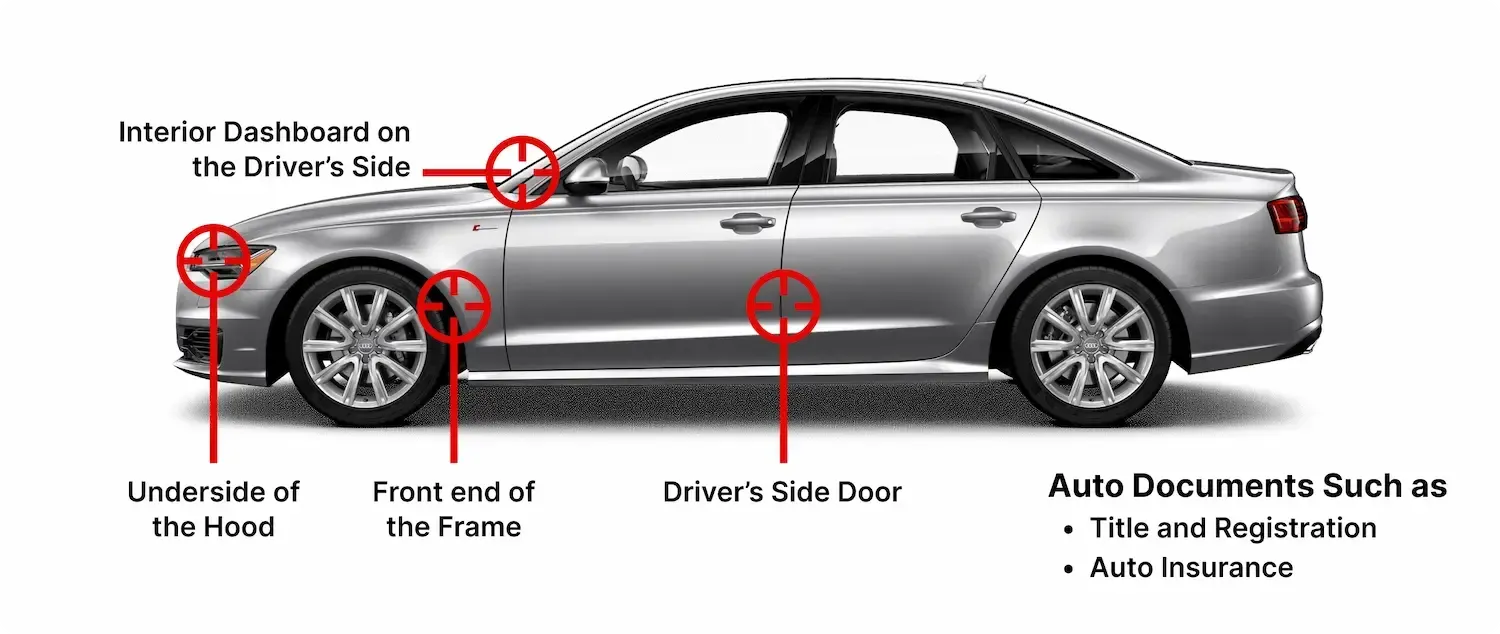
MINI VIN Location
The VIN is placed in several accessible areas on the vehicle and within official documents. Check the following spots to make sure you’re using the correct number:
Driver’s Side Dashboard
Look through the windshield at the lower corner of the dashboard on the driver’s side. This is the most common location for modern MINI vehicles.
Driver’s Side Door Jamb
Open the driver’s door and inspect the door frame or pillar near the latch. You’ll usually find a sticker or plate displaying the VIN along with manufacturing details.
Engine Bay
Check inside the engine compartment, often near the firewall or strut tower. Some MINI models may have the VIN stamped on structural components.
Documents
The VIN is also listed on official paperwork such as the registration, insurance documents, and vehicle title. Always cross-check these with the VIN on the vehicle.
Classic MINI VIN Location
Classic MINI models, especially older or pre-BMW-era vehicles, may not follow modern VIN placement standards. Identification numbers can appear in less obvious areas.
Under the Hood
On many classic MINIs, the VIN or chassis number is often found on a plate mounted inside the engine bay, typically on the inner wing or firewall.
Body Panels
Some older MINI models may have identification tags on panels like the bonnet or body shell. These were used for factory tracking and assembly identification.
Who Should Use the MINI VIN Decoder?
A MINI VIN decoder is useful for anyone buying, selling, or evaluating a MINI. Whether it’s a modern hatchback, a sporty Cooper S, or a classic Mini, decoding the VIN helps confirm details and avoid unexpected issues.
Buyers
Check the MINI’s factory specifications, ownership history, and overall condition before purchasing. A VIN lookup helps confirm the car matches the listing and reveals important details that may not be obvious at first glance.
Sellers
Provide accurate, verified information in your listing. Decoding the VIN helps confirm original specs and available records, making your listing more trustworthy and appealing to buyers.
Dealers
Dealers can use VIN decoding to quickly verify inventory and maintain accurate listings. This is especially important for MINI vehicles, where trims, engine options, and packages can vary widely.
Enthusiasts
MINI enthusiasts can use VIN decoding to understand their car’s original configuration, including engine type, trim, and factory options. This is especially helpful when restoring or modifying a vehicle.
What is the Difference Between a Modern and Classic MINI VIN?
The gap between modern and classic MINI VINs comes down to how they’re built and how much detail they reveal. Newer MINIs follow a global system, while older models use simpler identifiers shaped by their era.
VIN Length and Format
Modern MINI vehicles use the standardized 17-character VIN introduced in 1981, shared across global manufacturers. Classic MINI models—especially those from the original British Motor Corporation era—often use shorter, less uniform VINs that vary by production year and factory.
Data Availability
A modern MINI VIN can unlock detailed insights, including engine type (like TwinPower Turbo units), trim level, production plant, and factory options. Classic MINI VINs typically return more limited data, though they can still confirm key identifiers such as model and origin.
Decoding Accuracy
Decoding modern MINI VINs is straightforward thanks to standardized formatting and well-maintained databases. Classic VINs can be trickier due to inconsistent formats and limited records, but a reliable decoder can still uncover valuable historical details.
Decoding MINI’s VIN
A 17-digit MINI VIN follows a structured format designed to reveal essential vehicle information. It is split into three sections—WMI, VDS, and VIS—each providing insight into the manufacturer, vehicle characteristics, and unique production details.
World Manufacturer Identifier (WMI)
Digit 1 to 3: WMW
- W = Country of origin (Germany)
- MW = MINI
Vehicle Descriptor Section (VDS)
Digit 4 to 9: RH3343
- R = Model line (MINI Cooper / Hardtop platform)
- H = Engine type (1.6L inline-4 engine)
- 3 = Body style (2-door hatchback)
- 3 = Drivetrain (Front-Wheel Drive)
- 4 = Trim level (Cooper S / higher performance variant)
- 3 = Check digit
Vehicle Identifier Section (VIS)
Digit 10 to 17: 5TF82066
- 5 = Model year (2005)
- T = Assembly plant
- F82066 = Serial number
Get More MINI Information Through the Vehicle History Report
A VIN check gives you a snapshot, but a full history report fills in the story. For a MINI, that context matters, especially with used or imported cars, so you can see how it’s been driven, maintained, and whether it’s truly worth the asking price.
Vehicle Specification
See how the MINI left the factory. This includes engine type (like turbocharged 3-cylinder or 4-cylinder units), transmission, trim level, production plant, and original MSRP. It’s the quickest way to confirm the car still matches its original configuration.
Title Records
Review the title history to catch anything that could impact value or legality. Flags such as salvage status, rebuilt titles, theft records, or mileage inconsistencies are key checks when evaluating any used MINI.
Odometer Reading
Mileage tells you how the car has been used. This section shows recorded readings over time, including dates, helping you spot rollbacks or gaps that don’t quite add up.
Accident and Damage History
Check for reported accidents, structural damage, or environmental exposure like flooding. Even smaller incidents can affect a MINI’s handling and reliability, so having this visibility helps avoid surprises.
Auction History
If the MINI has been through an auction, you’ll see those records here. Details may include sale dates, locations, prices, and up to ten pictures that show the car's condition during the auction.
Ownership Information
Understand how the vehicle has changed hands. You’ll see the number of owners, general locations, and ownership duration, helping you gauge how consistently the car has been cared for.
Recalls Check
Stay informed about any recalls tied to the vehicle. This section shows the issue, when it was issued, and whether it has been resolved—important for keeping your MINI safe and road-ready.
Engine Information
Review the engine setup tied to the VIN in one report. Modern MINI models typically use efficient turbocharged 3- or 4-cylinder engines, while classic Minis often feature small, naturally aspirated inline-4 engines known for simplicity, lightweight performance, and go-kart-like driving feel.
Check More MINI Information with Our Tools
Need another piece of information and the window sticker for any MINI models? Use our dedicated MINI check service—get the result promptly.
MINI Recall Check by VIN
Check the recall history of MINI with our tool. Make sure the recall history is fixed and closed.
MINI Window Sticker by VIN
Get the original MINI window sticker by VIN to see the original features, options, colors, and much more.
Check Any Modern and Classic MINI Model by VIN
Thinking about buying a used MINI? Don’t just trust the listing or a quick test drive. Decode the VIN first to confirm the specs, verify its condition, and make sure the car truly matches what’s being advertised.
Supported Modern MINI Models
Decode VINs for a wide range of modern MINI vehicles, including models like the MINI Cooper, Cooper S, Countryman, Clubman, and more. Make sure you’re getting the right features, engine, and value before committing.
Supported Classic MINI Models
Exploring a classic MINI? Use our service to verify original specifications, confirm authenticity, and check estimated market value.
Decode Any Vehicle’s VIN
Looking at another car as well? Our VIN decoder works across multiple brands, giving you quick access to specifications, history records, and essential details.
MINI EV Updates
MINI Cooper’s current focus on electrification is to expand the next-generation lineup through dedicated EV development, improved battery technology, and enhanced digital features. The MINI Cooper Electric represents a major step compared to the previous generation.
Next-Generation MINI Cooper Electric
MINI has introduced a redesigned Cooper Electric developed specifically for battery-electric driving. The model features updated styling, modern technology, and improved efficiency compared with earlier electric MINI vehicles.
These are the key developments performed by MINI.
New-generation MINI Cooper Electric.
EV-focused design and engineering.
Updated exterior and interior styling.
Enhanced digital cockpit and infotainment features.
FAQs About MINI VIN Decoder
Can I look up my car specs by VIN number?
Yes, you can check detailed vehicle specifications for free using a 17-digit VIN (Vehicle Identification Number). Tools like the Detailed Vehicle History VIN decoder reveal key data such as engine type, transmission, trim level, manufacturer, assembly plant, and fuel system.
What does a free MINI Cooper VIN decoder provide?
A free VIN decoder gives instant access to factory-level details, including the exact model, engine configuration, transmission, production date, plant location, and original options. It also helps verify historical records like accidents, theft, and recalls.
How to check MINI history?
To review a MINI’s service history, run a VIN check, and access the full vehicle history report. This shows maintenance records, service dates, locations, and details of repairs or replaced components, helping you understand how well the car has been maintained.
Why should I use the Classic MINI VIN Decoder?
Using a classic VIN decoder is essential for confirming authenticity, identifying original specs (engine, model, year), and avoiding misrepresented or re-tagged cars. It also helps verify production details and source the correct parts for restoration projects.
Can a Classic MINI VIN tell me the production year?
Yes, a classic MINI VIN or chassis number can often indicate the production year, though not always in a straightforward way like modern VINs. Older models typically require decoding specific chassis codes or using dedicated MINI VIN tools.
How long are classic car VIN numbers?
Classic car VINs (pre-1981) usually range from 5 to 13 characters, depending on the manufacturer and year. Unlike today’s standardized 17-digit format, these older identifiers were less uniform and often functioned as simple serial or production codes.