
Decode Mercury VIN and Get Vehicle Details
Considering a Mercury? Don’t rely on looks or a quick test drive alone. Use our Mercury VIN decoder to get model year, trim, engine specifications, transmission setup, body style production details and many more.
|No VIN?Use License Plate
Table of Contents:
Last Information on Mercury
Closure
The Ford Motor Company shut down the brand in 2011, after 71 years of production.
Why the Brand Was Discontinued
Declining sales and increasing overlap with Ford vehicles reduced Mercury's role within Ford Motor Company.
Legacy of Mercury
Mercury served for decades as Ford's mid-tier brand, positioned between mainstream Ford models and luxury Lincoln vehicles.
What Will You Get from the Mercury VIN Decoder?
Our Mercury VIN decoder gives you a clear view of the vehicle’s true identity. From original factory specifications to available history records, it helps you verify what you’re actually dealing with. This is especially important for older Mercury models, where condition, originality, and past usage can significantly impact value.
- Manufacturer and origin
- Model, trim, and package details
- Engine specifications
- Transmission setup
- Body style
- Model year
- Production plant
- Manufacturer Suggested Retail Price (MSRP)
- Market Value
How to Decode the Mercury VIN?
Decoding modern and classic Mercury VINs is easy; you can use our service and get it done in less than a minute.
Decode Classic Mercury VIN
Our tool can decode any classic Mercury VIN, including older formats ranging from 5 to 14 digits. Always verify the details before purchasing a classic car to ensure it truly matches the seller’s claims.
Where to Find the VIN on a Classic and Modern Mercury?
Before decoding, you’ll need to locate the VIN on your Mercury. While most modern Mercury models follow standard VIN placement, older vehicles may vary slightly depending on the model, production year, and how they were built.
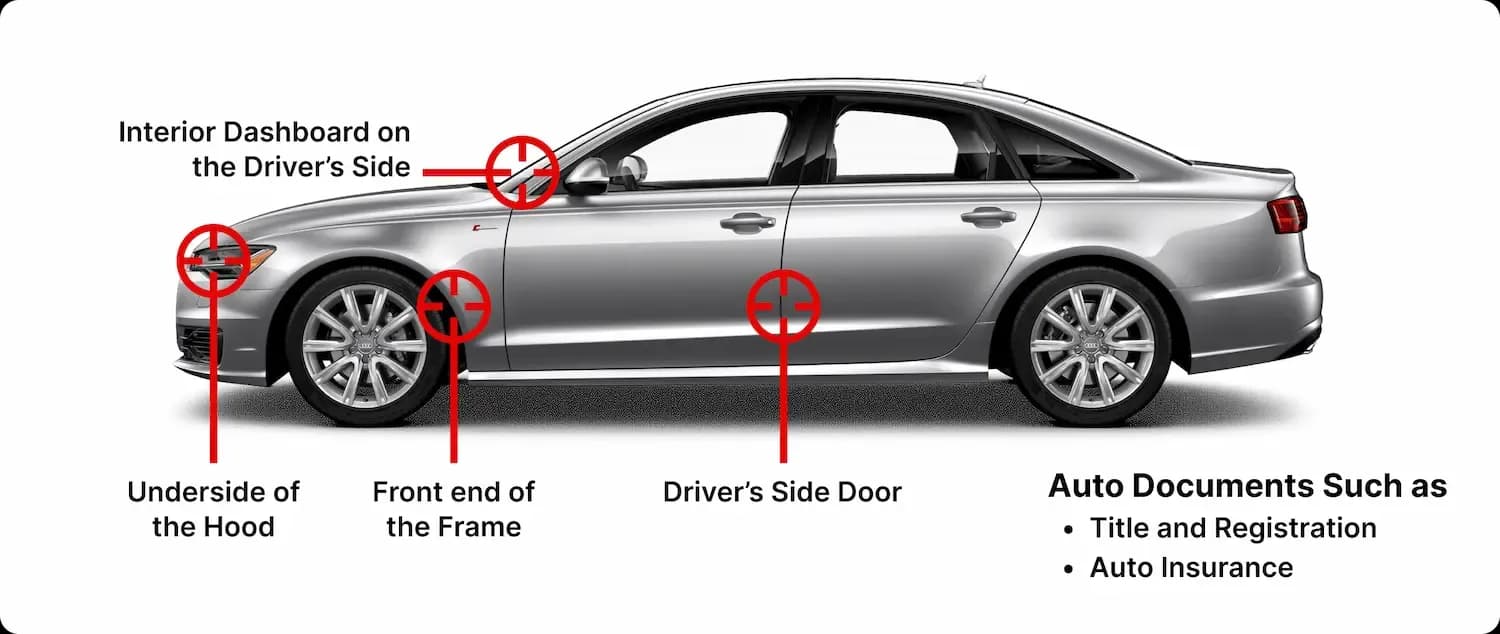
Mercury VIN Location
The VIN can be found in several key areas on the vehicle and within official documents. Check these locations to ensure you’re reading the correct number:
Driver’s Side Dashboard
Look through the windshield at the lower corner of the dashboard on the driver’s side. This is the most common location for modern Mercury vehicles.
Driver’s Side Door Jamb
Open the driver’s door and inspect the door frame or pillar near the latch. You’ll usually find a label or metal plate displaying the VIN along with manufacturing details.
Engine Bay
Check the engine compartment or chassis area for a stamped VIN. In many Mercury models, this may appear on structural components or near the firewall.
Documents
The VIN is also listed on official paperwork such as the registration, insurance documents, and vehicle title. Always match these with the VIN on the car to confirm accuracy.
Classic Mercury VIN Location
Classic Mercury models, especially those produced before VIN standardisation, may not always follow modern placement rules. Some identifiers can appear in less obvious areas.
Under the Floor Mat
On certain older models, the VIN or serial number may be stamped on the floor structure beneath the carpet, often on the driver or passenger side.
Body Panels
Some classic Mercury vehicles may have identification tags on removable panels such as the hood, trunk lid, or fenders. These were often used for factory tracking and assembly verification.
Who Should Use the Mercury VIN Decoder?
A Mercury VIN decoder is useful for anyone buying, selling, or evaluating a vehicle from the brand. Whether it’s a reliable daily driver like the Grand Marquis or a classic Cougar, decoding the VIN helps confirm authenticity and avoid costly surprises.
Buyers
Check the Mercury’s factory specifications, ownership history, and overall condition before purchasing. Make sure the car matches the ads before you proceed to purchase from a private seller or dealer.
Sellers
Provide accurate, verified details to strengthen your listing. Decoding the VIN helps with finding the original specifications and available records, helping build trust with buyers and making it easier to justify your asking price.
Dealers
Dealers can use VIN decoding to quickly verify inventory and maintain accurate listings. This is especially important for Mercury vehicles, where model years, trims, and condition can significantly affect value.
Collectors
Collectors and enthusiasts can use VIN decoding to confirm originality, production details, and key specifications. This is particularly useful for classic Mercury models, where authenticity and correct configurations matter most.
What is the Difference Between Modern and Classic VIN?
The main differences between modern and classic VINs lie in structure, consistency, and the level of detail they provide. While newer vehicles follow a standardised 17-digit format, older models use shorter, less uniform VINs, which can affect how accurately they are decoded.
VIN Length and Format
Modern Mercury vehicles use the standardized 17-digit VIN system introduced in 1981, following a consistent global format. Classic Mercury models, especially those built before 1981, may have VINs ranging from 5 to 14 characters due to the lack of standardization at the time.
Data Availability
Modern Mercury VINs provide detailed information, including engine type (such as V6 or V8), trim level, production year, and factory specifications. Classic VINs may return more limited data, depending on available records and the vehicle’s age.
Decoding Accuracy
Decoding modern Mercury VINs is generally accurate and consistent due to standardized formatting and complete databases. Classic VINs can be more challenging to interpret, but you can rely on our service to decode classic car VINs.
Decoding Mercury’s VIN
A 17-digit Mercury VIN follows a structured format that reveals important vehicle details. It is divided into three main sections: WMI (World Manufacturer Identifier), VDS (Vehicle Descriptor Section), and VIS (Vehicle Identifier Section).
Sample VIN: 4M2EU48E59UJ00905
WMI (World Manufacturer Identifier)
Digit 1 to 3: 4M2
- 4 = Country of origin (United States)
- M2 = Mercury
VDS (Vehicle Descriptor Section)
Digit 4 to 9: EU48E5
- E = Model line (Mountaineer platform)
- U = Engine type (4.0L V6 engine)
- 4 = Body style (4-door SUV)
- 8 = Drivetrain (All-Wheel Drive / AWD)
- E = Trim level (Premier / higher-end configuration)
- 5 = Check digit
VIS (Vehicle Identifier Section)
Digit 10 to 17: 9UJ00905
- 9 = Model year (2009)
- U = Louisville Assembly Plant, Kentucky, United States
- J00905 = Serial number
Why Do You Need to Decode the Mercury VIN?
Decoding a Mercury VIN turns a simple string of characters into verified vehicle data. For both classic and modern Mercury models, this step helps confirm factory specifications, check records, and ensure the car matches what’s being advertised.
Before Buying a Car
Before purchasing a Mercury, it’s important to review everything carefully—from specifications and trim level to estimated market value. Get the VIN decoded to make sure that the vehicle specifications match the claims.
Before Selling a Car
Transparency plays a big role in building buyer trust. Decoding the VIN allows you to present accurate specifications and details in your listing, helping attract serious buyers and making your vehicle easier to sell.
Verify Vehicle Identity
Make sure the VIN matches the Mercury’s model, engine, trim, and configuration. This step helps detect errors, mismatches, or potential fraud, especially when dealing with older vehicles where details may not always be consistent.
Check History and Records
Access important records such as ownership history, accident reports, auction activity, and recall data. These insights help you better understand the vehicle’s background and make a more confident buying or selling decision.
Need More Information? Get a Mercury Vehicle History Report
A VIN decoder gives you the basics, but a full history report shows the bigger picture. For a Mercury, this extra layer helps you understand how the car has been used, maintained, and whether it’s worth your money—especially for older or classic models.
Vehicle Specification
Get a complete view of the car’s original build. This includes engine type (commonly V6 or V8), transmission, MSRP, and country of origin. It’s the easiest way to confirm the vehicle still matches its factory specifications.
Title Records
Review the title history to spot issues that could affect value or legality. Red flags like salvage status, rebuilt titles, theft records, or mileage inconsistencies are important to check, especially when buying a used Mercury.
Odometer Reading
Mileage plays a key role in a Mercury’s value and reliability. This section shows recorded mileage over time, including the latest reading and date, helping you detect rollbacks or irregular patterns.
Accident and Damage History
Check for any reported accidents, structural damage, or environmental exposure like flooding. Even for durable Mercury models, past damage can affect safety and long-term performance.
Auction History
If the Mercury has been sold at auction, you’ll find those records here. This may include sale dates, locations, prices, and sometimes photos, giving you insight into its past condition and presentation.
Ownership Information
Track how the vehicle has changed hands over time. You’ll see the number of owners, general locations, and ownership duration, helping you understand how the car has been used and maintained.
Recalls Check
Stay updated on any recalls issued for the vehicle. This section shows the issue, recall date, and whether it has been resolved, helping ensure the car is safe and roadworthy.
Engine Information
Check the engine details for both classic and modern Mercury models. Most feature reliable V6 or V8 engines, with older models known for durable, naturally aspirated setups built for longevity and smooth performance.
Check More Mercury Information with Our Tools
Before you proceed to purchase a used Mercury, it is best to check everything thoroughly before you decide to purchase a used Mercury.
Need to check a recall history? Use our Mercury recall check by VIN tool and get it done in less than a minute.
Use the Mercury window sticker by VIN tool to check the complete information, like features, options, trim, and more.
Check Any Modern and Classic Mercury Model by VIN
Planning to buy a used Mercury? Don’t rely on listings alone. Decode the VIN to confirm the vehicle’s specifications, verify its condition, and make sure everything matches what’s being advertised.
Supported Modern Mercury Models
Decode VINs for a range of modern Mercury vehicles. Make sure you’re getting the right specs, features, and overall value before you commit.
CougarGrand MarquisMountaineerMystiqueSableTracerVillagerMarauderMontereyMontegoMarinerMariner HybridMilanMilan Hybrid
Supported Classic Mercury Models
Looking into a classic Mercury? Use our service to check original specifications, verify authenticity, and view estimated market value.
Mercury EightMercury MontereyMercury CougarMercury MarauderMercury MontegoMercury Grand MarquisMercury CapriMercury CycloneMercury CometMercury Villager
Decode Any Vehicle’s VIN
Need to check another vehicle? Our VIN decoder works across multiple brands, giving you access to specifications, history records, and key details all in one place.
Acura
Alfa Romeo
AM General
Aston Martin
Audi
Bentley
BMW
Buick
Cadillac
Chevrolet
Chrysler
Daewoo
Dodge
Ferrari
Fiat
Fisker
Ford
Genesis
GMC
Honda
Hummer
Hyundai
Infiniti
Isuzu
Jaguar
Jeep
KIA
Lamborghini
Land Rover
Lexus
Lincoln
Lotus
Maserati
Maybach
Mazda
Mclaren
Mercedes Benz
Mercury
Mini
Mitsubishi
Nissan
Oldsmobile
Panoz
Plymouth
Polestar
Pontiac
Porsche
RAM
Rolls Royce
Saab
Saturn
Scion
Smart
Subaru
Suzuki
Tesla
Toyota
Volkswagen
Volvo
FAQs About Mercury VIN Decoder
Yes, you can get a Mercury window sticker (Monroney label) using the VIN, typically for vehicles built from 1981 onwards. Some online tools provide access to original specs, MSRP, and even estimated market value.
A Mercury VIN is a unique 17-character code (for 1981 and newer models) that identifies the vehicle’s manufacturer, specifications, and history. It helps reveal details like model year, assembly plant, engine type, and is essential for verification and parts matching.
For classic Mercury vehicles (usually pre-1968), the VIN, often called a serial or warranty number, is rarely located on the dashboard. Instead, it is typically stamped on the frame or found on a data plate in areas like the door, firewall, or engine bay.
Yes, many classic Mercury vehicles, especially from the 1940s to 1970s, include hidden or secondary VINs stamped directly onto the frame. These are useful for identification if the main VIN plate is missing or damaged.
Mercury’s 1960s lineup included models like the Comet and its performance variant Cyclone, the Cougar introduced in 1967, and full-size cars such as the Monterey, Montclair, Park Lane, and Marquis—positioned between Ford and Lincoln in terms of style and luxury.
Yes, vintage Mercury vehicles often feature hidden or confidential VINs stamped on the frame or body, in addition to the visible VIN plate. These were used for identification and verification purposes.
The VIN or serial number on a classic Mercury (pre-1968) can vary by model and year, but it is most commonly found stamped on the frame or displayed on a data plate rather than on the dashboard.
Quick VIN Decoder
Get comprehensive vehicle history reports
Quick VIN Decoder
Get comprehensive vehicle history reports