
Decode Any Classic and Modern Mazda VIN
Need help decoding your Mazda VIN? Use our Mazda VIN decoder to get model year, trim, engine specifications, transmission setup, body style production details and many more.
Table of Contents:
What Will You Get from the Mazda VIN Decoder?
Our Mazda VIN decoder delivers detailed vehicle specifications and available history records. Whether you're checking a daily driver or a classic Mazda, verify the details before making any decision.
- Manufacturer and origin
- Model, trim, and package details
- Engine specifications
- Transmission setup
- Body style
- Model year
- Production plant
- Manufacturer Suggested Retail Price (MSRP)
- Market Value
How to Decode the Mazda VIN?
Decoding a Mazda VIN, whether a modern or classic VIN, you can use our Mazda VIN decoder and get it done in less than a minute. Follow these simple steps to get it done in seconds.
Step 1: Find the VIN
Check the dashboard on the driver’s side doorjamb, engine bay, or on the paperwork like the registration card or bill of sale.
Step 2: Fill out the Form
Click the form and write the classic or modern Mazda VIN. Then, click the button to submit.
Step 3: Check the Vehicle Specs
Once it is done, you’ll see the complete vehicle specification, like engine type, transmission type, country of origin, and updated market value.
Where to Find the VIN on a Classic and Modern Mazda?
Locating the VIN on a classic or modern Mazda is the first step before decoding. While most newer Mazda models follow standard VIN placement, older vehicles may have slight variations depending on the model and production year.
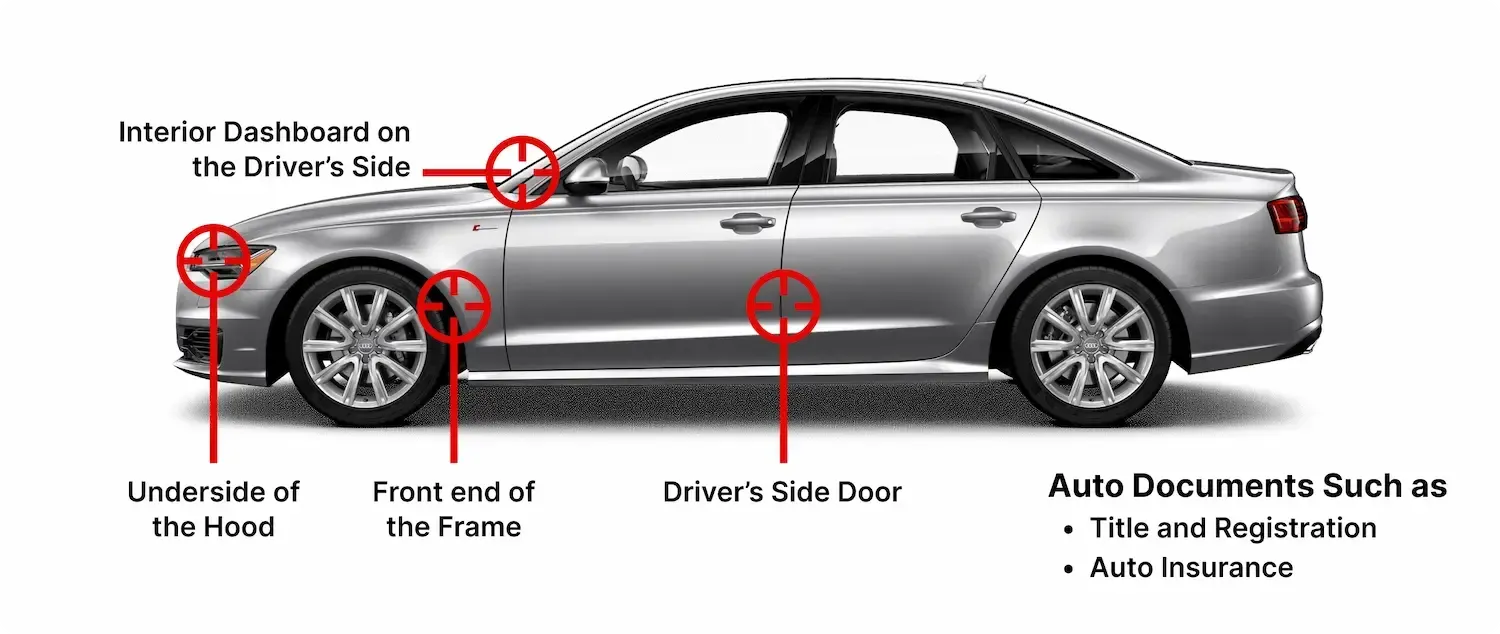
Mazda VIN Location
The VIN can be found in several places on the vehicle and in official documents. Check the following locations to identify it accurately:
Driver’s Side Dashboard
Look through the windshield at the lower corner of the dashboard on the driver’s side. This is the most common location for modern Mazda vehicles.
Driver’s Side Door Jamb
Open the driver’s door and inspect the door frame or pillar near the latch. You will usually find a sticker or plate displaying the VIN along with manufacturing details.
Engine Bay
Check inside the engine compartment for a stamped VIN. It is often located on the firewall, chassis frame, or near structural components.
Documents
The VIN is also listed on official paperwork such as registration documents, insurance cards, and the vehicle title. Always ensure these match the VIN on the vehicle.
Classic Mazda VIN Location
Classic Mazda models may have less standardized VIN placement, especially those produced before 1981. In addition to common locations, the VIN may appear in less obvious areas.
Under the Floor Mat
On some older Mazda models, the VIN may be stamped on the floor pan beneath the carpet, often on the passenger side.
Body Panels
Older vehicles may also have VIN tags on removable parts such as the hood, trunk lid, or fenders. These are typically small labels used for identification and assembly tracking.
Who Should Use the Mazda VIN Decoder?
A Mazda VIN decoder is useful for anyone planning to buy, sell, or evaluate a vehicle. Whether it’s a modern daily driver or a classic project, decoding the VIN helps ensure you have accurate information.
Buyers
Check the Mazda’s specifications, ownership history, and condition before purchasing. A VIN lookup helps confirm the vehicle matches its listing and reveals potential issues, especially for used or imported models.
Sellers
Provide accurate and verified details to support your listing. A VIN check helps confirm specifications and history, making your listing more transparent and building buyer trust.
Dealers
Dealers can use VIN decoding to verify inventory quickly and maintain accurate listings. This reduces errors and improves transparency, especially when handling multiple trims and model variations.
Collectors
For enthusiasts and collectors, decoding the VIN helps confirm originality, production details, and key specifications. This is especially useful when dealing with classic Mazda models or rare editions.
What is the Difference Between a Modern and Classic Mazda VIN?
The difference between modern and classic Mazda VINs comes down to structure and consistency. Newer Mazda models follow a global standard, while older vehicles may use shorter or less uniform identifiers, which can affect how much information you can retrieve.
VIN Length and Format
Modern Mazda vehicles use a standardized 17-digit VIN introduced in 1981, with a fixed structure used worldwide. Older Mazda models, especially pre-1981 units, may have VINs ranging from 5 to 14 characters due to the lack of a universal format at the time.
Data Availability
Modern Mazda VINs typically provide detailed information, including engine type (like SKYACTIV engines), trim level, production details, and factory specifications. Classic Mazda VINs may return limited data depending on the model year and available records, but decoding them can still reveal useful insights.
Decoding Accuracy
Decoding modern Mazda VINs is generally reliable thanks to standardized formatting and well-maintained databases. Classic VINs can be more challenging due to inconsistent formats and incomplete records. Use our classic VIN decoding service to get trusted information for your vehicle.
Deciphering Mazda’s VIN
A 17-digit Mazda VIN follows a structured format that reveals important vehicle details. It is divided into three main sections: WMI, VDS, and VIS, each providing specific information about the manufacturer, vehicle attributes, and unique production data.
World Manufacturer Identifier (WMI)
Digit 1 to 3: 4F2
- 4 = Country of origin (United States)
- F2 = Mazda (Ford/Mazda joint production)
Vehicle Descriptor Section (VDS)
Digit 4 to 9: CY0C76
- C = Model line (Tribute platform)
- Y0 = Engine type (likely 2.5L or 3.0L V6 depending on trim)
- C = Body style (4-door SUV)
- 7 = Trim level (mid-range configuration)
- 6 = Check digit
Vehicle Identifier Section (VIS)
Digit 10 to 17: BKM02921
- B = Model year (2011)
- K = Kansas City Assembly Plant, Missouri, United States
- M02921 = Production sequence number
Why Do You Need to Decode the Mazda VIN?
Decoding a Mazda VIN helps you to find the complete vehicle information in less than a minute. It helps confirm factory specs, check records, and ensure the car matches what’s being advertised.
Before Buying a Car
Before purchasing, check the Mazda’s VIN to confirm its specifications, ownership history, and overall condition. This is especially useful for used or imported Mazdas, where hidden damage, mileage issues, or mismatched details can impact reliability and value.
Before Selling a Car
Running a VIN check allows you to present accurate, verified details in your listing. This builds trust with buyers and makes your Mazda easier to sell. Clear specs and history can also help justify your asking price.
Verify Vehicle Identity
Make sure the VIN matches the Mazda’s model, engine, and trim. This step helps detect errors, cloning, or potential fraud, especially important when buying from private sellers or online listings.
Check History and Records
Access available records such as past ownership, accidents, and title data. This helps find a clearer picture of the vehicle’s background. For classic models, available history may vary, but even limited data can support buying decisions.
Need More Information? Get the Mazda History Report
A VIN decoder gives you the basics, but if you want the full picture, a vehicle history report is where things get real. It pulls together records like accidents, auctions, recalls, and more, helping you understand what the car has actually been through.
Vehicle Specification
Get a full breakdown of both modern and classic Mazda models in one place. This includes engine type (like SKYACTIV-G or SKYACTIV-D), transmission, drivetrain, production details, original MSRP, and factory options.
Title Records
Check for any title issues that could affect safety or resale value. This includes salvage, rebuilt status, theft records, or mileage inconsistencies. It’s one of the quickest ways to spot potential red flags before moving forward.
Odometer Reading
Mileage tells a story, if it’s accurate. This section shows recorded odometer readings over time, helping you catch rollbacks or unusual gaps that don’t quite add up.
Accident and Damage History
Find out if Mazda has been in any reported accidents or suffered damage. This can include collision records, structural issues, or even flood damage. Not everything gets reported, but what’s there can still say a lot.
Auction History
If the vehicle has gone through an auction, you’ll see those records here. That may include sale dates, locations, pricing, and sometimes photos. It’s a useful way to check how the car looked and was valued in the past.
Ownership History
See how many owners the car has had, where it’s been registered, and how long each owner kept it. It doesn’t show personal details, but it does give you a clearer sense of how the vehicle has been used.
Recalls Check
Check for any recalls issued by Mazda, along with their status. In this section, you’ll get more information on the Mazda recalls, like the date, causes, how the issues were handled, and the status of the recall (open/closed).
Engine Information
Confirm the engine setup tied to the VIN, whether it’s a fuel-efficient 4-cylinder or a turbocharged variant. Knowing the exact engine helps you understand performance, maintenance needs, and whether everything lines up with the listing.
Check More Mazda Information Using Our Tools
Need more details before committing to a used Mazda? Use our dedicated service to receive the Mazda window sticker and recall information in seconds.
Use the Mazda recall check by VIN to see if the car was recalled and fixed thoroughly.
Check the Mazda window sticker by VIN to get the complete information on Mazda’s features, options, safety ratings, and more.
Decode Mazda Modern and Classic Model by VIN
Our Mazda VIN decoder tool can be used to decode all VINs from modern (17-digit) to classic VINs (5 to 14 digits). Check the supported models below.
Supported Modern Mazda VIN
Need to decode any Mazda models? Use our tool and get it done in less than a minute!
Decode Classic Mazda VIN
Get a copy of the original window sticker using the VIN. It shows factory features, trim level, options, fuel economy, and more.
Decode Any Vehicle’s VIN
Need to check another car? Use our VIN decoder service to access vehicle data across multiple makes and models, all in one place.
Update on Mazda EV
The Mazda electrification strategy focuses on balancing electric vehicles, hybrids, and combustion engines rather than pursuing rapid EV expansion. While the MX-30 remains Mazda's primary battery-electric vehicle, the company continues taking a gradual approach to electrification through its multi-solution strategy.
EV Strategy
Mazda continues developing battery-electric technology while maintaining flexibility in its long-term rollout plans. Here’s what is developed on the Mazda EV:
MX-30 remains Mazda's primary global EV.
Dedicated next-generation EVs expected later in the decade.
Flexible electrification roadmap based on market demand.
Continued investment in battery-electric technology.
FAQs About Mazda VIN Decoder
How do I tell if my Mazda was made in Japan or Mexico?
To check where your Mazda was built, look at the first character of the 17-digit VIN. If it starts with “J,” the vehicle was made in Japan. If it begins with “3,” it was assembled in Mexico.
How do I find out what trim my Mazda is?
To identify your Mazda’s trim level, you can use a VIN decoder, check the driver-side door jamb label, or review documents like registration or insurance. Common trims include Sport, Select, Preferred, Carbon, Premium, and Signature.
Can a classic Mazda VIN reveal if the car still has its original rotary engine?
Yes, a classic Mazda VIN can indicate whether the car originally came with a rotary engine. However, it won’t confirm if that same engine is still installed today.
How do you decode a classic car’s VIN number?
Decoding a classic Mazda VIN usually means locating the identifier—often on the dashboard, door frame, or firewall—and using brand-specific references or specialized tools like our classic Mazda VIN decoder. Since pre-1981 VINs weren’t standardized.
Does a classic Mazda VIN help trace where the car was first sold?
A classic Mazda VIN can help trace where the car was first sold, though the level of detail depends on the year. Post-1981 VINs provide clearer data on origin and market, while older VINs may only point to the manufacturing plant.
How many digits were in a 1967 VIN?
A VIN from around 1967 typically used a shorter format, often around 13 characters, combining letters and numbers rather than the modern 17-digit structure.