
Lexus Modern and Classic VIN Decoder
Planning to buy a used modern or classic Lexus? Before you commit, run a Lexus VIN decoder to get model year, trim, engine specifications, transmission setup, body style production details and many more.
|No VIN?Use License Plate
Table of Contents:
What Will You Get From the Lexus VIN Decoder
Skip the guesswork and rely on the Lexus VIN decoder to cross-check the reality with what’s written on the vehicle listing description. For your reference, here’s the complete information you’ll get from our service.
- Manufacturer and origin
- Model, trim, and package details
- Engine specifications
- Transmission setup
- Body style
- Model year
- Production plant
- Manufacturer Suggested Retail Price (MSRP)
- Market Value
How to Use the Lexus VIN Decoder?
The Lexus VIN decoder works for both newer models and older vehicles. In just a few steps, you can access verified specifications and available history records to make a more informed decision.
Decode Classic Lexus VIN
Need to decode the classic Lexus VIN that has fewer than 17 digits? You can use our service to decode a classic car VIN. Always make sure to decode the classic car VIN to check its full specifications, market value, and get the classic history report to reveal more information.
Where to Find the VIN on a Lexus
Before decoding, you need to locate the VIN on your Lexus. Most models follow standard VIN placement, but exact locations can vary depending on the model year and whether it’s a modern luxury sedan, SUV, or an older model.
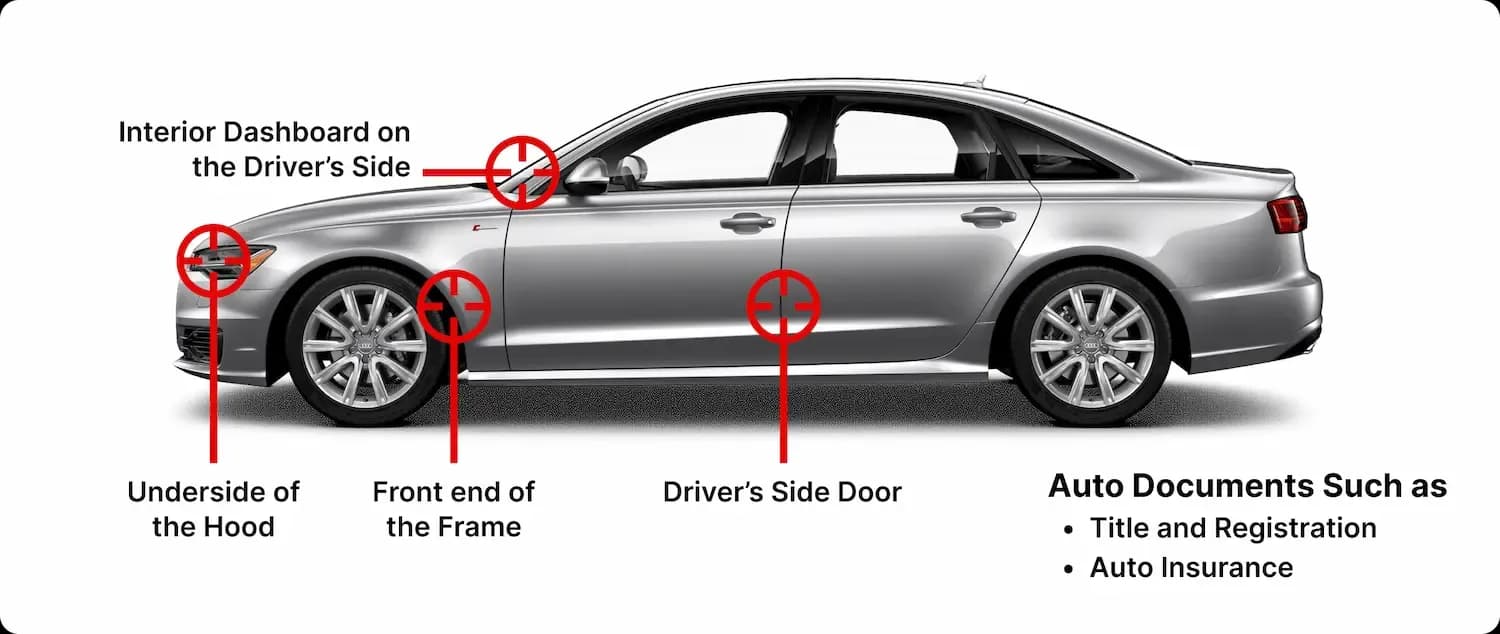
Lexus VIN Location
The VIN is usually placed in several key areas on the vehicle and within official documents. Check these common spots to find it accurately:
Driver’s Side Dashboard
Look through the windshield at the lower corner of the dashboard on the driver’s side. Most Lexus models display the VIN clearly on a fixed plate for easy visibility.
Driver’s Side Door Jamb
Open the driver’s door and inspect the door frame or pillar near the latch. A sticker or plate typically shows the VIN along with manufacturing details.
Engine Bay
Check the engine compartment for a stamped VIN, often located on the firewall or chassis components. This is useful for verifying the vehicle’s identity against other VIN locations.
Documents
The VIN is also listed on official paperwork such as registration documents, insurance papers, and the vehicle title. Always ensure these match the VIN shown on the car.
Classic Lexus VIN Location
Older Lexus models generally follow similar VIN placement, but some may include additional identification points depending on the production year.
Under the Front Seat
On certain models, the VIN may be stamped into the floor pan beneath the driver’s seat area.
Panel Stickers
Many Lexus vehicles include small VIN stickers on body panels such as doors, hood, or fenders. These are used for anti-theft identification and can help confirm originality.
Who Should Use a Lexus VIN Decoder?
A Lexus VIN decoder is useful for anyone dealing with a used or pre-owned luxury vehicle. Lexus cars are known for reliability and comfort, but that does not mean every unit on the market is problem-free. Decoding the VIN helps confirm specs, history, and overall condition before making a decision.
Buyers
When buying a used Lexus, do not rely on appearance alone. A VIN check helps confirm factory specifications, ownership history, and records. This is key to spotting accident damage, mileage inconsistencies, or imported vehicles that may not match the listing.
Sellers
Accurate details help your listing stand out. By decoding the VIN, sellers can present verified specifications and history, making the vehicle more credible and helping to set the right selling price.
Dealers
Dealers can use VIN decoding to manage inventory and avoid listing errors. With different trims, hybrid systems, and regional variations, verified data helps improve transparency and build trust with buyers.
Daily Drivers and Owners
Lexus owners can use VIN data to better understand their vehicle. It helps confirm original specifications, track history, and prepare for maintenance, resale, or long-term ownership with more clarity.
What is the Difference Between a Modern and Classic Lexus VIN?
The difference between modern and classic Lexus VINs comes down to structure, consistency, and how much information they provide. Newer Lexus models follow a standardized format, while older vehicles may use simpler or less consistent identifiers.
VIN Length and Format
Modern Lexus vehicles use a standardized 17-digit VIN introduced in 1981. Older models, especially early production units, have shorter VINs, which are only 5 to 14 digits long.
Data Availability
Modern and classic VINs provide detailed information such as engine type, trim level, hybrid system details, and production data. Make sure to use a proper VIN decoding service to decode the modern and classic VINs.
Decoding Accuracy
Decoding modern Lexus VINs is generally reliable due to standardized formatting and complete databases. Classic VINs can be more challenging to interpret. You can use our VIN Decoder tool and have the complete vehicle history report.
Deciphering Lexus’ VIN
A 17-digit Lexus VIN follows a structured format that reveals key details about the vehicle. It is divided into three main sections: WMI, VDS, and VIS. Each section provides specific information, helping identify the manufacturer, vehicle attributes, and serial number.
Sample VIN: JTHHP5BCXG5004958
WMI (World Manufacturer Identifier)
Digit 1 to 3: JTH
- J = Country of origin (Japan)
- TH = Lexus
VDS (Vehicle Descriptor Section)
Digit 4 to 9: HP5BCX
- H = Model line (RC platform)
- P = Engine type (3.5L V6 engine, commonly used in RC 350 models)
- 5 = Series/grade within the model range (performance-oriented variant)
- B = Body style (2-door coupe)
- C = Trim level (base / standard configuration)
- X = Check digit
VIS (Vehicle Identifier Section)
Digit 10 to 17: G5004958
- G = Model year (2016)
- 5 = Tahara Plant, Aichi, Japan
- 004958 = Production sequence number
Why Decoding a Lexus VIN is a Smart Move?
Decoding a Lexus VIN turns a simple code into verified vehicle information. While Lexus vehicles are known for reliability and smooth performance, hidden issues like accident history, title problems, or mileage inconsistencies can still exist.
Before Buying a Car
Check the Lexus VIN to confirm factory specifications, trim level, and ownership history. This helps uncover risks such as prior accidents, flood damage, import history, or rebuilt status—things you may not notice during a quick inspection.
Before Selling a Car
Use a VIN check to present accurate, verified details in your listing. Clear information about specifications and history builds trust with buyers and reduces hesitation, especially when selling higher trims or well-maintained models.
Verify Vehicle Identity
Make sure the VIN matches the Lexus model, engine, and configuration. This helps detect mismatches, tampering, or incorrect listings—issues that can happen with imported or modified vehicles.
Check History and Records
Access available records such as title data, accident history, auction entries, and ownership timelines. Even though Lexus vehicles are often well-maintained, these records help you understand the car’s true background.
Want More Details? Get a Lexus Vehicle History Report
Need more information about the car before you decide to purchase the vehicle? Get the full vehicle history report and see the complete information like auction, accident, and recalls in one report!
Vehicle Specification
Access full specifications for both modern and older Lexus models in one report. This includes engine type, transmission, trim level, production origin, and original MSRP.
Title Records
Check for title issues that could affect legality or resale value. This includes salvage, rebuilt, theft records, or discrepancies. Even a reliable Lexus can lose value quickly if the title history is not clean.
Odometer Reading
Review mileage records over time to ensure consistency. Lexus vehicles are often kept for many years, so verifying accurate mileage is key to understanding wear, maintenance needs, and overall value.
Accident and Damage History
Identify any reported accidents, including dates and severity. The report may also include damage from flooding or structural repairs, issues that can impact safety and long-term reliability, even in a Lexus.
Auction History
Find out if the Lexus has been listed or sold at auction. You may see sale dates, locations, prices, and sometimes photos, giving you insight into the vehicle’s past condition.
Ownership Information
Review ownership history, including the number of owners, locations, and duration. This helps you understand how the vehicle was used, whether it was carefully maintained or frequently resold.
Recalls Check
Check for any safety recalls issued for the Lexus. Newer models typically include detailed recall data, while older ones may have limited records. Addressing recalls helps keep the vehicle safe and dependable.
Engine Information
Verify engine specifications and configuration. Lexus models are known for smooth and durable engines, but confirming the exact setup helps ensure it matches factory records and supports proper maintenance planning.
Get More Information on the Lexus
Need more details before making a decision? Use the VIN tool to check recalls and access factory specifications, including the original copy of the window sticker.
Lexus Recall by VIN
Use the Lexus recall check by VIN to see and examine if the car was recalled in the past. Be sure to have the recall information before you purchase the vehicle.
Lexus Window Sticker by VIN
Use the Lexus window sticker by VIN to get the original copy of the initial window sticker with no information differences.
Check Any Lexus Models by VIN Before You Buy
Thinking about buying a used Lexus? Don’t rely on appearance or a smooth test drive alone. Check the VIN and get the vehicle history report to see everything.
Supported Modern Lexus Models
Decode VINs for a wide range of modern Lexus vehicles, including popular models like RX, NX, ES, IS, GX, LX, and more.
ES 300GS 300GS 400LS 400LX 470RX 300SC 300SC 400GS 430IS 300LS 430SC 430GX 470ES 330RX 330IS 250IS 350RX 400hES 350GS 350GS 450hLS 460RX 350GS 460IS FLS 600hLX 570GX 460HS 250hIS 250cIS 350cRX 450hCT 200hLFAES 300hNX 200tNX 300hRC 350RC FGS 200tGS FIS 200tRC 200tRC 300LC 500LC 500hLS 500LS 500hNX 300RX 350lRX 450hlUX 200UX 250hES 250IS 500LX 600NX 250NX 350NX 350hNX 450hRX 350hRX 500hRZ 450e
Supported Classic Lexus Models
Not only modern vehicles, but our service can also be used to decode classic Lexus models.
LS 400SC 300SC 400ES 300GS 300GS 400LX 450RX 300
Decode Any Vehicle’s VIN
Need to decode another car’s VIN? Use our VIN decoder service and check all makes!
Acura
Alfa Romeo
AM General
Aston Martin
Audi
Bentley
BMW
Buick
Cadillac
Chevrolet
Chrysler
Daewoo
Dodge
Ferrari
Fiat
Fisker
Ford
Genesis
GMC
Honda
Hummer
Hyundai
Infiniti
Isuzu
Jaguar
Jeep
KIA
Lamborghini
Land Rover
Lexus
Lincoln
Lotus
Maserati
Maybach
Mazda
Mclaren
Mercedes Benz
Mercury
Mini
Mitsubishi
Nissan
Oldsmobile
Panoz
Plymouth
Polestar
Pontiac
Porsche
RAM
Rolls Royce
Saab
Saturn
Scion
Smart
Subaru
Suzuki
Tesla
Toyota
Volkswagen
Volvo
Lexus EV Market Update
Lexus has produced an electric vehicle with its initial Lexus RZ, while additional EV models like ES EV and TZ SUV are in the pipeline for future release. ly, Lexus has been continuing to expand its EV models alongside its established hybrid lineup.
EV Model
- Lexus RZ: The brand’s main all-electric SUV. 2025–2026 updates include improved power, better range, and faster charging.
Upcoming EVs
- Lexus ES EV (ES 300e / ES 500e): Upcoming all-electric sedan for select markets, part of Lexus’ growing battery-electric lineup.
- Lexus TZ SUV: Future electric SUV designed to expand Lexus’ EV presence in the luxury SUV segment.
Simple Version
- Production EV: RZ
- Future EVs: ES EV sedan and TZ SUV.
- Lexus is no longer hybrid-only and is steadily building a real EV lineup.
FAQs About Lexus VIN Decoder
A Lexus VIN is a 17-character code typically located on the driver-side dashboard or door jamb. It is divided into three sections: WMI (characters 1–3 for origin and manufacturer), VDS (4–9 for vehicle details), and VIS (10–17 for year, plant, and serial number). Key identifiers include the 1st character (J = Japan), 10th (model year), 11th (assembly plant), and 12–17 (production sequence).
To check the exact options, packages, and technical specifications of your Lexus, enter the 17-character VIN on the official Lexus Owners platform. This generates a factory build sheet with original equipment, paint codes, and optional features. You can also use the Lexus app or trusted third-party VIN tools.
A free Lexus VIN decoder gives instant access to key vehicle details such as model, year, engine type, transmission, body style, and assembly plant. It also helps confirm authenticity, identify the manufacturer through the WMI, and check for open safety recalls.
A classic Lexus VIN decoder helps spot non-original parts by comparing factory specifications with the vehicle’s current condition. While it does not directly flag aftermarket components, it shows how the car was originally built, making it easier to detect changes in engine, transmission, color, or optional equipment.
The most accurate way to confirm your Lexus’s original configuration is by entering the 17-character VIN into the Lexus Owners system. This provides a factory-issued build sheet detailing installed options, packages, and technical specifications.
A free Lexus VIN decoder provides quick access to detailed specifications, including model year, engine, transmission, body style, and production plant. It also helps verify authenticity, confirm factory-installed features, and may reveal records such as recalls, accidents, or odometer history, depending on the service used.
Quick VIN Decoder
Get comprehensive vehicle history reports
Quick VIN Decoder
Get comprehensive vehicle history reports