
Decode Land Rover VIN and Get Vehicle Details
Planning to buy a used modern or classic Land Rover? Run a VIN decoder and get model year, trim, engine specifications, transmission setup, body style production details and many more.
Table of Contents:
What Will You Get From the Land Rover VIN Decoder
Good decisions start with accurate data. Decoding the Lamborghini VIN helps verify the vehicle’s specs, prevent costly mismatches, and adjust the price accordingly by using the MSRP and updated market value.
- Manufacturer and origin
- Model, trim, and package details
- Engine specifications
- Transmission setup
- Body style
- Model year
- Production plant
- Manufacturer Suggested Retail Price (MSRP)
- Market Value
How to Use the Land Rover VIN Decoder?
The Land Rover VIN decoder works for both modern and older vehicles. It helps you access key specifications and available history records within seconds by following a simple process.
Step 1: Find the VIN
Check the driver’s side doorjamb or vehicle documentation, like registration paper and bill of sale, to find the VIN.
Step 2: Fill in the Form
Click on the form above, then write the VIN. After that, click the button to submit the form.
Step 3: Check the Vehicle Specs
Check the preview page to see the complete specifications and market value. Then, proceed to payment and secure the full vehicle history report.
Where to Find the VIN on a Land Rover?
Before decoding, you need to locate the VIN on your Land Rover. Most models follow standard placement, but exact positions can vary depending on the model, production year, and whether it’s a modern SUV or an older utility vehicle.
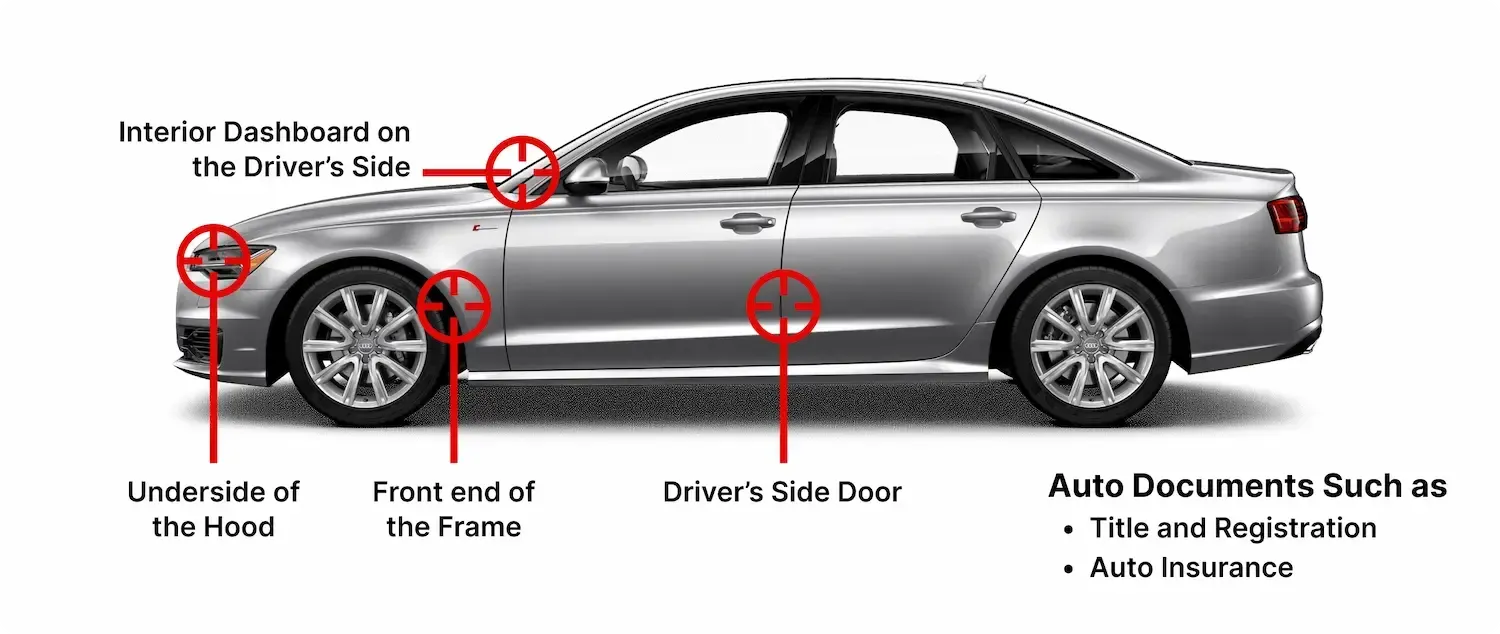
Land Rover VIN Location
The VIN is typically found in several key areas on the vehicle and within official documents. Check these common locations to identify it accurately:
Driver’s Side Dashboard
Look through the windshield at the lower corner of the dashboard on the driver’s side. Most modern Land Rover models display the VIN clearly on a fixed plate.
Driver’s Side Door Jamb
Open the driver’s door and inspect the door frame or pillar near the latch. A sticker or metal plate usually displays the VIN along with manufacturing details.
Engine Bay
Check the engine compartment for a stamped VIN. It is often located on the chassis frame, firewall, or other structural components, especially in rugged Land Rover models built for durability.
Documents
The VIN is also listed on official paperwork such as registration documents, insurance papers, and the vehicle title. Always ensure these match the VIN shown on the vehicle.
Classic Land Rover VIN Location
Classic Land Rover models may have less standardized VIN placement, especially older Defenders and early Series vehicles. Variations depend on production year and original build practices.
Windscreen
On later classic-era models, such as Defender variants, a VIN plate may be visible through the lower section of the windscreen.
Door Pillar
A VIN plate or sticker is often located on the driver’s side pillar. On older models, this may appear as a riveted metal plate rather than a modern label.
Who Should Use a Land Rover VIN Decoder?
A Land Rover VIN decoder is useful for anyone dealing with vehicles built for both luxury and capability. From daily-driven Range Rovers to off-road-ready Defenders, decoding the VIN helps verify specs, usage history, and condition.
Buyers
Before buying a used Land Rover, it is important to go beyond a visual inspection. A VIN check helps confirm factory specifications, ownership history, and past usage. This is crucial for spotting flood damage, heavy off-road use, or imported vehicles that may not match the listing.
Sellers
Accurate details can make or break a listing. By decoding the VIN, sellers can present verified specifications and history, helping justify the price and build trust with potential buyers; especially for higher-end trims or well-maintained units.
Dealers
Dealers can use VIN decoding to manage inventory more efficiently and avoid listing errors. With multiple trims, engine options, and regional variations, having verified data helps maintain transparency and improve buyer confidence.
Off-Road Owners and Enthusiasts
Land Rover owners and enthusiasts can use VIN data to better understand their vehicle’s original build. This is useful for planning upgrades, confirming drivetrain systems, and ensuring key components still align with factory specifications.
What is the Difference Between a Modern and Classic Land Rover VIN?
The difference between modern and classic Land Rover VINs comes down to structure, consistency, and the level of detail available. Newer models follow a global standard, while older models often use shorter, less consistent identifiers.
VIN Length and Format
Modern Land Rover vehicles use a standardized 17-digit VIN introduced in 1981. Earlier models, including older Defender and Series vehicles, may use shorter VINs or chassis numbers without a fixed global format.
Data Availability
Modern VINs provide detailed information such as engine type, trim level, drivetrain system, and production details. Classic Land Rover VINs may return limited data depending on available records and historical documentation.
Decoding Accuracy
Decoding modern Land Rover VINs is generally reliable due to standardized formatting and comprehensive databases. Classic VINs can be more difficult to interpret; however, you can still extract the information on any classic Land Rover model with our tool.
Breaking Down a Land Rover VIN
A 17-digit Land Rover VIN follows a structured format that reveals key details about the vehicle. It is divided into three main sections: WMI, VDS, and VIS. Each section provides specific information, helping identify the manufacturer, vehicle attributes, and unique production data.
World Manufacturer Identifier (WMI)
Digit 1 to 3: SAL
- S = Country of origin (United Kingdom)
- AL = Land Rover
Vehicle Descriptor Section (VDS)
Digit 4 to 9: CR2BG7
- C = Model line (Discovery Sport platform)
- R = Engine type (2.0L inline-4 turbocharged Ingenium engine)
- 2 = Drivetrain (All-Wheel Drive system)
- B = Body style (5-door SUV)
- G = Trim level (SE / mid-range configuration)
- 7 = Check digit
Vehicle Identifier Section (VIS)
Digit 10 to 17: HH713847
- H = Model year (2017)
- H = Halewood Assembly Plant, United Kingdom
- 713847 = Production sequence number
Why Decoding a Land Rover VIN is a Smart Move?
Decoding a Land Rover VIN turns a string of characters into verified vehicle data. With many Land Rovers used for off-road driving, towing, or long-distance travel, this step helps confirm specs, uncover history, and avoid unexpected repair costs.
Before Buying a Car
Check the Land Rover’s VIN to confirm factory specifications, drivetrain setup, and ownership history. This helps identify risks such as flood damage, heavy off-road use, import history, or rebuilt status.
Before Selling a Car
Use a VIN check to present accurate, verified details in your listing. Clear information about specs and history builds trust with buyers and reduces buyers’ hesitation–especially when they are buying a higher trim.
Verify Vehicle Identity
Confirm that the VIN matches the Land Rover’s model, engine, and configuration. This helps detect mismatches, tampering, or incorrect listings, which can happen with modified or imported units.
Check History and Records
Access available records such as title data, accident history, auction entries, and ownership timelines. While not every event is recorded, this information helps you better understand how the vehicle was used and maintained.
Need More Information? Get a Land Rover Vehicle History Report
Need more vehicle information? Get the full vehicle history report to see its complete specs and the past records. Here’s a snippet of the information you will get from the Land Rover vehicle history report.
Vehicle Specification
Access full specifications for both modern and classic Land Rover models in one report. This includes engine type, drivetrain (4WD systems like Terrain Response), transmission, production origin, and MSRP.
Title Records
Check for title issues that could affect legality, safety, or resale. This includes salvage, rebuilt, theft records, or inconsistencies. Clean title status is crucial, especially for vehicles that may have been heavily used or imported.
Odometer Reading
Review mileage records over time to ensure consistency. This is important for Land Rover vehicles, as usage can vary from city driving to off-road conditions, which can impact wear and long-term durability.
Accident and Damage History
Identify any reported accidents, including dates, locations, and severity. The report may also include damage from flooding, rough terrain use, or structural repairs—factors that can affect performance and safety.
Auction History
Find out if the Land Rover has been sold at auction. The report may include sale dates, locations, final prices, and sometimes photos, giving insight into the vehicle’s past condition and presentation.
Ownership Information
Review ownership history, including the number of owners, regions, and duration. While personal details are not included, this helps you understand how the vehicle has been used and maintained over time.
Recalls Check
Check for any safety recalls issued for the Land Rover. Newer models often include detailed recall data, while older ones may have limited records. Addressing recalls is important to maintain safety and performance.
Engine Information
Verify engine specifications, configuration, and key features. Land Rover vehicles may include a range of engines, from efficient turbocharged units to larger V6 or V8 options, making this section essential for accurate evaluation and maintenance planning.
Get More Land Rover Information
Need more details before making a decision? Our tools to get more information on the vehicle’s recall and get the original copy of the window sticker to help you see the initial information on the vehicle’s features, options, and more.
Land Rover Recall Check by VIN
Make sure the car has never been recalled. Check the detailed recall information by VIN, like date, causes, and fixes.
Land Rover Window Sticker by VIN
Need to get the Land Rover window sticker? Use our tool and secure the original copy that has the same information as the initial window sticker.
Check Any Land Rover Models by VIN Before You Buy
Thinking about buying a used Land Rover? Do not rely on looks alone. Get the vehicle history report first and understand its real condition, past usage, and records.
Supported Modern Land Rover Models
Decode the VIN of modern Land Rover models, including Range Rover, Defender, Discovery, and more.
Supported Classic Land Rover Models
Not only modern models of Land Rover, but our service can also be used to decode the older models of Land Rover. Get access to specs, market value, records, and more.
Decode Any Vehicle’s VIN
Need to decode another car’s VIN aside from the Land Rover? Use our VIN decoder service and check all makes!
Land Rover Electrification Information Update
The Land Rover electrifications strategy focus on expanding luxury EV options while continuing to erly on hybrid technologies on its SUV lineup. The brand has continued combining electrification with connected software system and premium off=road capability.
Range Rover Electric Development
The Range Rover Electric serves as the flagship model in Land Rover transition toward battery-electric vehicle. Positioned as a premium luxury SUV, representing the brands fist full EV product while maintaining the signature Range Rover lineup.
Hybrid and Multi-Energy Strategy
Land Rover has decided to continue to rely on hybried and plug-i hybrid as a part of its broader electifications roadmap. Rather than replacing combustion vehicle immediately, the company plans to put a more balanced multiple powertrain types during the transition phase.
Software and Connected Features
The software integration remains an important part of the Land Rover that evolving its EV ecosystem. The Land Rover company has decided to continue improving its infortainment system, navigation functionality, and integrating vehicle servcie across the lineup.
Ongoing updates to the Pivi Pro infotainment system.
Navigation and map update improvements.
Expanded connected vehicle and security features.
Software-focused enhancements supporting EV usability and ownership experience.
FAQs About Land Rover VIN Decoder by VIN
How do I decode my classic Land Rover VIN number?
To decode a classic Land Rover VIN, start by breaking the number into three sections: the World Manufacturer Identifier (first 3 characters, often “SAL”), the Vehicle Descriptor (characters 4–9 for model and engine), and the Vehicle Identifier (characters 10–17 for year and serial). The 10th character shows the model year. For pre-1980 models, check for a stamped plate on the bulkhead or near the brake master cylinder.
What if the chassis number plate is missing or hard to read?
A missing or unreadable chassis number plate (VIN) can lead to serious problems, including issues with insurance and verification. In such cases, a license plate lookup can help retrieve available vehicle history and details.
How do I check a Land Rover’s service history?
To check a Land Rover’s service history, especially for models built from July 2013 onwards, you can enter the 17-digit VIN into a decoder tool to access available records and vehicle data within seconds.
What if the chassis number plate is missing or hard to read?
An unreadable or missing VIN plate is a major concern. It can prevent the vehicle from passing inspections, being registered, or even being driven legally, since the VIN serves as the car’s official and unique identifier.
Why is my VIN not being recognised?
A VIN may not be recognized due to simple errors like typos or invalid characters. Letters such as I, O, and Q are not used, and common mistakes include confusing “S” with “5” or “B” with “8.” Always double-check the 17-character VIN on the dashboard or documents, as database limitations can also affect results.