
Decode Triumph Motorcycle VINs for Any Model
In the market to purchase a used Triumph? Be sure to decode the VIN to check everything thoroughly. Click on the form to decode the classic and modern VINs from any Triumph motorcycle models!
Table of Contents:
What Will You Get from the Triumph VIN Decoder?
Our Triumph VIN decoder provides a comprehensive breakdown of the motorcycle’s specifications, along with its current market value. Below is a preview of the information available through the tool.
- Manufacturer and origin
- Model, trim, and package details
- Engine specifications
- Transmission setup
- Body style
- Model year
- Production plant
- Manufacturer Suggested Retail Price (MSRP)
- Market Value
How to Decode a Triumph VIN
Decoding the Triumph VIN is easy; our tool can decode both classic and modern VIN formats. Follow these simple steps to quickly decode the VIN.
Step 1: Find the VIN
Check on the steering head, front frame rail, or the vehicle documentation, like the bill of sale or registration cards.
Step 2: Enter the VIN
Click on the form above and then write down the VIN. After that, click on the button to submit the form.
Step 3: Check the Full Triumph Specs
Once it is done, you can see complete information about the vehicle’s details like engine type, country of origin, MSRP, and market value.
Where to Find the VIN on a Triumph
Before decoding, the VIN needs to be located on the motorcycle. Most modern Triumph Motorcycles models follow standard placement, while older or classic bikes may vary depending on the production year and origin. The sections below outline the most common VIN locations.
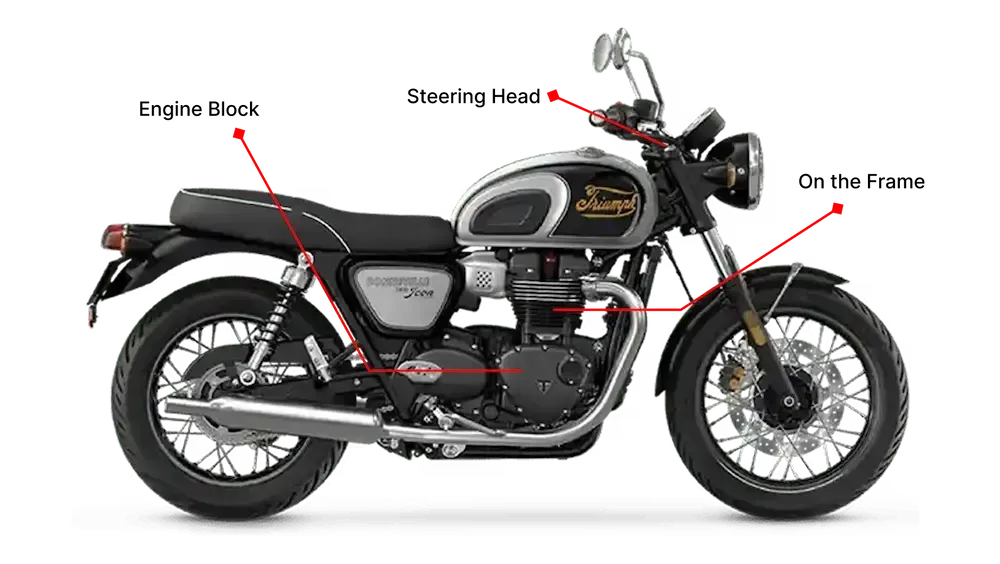
Triumph VIN Location
The VIN can be found in several places on the motorcycle and in the official documents. It is recommended to check multiple locations to ensure the number is consistent across all sources.
Steering Head / Headstock (Primary)
Check the right side of the frame, between the handlebars and the fuel tank. The VIN is usually stamped directly into the metal or displayed on a small compliance plate.
Vehicle Documents
The 17-digit VIN can also be found in official documents, such as the owner’s manual, registration, or insurance papers.
Engine Case
While the VIN is typically located on the frame, some older or specific models may have an engine number stamped on the crankcase, usually below the cylinder barrel.
Classic Triumph VIN Location
Classic Triumph Motorcycles motorcycles may not follow the modern 17-character VIN standard. Depending on the model, production year, and factory origin, the VIN or frame number can appear in less consistent locations.
Steering Head / Neck Tube
Typically stamped into the metal on either side of the headstock, just behind the front forks. This is the most common location on older Triumph models.
Engine Crankcase
The engine number is often stamped on the crankcase, usually on the left-hand side below the cylinder barrels. While not the VIN, it can help confirm originality.
Chassis Plate
Some classic models may include a stamped or riveted plate attached to the frame, often on the downtube or a visible section of the chassis.
Who Should Use the Triumph VIN Decoder
A Triumph VIN decoder is useful for anyone planning to buy, sell, insure, or verify a Triumph motorcycle. Running a VIN check helps confirm the bike’s identity and ensures it meets your expectations.
Buyers
Before purchasing, check the motorcycle’s exact specifications, features, and history. A VIN decoder helps confirm the bike matches the listing and gives a clearer view of its current market value.
Sellers
Provide accurate and transparent details in your listing. Decoding the VIN ensures the correct model, engine type, and factory specifications are disclosed, helping build trust with potential buyers.
Dealers
Dealers can use VIN decoding to verify specifications and history quickly. This is especially useful for Triumph models, where trims and configurations may vary by market or production year.
Collectors
For collectors and enthusiasts, VIN decoding helps confirm originality and production details. This is particularly important for classic Triumph models like the Bonneville or Thruxton, where authenticity and matching numbers can significantly impact value.
What are the Differences Between a Classic and a Modern Triumph VIN
Modern and classic Triumph Motorcycles VINs differ in structure, level of detail, and consistency. Understanding these differences is important when decoding a VIN and verifying a motorcycle’s background, especially with Triumph’s long production history.
VIN Length and Format
Modern Triumph motorcycles use the standardized 17-character VIN system introduced in 1981. Classic Triumph models, particularly those built before this period, often use shorter frame or engine numbers that can range from 5 to 14 characters and may not follow a uniform format.
Data Availability
A modern Triumph VIN provides detailed information, including engine type, model designation, production year, manufacturing location, and key specifications. In contrast, older Triumph VINs or frame numbers may offer limited data, as historical records are not always fully digitised or standardised.
Decoding Accuracy
Modern Triumph VINs are generally easier to decode due to their consistent global format and strong database support. Classic Triumph numbers can be more complex, but you can use our Triumph VIN decoder service to see the correct data.
Quick Triumph VIN Number Breakdown
A modern Triumph VIN contains 17 characters, each representing specific information about the motorcycle. These characters identify the manufacturer, model, engine type, production location, and unique serial number. Check the section below to see how a Triumph VIN is broken down.
World Manufacturer Identifier (WMI)
Digit 1 to 3: SMT
- S = Country of origin (United Kingdom)
- MT = Triumph
Vehicle Descriptor Section (VDS)
Digit 4 to 9: E68DG4
- E = Model line (Street / Speed Triple family)
- 6 = Engine type (inline-3 / “triple” engine configuration)
- 8 = Engine displacement class (765cc range)
- D = Body style (naked / roadster motorcycle)
- G = Trim level (RS / higher-performance variant)
- 4 = Check digit
Vehicle Identifier Section (VIS)
Digit 1o to 17: NTAX3960
- N = Model year (2022)
- T = Assembly plant in Hinckley, Leicestershire, United Kingdom
- AX3960 = Production sequence number
Decode Any Triumph Model by VIN: Modern or Classic
Don’t rely on looks or a short test ride alone. Decode the VIN to check the complete information of the bike, like specifications, country of origin, and the MSRP.
Supported Modern Triumph Models
Decode VINs for popular Triumph Motorcycles models such as the Street Triple, Speed Twin, Tiger series, Trident 660, and Bonneville range.
Supported Classic Triumph VINs
Considering a vintage Triumph? Our VIN decoder supports older formats, including shorter or non-standard frame numbers. This makes it easier to verify authenticity, production details, and originality.
FAQs About Triumph VIN Decoder
How do you read a Triumph motorcycle VIN?
Decoding a 17-character Triumph VIN (post-1981) involves identifying key elements such as the manufacturer, model series, production year, assembly plant, and unique serial number. The 10th character indicates the model year, while the 11th character identifies the factory (e.g., Hinckley or Thailand).
How do I identify the old Triumph motorcycle?
To identify a classic Triumph motorcycle, check the engine and frame numbers, usually stamped on the left side of the bike (crankcase and steering head). On original bikes, these numbers should match. These codes can also be used to confirm the production year and date, especially for models using older prefix systems.
Can a Triumph VIN decoder reveal if aftermarket parts have replaced original components?
No, a standard Triumph VIN decoder cannot confirm whether aftermarket parts have replaced original components.
Do Triumph VIN decoders provide recall and safety notice information?
Yes, Triumph VIN decoders and dedicated lookup tools can provide information about recalls and safety notices. Running a VIN check allows you to see if the motorcycle has any open or past recall records.
Why do collectors and enthusiasts rely heavily on Triumph VIN decoding?
For collectors and enthusiasts, VIN decoding is essential, especially for pre-1981 Triumph models. It helps verify authenticity, confirm matching numbers, and understand the bike’s production details. Given Triumph’s long history, these identifiers act as a reliable reference when assessing originality or restoration work.
Can a Triumph VIN decoder show if my bike was built for the US or UK market?
Yes, a Triumph VIN can help indicate the market it was built for, such as the US or UK/EU. This is typically determined by analysing the first three characters (World Manufacturer Identifier) along with other position codes within the VIN.
How can I tell if a classic Triumph’s engine and frame numbers match?
To check if a classic Triumph has matching numbers, compare the engine number (usually stamped on the left side of the crankcase) with the frame number (located on the headstock or front frame area). On original models, these numbers should align, although minor prefix differences may appear.
Want More Info About Your Triumph? Get a Vehicle History Report
A quick VIN decoder gives you a snippet about the bike. However, if you’re serious about buying a Triumph motorcycle, a full history report is where the real value is. It helps you move beyond surface-level details and understand exactly what you’re buying before you commit.
Vehicle Specification
See how the Triumph was originally built at the factory. From engine configuration and model variants (Bonneville, Street Triple, Tiger, etc.) to production details and factory options, you’ll get a clear picture of the bike’s true specifications and value.
Title Records
Used Triumph motorcycles, especially imports or cross-market units, can carry hidden risks. This section highlights critical issues such as salvage titles, theft records, rebuilt status, or registration problems that could affect legality and resale value.
Odometer Reading
Mileage plays a key role in determining a bike’s condition. By reviewing recorded odometer data over time, you can spot inconsistencies, potential rollbacks, or unusual gaps, helping you avoid bikes that may not be as advertised.
Accident and Damage History
Even well-maintained Triumph bikes can have a past. Check for reported accidents, structural damage, or environmental exposure such as flooding. These factors can significantly impact safety, performance, and long-term reliability.
Auction History
Many motorcycles pass through auctions before reaching the market. Access past sale records, including dates, locations, and in some cases photos, to better understand how the bike was previously listed and valued.
Ownership Information
Understand how the motorcycle has been used over time. This includes the number of previous owners, general registration regions, and ownership duration—useful indicators of how consistently the bike may have been maintained.
Recalls Check
Stay updated on any recalls linked to the Triumph. This section outlines known issues, announcement dates, and repair status, helping ensure the bike meets safety standards and compliance requirements.
Engine Information
Confirm that the engine matches the VIN. Triumph’s range, from parallel twins to triple engines, makes verification essential for maintenance, parts compatibility, and overall value. Matching numbers can also be especially important for classic models.
Get More Information on a Triumph Using Our Other Tool
Need to check more information on a Triumph before you purchase the vehicle? Get the vehicle history report to see everything thoroughly, to see its complete specifications and history, and to make sure the bike has no serious problems.
Triumph Recall Check by VIN
Use the Triumph recall check by VIN to see the bike’s recall history and make sure the issues are fixed and closed.
Check Other Vehicles’ VINs
Aside from Ducati, our VIN Decoder tool also supports other makes and models. Refer to the lis below and decode any VIN from any makes you like.