How Accurate Are Window Stickers Generated from VINs?
Key Takeaways
Most window sticker lookup services are generally accurate, because they rely on factory and manufacturer data.
- A VIN-generated sticker is linked to a specific vehicle, not some generic make and model.
- Entering the VIN correctly matters a lot. One wrong character can bring up an entirely different vehicle.
- Older vehicles may have slightly less complete digital records than newer ones.
- The biggest factor for accuracy is where the data is sourced from.
- A VIN-generated sticker can still work for the same kind of verification you’d use with an original window sticker.
If you’ve ever tried to find a window sticker by VIN, you probably wondered pretty quickly, how accurate is this really? And yeah, it’s a fair question.
The good news is that a window sticker generated from a VIN is usually pretty accurate, especially when the details come from manufacturer records tied to that exact vehicle. In a lot of situations the info ends up matching what was on the original sticker, back when the car was sitting on the dealer’s lot.
That said, not every lookup service pulls its data from the same place. Some pull directly from factory records, and others use estimated vehicle details or partial info. Because of that, accuracy can change, depending on where the data came from and sometimes how old the vehicle is.
Let’s dig a little more into how VIN-generated window stickers operate, what can mess with accuracy, and what you can do to figure out if the sticker you’re looking at is actually reliable.
What Does "Generated from VIN" Actually Mean?
Many people assume a sticker generated from the VIN is simply a computer-generated estimate. That's not really how it works.
When you enter a VIN into a window sticker lookup tool, the system searches for records associated with that exact vehicle. If manufacturer data is available, the system retrieves information connected to the vehicle when it was originally built and sold.
Think of it like looking up a birth certificate. You're not getting information about every car of that model. You're getting information tied to that specific vehicle.
The process is pretty simple:
- Enter the VIN.
- The system searches for factory records linked to that VIN.
- The information is displayed in a window sticker format.
This is very different from a simple VIN decoder.
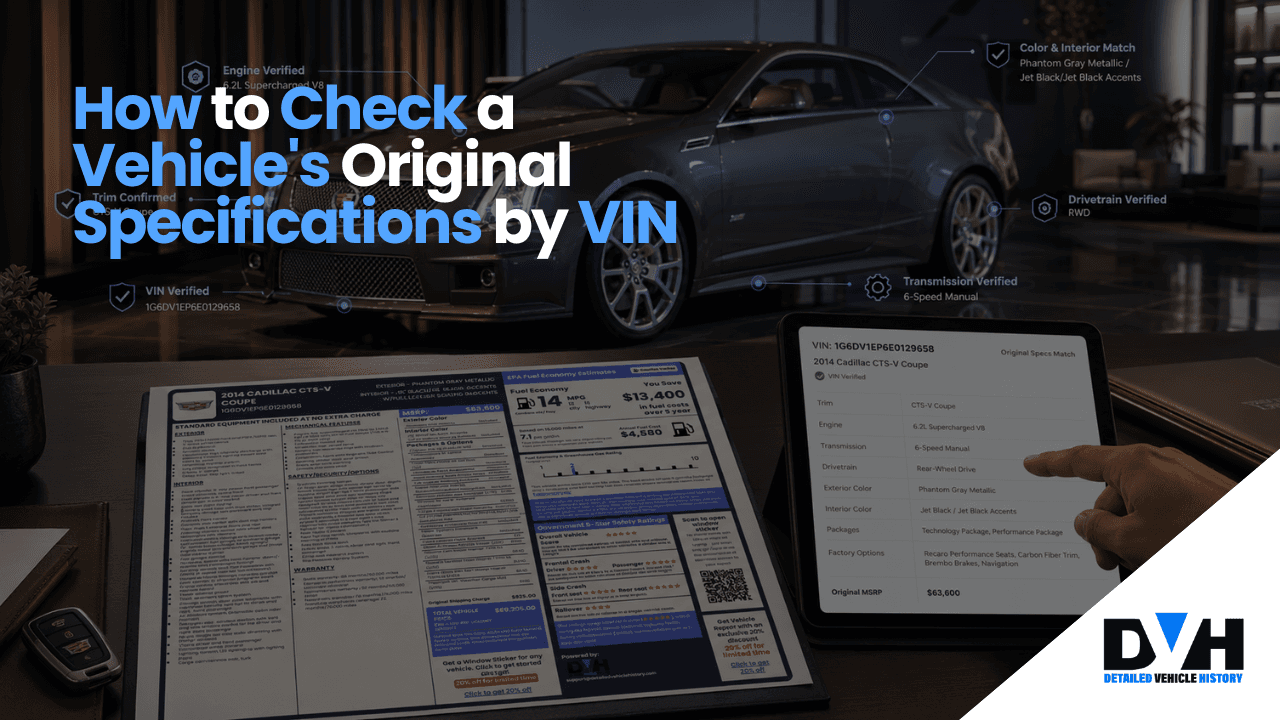
A VIN decoder can tell you things like the make, model, engine, transmission, and trim level. A window sticker goes much deeper. It shows factory-installed options, package pricing, original MSRP, fuel economy ratings, warranty details, and much more.
That is why a properly sourced window sticker is usually far more detailed than a basic free VIN lookup.
READ ALSO: How to Check if Your Car is All-Wheel Drive (AWD)
What Determines the Accuracy of a Window Sticker Generated from a VIN?
The accuracy of a window sticker comes down to several factors. These are:
The Data Source
This is by far the biggest factor.
A sticker generated using proper VIN decoding and manufacturer records is usually very accurate because the information comes directly from the vehicle's original factory build data.
In other words, the system isn't guessing what options the car might have had. It's pulling information tied to that exact VIN.
On the other hand, some tools rely mostly on estimated vehicle information using the VIN. While this can help to identify trim levels and some vehicle specs, it often cannot identify every optional package or accessory installed at the factory.
That's why you need to keep your eyes peeled and use the right sources. Ensure that data comes directly from manufacturer records whenever available.
Get an Accurate OEM Window Sticker
Correct VIN Entry
Even the best database can't help if the VIN is entered incorrectly.
Every VIN contains 17 characters. If one character is wrong, the system may pull information for a completely different vehicle or fail to find a record at all.
A surprising number of VIN lookup errors happen because people confuse similar-looking characters. Fortunately, VINs never use the letters I, O, or Q. They were excluded to avoid confusion with the numbers 1 and 0.
Before requesting a window sticker, it's always a good idea to double-check the VIN against the dashboard plate or driver's door sticker.
Vehicle Age
Newer vehicles generally have better digital records than older ones.
Most manufacturers maintain detailed electronic build records for modern vehicles. However, once you start getting into older vehicles, especially those built in the 90s, record availability can become less consistent.
That doesn't mean the information is inaccurate. It simply means there may be fewer records available to reconstruct every detail of the original sticker.
In this case, we would recommend getting a build sheet for classics.
Verification of External Data
A quality window sticker doesn't only show manufacturer information. Many also include fuel economy ratings and safety information.
For example, EPA fuel economy data is often verified using official government databases. The EPA reports that drivers can save thousands of dollars in fuel costs over a vehicle's lifetime by choosing more fuel-efficient vehicles, which is one reason fuel economy information remains such an important part of a window sticker.
When these details are verified through official sources, the accuracy improves, and smarter decisions are made.
READ ALSO: How to Use Car Sticker Price to Negotiate a Fair Price
What a VIN-Generated Window Sticker Should Include (If It's Accurate)
If you're trying to judge the quality of a window sticker, there are several things you should look for.
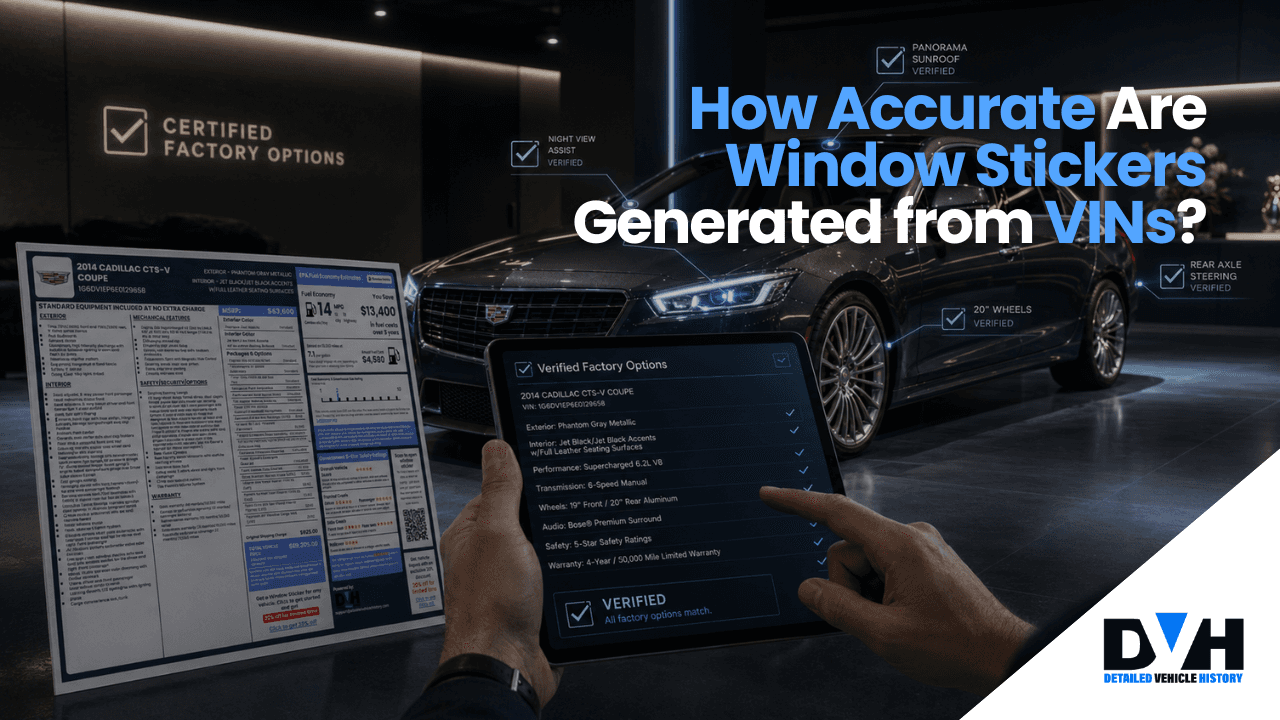
An accurate sticker should typically include the following:
- Matching 17-character VIN
- Original model and trim level
- Standard equipment list
- Factory-installed options
- Individual option pricing
- MSRP breakdown
- Destination charge
- Fuel economy ratings
- Safety ratings
- Original warranty information
One thing worth paying attention to is the options section.
A generic vehicle summary might tell you that a vehicle is an EX, Limited, Platinum, or Premium trim.
A true factory-based window sticker should go further by showing the actual packages and options installed on that particular vehicle.
That level of detail is often what separates a real factory-based sticker from a simple VIN-decoded report.
Here are some samples of Detailed Vehicle History’s 100% accurate window stickers:
Get a Window Sticker · View Samples
Benefits of VIN-Generated Window Stickers for Buyers and Sellers
This document can be a useful tool, not just for buyers but sellers also. Here’s why:
For Buyers
Buying a used car can sometimes feel like a guessing game.
A seller might say a vehicle has premium packages, upgraded technology, or special factory options, but how do you verify those claims?
A window sticker helps answer that question.
Because the sticker shows the vehicle's original factory equipment, buyers can confirm whether the car actually came with the features being advertised. This can help prevent overpaying for a vehicle that may not have the options the seller claims it has.
A VIN-generated sticker can also help buyers:
- Verify original trim level and factory options
- Compare MSRP with the current asking price
- Check fuel economy ratings
- Review original safety information
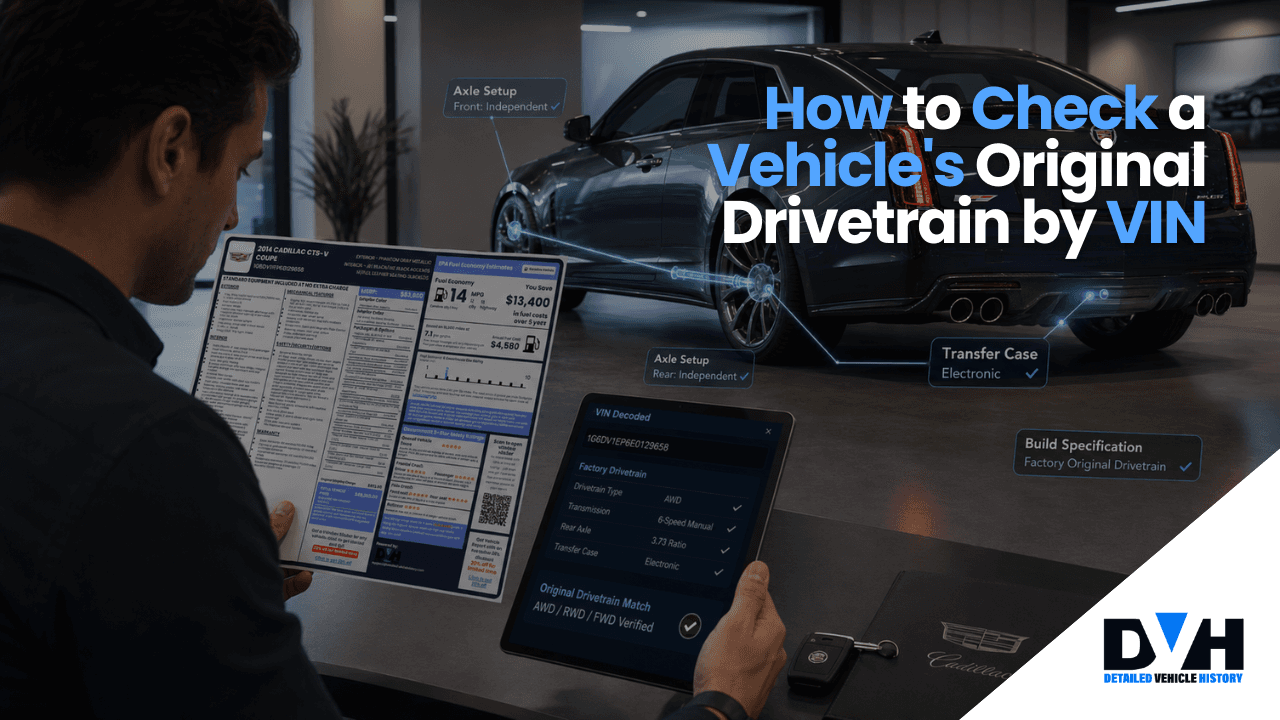
- Confirm engine, transmission, and drivetrain details
- Spot missing or replaced equipment
In short, it gives buyers a clearer picture of what they are actually purchasing.
For Sellers and Dealers
For sellers and dealerships, a window sticker can be a valuable sales tool.
Many used vehicles no longer have their original paperwork. Providing a VIN-generated window sticker gives potential buyers more confidence because they can see exactly how the vehicle was equipped when it left the factory.
This is especially helpful for vehicles with expensive option packages that may not be obvious at first glance.
For example, two vehicles may look nearly identical from the outside, but one may have thousands of dollars worth of factory upgrades. A window sticker helps document those differences.
Sellers and dealers can use a window sticker to:
- Showcase factory-installed options and packages
- Support vehicle pricing with original MSRP data
- Build trust with potential buyers
- Verify vehicle specifications before listing a car for sale
- Differentiate similarly equipped vehicles
- Reduce questions during the sales process
Whether you're buying, selling, or trading in a vehicle, a VIN-generated window sticker helps replace guesswork with documented factory information. That's one reason these reports have become increasingly popular in today's used car market.
How to Check the Accuracy of a Window Sticker You Receive
Even if a service has a strong reputation, it doesn't hurt to verify the information yourself.
Here are a few easy checks you can perform.
Compare the VIN
Start with the basics. Make sure every character on the sticker matches the VIN on the vehicle. Not most of the VIN but every character.
Verify the Color
Check whether the listed exterior and interior colors match the actual vehicle. This is one of the fastest ways to spot potential issues.
Look for Itemized Options
A good sticker should show specific options and package pricing.
If all you see is a generic equipment list, the stickere may be based primarily on trim-level information rather than factory records.
Check Fuel Economy Information
Fuel economy data should look complete and realistic. Most properly generated stickers include city, highway, and combined MPG figures.
Review the MSRP Math
This sounds simple, but it helps.
The base MSRP plus options plus destination charge should equal the total MSRP. If the numbers don't add up, something may be missing.
READ ALSO: Vehicle stickers by VIN: How Window Stickers Help Sellers Increase Their Sales and Profits
Why VIN-Generated Stickers Are the Practical Standard Today
The reality is that most original window stickers are long gone. Cars change owners. Documents get lost and even dealers throw paperwork away.
By the time a vehicle is ten or fifteen years old, finding the original sticker can be surprisingly difficult. That's one reason window stickers generated from VINs have become so popular.
They allow buyers, sellers, dealerships, collectors, and enthusiasts to access information that would otherwise be difficult to find. The sticker can help verify original equipment, identify factory packages, confirm MSRP, and compare the vehicle's current condition against how it left the factory.
This is especially important in today's used car market.
According to data from the Federal Highway Administration, Americans keep their vehicles longer than ever before, with many vehicles remaining on the road well beyond 12 years. As vehicles age and pass through multiple owners, original documentation becomes harder to track down.
A reliable window sticker helps fill that gap.
Wrapping Up: How Accurate Are Window Stickers Generated from VINs?
So, is a window sticker from VIN accurate? In most cases, yes.
When the information comes directly from manufacturer records, a VIN-generated sticker can closely match the original document that came with the vehicle when it was new.
The key is understanding where the information comes from. A sticker built from factory data will almost always be more reliable than one based only on estimates.
A well-made VIN-generated window sticker is one of the simplest ways for buyers, sellers, collectors, and regular vehicle owners to confirm original vehicle details and gain insight into how the vehicle was originally built.
FAQ on Window Stickers Generated from VINs
Are window stickers generated from a VIN accurate?
Yes. How accurate window stickers generated from VIN are depends mainly on the source of the data. When the information comes from manufacturer records, the sticker is usually very close to the original.
What makes a VIN-generated window sticker accurate?
The VIN must match the factory record for that specific vehicle. Manufacturer data, EPA information, and properly maintained databases all contribute to accuracy.
How can I tell if a window sticker was built from real factory data?
You can tell if a window sticker was built from real factory data by looking for itemized options, MSRP breakdowns, destination charges, warranty information, and fuel economy data. These details usually indicate a more complete factory record.
Is a free window sticker by VIN as accurate as a paid one?
It can be. The price isn't what determines accuracy. The source of the data matters much more than whether the report is free or paid. However, we would advise you to use a paid option, as they are usually accurate.
Can I verify a sticker generated from the VIN myself?
Yes, you can verify a sticker generated from the VIN yourself. All you need to do is compare the VIN, colors, options, and equipment listed on the sticker with the actual vehicle. Any major mismatch should be investigated.

About Joses Peter
131 articles published
Joses Peter is a seasoned writer with a portfolio of 100+ blog posts and two published papers. Currently, she contributes as a professional writer in the automotive industry, with a great passion for technology and automobiles. This passion keeps her constantly learning and translating complex tech concepts into accessible content.