How to Check a Vehicle's Original Drivetrain by VIN
Key Takeaways
A VIN decoder confirms the factory drive type (FWD, RWD, AWD, or 4WD) in seconds for free, using the vehicle's own production record, not a guess based on the model name.
- The window sticker lookup adds a layer of explicit factory confirmation, showing the drivetrain paired with the engine, and any AWD or 4WD packages that were originally ordered.
- The same make, model, and trim can be offered in more than one drivetrain configuration, and VIN is really the only way to confirm which one a specific vehicle actually has.
- AWD and 4WD are not the same system and people confuse them all the time. AWD operates automatically without any driver input, while 4WD is something the driver typically has to engage and is built for more demanding terrain.
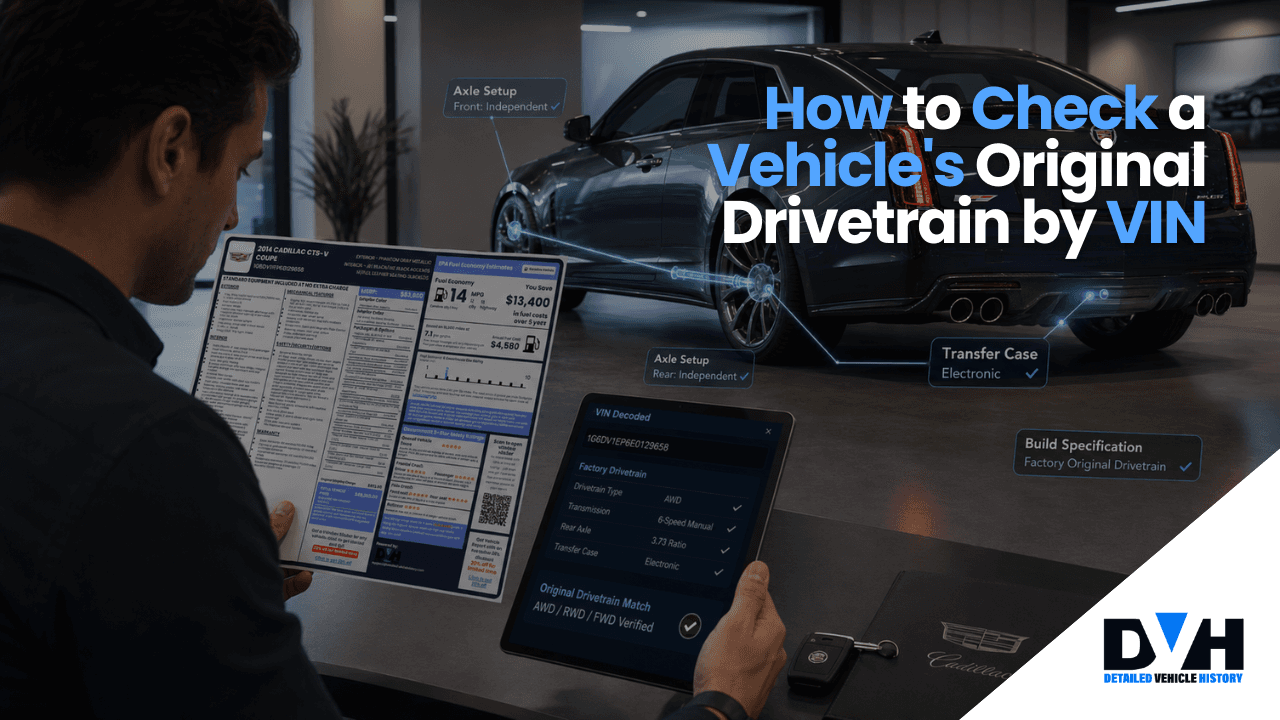
To check a vehicle's original drivetrain by VIN, all you need to do is run the 17-character VIN through a free decoder, and it will return the factory drive type (FWD, RWD, AWD, or 4WD) tied to that exact vehicle.
For full confirmation, the window sticker by VIN goes even further, because it lists the drivetrain exactly as it was factory-installed, and that matters a lot when a seller is claiming AWD or 4WD on a vehicle that may have rolled off the assembly line in a basic two-wheel-drive configuration.
Here's something many buyers don't think about: identical-looking vehicles parked next to each other on the same lot can have completely different drivetrain setups. Badges and stickers can be added by anyone later. Factory records, on the other hand, cannot lie and cannot be changed.
What Is a Drivetrain?
Before we get into how to actually look this up, it's worth making sure we're all on the same page about what a drivetrain even is, because a lot of people use the word without fully knowing what it covers.
A drivetrain is the system that connects the engine to the wheels so the vehicle can actually move. It's basically responsible for transferring all that engine power to the road. The main components include the transmission, the driveshaft (which you won't find in FWD vehicles since there's no need to send power to the rear), the differential, the axles, and in 4WD systems, a transfer case.
Why the Drivetrain Matters
The drivetrain affects more than just how a vehicle moves. It can influence:
- Fuel economy
- Handling and traction
- Towing capability
- Maintenance requirements
- Parts and repair costs
- Overall ownership experience
That's why ending up with the wrong drivetrain for your needs can be one of the most expensive mistakes you make when buying a used vehicle.
How to Check a Vehicle's Original Drivetrain by VIN: Step by Step
This part is more straightforward than most people expect. To check a vehicle’s original drivetrain, all you need to do is follow these simple steps:
Step 1: Start With the VIN
The VIN acts like the vehicle's fingerprint. You'll usually find it on the dashboard near the windshield, inside the driver's door opening, and on ownership documents. It should contain exactly 17 characters.
Step 2: Double-Check Every VIN
Compare the VIN on the vehicle with the VIN on the paperwork. If the numbers don't match, stop and investigate further before relying on any other information.
Step 3: Use a free VIN Decoder
This returns the factory drive type (FWD, RWD, AWD, or 4WD) along with the trim level, engine, and transmission configuration, all tied to that specific vehicle's production record.
Step 4: Get a Factory Window Sticker Lookup
Getting a window sticker by VIN gives you the full factory drivetrain configuration in plain language, including any AWD or 4WD packages that were originally ordered, and it pairs that info with the engine and transmission so you can see how the whole powertrain was spec'd from the beginning.
Step 5: Check the Information Label
Open the driver's door and inspect the manufacturer's label. While its primary purpose is to provide weight and tire information, it may also contain useful specification details.
Step 6: Inspect the Vehicle Itself
Documentation is helpful, but sometimes it's worth looking at the hardware. AWD and 4WD systems leave clear evidence in the form of drivetrain components that are difficult to disguise.
Step 7: Trust the VIN over the Badge
A badge can be changed in minutes. Factory records connected to the VIN are far more reliable when you're trying to determine a vehicle's original drivetrain setup.
READ ALSO: How to Check if Your Car is All-Wheel Drive (AWD)
The Four Drivetrain Types: What Each One Actually Means
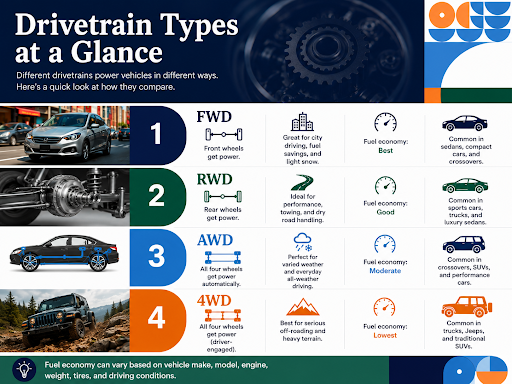
This is where people usually start throwing around terms like FWD, AWD, 4WD, and RWD. But what do they actually mean? Let's find out!
Front-Wheel Drive (FWD)
With FWD, power only goes to the front wheels, which means those front wheels are doing two jobs at once. They're steering the car and also pulling it forward. It's the most common drivetrain setup you'll see in modern sedans, compact cars, and a lot of crossovers, and there are good reasons for that.
FWD vehicles are typically lighter and more fuel-efficient, and they tend to have more interior space because there's no rear driveshaft or floor tunnel eating into the cabin.
What is FWD Best for?
- daily city and highway driving
- fuel efficiency
- Mild weather conditions
Rear-Wheel Drive (RWD)
With RWD, power goes only to the rear wheels, so the rear wheels do the pushing while the front wheels handle steering. That separation of duties actually gives the car a more balanced weight distribution, which is why most sports cars, performance sedans, and full-size pickup trucks use this setup.
It's also better for towing on trucks, because the weight of a trailer pushes down on the rear wheels and actually improves traction rather than hurting it.
The downside is that in snow and ice, RWD vehicles can be harder to control because there's no engine weight sitting over the drive wheels to help grip the road, and the rear end can step out if you're not careful.
What is RWD Best for?
- Performance driving
- Towing-focused trucks
- Dry road handling
All-Wheel Drive (AWD)
AWD sends power to all four wheels automatically, with the system adjusting how much goes where as conditions change, and the driver doesn't have to do anything for this to happen.
The system monitors each wheel independently, allowing them to receive different amounts of power depending on what's going on with traction and road conditions, which gives the vehicle solid grip in wet, icy, or just generally unpredictable weather.
One thing a lot of people don't realize about AWD, though. It helps you get moving and stay in control, but it does not help you stop faster.
AWD is Best for
- Drivers in variable weather who want automatic all-weather traction without having to think about it.
Four-Wheel Drive (4WD / 4x4)
4WD is a driver-activated system built for situations where maximum traction matters. Most 4WD vehicles also include a low-range mode that helps in deep mud, rough trails, steep hills, and other challenging conditions.
Unlike AWD, which works automatically, 4WD is designed more for off-road use and demanding terrain. It can be heavier and less fuel-efficient, but it's usually the better choice when the road ends and the tough stuff begins.
4WD is Best for
- Serious off-roaders
- Construction and work sites
- Vehicles that regularly deal with deep snow, mud, or rough unpaved terrain.
READ ALSO: What is the Suspension System of a Car?
How Drivetrain Information Appears on a Window Sticker
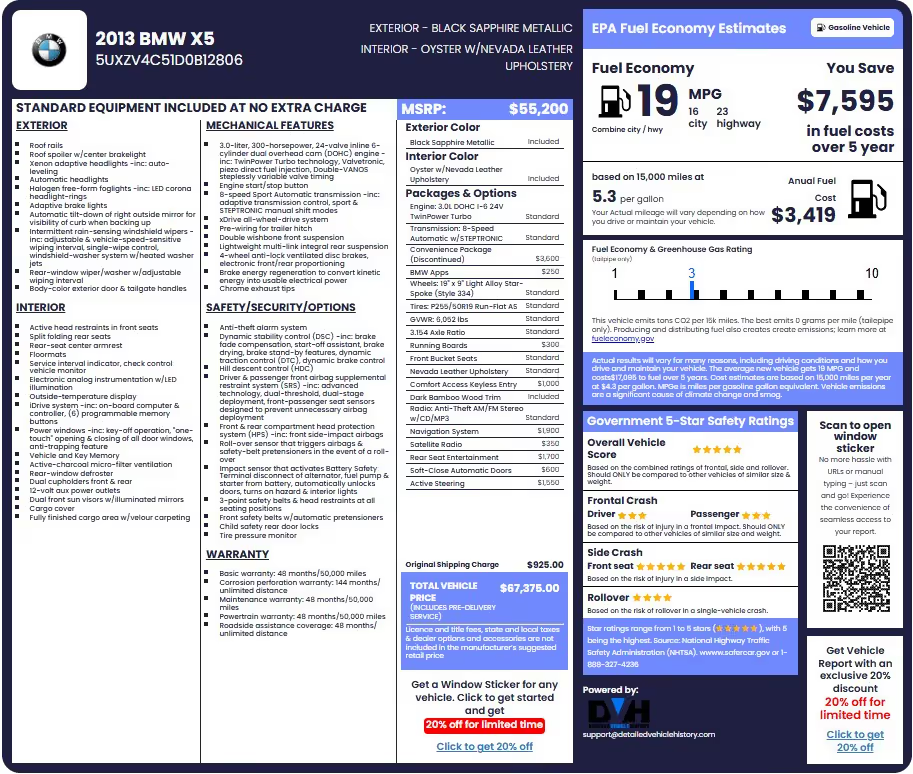
The window sticker is honestly one of the most useful documents attached to any used vehicle, but a lot of buyers either don't know it exists or don't know how to read it.
The drivetrain shows up under the powertrain or mechanical section of the sticker, listed clearly right alongside the engine and transmission. So instead of having to decode anything, you'll see something written out clearly, like "Full-Time All-Wheel Drive" or "4WD Off-Road Package," and it's paired with the exact engine and transmission the car left the factory with.
Here's what to specifically look for when you pull the window sticker by VIN:
- The drive type listed explicitly, for example, "All-Wheel Drive," "Front-Wheel Drive," "4WD," or similar language.
- Any drivetrain packages listed, like "4x4 Off-Road Package" or "e-AWD System," which tell you even more about what the system is actually capable of.
- The engine and transmission pairing, which confirms the drivetrain is matched to what the factory installed.
- Any towing or capability packages, because these sometimes come with drivetrain upgrades or modifications that affect what the vehicle can actually do.
This is the most direct factory confirmation available for any used vehicle with a surviving or retrievable sticker, and for most vehicles, especially anything from the last 20 or so years, that sticker can be pulled up by VIN.
AWD vs. 4WD: The Difference Most Buyers Get Wrong
This is probably the most common source of confusion in used car buying, and sellers know that, which is why it's also one of the most common sources of misrepresentation. The table below clearly shows the difference between both:
| Feature | AWD (All-Wheel Drive) | 4WD (Four-Wheel Drive) |
|---|---|---|
| How It Activates | Works automatically without driver input. | Usually engaged by the driver when needed. |
| Power Distribution | Adjusts power between wheels as road conditions change. | Sends power to both front and rear axles when activated. |
| Low-Range Gear | Rarely included. | Common on most systems for off-road driving. |
| Best For | Rain, snow, ice, and everyday driving. | Mud, sand, rocks, steep trails, and heavy-duty use. |
| Use on Dry Pavement | Safe to use all the time. | Low-range should not be used on dry pavement. |
| Fuel Economy | Slightly lower than FWD or RWD vehicles. | Typically lower than AWD, especially when engaged. |
| Common Vehicles | Crossovers, SUVs, and performance cars. | Pickup trucks and off-road SUVs. |
| Maintenance | Moderate maintenance requirements. | More components mean higher maintenance costs. |
Why Drivetrain Verification Matters Before Buying a Used Car
Let's talk about what's actually at stake, because this isn't just a technical detail.
Badges And Stickers Can Lie. Factory Records Can't
4x4 and AWD badges are easy to order online and stick on any vehicle. A VIN decode tells you what the car actually left the factory with, not what someone decided to advertise it as.
Same Model, Different Drivetrain = Different Price, Different Costs
AWD versions of the same crossover or SUV typically cost $1,500 or more extra when new, and they carry a higher price tag in the used market too. If you pay AWD money for what turns out to be an FWD vehicle, that's a direct financial loss, and it's more common than you'd think.
Maintenance And Parts Differ By Drivetrain
AWD and 4WD systems have additional components (transfer cases, rear differentials, and extra driveshafts), each with their own service requirements and replacement costs. The 2026 Honda CR-V with AWD, for example, costs $1,500 more than the FWD version and returns 1 fewer mpg.
Over time, those cost differences add up. AWD vehicles also cost more to insure, because they're more expensive to repair or replace if something goes wrong.
Towing Capacity Is Drivetrain-Dependent
The same truck in a 2WD configuration versus a 4WD configuration can have meaningfully different rated towing capacities.
If you're buying a truck partly because you need to tow something, confirming the factory drivetrain is not optional. It's how you know whether the towing specs you're looking at actually apply to the vehicle you're looking at.
Insurance And Resale Value
A drivetrain swap or a misrepresented configuration can create real complications with insurance claims, and it tends to reduce buyer confidence when you go to sell the car later. The cleaner and more verified the factory record, the easier it is to sell and insure the vehicle properly.
Conclusion on Checking Drivetrain Specifications
Checking a vehicle's original drivetrain by VIN is one of the simplest and most important things you can do before buying or selling a used car, and it takes about two minutes.
Running the VIN through a decoder gives you the factory drive type tied to that specific vehicle, and pulling the window sticker by VIN gives you the full picture: the drivetrain as originally installed, paired with the engine and transmission, plus any packages or options that came with it.
The reason this matters is that drivetrain claims are easy to fake and expensive to get wrong. The VIN and the window sticker are the only documents that tell you what the factory actually built. Everything else is just what somebody decided to tell you.
Frequently Asked Questions About How to Check a Vehicle's Original Drivetrain by VIN
How do I find out what drivetrain my car originally came with?
You can find out what drivetrain your car originally came with by running the VIN through a free decoder. It returns the factory drive type (FWD, RWD, AWD, or 4WD) tied to that specific vehicle.
For full confirmation, pull the window sticker by VIN, which lists the drivetrain exactly as it was factory-installed alongside the original engine and transmission.
What's the difference between AWD and 4WD?
The difference between AWD and 4WD is that AWD operates automatically. It sends power to each wheel as needed without you having to do anything. Four Wheel Drive on the other hand, is something you have to turn on yourself. It locks the rear axles together to give you the most traction when you are driving on really tough terrain.
All-wheel drive is good for driving around town and for driving in weather that changes a lot. Four-wheel drive is better for driving off-road and for doing work.
Can a VIN tell me if the drivetrain has been modified?
No, a Vehicle Identification Number can only tell you what the original drivetrain was. It cannot tell you if anyone has made any changes to the drivetrain after the car was sold.
If the VIN shows FWD but the vehicle appears to have a rear differential and driveshaft, a swap may have happened at some point. A physical inspection combined with a vehicle history report is the best way to confirm this.
Is AWD always better than FWD?
Not always. It depends on what you need your car to do. All Wheel Drive gives you traction in bad weather, but it also makes your car heavier, uses more fuel, and costs more to maintain. For everyday driving, front-wheel drive is fine, and it is cheaper to own in the long run.
Why do two identical-looking trucks have different drivetrains?
The same make, model, and trim can be offered in both 2WD and 4WD configurations at the factory level. Drivetrain is a factory-selected option, and the year, make, and model alone aren't enough to tell you which one a specific vehicle has. The VIN is the definitive source for that.
Does drivetrain affect towing capacity?
Yes, drivetrain affects towing capacity. The towing capacity can be different for the two-wheel drive and four-wheel drive versions of the truck. You should always check the drivetrain of your car before you try to tow anything.

About Joses Peter
131 articles published
Joses Peter is a seasoned writer with a portfolio of 100+ blog posts and two published papers. Currently, she contributes as a professional writer in the automotive industry, with a great passion for technology and automobiles. This passion keeps her constantly learning and translating complex tech concepts into accessible content.