
A worn or damaged tire compromises your vehicle's handling and makes it exponentially harder to stop, especially when the weather turns bad. You don't want to be caught out on a wet highway with compromised traction, trust us.
Buying blind is like revving without oil; it almost always ends messily. We're going to walk through the hard facts: when you need to change them, how to check them yourself, and what makes them wear out in the first place.
Key takeaways:
- Tires shouldn't be on your vehicle for more than six years from the date of manufacture, regardless of how much tread is left.
- Fix your driving habits to lengthen the tire's lifespan and performance
When to Replace Tires?
People often ask, “When should I replace my car's tire?” There are no exact answers because it depends on different factors like how long you've used the tires, how you drive, and the road conditions. Instead, you can pay attention to the tires' condition to determine when it is time to change the tires.
The Six-Year Rule
Even if a tire has low mileage, age matters significantly. Many experts, and certainly our experience, recommend replacement every six years from the manufacturer's date. Old rubber becomes hard, brittle, and prone to cracking, losing its critical flexibility and grip, a process often called dry rot.
Check the Manufacturer's Date Code
Every tire has a DOT code on the sidewall, which ends in four numbers (e.g., 4023 means the 40th week of 2023). If that date is approaching six years, you need to plan for replacement, even if the tread looks decent.
Understanding the Tread Depth Limit (The Safety Margin)
Tread gives your tires the necessary grip, especially by evacuating water from beneath the contact patch to prevent hydroplaning.
The Legal Minimum
The law says $2/32$ of an inch is the minimum, but that's for dry pavement, frankly. It's also often the thickness of the small rubber bars molded into the main grooves, the Tread Wear Indicators (TWIs). When the tread surface is level with these bars, it's overdue.
The Optimal Replacement
For added safety in weather conditions like heavy rain or slushy snow, you should look to change them closer to $4/32$ of an inch. That extra depth provides a crucial buffer for safe stopping and maneuverability.
Look for Visible Physical Damage
You must routinely inspect for structural failures. This isn't just about appearance; these defects signal that the internal construction of the tire is compromised. Bulges, blisters, or deep cuts on the sidewall signal an internal structural breakdown.
Any sign of cords or fabric showing through the rubber means the tire is critically damaged and shouldn't be driven on at all.
DIY: How to Check When You Need to Change the Tires?
As a vehicle owner, it's important to be informed on how to check the tire's condition by yourself, without calling up a mechanic. Here, we compiled a list of manual tire checks you can do at home, so you'll know when it's time to change the tires.
Tread Depth Checks
First thing, check the tread depth of the tires, one by one. This method is the quickest and easiest method you can use. We recommend that you run the penny test and visual inspection to see its real condition.
The Penny Test Still Works
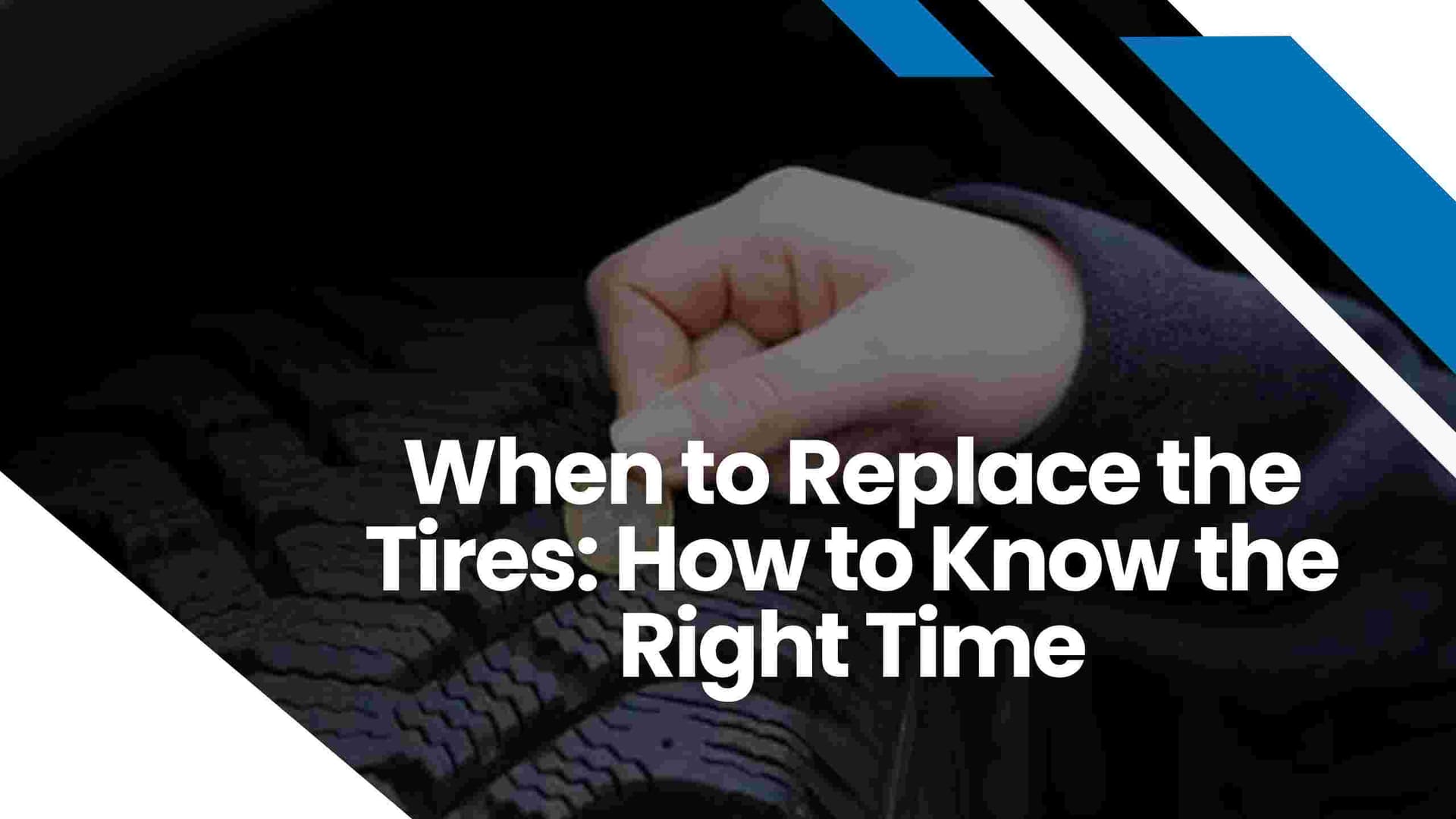
This is the quickest, most accessible check to place a penny upside-down into a major tread groove with Abraham Lincoln's head facing the tire. If you can see the very top of his head, the tread is too low, and replacement is urgent. It's simple, it's accurate, and everyone can do it right now.
Visual TWI Check
Look for those small rubber bars in the tread grooves. Check them in several spots across the tire, both inner and outer edges, to account for uneven wear.
Sidewall and Surface Check
After you've checked the tread, check on the sidewall to inspect the dry dot and to feel if there's bulges. Also, ensure that the tire has no sharp objects embedded in it.
Inspect for Dry Rot and Cracking
Run your hand along the sidewall and tread. Tiny surface checks are common, but if you see long, deep fissures, especially near the bead (where the tire meets the rim), that rubber compound has lost its flexibility.
Feel for Bulges or Blisters
A bulge, no matter how small or where it is on the tire, means the internal structural belts are damaged. The internal air pressure is only being held by the remaining rubber layers. This is a non-negotiable, serious defect that could lead to a sudden, dangerous blowout.
Embedded Objects
Look for nails, sharp stones, or other debris lodged in the tread. Even if it hasn't caused a pressure leak yet, it can eventually work its way deeper and cause a catastrophic failure.
On-Road Indicators
When you're out on the road, pay attention not just to what you see but also to how your vehicle feels. Subtle changes in the drive, like light shaking or needing to correct the steering often, are sometimes the earliest warnings that something's wrong with the tires.
Persistent Vibration
If you feel an unexplained shaking in the steering wheel or the seat while driving, it might be an alignment or balancing issue. That could be a sign of internal tire damage or cord separation that is throwing the wheel out of round. If you feel your car is vibrating, call up a mechanic to inspect and fix it as soon as possible.
Pulling to One Side
If the vehicle consistently drifts when you're driving straight, it often suggests a severe alignment issue, which will rapidly create uneven wear on one tire and reduce its life dramatically.
What Speeds Up Tires' Wear and Tear?
What makes a good tire go bad too soon, and what you can control. Many drivers assume the product is at fault when their tires only last around 30,000 miles instead of reaching 50,000. In reality, most early wear is caused by everyday factors like how you drive, habits, and how the tires are maintained.
Driving Habits
Do you know that driving habits played a crucial role in speeding up the tire's wear and tear? We recommend that you change your driving habits to save more tires
Aggressive Driving is Hard on Rubber
Quick starts, hard braking, and fast cornering create excessive heat and friction across the tread face. That heat burns through the tread compound faster than smooth, consistent driving. Drive smoothly, anticipate stops, and you'll extend your tire life significantly.
Overloading the Vehicle
Consistently carrying heavy cargo or towing puts extra strain and heat on the tires, forcing them to run hotter and wear out quickly, especially on the shoulders. Always check the load rating listed on the tire's sidewall and your vehicle's payload rating.
Basic Tires Maintenance
Looking up your tires does not need to be complicated. A small but consistent habit can help lengthen the tire's performance and lifespan. Here's what you need to do to perform basic tire maintenance at home.
Tire Pressure is Everything
Incorrect inflation is the single biggest cause of premature and uneven wear. Under-inflated tires wear out faster on the outer edges and increase heat; over-inflated ones wear out quickly in the center.
Check the sticker in your driver's side door jamb; that's the correct pressure, not the maximum pressure number molded into the tire wall. Check it once a month; check it twice, really.
Rotate the Tires
You need to rotate your tires every 5,000 to 8,000 miles, generally when you get your oil changed. Why? Because the front and rear tires wear at different rates due to steering and weight distribution. Rotation ensures the entire set wears down evenly, maximizing their lifespan and handling balance.
Alignment Checks
If you hit a significant pothole or curb, you should get your alignment checked. Bad alignment causes tires to scrub against the road, leading to that rapid, uneven wear we spoke about earlier.
Read also:How to Find My Tire Size by VIN Number
External Factors You Can't Control
Even when you've fixed your driving habits and chosen the best tires, some things are not in your control. The environment where you drive is one of the crucial factors that could affect the car's lifespan
Road Quality
Driving frequently on rough, rocky, or unpaved roads accelerates wear compared to smooth highway driving.There's not much you can do here except slow down on bad roads.
Weather Extremes
Constant exposure to intense UV rays and extreme heat accelerates the dry-rot process. Cold weather stiffens the rubber, which can make it more susceptible to cracking when flexed. If you live in a region with extreme temperatures, you might have to adhere more closely to that six-year replacement rule.
Why Timely Tire Replacement Matters
Replacing a worn-out tire is more than just ordinary maintenance, as it could directly affect your car's safety. Ignoring tire wear might seem harmless at first, but the consequences can stack up quickly across different areas.
- Stopping Distance Increases Dramatically: Worn tires take longer to stop a vehicle, especially when the roads are wet. Low tread makes hydroplaning far more likely, leading to a dangerous loss of control.
- Blowouts and Accidents: Old, damaged, or severely underinflated tires are far more likely to suffer sudden, catastrophic failure at speed.
- Fuel Efficiency Dips: Tires in good condition have lower rolling resistance. When a tire wears out or is under-inflated, the engine has to work harder to move the car, which directly translates to worse gas mileage, costing you money at the pump week after week.
- Fines and Insurance Complications: Driving on tires below the legal limit can result in fines and, worse, may complicate or limit your insurance claim if you're involved in an accident where tire condition is cited as a contributing factor.
- Suspension and Braking Wear: Poorly maintained, out-of-balance, or damaged tires put unnecessary stress on your braking system and your suspension components. That $800 set of new tires might end up saving you a $2,000 repair on a worn-out shock or strut system down the road.
A Simple Guide to Buying Tires
Before you buy, you need to understand the basic codes on your existing tire. Getting the wrong size or speed rating compromises performance, fuel efficiency, and safety. If you're unsure, look up the specs by your VIN, and don't guess.
Know Your Tire Size Code
Look at the sidewall for a sequence like 215/60R16. That code is critical for ensuring proper fit and function.
- 215: The tire's width in millimetres.
- 60: The aspect ratio, the sidewall height as a percentage of the width.
- 16: The wheel diameter in inches.
Check the Door Jamb Sticker
Your vehicle's manufacturer-recommended size and pressure are always on a sticker inside the driver's side door jamb. Stick to this size. Deviating too far (the general advice is no more than a 3% difference in overall diameter) can throw off your speedometer and ABS.
Speed Rating Matters
Every tire has a letter (S, T, H, V, Z, etc.) that indicates the maximum safe speed it can handle while carrying its load. A higher speed rating often means better grip and handling, but they typically have a softer compound that wears out faster and costs more.
Cost Factors
Online prices can look great, but remember to add the costs for shipping, mounting, balancing, and disposal of the old tires at a local shop. Sometimes, a local tire retailer's bundled price, which includes all the labour and road hazard warranties, ends up being the better overall deal, always asking.
Protip: If this is your first time buying a replacement title, get a window sticker by VIN to check the car's tire size.
So, When is the Best Time to Change Your Car's Tire?
Knowing when to replace your tires is one of the most important safety assessments you should know. It's crucial to regularly check that tread depth using the penny test, look for any signs of physical damage like those dangerous bulges and cracks, and remember that six-year age limit, regardless of how low your mileage is.
By doing proper tire care, including routine rotation and timely replacement, you reduce the risk of accidents and breakdowns. Do the checks, know the limits, and you'll keep that peace of mind.
FAQ on When to Change the Tires
The legal minimum depth across most of the country is $2/32$ of an inch, indicated by the built-in tread wear bars. We advise replacing them at $4/32$ of an inch for better safety, especially when driving in rain or snow.
Yes, you should. The rubber compounds in tires degrade and lose elasticity over time due to heat and UV exposure. Most experts advise that tires should be replaced after six years from their manufacture date, regardless of tread wear.
We generally advise against buying second-hand tires. Even if they look good externally, they can hide unseen damage, like damaged internal belts or subtle cracks in the sidewall that severely compromise your safety and could lead to failure.
Uneven wear usually indicates a problem with your vehicle's wheel alignment or improper tire inflation. This needs immediate professional attention, as it negatively affects handling, braking, and reduces the lifespan of the tire.
The cost can range widely from $50 to over $1,000 per tire. Most drivers can expect to pay an average of $460 to $1,280 for a complete set of four, with the final price heavily influenced by the size and type of vehicle.
The DOT code is a long sequence of letters and numbers that includes the date of manufacture. The final four digits tell you the week and year the tire was made (e.g., 4023), which is what you use to track the six-year replacement rule.