
Find Your Car’s Paint Code by VIN
Looking for a paint code by VIN? While a VIN does not store the factory paint code itself, it can show the original exterior and interior colors the vehicle was built with. Check the VIN to see the vehicle’s original color details and avoid guessing.



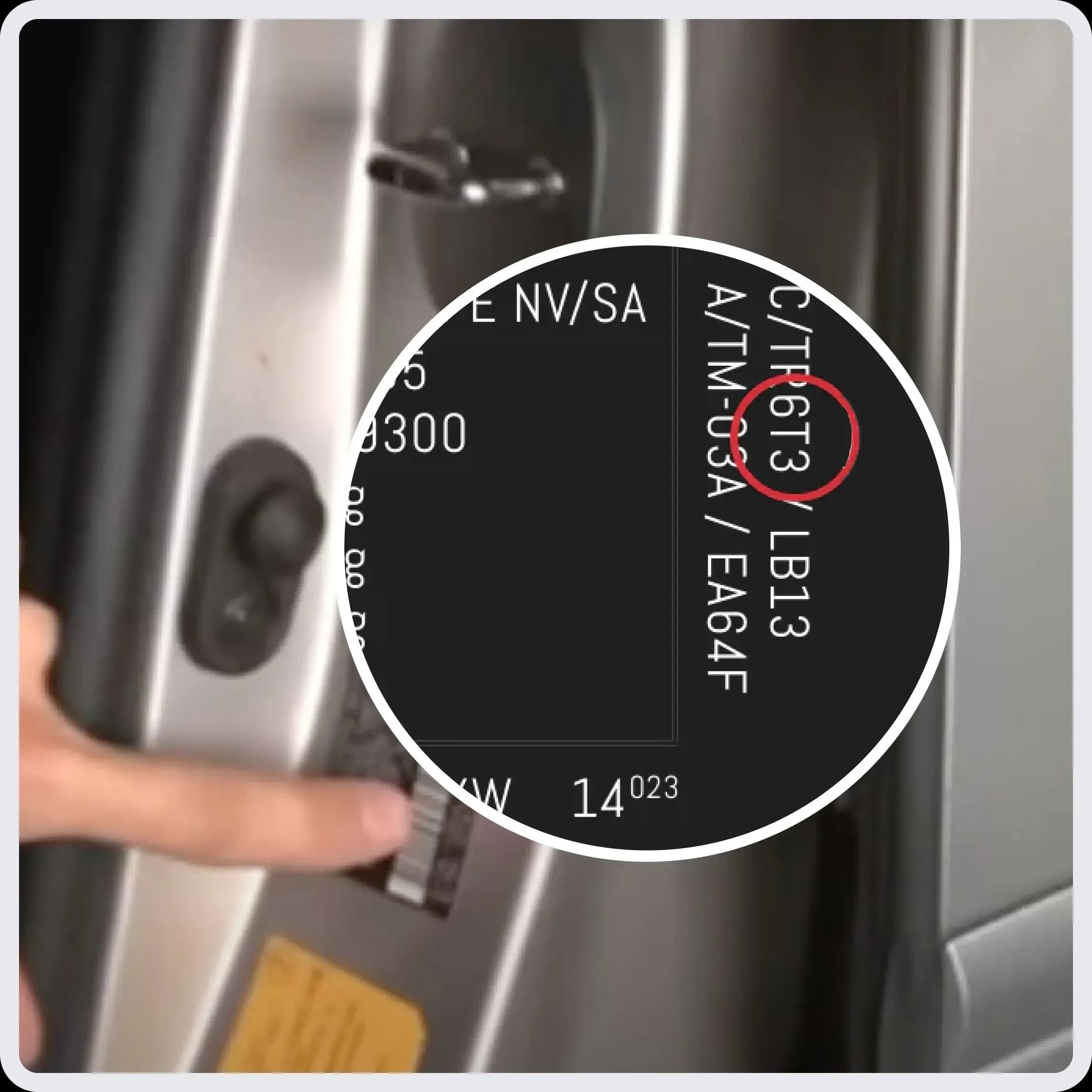
Can You Find Your Car’s Paint Code by VIN?
No. A VIN does not directly show the factory paint code.
Paint codes are not embedded inside the 17 character VIN. They are assigned separately during production and usually printed on a label or stored in manufacturer systems. That is why free VIN decoders often fail to show paint codes at all.
Here is the important part, though. While the VIN does not include the paint code itself, it can be used to identify the original paint color of the vehicle. That information is often all you need to verify originality, compare listings, or confirm whether a car has been repainted.
Where Is the Paint Code Located on My Vehicle?
Paint codes are not placed in a single standard location. Placement varies by manufacturer and model year. Below are some of the most common locations to check:
Inside the Door Frame
Often found on a sticker inside the driver’s door jamb. This is one of the most common locations.
Near the Radiator Support
Some vehicles place paint information on a label near the front of the engine bay.
Under the Hood
Check the underside of the hood or nearby engine bay components.
Trunk or Spare Tire Area
Certain manufacturers place labels inside the trunk or spare tire well.
Firewall or Strut Tower
Older vehicles may have metal plates or stamped information in these areas.
Inside the Glove Box
Some manufacturers place a paint or build information label inside the glove box or on the glove box door.
If none of these labels are present, getting the color information by VIN becomes even more valuable.
How to Check Vehicle Color by VIN?
Checking the original vehicle color by VIN is straightforward. You just need to follow these steps:
Step 1. Find the VIN
You can find the VIN on the dashboard near the windshield, inside the driver’s door frame, or on vehicle documents like registration and insurance.
Step 2. Enter the VIN
Use the VIN lookup tool on this page. Make sure all 17 characters are entered correctly.
Step 3. View Original Color Details
See the original exterior and interior colors recorded at the factory. Now you can compare the results to the vehicle’s current appearance, listings, or documentation.
What You’ll See With Our Paint Code by VIN Lookup?
Our paint code by VIN lookup focuses on what the VIN can reliably tell you. Instead of making promises that a VIN cannot keep, we show clear factory color details that are actually useful.
Original Exterior Color
See the exterior color the vehicle left the factory with. This helps you confirm whether the current paint matches the original configuration or if the vehicle has been repainted at some point.
This is especially helpful when:
Evaluating used car listings
Inspecting a vehicle in person
Verifying originality before purchase
Original Interior Color
Interior colors are often overlooked, but they are just as important. Our VIN lookup shows the original interior color recorded at production, which helps identify mismatches or undocumented interior changes.
This can matter a lot for resale value and buyer trust.
Factory Color Names
Instead of vague descriptions like “gray” or “black,” you see the factory color names used by the manufacturer. These names are far more precise and reflect how the vehicle was originally configured.
Clear color naming reduces confusion and makes comparisons easier.
Want More Than Just Color? Get the Full Window Sticker
If you are checking a vehicle’s original color, you are probably interested in more than just paint. A full window sticker lookup shows how the vehicle was built at the factory, all in one clear document.
With a window sticker, you can see:
Original MSRP
The price of the vehicle when it was new, before discounts or resale changes.
Standard and Optional Features
A full breakdown of what came standard and what was added, covering comfort, tech, and safety features.
Factory Options and Packages
All optional upgrades selected at production, not dealer add-ons or later modifications.
Engine and Drivetrain Details
Information about the engine type, drivetrain layout, and performance configuration.
Transmission Type
Confirms whether the vehicle was built with an automatic, manual, or specialty transmission.
Interior and Exterior Equipment
Details on seating materials, trim, wheels, lighting, and exterior components.
Fuel Economy Ratings
Official fuel efficiency figures as rated at the time of manufacture.
Warranty Information
Shows the factory warranty coverage, including original duration, mileage limits, and coverage types.
Safety and Emissions Information
Factory safety equipment and emissions compliance details.
Why Check Original Vehicle Color by VIN?
Checking the original color by VIN is not just about curiosity. It solves real problems for real people. Here is how different users benefit from getting the vehicle’s original vehicle color:
For Sellers
Accurate Listings
Listing the correct original color builds trust and reduces buyer questions.
Proof of Originality
Factory color data helps support claims that a vehicle has not been repainted.
Fewer Disputes
Clear color information reduces misunderstandings after the sale.
Stronger Value Perception
Original paint often adds value. Being able to verify it helps justify pricing.
For Dealers
Faster Appraisals
Knowing the original color helps during intake and valuation.
Cleaner Inventory Descriptions
Accurate factory details improve listing quality across platforms.
Reduced Returns
When buyers know what they are getting, surprises are less likely.
Better Compliance
Accurate descriptions help meet marketplace and disclosure requirements.
For Owners
Verify What You Own
Many owners never actually know the original color of their vehicle.
Spot Past Repaints
Color mismatches often point to previous repairs or cosmetic changes.
Prepare for Sale
Original color details help when creating listings or trade-in paperwork.
Save Time
No need to hunt for faded stickers or missing labels.
Different Ways to Find Paint Codes by VIN
Accurately identifying your vehicle’s paint code is key to achieving a perfect color match for touch-ups or customizations. Here are several methods that provide reliable and accessible options for VIN check color code retrieval:
Authorized Dealerships
Most dealerships can access manufacturer databases and verify your VIN, ensuring they provide the correct paint code. This option is ideal for those who prefer guidance from a trusted expert.
Auto Experts and Service Centers
Many local service centers and automotive experts can look up paint codes based on your VIN. Their familiarity with different vehicle models makes them reliable for precise color matching.
Manufacturer’s Online Portals
Manufacturers often offer online portals for VIN-based lookups, which give users access to accurate, detailed vehicle specs, including paint codes.
Automotive Paint Suppliers
Some paint suppliers maintain VIN-linked databases for paint codes. These suppliers are excellent resources, providing high-quality paints that match your car’s shade.
Online VIN Decoders
While VIN decoder don’t exactly provide the paint code, they can provide paint colors that you can use as references.
Window Stickers
Alternatively, the window sticker also shows the exact interior and exterior color along with other information, such as MSRP, safety ratings, warranty, etc. These documents show the official color name that the manufacturer uses for your vehicle.
With these methods, finding the correct paint code becomes a streamlined process, ensuring consistent color matching for vehicle maintenance or custom paint jobs.
When You Might Still Need the Exact Paint Code
There are cases where original color information is not enough.
If you are:
- Mixing paint professionally.
- Performing a full repaint
- Matching paint for bodywork repairs
You may still need the exact factory paint code. In those cases, original color data helps you confirm the correct color first, so you know exactly what you are trying to match before contacting a dealer or paint supplier.
Think of VIN color lookup as the foundation. Paint codes come later if needed.
Why Use Our VIN Color Lookup?
Because guessing a vehicle’s color is risky, and relying on listings or faded labels often leads to mistakes. Our car color by VIN lookup is built for accuracy, clarity, and real-world use.
Here’s why our tool is the best choice for you:
Factory-Recorded Color Data
Shows the original colors the vehicle was built with, not how it may look today.
Works When Labels Are Missing
Get reliable color information even if paint code stickers are damaged or gone.
Exterior and Interior Colors
See both original exterior and interior colors to spot mismatches and confirm originality.
No Visual Guesswork
Avoid errors caused by fading, lighting, or repaints.
Trusted and Update Data Source
Get up-to-date vehicle data from DMV, auctions, police, insurance, and proprietary online sales sources.
A Practical Starting Point
Ideal for buyers, sellers, owners, and anyone verifying vehicle details before the next step.
Real Customer Feedback
As a used car dealer, being able to display an original window sticker builds value to prospective buyers. In addition to being able to see all the options the vehicle came with, they can see exactly how much the MSRP was. We call this the “Was & Now” price! Instant Vin Reports has been very instrumental in our continued success and is a great addition to our sales staff!
Parker Hanson – Central Auto
Peter Hans on
View testimonial ›I was researching an older vehicle and there was a bit of difficulty getting a copy of the window sticker. I was assured by the live agent, Sam it would come through in a couple hours. It did.
Thanks, Sam!
Grek Stanko
View testimonial ›Outstanding!I got a super detailed report that shows information that wasn’t in Autocheck or Carfax and an original window sticker for $30. Such a bargain. The window sticker didn’t show some of the options originally but they’re helpful staff helped out and in minutes the complete option list and spec were correct.
Outstanding! I don’t say that very often about anything!
Gavin Moran
View testimonial ›FAQ About Paint Code by VIN Lookup
Does a VIN tell you the car’s paint color?
No, a VIN does not directly store the factory paint code, but a VIN can inform about the car’s original paint color. By decoding manufacturer records linked to the VIN, you can see the exterior and interior colors the vehicle was built with at the factory.
Where else can I find the car’s paint code using the VIN?
You can find the car’s paint code using the VIN by contacting a dealership parts department or checking manufacturer systems. In numerous instances, the paint code is also affixed to a physical label on the vehicle rather than being stored in the VIN itself.
What does the paint code look like?
Generally the paint code consists of a short manufacturer-assigned mix of letters and numbers. The brand determines the appearance, so a Ford paint code might be totally different from a GM or Toyota paint code.
For instance, the Ford paint codes may be one or two letters, for example, UA or YZ. Conversely, GM paint codes are likely to start with WA and then be followed by numbers like WA8555. Toyota and Lexus paint codes are usually three characters, such as 1C8 or 040.
Where is the paint code on a Volvo?
The paint code on a Volvo vehicle is most commonly found on the driver’s door jamb sticker. The code here will be labelled “Color” or “Paint,” or else, like other vehicle details, it will be a short code.
How do I read a GM paint code?
To read a GM paint code, look for a code that often starts with “WA” followed by numbers. GM paint codes are typically listed on labels under the hood, near the radiator support, or inside the trunk area.
If you still can’t use it, we recommend verifying the actual color of the GM vehicle with a VIN lookup.
Where is the paint code on a Toyota or Lexus?
The paint code on a Toyota or Lexus vehicle is typically printed on the driver’s door jamb sticker. It is often listed as a short code near the vehicle’s trim and production information.
How do I find interior paint or color codes?
You can find interior paint or color codes through vehicle labels, trim tags, or manufacturer records. A VIN lookup can also show the original interior color, which helps confirm what the vehicle was built with.
What if I can’t find my paint code?
If you can’t find your paint code because the label is missing or unreadable, a vehicle color by VIN lookup can still show the original exterior and interior colors recorded at the factory, giving you a reliable reference point.
Do all vehicles have paint codes in the same location?
No, vehicles do not have paint codes in the same location. Paint code placement varies by manufacturer, model, and year, which is why many people rely on VIN-based color information when labels are hard to find.
Why is the factory paint code important for vehicle authenticity?
The factory paint code is a key part of your vehicle's original identity. It tells you the exact color your car left the factory with, which is important for proving the car has not been altered. Buyers and collectors often check the original car color by VIN to confirm a vehicle is in its factory condition.
How important is the paint code for classic car restoration?
For classic car restoration, having the correct paint code is everything. It ensures the restored color matches what the manufacturer originally used, keeping the car true to its roots. Using the wrong color can reduce the car's value and authenticity in the eyes of serious collectors.
Can a paint code help verify if a car has been repainted?
Yes, the paint code is one of the easiest ways to spot a repainted vehicle. If the color on the car does not match the factory color listed on the build sheet, the car has likely been repainted. This is a common check done during a used car inspection or pre-purchase review.
Does repainting a car affect its resale value?
In most cases, repainting a car lowers its resale value. A car in its original factory color is seen as better maintained and more authentic. When a buyer pulls the factory color code by VIN and finds it does not match the current paint, it raises questions about the vehicle's history. For everyday vehicles, the drop may be small, but for collectibles and classic cars, a non‑original paint job can significantly reduce the value.
Can a paint code reveal if a vehicle has been in an accident?
A paint code alone does not prove accident history, but it can point to signs worth investigating. If sections of the car show a different shade or a color that does not match the original factory paint code, that could mean panels were resprayed after a collision. Combined with a vehicle history report and a close inspection, checking the factory color by VIN is a smart first step in spotting past accident repairs before buying a used car.
Are some factory paint colors more valuable or rare than others?
Yes, certain factory colors are far more desirable and can increase a car's value. Limited production colors, special edition shades, and colors tied to iconic model years are often worth a premium. A rare factory color combined with a matching build sheet record can add thousands of dollars to a vehicle's sale price.
How is a paint code used for insurance or repair purposes?
When your car is damaged, the body shop uses the factory paint code to order the exact color match for repairs. Insurance companies also reference the original factory color to confirm the repair is done to OEM standards. Without the correct paint code, shops may use a close but not exact color, which can leave visible differences on the repaired panels. Getting an accurate color match starts with finding the right code from your vehicle's build sheet.