
Find Hidden Auction Records With a VIN Check
About 40% of vehicles sold at auctions have been involved in accidents or sustained critical damage. Check auction history by VIN or license plate to verify the auction status, the salvage auction history, and any hidden damage.
What is an Auction History Lookup?
An auction history lookup checks whether a vehicle has ever been listed or sold at an auction using its VIN. It shows recorded auction activity, including when the car appeared and the type of auction involved.
This helps you spot vehicles that passed through insurance, salvage, or wholesale auctions before being resold. It adds context that is often missing from listings and seller descriptions.
Potential Risks of Buying Cars at Auctions
Vehicles with auction history are likely to have one or more of the following issues:
Hidden damage
About 30% of auction cars have undisclosed mechanical or structural issues.
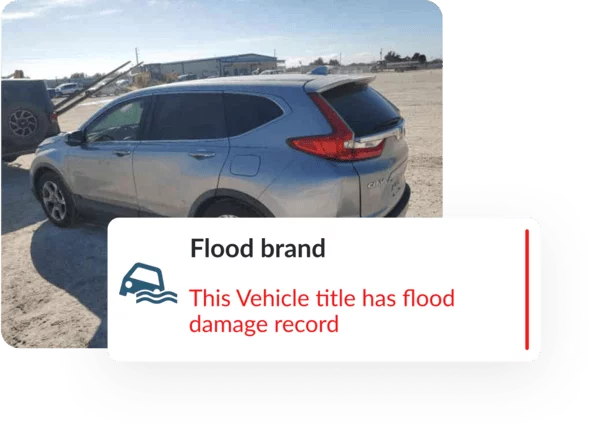
Flood damage records
Tens of thousands of flooded cars are sold at salvage auctions each year.
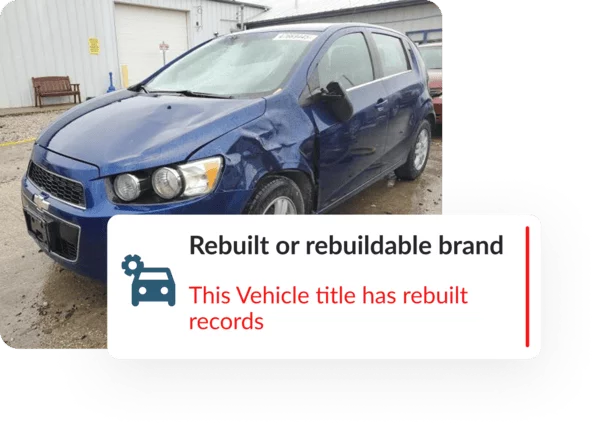
Salvage or rebuilt titles
About 10 - 15% of auction cars have title issues.
Odometer rollback or high mileage
40% of vehicles at auction have higher-than-average mileage.
Previous accidents
Over 400,000 accidented cars are sold at auctions each year.
Lower resale value
Vehicles with auction history lose 15-30% of their resale value.
What Auction History Looks Like in Real Reports
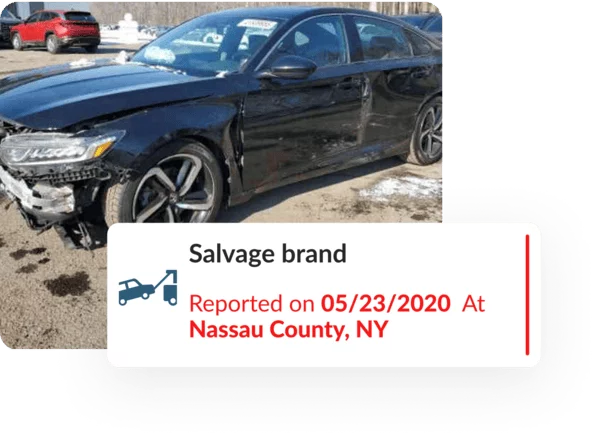
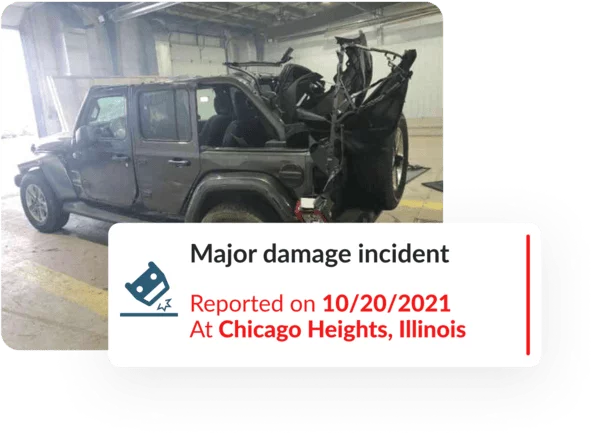
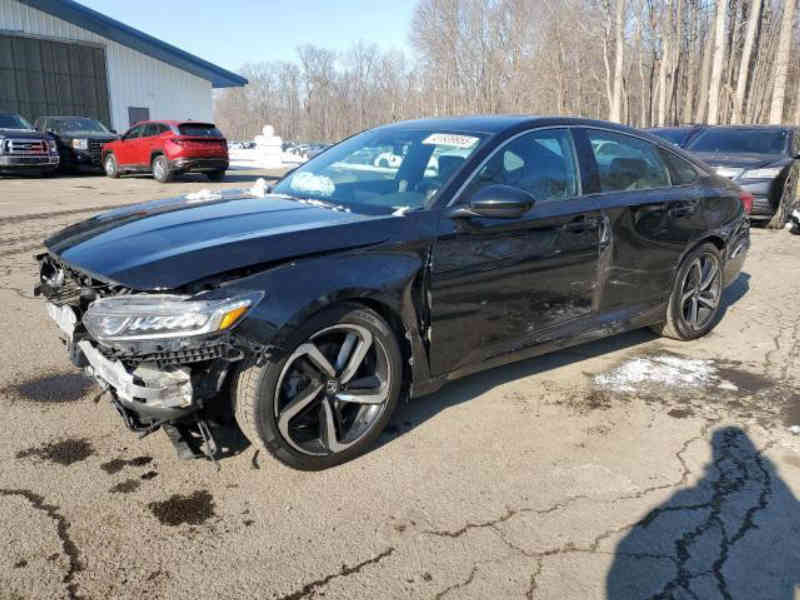
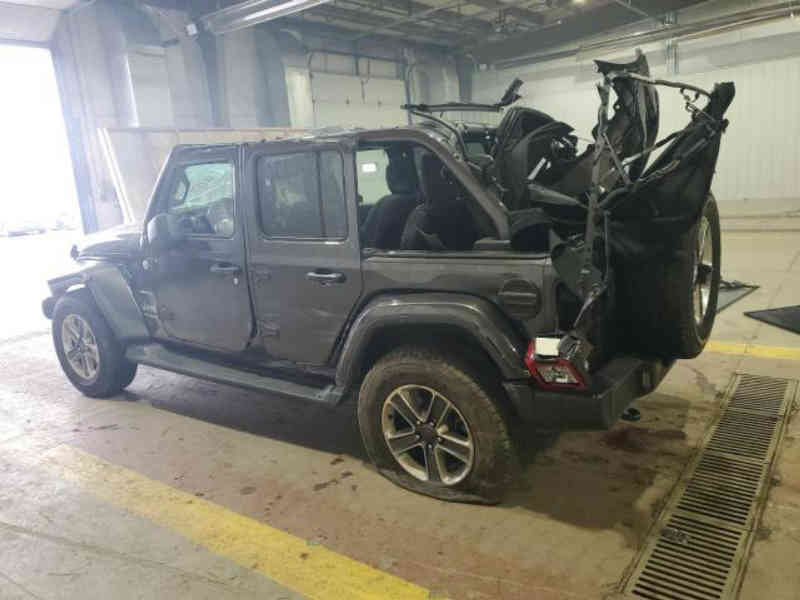
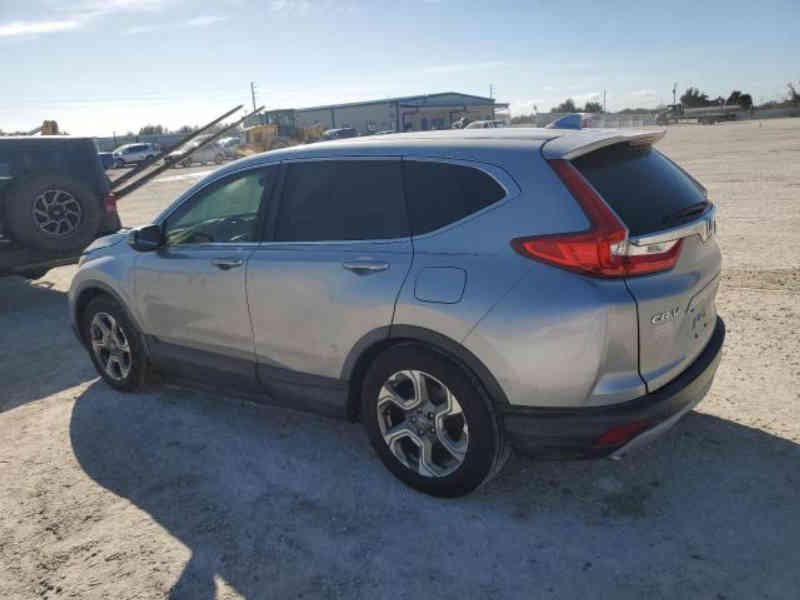
Here are examples of vehicles with auction histories and the types of issues our reports can detect.
2019 Honda Accord
2021 Jeep Wrangler
2017 Honda Cr-v
A Real Buyer Example: 2019 Toyota Highlander Auction History
At first glance, everything about this vehicle looked right. The price was reasonable. The condition seemed solid. The seller described it as accident-free and well cared for. This is the kind of listing most buyers feel comfortable with. Nothing felt rushed. Nothing raised obvious red flags.
Still, the buyer decided to run a VIN auction history check. Not out of suspicion, but simply to be sure. What came back told a very different story.
Sample Report Details
Vehicle Information:
Model:
Usage/Users:
Ownership:
Background
- Car listed at $24,000.
- Claimed to be accident-free and in excellent condition.
- Appeared clean and well-maintained.
- Buyer ran a VIN auction check for title issues, damage, and accidents.
Critical Findings
- 4 Auction Records – Multiple sales through salvage auctions.
- 1 Accident Record – Contradicted the seller's "no accident" claim.
- Damage Photos – Visual proof of previous collision.
- Salvage Title – Branded as salvage, reducing car's value and insurability.
- Last Auction Price: $12,100 – Previously sold for half of the current asking price.
Outcome
- Buyer walked away from the deal.
- Continued search for a similar model with a clean history.
- Avoided overpaying for a damaged and devalued vehicle.
- Hidden history exposed to save thousands of dollars.
- Buyer is confident in making a better purchasing decision.
- Prevented future issues with insurance, resale, and reliability.
How to Check if a Car Was Auctioned
Getting a car auction history by VIN is quick, easy, and affordable—our service is much cheaper than Carfax or AutoCheck. Follow these steps to check auto auction history by VIN or license plate.
Step 1: Locate the VIN
Find the VIN on the dashboard, driver’s door area, or vehicle documents.
Step 2: Fill out the Form
Enter the full 17-character VIN into the auction history lookup tool and click on “Search VIN”. You can also check vehicle auction records using the license plate number.
Step 3: Review the Report
The report will be provided instantly, and you can download it as a PDF or print it out. Look through auction records, photos, mileage data, and condition notes.
A vehicle history report doesn’t include the full vehicle specifications. If you care to verify the original features, simply use our window sticker by VIN tool to get detailed records on the features, options, original MSRP, color, fuel economy, and more.
What An Auction History Check Can Show
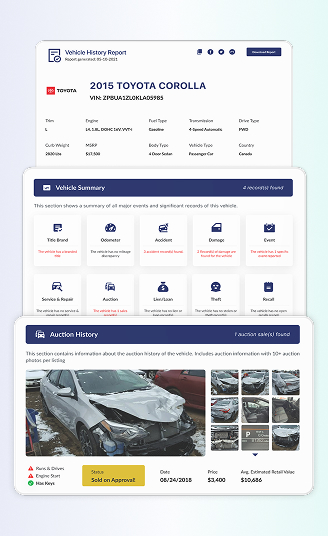
A car auction history by VIN lookup shows if a vehicle was ever sold through an auto auction. These records show hidden damage or repairs at the time of auction. To access a vehicle auction history by VIN or plate, conduct an auction VIN check to retrieve the vehicle history report.
Usually, the auction history section of a vehicle history report should include the following:
Auction Date
When the car was listed or sold
Sales Status
Sold, not sold, or pending
Price
Final sale price at auction
Auction Photos
View 10+ images when available
Exterior Color
Vehicle's exterior color
Odometer Reading
Mileage at the time of auction
Run & Drive Status
Indicates if the car was running
Damage Type
Primary and secondary damages
Repair Cost
Estimated cost to fix reported damages
Sales Documents
Title, salvage certificate, or others
Retail Value
Market value estimate at the time
Seller's Location
Where the vehicle was auctioned from
Why Run an Auction VIN Lookup?
Looking up an auto auction history gives details on a vehicle’s condition and sales history before making a purchase. Here are other reasons to check car auction history:
Uncover hidden damages
Insurance records might miss certain repairs. Getting the auto auction history reveals the repairs and service history, past accidents or mechanical issues, ensuring buyers aren’t misled about the vehicle’s true condition.
Spot salvage titles
Salvaged cars often conceal underlying problems despite seeming roadworthy. Checking the auction history by VIN or plate highlights title status, helping buyers avoid purchasing vehicles with serious safety risks.
Understand resale value
Auction records lower resale value significantly. Knowing a vehicle auction history prevents overpaying and helps buyers anticipate future depreciation.
Avoid flood-damaged cars
Flood-damaged vehicles are often camouflaged and resold. A vehicle auction history lookup helps identify such histories, protecting buyers from cars with hidden electrical or structural damage.
View 10+ auction images
When available, the car images are provided to offer clear visuals of past conditions, exposing damages or modifications that descriptions might overlook.
Verify odometer readings
Odometer rollbacks deceive buyers on mileage. An auto auction history lookup helps verify actual mileage, ensuring accurate valuations and preventing fraud.
Additional Details Shown in an Auction History Report
An auction history check is only one piece of the puzzle. When you run a VIN through our system, you are not just seeing auction data in isolation.
You are seeing how that auction activity fits into the vehicle’s wider history. That context is where the real value sits.
Below are other key sections included in the report:
Vehicle Specifications
Confirms factory specs such as engine type, drivetrain, body style, and trim. Useful when auction listings or ads seem vague or inconsistent.
Vehicle Usage
Personal, fleet, rental, or commercial.
Ownership and Registration Changes
Shows how often the vehicle changed owners and where it was registered. Frequent changes before or after auctions can signify hidden defects.
Market Value Context
Provides pricing context so you can compare auction sale amounts against typical market values, helping you judge whether a deal makes sense.
Auction History
Sales date, price, damages, photos, and documents.
Mileage and Odometer Records
Lists recorded mileage entries over time. Comparing these with auction mileage helps spot inconsistencies or potential rollbacks.
Theft Records
Indicates whether the vehicle was ever reported stolen and later recovered. You don’t want to end up with a stolen vehicle, as you could lose both your money and the vehicle.
Title and Branding History
Displays title status changes such as clean, salvage, rebuilt, or written-off. This is critical for understanding legal and resale implications.
Accident and Damage Records
Shows reported accidents, damage events, and severity levels tied to insurance claims or official records. This helps confirm whether auction listings align with known damage.
Lien and Loan Records
Indicates whether the vehicle has active or historical liens or loans. This is important because unpaid liens can delay transfers or cause legal issues later.
Maintenance and Service History
Highlights recorded service and maintenance events such as routine servicing, inspections, or major repairs. This adds context to auction condition notes and overall vehicle care.
Recall and Safety Information
Lists open and closed manufacturer recalls so you know if safety issues were addressed or are still pending.
Why Checking Vehicle Auction History Matters
Auction history matters because it fills in gaps that listings often leave out and answers questions sellers may not even realize exist. See why checking for past auctions matters:
Buyers
Avoid unpleasant surprises
Auction records can expose prior damage or loss events that were repaired cosmetically and are no longer visible today.
Verify seller claims
If a seller claims the vehicle was never damaged, auction history can support that claim or clearly contradict it.
Negotiate with confidence
Understanding a vehicle’s auction background gives buyers factual leverage when discussing price, condition, or inspection requests.
Protect long-term value
Vehicles with serious auction histories often carry higher insurance costs and lower resale value over time.
Sellers
Build buyer trust
Sharing auction history upfront reassures buyers and shows honesty, which often leads to faster and smoother transactions.
Explain pricing clearly
Auction history helps sellers justify pricing by providing context around past events that affect current market value.
Reduce post-sale issues
Clear disclosure of auction records lowers the risk of disputes, refunds, or complaints after the sale is completed.
Attract more serious buyers
Transparent auction history filters out casual shoppers and attracts informed buyers who are ready to move forward.
Can You Get a Free Auction History VIN Check?
Short answer. Yes, to a point.
With this tool, you can see some auction history details for free before deciding whether to run a full paid check. This is meant to give you a quick sense of whether the vehicle has ever been listed at auction and whether it’s worth digging deeper.
To see all auction records, complete details, and available photos, a full vehicle report is required.
Free vs Paid Auction History Check. What’s the Difference?
| Feature | Free Auction Check | Full Paid Report |
|---|---|---|
| Confirms auction listing | Yes | Yes |
| Auction date | Yes | Yes |
| Auction location | Limited | Full location details |
| Odometer reading | Yes | Yes |
| Auction sale price | Yes | Yes |
| Number of auction events | Limited | All recorded auctions |
| Auction status | No | Yes (active, sold, not sold) |
| Runs & drives status | No | Yes |
| Engine start information | No | Yes |
| Has keys indicator | Limited | Yes |
| Seller type | No | Yes (insurance, dealer, fleet) |
| Title type and branding | No | Yes |
| Primary and secondary damage | Limited | Full damage details |
| Auction photos | No | Up to 10+ images when available |
Why Are Cars Sold at Auctions?
Cars are sold at auctions for various reasons. Understanding the following reasons can help buyers make informed choices when purchasing used vehicles:
Lease Returns:
When people finish their car lease, the cars are sent to auctions to be sold.
Unsold Dealer Inventory:
Dealerships use auctions to clear out cars that didn't sell to make room for new ones.
Fleet Liquidation:
Companies sell older work vehicles quickly through auctions when they no longer need them.
High Mileage or Low Demand:
Cars with too many miles or ones that aren't popular are sold at auctions to quickly find buyers.
Repossessions:
Cars are taken back by lenders when people can't pay, and auctions help sell them fast.
Insurance Total Loss:
Vehicles deemed a total loss by insurance companies are often sold through salvage auctions.
The Risks and Benefits of Buying Cars Sold at Auction
Buying from auctions comes with both potential rewards and real risks, including:
Buyers
- Hidden damages that may not be disclosed
- No test drives before purchasing
- No return policies or warranties
- Potential odometer fraud
- Difficult financing options
- Title transfer delays and complications
Benefits
- Lower purchase prices than retail
- Wide selection of vehicles to choose from
- Quick transaction process
- Access to rare or hard-to-find vehicles
- Ideal for dealers and resellers
- Transparent sales records available
Tips for Buying a Car at Auction
This tool focuses on clarity and real-world usefulness. It does not just flag auction activity. It explains it with dates, context, and photos when available. Some reasons why we stand out are:
Verified, reliable data
Information comes from trusted sources and is checked for consistency before it appears in your report.
Clear and simple reports
Data is presented in plain language so auction records are easy to understand.
One complete report
Everything is presented together, without jumping between multiple tools or pages.
Built for real decisions
Designed for buying and selling situations where mistakes can be costly.
No vague summaries
Results are shown clearly, without hiding details behind generic labels.
24/7 customer support
Help is always available if you have questions or need clarity on any part of the report.
Tips for Buying a Car at Auction
Get the most from your auction experience by staying prepared and alert.
Before the Auction
- Perform a VIN auction check before hand to check the car auction records and reveal other crucial records like accidents, titles and more.
- Set a strict budget and stick to it during bidding.
- Research the market value of the vehicles you're interested in.
Before the Auction
- Inspect photos closely for signs of damage or repairs. If auction records are found in the database, our car auction history by VIN service helps provide high-quality images.
- Understand auction terms and fees before you bid.
- Be cautious of salvage titles or flood damage history.
Used and Trusted by Car Buyers and Sellers

Vivek Malkan
I was looking online to get a copy of my car's window sticker. I came to this website and entered my car's vin number, and instantaneously I received my vehicles history and window sticker. The process was really smooth and efficient and it got me exactly what I was looking for. Once, I received the reports, I wad then contacted by their team, personally via a phone call to make sure I was happy with their service and received what I wanted. This kind of after-sales service is make differentiates a great company from the rest!
Martin Acuña bermudez
I am thoroughly impressed with Detailed Vehicle History for their exceptional service. The comprehensive report I received was on par with industry leaders, yet offered at a fraction of the cost. The efficiency and expertise displayed by the live chat agent were remarkable, providing immediate and knowledgeable assistance without any delay. This level of customer service and value has solidified my decision to exclusively use Detailed Vehicle History for all future vehicle history report needs.
Michael
Recently bought a used 7 year old MB sedan. The dealer had limited info about the specific car and affordable option/ costs at original sale. Read favorable newspaper article about Detailed Vehicle History. Within a few minutes the window sticker came back, it was amazingly detailed, showed all the specific options/ costs and looked just like the original window sticker. Would definitely recommend this invaluable service to others.
Ha Duong
I had ordered a window sticker and vehicle history reports for my car. Detailed Vehicle History company helped me to get the report very detailed and accurate at very low price if you compare with carfax, and the window sticker report was very accurately and fast. I am highly recommend this Detailed Vehicle History company for your vehicle history report at very price
Constantin Colodezni
I was pleasantly surprised by the simplicity and effectiveness of this service for checking the history of my motorcycle. With just the VIN number, Detailed Vehicle History provided me with comprehensive information that was well worth it. It's an easy recommendation for any motorcycle owner looking for detailed insights into their vehicle's history.
DE LOS SANTOS JR, CARLOS L
I'd like to thank detailed vehicle history for getting me my OEM window sticker it was so easy and seamless and very inexpensive I was looking everywhere and couldn't find any sites or ask people no one knew how to get my OEM window sticker but they made it so easy for me I highly recommend them!
Phil D
Incredibly efficient service! One of those rare cases where you get exactly what is advertised. I went onto the DVH website and was able to obtain a window sticker for a 25 year old Porsche within a few minutes. Highly recommended!
Mr. Ed
Dealership would/could not provide the Monroney label. Other sites noted it was unavailable for my 2003 BMW M5. DVH had it at a great price. Nailed it in fact.
FAQ About Auction History by VIN
Why is checking auction history important?
Checking auction history is important because it can expose past damage, salvage titles, or insurance losses that may not be visible today. It helps buyers avoid costly mistakes and gives sellers a clearer way to explain a vehicle’s past.
How do you check a car’s auction history?
You check a car’s auction history by entering its VIN into an auction history lookup tool. The system searches auction databases and returns any records linked to that vehicle, including dates, locations, and condition details when available.
What is a VIN number?
A VIN, or Vehicle Identification Number, is a unique 17-character code assigned to every vehicle at the factory. It identifies the vehicle and connects it to registration, title, insurance, and auction records throughout its life.
Where can I find the VIN on a vehicle?
You can usually find the VIN on the driver’s side dashboard near the windshield, inside the driver’s door jamb, or on vehicle documents like the registration, insurance card, or title.
How does Detailed Vehicle History’s auction history work?
Detailed Vehicle History uses the VIN or license plate number to search previous auction sales from multiple sources. If the vehicle was listed or sold at auction, those events appear in the report along with supporting details and photos when available.
What auction data is available?
Auction data may include auction dates, locations, sale prices, mileage at auction, damage notes, title status, seller type, and auction photos. The amount of detail depends on the auction event and data availability.
How do you get a title for a vehicle purchased at an auction?
To get a title for a vehicle bought at auction, you usually receive paperwork from the auction company after payment. This includes a bill of sale and title documents. You then submit these to your local DMV, pay the required fees, and wait for the title to be issued or mailed.
How to buy a vehicle at auction?
Buying a vehicle at auction starts with registering with the auction house. Before bidding, review the vehicle listing, condition notes, and history. Set a firm budget, place your bids, and if you win, complete payment within the required timeframe. Most auctions sell vehicles as-is.
Why would a vehicle be sold at auction?
Vehicles are sold at auction for many reasons. Common ones include insurance total losses, lease returns, dealer overstock, repossessions, fleet reductions, or cars that did not sell on dealer lots. Not all auction vehicles are damaged, but many have some history worth checking.
Can I get a car auction history by VIN free check?
Yes, you can see some auction history details for free, such as whether a vehicle was listed at auction and basic event information. To view all auction records, full condition details, and available photos, a paid vehicle history report is required.
