Why Checking a Window Sticker Before Buying a Used Car Can Save You Money
Key Takeaways
- A window sticker can help you avoid overpaying by showing the vehicle's original factory configuration.
- Most vehicles, even classic cars, can still have a window sticker retrieved with the VIN.
- The sticker confirms original options, packages, colors, and MSRP. It also helps show “features” sellers claim are there but were never installed from the factory.
Buying a used car can save you a lot of money compared to buying new. The problem is, not every used car is priced fairly. Some vehicles seem like a great deal until you realize you’re paying for features they never even had in the first place.
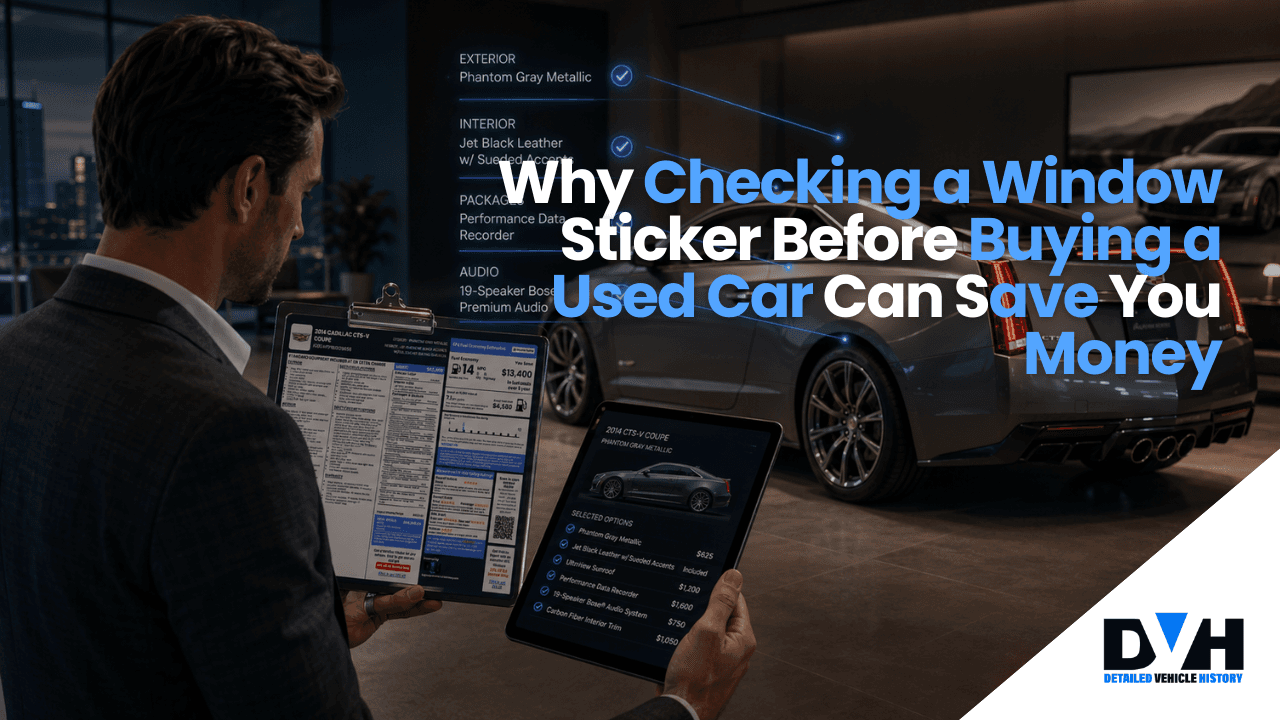
So now many buyers check the window sticker by VIN before they actually buy. The window sticker basically shows the vehicle’s original MSRP, factory options, trim level, and other details that are often missing or kind of vague in online listings.
The thing is, sellers don't always get every detail right. A quick window sticker lookup can help you spot missing features, verify the vehicle's true value, and avoid overpaying.
What a Window Sticker Shows That Listings Often Don't
Most used car listings provide only the basics.
You'll usually see the year, make, model, mileage, asking price, and maybe a short list of features. Sometimes that's enough. Other times, it leaves out information that could affect the vehicle's value by thousands of dollars.
A used car Monroney label contains much more detail.
For example, it can show:
- Original MSRP
- Standard equipment
- Optional factory packages
- Engine and transmission specifications
- Interior and exterior colors
- Fuel economy ratings
- Safety ratings
- Warranty information when new
For a lot of buyers, the most important section is the list of factory options.
Two vehicles can look nearly identical in photos but have very different equipment levels. One may include a premium sound system, upgraded seats, advanced safety technology, and a panoramic roof. The other might not.
Without a window sticker, those differences are not always obvious. That becomes a problem when both vehicles are priced about the same.
READ ALSO: What is The Make and Model of a Car?
5 Ways a Window Sticker Directly Saves You Money
From confirming the original price to exposing missing options, here are five ways a window sticker can save you money before you buy.
Confirms the Original MSRP and Gives You a Negotiation Baseline
One of the biggest mistakes used-car buyers make is negotiating from the seller's asking price.
Think about it.
If a seller lists a vehicle for $28,000, most people start negotiating around that number. Maybe they try to get it down to $26,500 and feel pretty good about it.
But what if the vehicle originally sold for $29,000 when it was brand new? That changes the conversation pretty quick.
The original MSRP of a used car shown on the sticker gives you context. You can see how the vehicle was priced when new and determine whether today's asking price makes sense based on age, mileage, condition, and depreciation.
Without that information, you're basically negotiating in the dark.
Exposes Options You're Paying For That Aren't Actually There
This happens more often than people think.
A seller may advertise:
- Premium audio
- Tow package
- Luxury package
- Navigation package
- Sport package
The thing is, sometimes those features were never installed by the factory.
Maybe the seller assumed the vehicle had them. Maybe they copied another listing. Maybe they simply got it wrong.
When you check the window sticker before buying, you can compare the advertised features against the original factory equipment list.
If the sticker doesn't show a premium audio package but the seller is charging a premium because of it, you've just found a good reason to negotiate. Or walk away.
Either way, you save money.
Lets You Compare Similar Listings Apples-to-Apples
This is where a lot of buyers get snagged. Imagine you’re shopping for two used pickup trucks with the same year, model, engine, and close mileage, both listed at $35,000.
At first glance, they look almost identical. Then you pull the window stickers, and suddenly it’s clear that one truck originally included a tow package, upgraded suspension, a larger fuel tank, leather upholstery, and a premium tech package, while the other one came with none of that.
When you compare used car trims with window stickers, you can see fast which vehicle really gives more value for the money. Without that info, there’s a good chance you’ll pay the same amount for a less.
Confirms the Vehicle Hasn't Been Modified or Downgraded
Not every modification is a bad thing. Some upgrades can actually improve a vehicle.
The problem is when modifications reduce value or create confusion. Let's say a vehicle originally came with premium wheels, upgraded headlights, and a factory sunroof. Years later, some of those parts have been removed or replaced.
Now the vehicle looks different from how it left the factory.
A window sticker helps establish a baseline. You can compare the actual vehicle against its original configuration and spot missing equipment.
This is especially useful when buying higher-trim vehicles where factory features can significantly affect value.Paying premium-trim money for a downgraded vehicle is something most buyers would rather avoid.
Gives You More Confidence at the Negotiating Table
Confidence matters when you're buying a used car. A lot of people walk into a dealership not really knowing what questions to ask. They rely heavily on whatever the salesperson tells them.
But when you have a window sticker in front of you, the conversation changes.
You already know:
- The original MSRP
- Factory options
- Trim level
- Fuel economy ratings
- Equipment packages
Instead of asking questions hoping for answers, you're verifying information you already have. That's a very different position to be in.
The truth is, sellers usually have more leverage when they know more than the buyer. A window sticker helps level the playing field. And sometimes that's all it takes to negotiate a better deal.
READ ALSO: 10 SUVs with the Best Gas Mileage: Best MPG SUV Pick
Real Scenario: A Window Sticker Saves a Buyer Money
Sarah finds a used 2013 BMW X5 listed for $14,500 and described as a "fully loaded" luxury SUV. Before contacting the seller, she pulls the window sticker using the VIN.
The sticker shows the vehicle originally came with options like the Premium Package, navigation system, and rear-seat entertainment. But when she reviews the photos, she notices the rear entertainment screens are missing.
Using the window sticker as proof, Sarah negotiates the price down to $13,500 because the SUV no longer has all of its original equipment. A five-minute check helps her avoid paying full price for features that aren't there anymore.
What Sarah Saved by Checking the Window Sticker
By taking a few minutes to review the window sticker, Sarah was able to:
Save $1,000 on the purchase price.
- Spot missing factory-installed features before visiting the seller.
- Avoid paying a premium price for equipment that was no longer on the vehicle.
- Verify the BMW X5's original options and trim level.
- Use documented factory information as leverage during negotiations.
- Buy with more confidence, knowing exactly what the SUV originally came with.
View Sarah’s Window Sticker · Get a Window Sticker
How to Check a Window Sticker Before You Buy. Step by Step
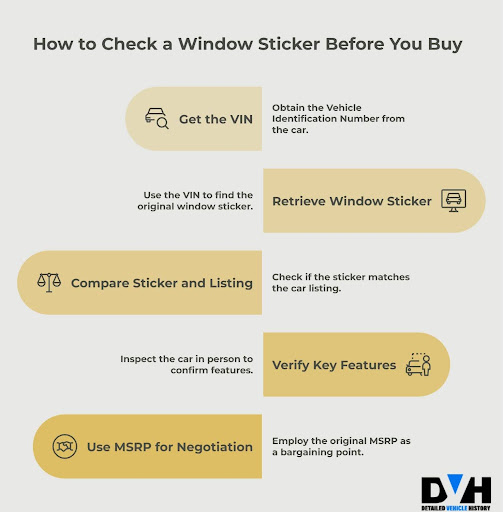
The good news is that checking a window sticker isn't complicated. In most cases, you can do it in a few minutes from your phone or laptop.
Get the VIN
First, you'll need the vehicle identification number.
Most online listings include it somewhere in the description. If not, ask the seller for it.
You can also find the VIN:
- On the dashboard near the windshield
- Inside the driver's door jamb
- On registration and insurance documents
Make sure you enter all 17 characters correctly. One wrong digit can pull up a completely different vehicle.
Retrieve the window sticker by VIN
Once you have the VIN, use our trusted window sticker service to retrieve the original sticker.
In many cases, all you need is the VIN. But if it’s not available, you can also get a window sticker using the license plate or year, make, and model.
The system then searches records tied specifically to that vehicle and generates a digital version of the original window sticker.
Compare the Sticker to the Listing
This is where things get interesting.
Take the seller's listing and compare it line by line against the sticker.
Look for:
- Features advertised but not shown on the sticker
- Trim levels that don't match
- Missing packages
- Incorrect engine descriptions
- Claims of special editions or premium options
Sometimes everything matches perfectly and sometimes it doesn't.
Verify a Few Features in Person
If you decide to see the vehicle, bring the sticker with you.
Check a few of the major items listed:
- Leather seats
- Sunroof
- Premium audio
- Tow package
- Navigation system
- Driver assistance features
You don't need to inspect every single thing.
Just verify enough to make sure the vehicle generally matches what the factory originally built.
Use the MSRP as Your Negotiation Anchor
This is one step many buyers skip.
Instead of negotiating solely from the seller's asking price, use the original MSRP as your reference point.
Then consider:
- Vehicle age
- Mileage
- Condition
- Accident history
- Market demand
Having that baseline often makes it easier to determine whether the asking price is reasonable.
Walk In Informed
Window stickers boost confidence. By the time you visit a seller or dealership, you'll already know what the vehicle should have, what it originally cost, and whether the advertised description appears accurate.
That can save a lot of time and help you avoid bad deals before they happen.
Window Sticker Lookup vs. Skipping It. What's at Stake?
The difference can have a big impact on how much you pay and how confident you feel about your purchase.
| Buyer Who Checks the Window Sticker | Buyer Who Skips It | |
|---|---|---|
| Knows original MSRP | ✓ Yes | ✘ No |
| Can verify claimed options | ✓ Yes | ✘ Relies on seller's word |
| Can compare similar listings accurately | ✓ Yes | ⚠️ Greater risk of overpaying |
| Negotiation leverage | ✓ Yes | ⚠️ Limited |
| Risk of paying for missing features | Low | High |
| Time investment | Around 5 minutes | None, but potentially costly |
Looking at it this way, the time investment is pretty small.
Five minutes today could save hundreds or even thousands of dollars later.
Window Sticker Checklist for Used Car Buyers
Before buying a used car, make sure you've reviewed the following items.
| What to Check | Why It Matters for Your Wallet |
|---|---|
| Original MSRP | Helps establish a realistic negotiation baseline |
| Itemized factory options | Confirms you're paying for features that actually exist |
| Exterior and interior color codes | May help identify repainting or interior changes |
| Fuel economy ratings | Helps estimate long-term ownership costs |
| Safety ratings | Ensures the vehicle has the equipment you're paying for |
| Warranty information | Remaining coverage may add value to the vehicle |
A quick review of these details can tell you a lot more than most listing descriptions ever will.
FAQ on Checking a Window Sticker by VIN Before Purchase
How does a window sticker save money on a used car?
It helps buyers avoid overpaying by showing the original MSRP and exact factory equipment. This makes it easier to determine whether the asking price matches what the vehicle actually came with.
Can I get a window sticker for an older used car?
Sometimes. Most vehicles built within the last 15 years have a better chance of having available records, though availability varies by manufacturer and vehicle age.
Does a window sticker show if a car has been modified?
Not directly, but it shows what equipment the vehicle originally had. Comparing the sticker to the actual vehicle can help identify modifications, missing parts, or downgraded components.
Should I check the window sticker before or after negotiating?
Before. Reviewing it ahead of time gives you facts you can use during negotiations instead of relying entirely on the seller's claims.
What's the biggest money-saving benefit of a window sticker?
For many buyers, it's knowing the original MSRP and factory option pricing. Those details make it easier to judge whether a used vehicle's asking price is justified.
Can a window sticker help me compare two similar used cars?
Absolutely. Two vehicles may appear nearly identical but have very different factory options and original prices. A window sticker shows those differences quickly.
Is checking a window sticker worth it on a budget used car?
Yes. Even lower-priced vehicles can be advertised incorrectly. A quick sticker check helps confirm you're getting the trim level and equipment you're paying for.
Final Thoughts: Why a Window Sticker Is Worth Checking
A lot of used car buyers spend hours comparing prices, reading reviews, and looking through listings. Yet many skip one of the easiest checks available.
The truth is, a window sticker can tell you things a seller's description often won't.
It shows the vehicle's original price, equipment, factory options, colors, fuel economy ratings, and much more. More importantly, it helps you verify whether the vehicle you're looking at is actually worth the money being asked.
That's why learning to check the window sticker before buying a used car is such an important part of the shopping process.
Five minutes with a window sticker may not seem like much. But when it helps you avoid overpaying for missing features, spot misleading listings, or negotiate a better deal, those five minutes can end up being some of the most valuable time you spend during your search.

About Joses Peter
131 articles published
Joses Peter is a seasoned writer with a portfolio of 100+ blog posts and two published papers. Currently, she contributes as a professional writer in the automotive industry, with a great passion for technology and automobiles. This passion keeps her constantly learning and translating complex tech concepts into accessible content.