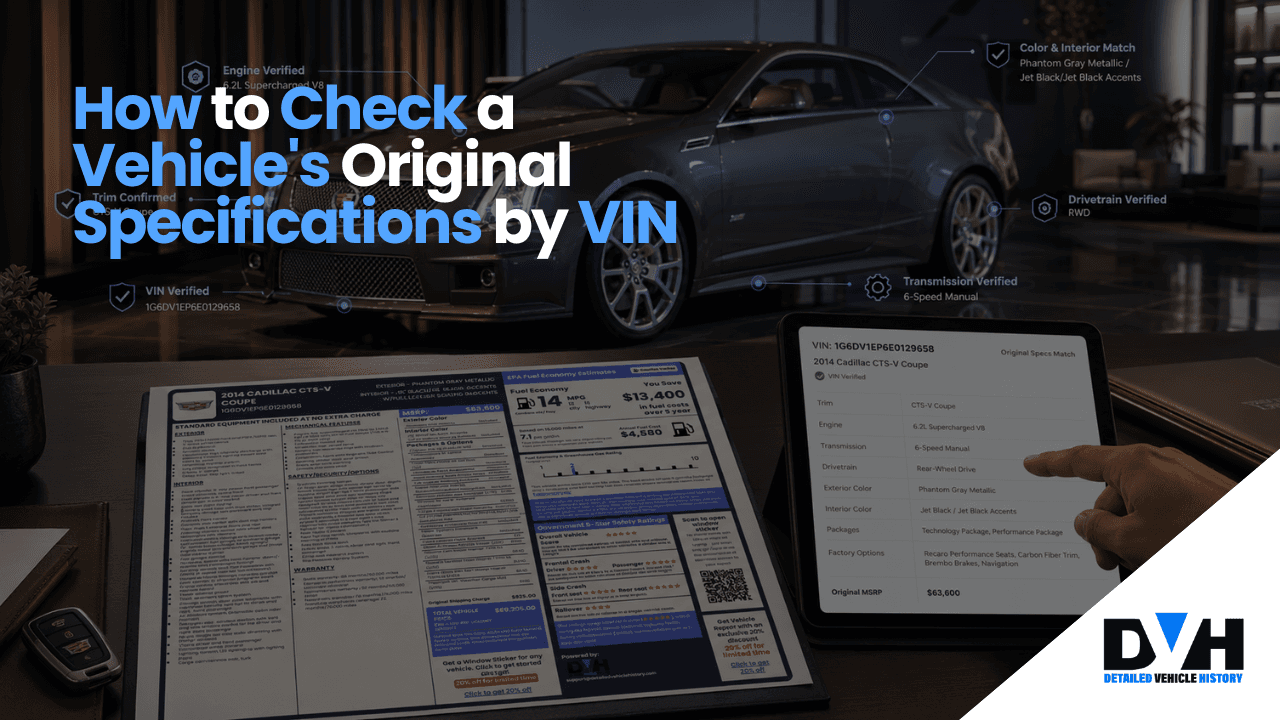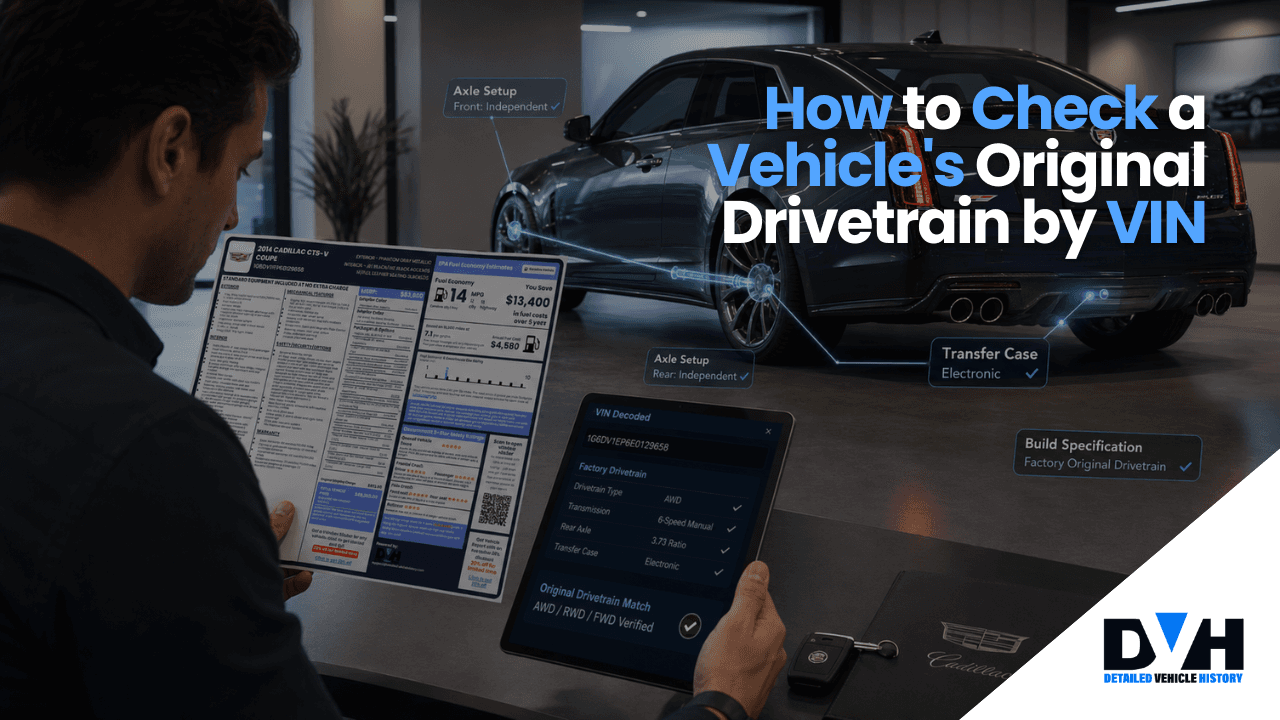
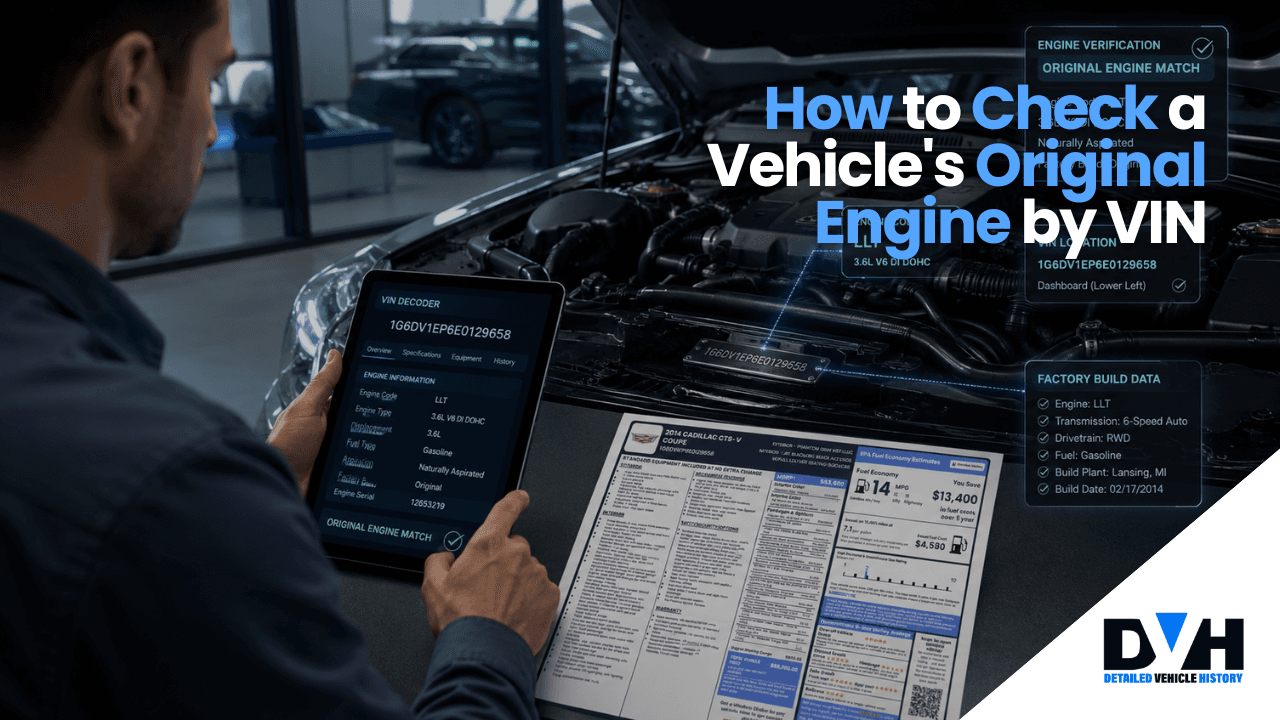
How to Check a Vehicle's Original Engine by VIN
Key Takeaways
- A free VIN decoder is the quickest way to identify a vehicle's original engine type, displacement, and fuel type.
- A window sticker by VIN goes further and often shows horsepower, transmission pairing, and factory-installed options.
- Build sheets and window stickers usually provide more detailed factory engine information than a decoder alone.
- VIN-based tools show how the vehicle left the factory, not necessarily what's under the hood today.
- The emissions label under the hood is an important physical source for verifying engine information.
The easiest way to check a vehicle's original engine by VIN is to run the VIN through a VIN decoder. In just a few seconds, you'll usually see the engine type, displacement, fuel type, and other factory specifications tied to that vehicle.
If you want more detail though, a window sticker lookup can take things a step further. A factory window sticker often shows the exact engine the vehicle left the assembly line with, plus horsepower, transmission information, fuel economy ratings, and sometimes even performance packages that affect engine output.
But why should you check engine specs?
Maybe you're buying a used car and want to make sure the seller didn't swap the engine. Maybe you're ordering parts and don't want to buy components for the wrong engine. Or maybe you're trying to verify that a classic vehicle still has its original powertrain before spending serious money on it.
Whatever the reason, the VIN is usually the best place to start.
What a VIN Decoder Tells You About the Original Engine
A VIN decoder reads the vehicle's 17-character VIN (or 5 to 14 characters in classic cars) and translates factory information into something that's actually easy to understand.
Most people don't really want to decode VIN positions manually. Sure, you can spend time looking at VIN charts and trying to figure out what each character means. But honestly, most people just want the answer.
That's where a VIN decoder helps.
When you enter a VIN, you'll typically see:
- Engine displacement
- Engine configuration
- Fuel type
- Drivetrain
- Transmission information
- Manufacturer details
- Model year
For example, a decoder might tell you the vehicle came equipped with a 3.0L turbocharged inline-six gasoline engine paired with an automatic transmission and all-wheel drive.
That alone can help you catch mistakes in a vehicle listing.
You'd be surprised how often sellers accidentally list the wrong engine. Sometimes it's a simple mistake. Other times, not so much.
A quick VIN decoder engine lookup can help spot those issues before you waste time driving across town to inspect a vehicle.
READ ALSO: What is the Suspension System of a Car?
How to Check a Vehicle's Original Engine by VIN Step by Step
Finding the original engine information isn't complicated. Here's the simple process to follow:
Step 1: Locate the VIN
Most vehicles have the VIN in several places:
- Dashboard near the windshield
- Driver-side door jamb
- Vehicle registration
- Insurance card
- Title document
- Original window sticker
Modern vehicles built after 1981 use a standardized 17-character VIN.
Step 2: Copy the VIN Carefully
This sounds obvious, but one wrong character can pull up an entirely different vehicle. Double-check every number and letter before running the search.
Step 3: Run a VIN Decoder
Enter the VIN into a decoder. With
A quality decoder can quickly show:
- Engine type
- Engine size
- Fuel type
- Drivetrain
This is usually the fastest way to find engine type by VIN.
Step 4: Get a Window Sticker Lookup
Now this is where things get interesting. A decoder gives just a bit of the vehicle’s specifications. A window sticker shows you everything clearly, just as it was when the vehicle left the factory.
Getting the window sticker by VIN shows:
- Exact engine description
- Horsepower
- Torque
- Fuel economy
- Transmission pairing
- Factory-installed packages, and more.
It can tell you not just what engine family the vehicle belongs to, but exactly how it was configured when sold new.
Step 5: Check the Build Sheet
If you’re checking a classic vehicle, we'd recommend a build sheet. This provides factory-installed equipment in detail, including engine options.
Step 6: Inspect the Engine Bay
Paperwork is useful, but the actual vehicle matters too. Now you need to pull out your gloves for this one.
Open the hood and look for the emissions label. Manufacturers place this label in the engine compartment, and it contains important certification information related to the engine family.
Step 7: Compare Engine Codes
For the highest level of certainty, compare engine codes stamped on the engine block with factory documentation.
This can help identify engine replacements that don't appear in ownership records.
How to Read Engine Information on a Window Sticker
A window sticker is often the clearest record of the engine a vehicle originally came with. Unlike a decoder that may return technical specifications, the sticker usually lists the engine in plain language.
Let's use the BMW window sticker example below.
Example: BMW 535i Gran Turismo Window Sticker
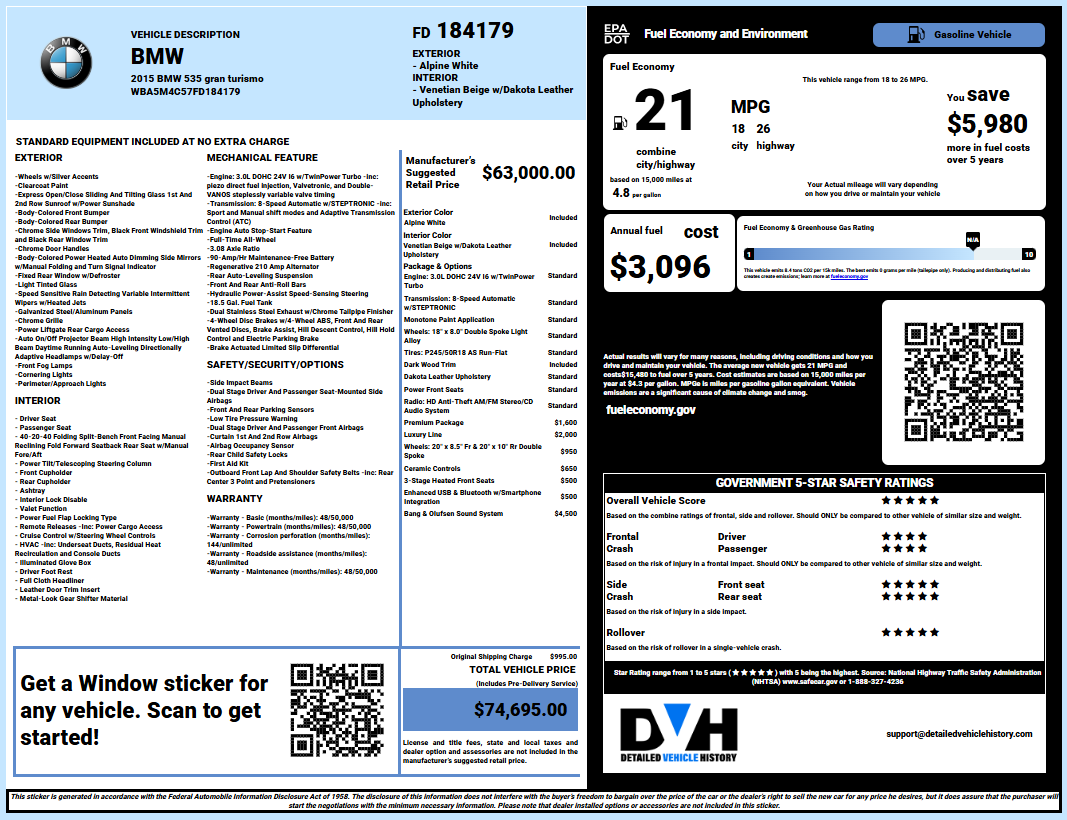
Looking at the sticker, the engine information appears under Mechanical Features.
The sticker lists:
Engine: 3.0L DOHC 24V I6 with TwinPower Turbo
Right away, we know several things:
- 3.0-liter displacement
- Inline 6-cylinder design
- Turbocharged
- Direct fuel injection
- Variable valve timing technology
The sticker also shows:
Transmission: 8-Speed Automatic with STEPTRONIC
That pairing is important because transmission options can vary between trims and engine configurations.
Other related mechanical details listed include:
- Full-time all-wheel drive
- Engine Auto Stop-Start
- Rear Auto-Leveling Suspension
- Brake Actuated Limited Slip Differential
- Hydraulic Power Steering
In real-world terms, this BMW was not just built with a turbocharged six-cylinder engine. It was built with a specific drivetrain package, suspension setup, and transmission combination that all worked together from the factory.
That's information a basic decoder may not always show.
What to Look for on Any Window Sticker
When reviewing a window sticker, pay attention to:
- Engine description
- Engine displacement
- Fuel type
- Horsepower rating
- Torque rating
- Transmission details
- Turbocharged or naturally aspirated designation
- Performance packages
- Fuel economy ratings
For buyers, this can be incredibly useful.
Maybe the seller says the vehicle has a performance package.
Maybe they claim it came with a larger engine.
The window sticker can often settle that argument pretty fast.
Check any Vehicle’s Engine · View the Sample Sticker
VIN Decoder vs. Window Sticker: Which Gives You More Engine Detail?
| Feature | VIN Decoder | Window Sticker |
|---|---|---|
| Cost | Usually Free | Low Cost |
| Speed | Instant | Instant |
| Engine Type | Yes | Yes |
| Displacement | Yes | Yes |
| Fuel Type | Yes | Yes |
| Horsepower | Sometimes | Usually |
| Torque | Sometimes | Usually |
| Transmission Pairing | Sometimes | Yes |
| Factory Option Confirmation | Limited | Yes |
| Performance Package Details | Rarely | Usually |
| Best Use | Quick Check | Full Verification |
A lot of people think these tools compete with each other. They really don't. They work best together.
Use the decoder first. Then use the window sticker for deeper verification.
READ ALSO: How to Find the Original Window Sticker by VIN?
Where to Find the VIN on Your Vehicle
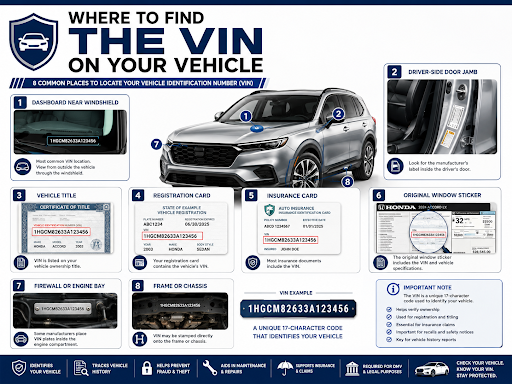
Before you can check the original engine, pull a window sticker, or run a VIN decoder, you need the VIN itself. The good news is that finding it is usually pretty easy.
Most vehicles have the VIN displayed in several locations, so even if you don't have access to the title or registration, there's a good chance you can still find it on the vehicle within a minute or two.
Some common locations are:
| Location | Notes |
|---|---|
| Dashboard Near Windshield | Most common location |
| Driver-Side Door Jamb | Usually includes VIN label |
| Vehicle Title | Official ownership record |
| Registration Card | Easy reference |
| Insurance Card | Often includes VIN |
| Original Window Sticker | Lists VIN and factory specs |
| Firewall or Engine Bay | Found on some vehicles |
| Frame or Chassis | Common on older vehicles |
If you're shopping online, you can often ask the seller for a dashboard VIN photo before meeting in person.
How to Confirm the Engine Is Original Beyond the VIN
Here's the thing. The VIN tells you what the vehicle left the factory with. But that doesn't automatically tell you what's inside the vehicle today.
Engines get replaced all the time.
According to data from the U.S. Department of Transportation, Americans keep vehicles on the road longer than ever, with the average vehicle age now exceeding 12 years. The older a vehicle gets, the greater the chance that major repairs or engine replacements have happened at some point.
If you're trying to verify the original engine vs. the replacement, take a few extra steps.
Check the Emissions Label
The emissions label is often found under the hood.
This label identifies the certified engine family and provides valuable factory information.
Inspect the Engine Code
Many engines have identification codes stamped directly onto the block or cylinder head. These codes provide information independent of vehicle paperwork.
Compare Factory Specifications
Look at:
- Horsepower
- Torque
- Displacement
- Fuel system
- Engine configuration
Sometimes two engines look nearly identical.
Then you discover one makes 300 horsepower while another version makes 380 horsepower.
That difference can show an engine swap pretty quickly.
Have a Mechanic Verify It
If documentation doesn't match the vehicle, bring in a professional.
Especially if you're dealing with collector vehicles, performance cars, or expensive trucks.
A mechanic can often spot things that paperwork alone can't.
Final Thoughts on Checking a Vehicle's Original Engine by VIN
If you're wondering how to check a vehicle's original engine by VIN, start with the simple stuff first. Run the VIN through a decoder. Pull the window sticker. Then compare those records with the actual vehicle.
Most of the time, everything lines up exactly how you'd expect. But every now and then, you find something interesting.
Maybe the vehicle has a replacement engine. Maybe it was upgraded years ago. Maybe the seller didn't even know there was a difference.
That's why using both a VIN decoder and getting a window sticker lookup works so well. One tells you what the vehicle should have. The other helps confirm how it was originally built. And when you're spending thousands of dollars on a used vehicle, a few minutes of checking can save you from a pretty expensive surprise later.
FAQ on Checking Original Engine Specs
What's the fastest way to check a vehicle's original engine by VIN?
The fastest way to check a vehicle's original engine by VIN is to use a VIN decoder. It can return factory engine information within seconds and gives you a good starting point for further verification. However, you can get detailed mechanical information with a window sticker.
Can a VIN decoder tell me if my engine has been swapped?
Not directly. A VIN decoder shows what engine the vehicle originally had. It does not automatically track later engine replacements.
What's the difference between a VIN decoder and a window sticker?
A decoder focuses on specifications. A window sticker usually provides more detail about the exact factory-installed engine, horsepower, transmission pairing, fuel economy, and optional packages.
Where else can I find engine information besides the VIN?
You can find engine information on the engine. Check the emissions label under the hood and look for engine identification numbers stamped directly on the engine itself.
Can I check the original engine on a vehicle built before 1981?
Yes, you can check the engine on a classic vehicle using a buildsheet by VIN lookup. Other sources are manufacturer archives and DMV records.
Why doesn't my VIN result match what's actually in my vehicle?
Your VIN results might not match your engine because of an engine replacement. Vehicle records often remain unchanged after a swap, so the VIN continues to reflect the original factory engine rather than the one currently installed.

About Joses Peter
131 articles published
Joses Peter is a seasoned writer with a portfolio of 100+ blog posts and two published papers. Currently, she contributes as a professional writer in the automotive industry, with a great passion for technology and automobiles. This passion keeps her constantly learning and translating complex tech concepts into accessible content.