
Check Car Insurance Lookup by VIN Number
Millions of vehicles are written off every year in the U.S. Run a car insurance history check by VIN number to reveal hidden insurance loss titles, past damage records, and other title brands that could cost you later.



What Is a Car Insurance History Check?
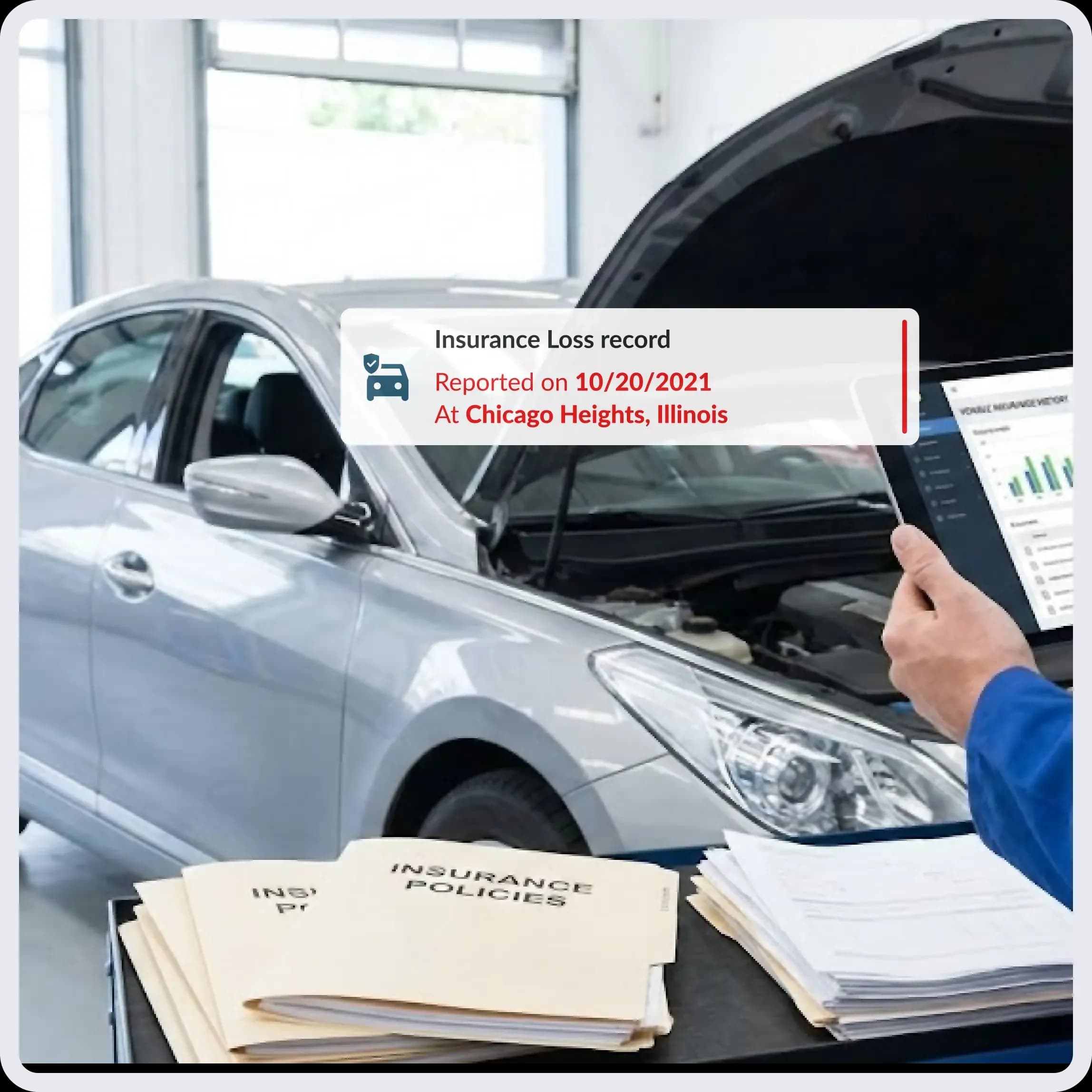
A car insurance history check lets you look up what an insurance company has ever reported about a vehicle. It pulls records tied to the car's VIN number and shows if the car was ever declared a total loss, damaged, or flagged by an insurer.
This check is important in helping buyers avoid hidden problems. Also, sellers use it to back up what they are asking for the car. It brings honesty to both sides of the deal.
What Is an Insurance Loss Title?
An insurance loss title is a label a state puts on a car after an insurance company declares it a total loss. This usually happens when repair costs hit 70 to 75% of the car's cash value.
How to Check a Car Insurance History
Follow these three simple steps to run your insurance check by VIN number and get the full vehicle report.
Step 1: Enter the VIN
Type the 17-character VIN into the search box. You can also search by license plate and select your US state.
Step 2: Search VIN
Click the "Search VIN" button to preview basic vehicle details like the year, make, model, trim, and engine type.
Step 3: Get Your VIN Check Report
Complete your payment to access the full vehicle history report, including all reported branded titles, accident records, mileage history, and more, downloadable as a PDF.
The Importance of Checking Car Insurance Loss Records
Knowing a car's insurance history protects both the buyer and the seller from surprises, disputes, and financial loss down the road. Here are some benefits:
Buyers
By looking up a vehicle's past, buyers will know what they are getting before handing over their hard-earned money.
Avoid Overpaying for a Damaged Car
A car with an insurance loss title is worth less. Knowing this upfront helps you negotiate a fair price.
Stay Safe on the Road
Cars declared total losses may have structural damage. Checking the record helps you avoid vehicles that could be unsafe to drive.
Make a Confident Decision
When you know the full insurance history of a car, you can decide to buy, walk away, or ask more questions without guessing.
Sellers and Dealers
Sellers and dealers who check insurance records first can price their cars right and build trust with potential buyers from the start.
Set the Right Asking Price
If a car has a clean insurance history, that is a selling point worth knowing. It helps you price the vehicle with confidence.
Avoid Disputes After the Sale
Disclosing insurance history upfront keeps you protected. Buyers cannot come back later claiming they were not told the full story.
Move Cars Faster
Buyers trust sellers who are open about a vehicle's history. A clean or disclosed report helps you close deals more quickly.
What Information Does a Car Insurance Check Provide?
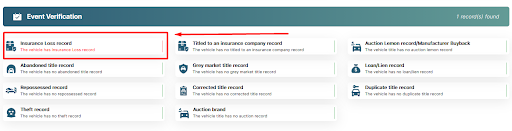
A car insurance VIN lookup gives you a detailed history of how a vehicle has been handled, reported, and titled over its lifetime. Here’s what to expect:
Date Reported as Insurance Loss
This shows the exact date when an insurance company officially reported the vehicle as a total loss.
Type of Insurance Loss Title
See the kind of title the car carries, such as salvage, flood, fire, or another state-issued insurance designation.
Accident Records
See if the vehicle was ever in a reported accident, including when it happened and how serious the incident was.
Damage Records
View any structural, mechanical, or cosmetic damage that was reported to an insurer or recorded at any point.
Vehicle Usage Records
Find out if the car was ever used as a rental, fleet vehicle, taxi, or for any other commercial purpose.
Ownership History
See how many people have owned the car, what states it was registered in, and how long each owner kept it.
Mileage Records
Check if the odometer reading lines up with what is on the report. Inconsistent mileage is a red flag worth spotting early.
Lien and Loan Records
Find out if there is an active loan or lien on the vehicle. Buying a car with an open lien can cause big legal problems.
Theft Records
The report shows if the vehicle was ever reported stolen, recovered, or flagged by law enforcement at any point in time.
Auction Records and Sales Listing History
See if the car passed through an auto auction or was previously listed for sale, which can reveal more about its history.
Other Records Provided in the Insurance Check Report
A full VIN report goes beyond insurance loss records. Here is what else you will find when you run a complete VIN check.
Types of Insurance Title Brands You Might Find in Our VIN Report
When you do an insurance VIN lookup, one of these title brands could show up tied to the vehicle's history.
Salvage Title
A salvage title means an insurance company declared the car a total loss. Repairs often cost more than the car's worth.
Flood Water Damage
This means the car was submerged or heavily damaged by water. Flooded cars often have long-term electrical and mechanical problems.
Rebuilt Title
This means a salvage car was repaired and passed a state inspection. It is drivable but carries a lower resale value.
Fire Damage Title
This is given to a car that suffered damage from a fire. Hidden fire damage can affect wiring, the frame, and safety systems.
Junk Title
This means the car was deemed too damaged to fix safely. A junk-titled car cannot be legally driven on public roads again.
Theft Recovery Title
This title is issued when a stolen vehicle is found after an insurance payout was made. These cars sometimes have missing parts or hidden damage.
How to Locate the VIN on Your Car
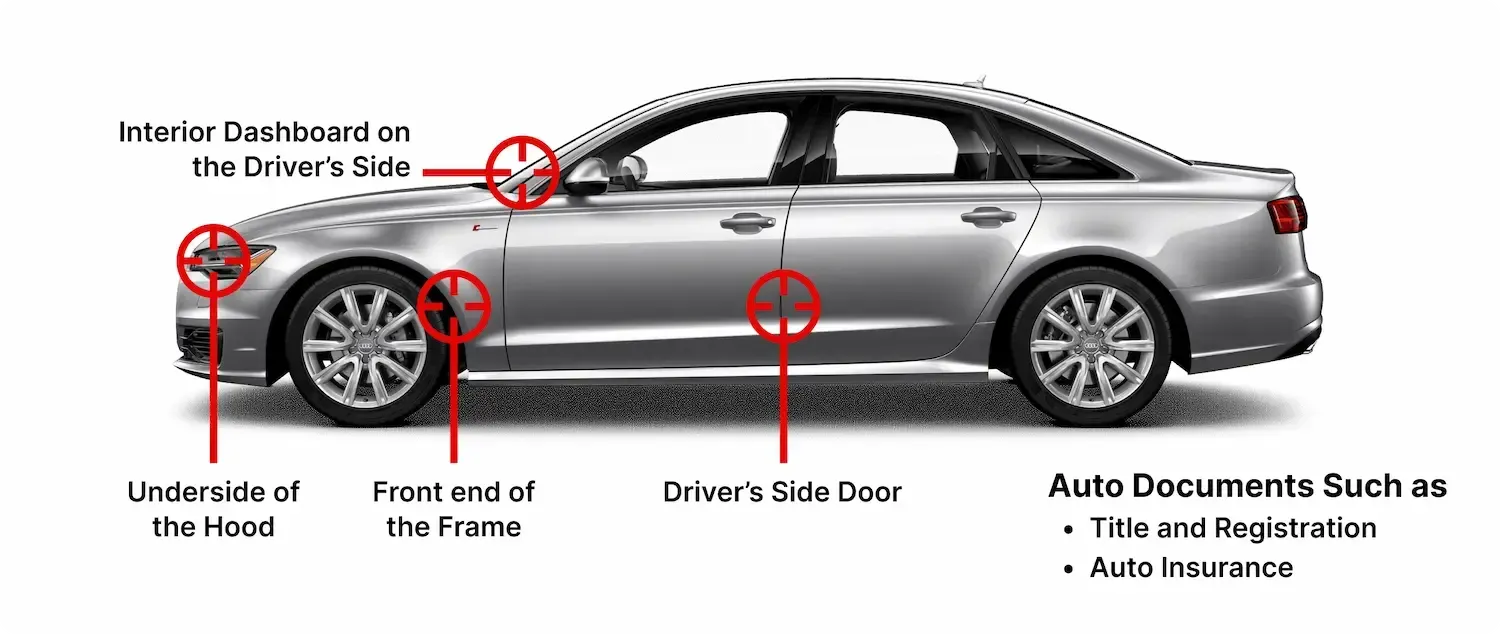
The VIN is a 17-character code that is unique to every vehicle. Here are some common places you can find it on your car.
Driver’s Side Dashboard
Look at the lower left corner of the dashboard from outside the car through the windshield.
Driver's Side Door Jamb
Open the driver's door and check the sticker or metal plate on the door frame area.
Vehicle Title and Registration
Your car's title and registration documents always have the VIN printed on them.
Engine Block
The VIN is sometimes stamped directly onto the engine block. It can be harder to spot here.
Under the Spare Tire
The VIN is also stamped under the spare tire compartment in the trunk of the vehicle.
Insurance Card
Most auto insurance cards list the VIN directly on the card for quick reference.
What Vehicle Types Do We Support?
Our insurance VIN lookup tool works across a wide range of vehicle types, covering all Toyota models and many other makes. We currently support the following vehicle types:
Insurance Loss Vehicles in the US: What You Need to Know
5 Million Vehicles
Declared total losses annually in the U.S. This equates to about 20% of all collision claims.
1 in 5 Vehicles
Now written off after accidents. About 21% of vehicles were totaled after claims in 2024.
61% of Auction Inventory
Dominated by salvage vehicles from insurance total-loss claims.
More Helpful VIN Tools
Use these additional tools alongside your insurance check to get the most complete records and condition of any vehicle.
Free VIN Decoder
Decode any VIN for free to view specs like the year, make, model, engine, and more.
VIN Check
Get an affordable VIN lookup for complete vehicle history, including ownership, accidents, thefts, and more.
Window Sticker Lookup
Find out how a car originally left the factory. Get details like MSRP, options, standard features, and more.
License Plate Lookup
No VIN, no issues. Look up any vehicle’s detailed history using the license plate number.
Classic Build Sheet
Find any classic car factory build options & equipment. View engine specs, colors, base price, and more.
Motorcycle VIN Check
Lookup any motorcycle VIN to access detailed bike specs, history, and more.
Frequently Asked Questions About Car Insurance History Check
Can I check car insurance by VIN number for any vehicle?
Yes. As long as you have the 17-character VIN, you can run a car insurance history check on most cars, trucks, motorcycles, and other registered vehicles in the US using our tool.
What is a car insurance lookup by VIN number used for?
A car insurance lookup helps buyers and sellers find out if a used vehicle was ever declared a total loss by an insurance company due to damage, flooding, fire, or theft.
How do I check my car insurance history using a VIN?
To check your car insurance history, enter your car's VIN into the search box, click "Search VIN" to preview the specs, then complete your payment to access the full vehicle history report.
Is a car with an insurance loss title safe to buy?
It depends on the type of title and the repairs made. A rebuilt title car may be safe if inspected properly, but a junk or flood title often comes with serious hidden risks.
Does an insurance loss title affect a car's resale value?
Yes. Cars with any kind of insurance loss title are typically worth 20 to 40 percent less than a similar car with a clean title history.
Can I check if a car is insured right now using a VIN?
No. A VIN check shows past insurance loss records and title brands, but it does not confirm whether a car has active insurance coverage at the current moment.
Can insurance records show previous accident or damage claims?
Yes. When you run a vehicle history report by VIN, it includes insurance claim records tied to that car. These records may reveal past collision damage and repair payouts reported to major insurance databases. This is one of the most effective ways to check a car’s accident history before buying a used vehicle. Knowing about prior damage claims helps you avoid cars with hidden structural issues or repeated repair work.
How can I check if a vehicle was declared a total loss by an insurance company?
DetailedVehicleHistory.com’s VIN report is one of the easiest ways to perform a total loss check on a car. Insurance companies report a total loss when repair costs are higher than the actual value of the car. Once a vehicle is marked as a total loss, that record is reported to national databases and appears in the vehicle’s history report.
Can a VIN insurance report reveal salvage or rebuilt history?
Yes. A detailed vehicle history report will clearly display any branded titles. You don’t receive a standalone insurance record, but the main report includes all past updates and can reveal whether a car was ever issued a salvage or rebuilt title.
Will insurance records show flood, fire, or theft-related damage?
Yes, these major events are documented by insurance providers and added to the vehicle history report. Flood and fire can cause serious electrical problems that are very difficult to repair later. Checking this history helps you avoid badly damaged cars that may be sold as clean vehicles.
Can repeated insurance claims indicate high-risk vehicle history?
Yes. When a vehicle history report shows multiple insurance claims over a short period, it can be a sign of a high-risk vehicle. Repeated claims may point to recurring mechanical problems, reckless past ownership, or ongoing structural damage. Running a quick car history check on DetailedVehicleHistory.com helps you spot high‑risk vehicles before making a final decision.
Do insurance records help reveal previous commercial or fleet use?
Yes. Insurance records are very effective at showing whether a vehicle was previously used for commercial or fleet purposes. Through centralized databases and vehicle history reports, insurers and buyers can uncover a vehicle’s past by identifying its usage type. Vehicles previously used as rental cars, taxis, delivery vehicles, or company fleet cars tend to have higher mileage and more wear. A standard VIN report helps you see this history so you can negotiate a fair price.