
Sometimes choosing the right car in the used car market can be tough, especially if you're new to car-buying and you want a luxury car. Each car type offers its own unique blend of style, performance, and functionality and may be difficult to understand without a guide.
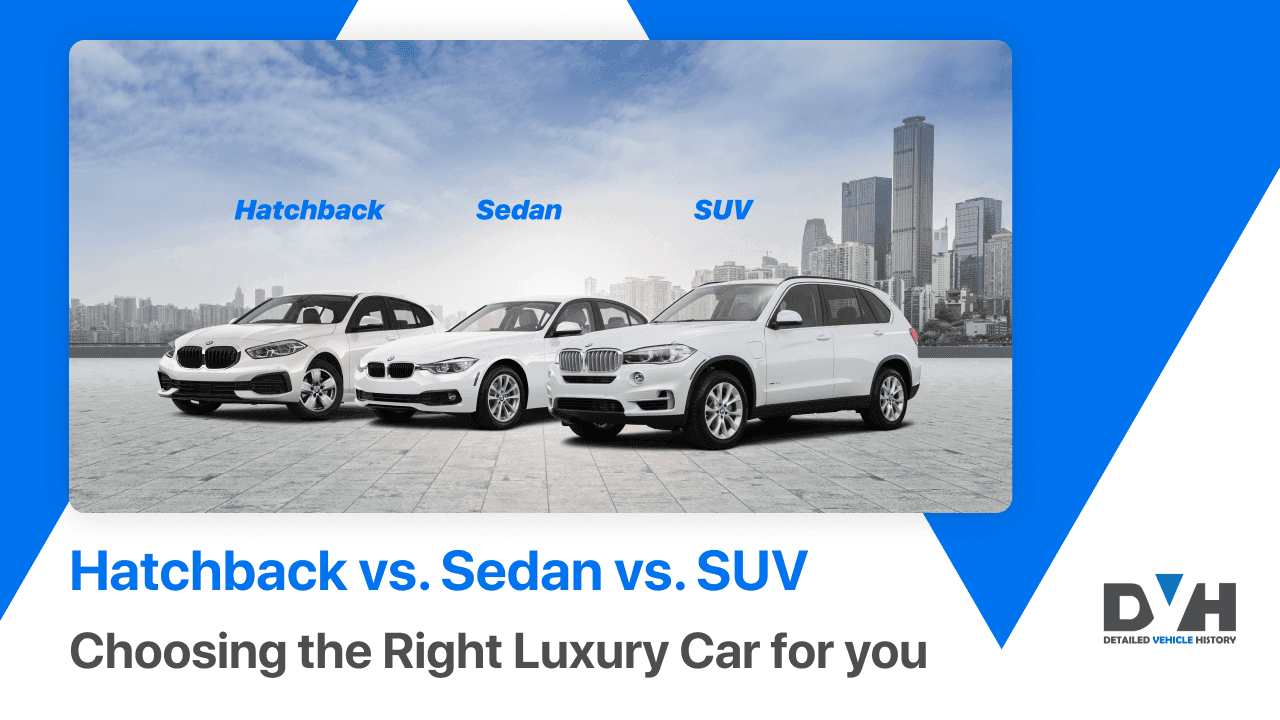
This article shows clearly the difference between a hatchback vs. sedan vs. SUV and makes it easy to make that choice if you're looking to buy one.
What is a Hatchback?
A hatchback is a type of car that features a rear door that swings upward to provide access to the cargo area. It is typically smaller than an SUV or minivan but larger than a sedan. Unlike traditional sedans with a separate trunk compartment, hatchbacks have a rear door that serves as both the rear window and the trunk area.
It has a rear hatch with seats that fold down to provide even more cargo space whenever necessary to accommodate larger items. With this design, it is common to see a hatchback advertised as small family cars or executive cars.
These cars are also easy to park compared to large SUVs and they stand out because of their practicality. A good example of a hatchback is the Volkswagen Golf.
What is a Sedan?
What is a Sedan? A sedan, popularly known as a saloon in some countries, is probably one of the most popular body styles. It has two rows of seats, four doors, and a 3-box configuration.
If you're thinking of fuel economy, you can't go wrong with a sedan. They have great fuel economy, affordability, good handling, and performance. They are also popular choices for individuals and small families looking for a practical yet sophisticated mode of transportation for daily commuting and leisure driving.
Sedans come in various sizes, ranging from compact to full-size models, but the downside is even full-sized models don't come with large storage space, unlike station wagons and SUVs. A good example of a sedan is the Chevrolet Malibu.
What is an SUV?
Finally, we have SUVs. An SUV, which stands for Sport Utility Vehicle, is a type of vehicle that combines elements of a passenger car with features typically found in off-road vehicles.
This means they are large vehicles. SUVs, compact, large, crossovers, etc, are characterized by their spacious interiors, high ground clearance, high center of gravity, and often come with all-wheel or four-wheel drive capabilities.
They are basically designed to provide comfort and an adventurous driving experience, suitable for various terrains and weather conditions. SUVs typically offer more than enough cargo space and seating capacity, making them popular choices for families, outdoor enthusiasts, and those who require extra utility from their vehicles.
A popular example is the Ford Explorer.
So, let's take a look at the difference between a Hatchback vs. sedan vs. SUV.
What is the Difference Between a Hatchback vs Sedan vs SUV
What's the difference between a sedan vs hatchback vs SUV? All three vehicle types vary in design, performance, cost, and other characteristics, If you are in the market for a used or new car, knowing the difference could be a life and money saver. So what are they?
Design
- Hatchbacks: They are characterized by a compact size and a rear door that swings upward to access the cargo area. With hatchbacks, you will often find that they have a more versatile interior layout compared to sedans.
- Sedans: Typically feature a sleek and streamlined design, with a separate trunk compartment and two rows of seating. Sedans prioritize style and comfort, offering a smooth and refined driving experience.
- SUVs: Known for their robust and rugged design, with a higher ground clearance and often featuring all-wheel or four-wheel drive capabilities. SUVs typically offer spacious interiors and a commanding presence on the road.
Performance
- Hatchbacks: Emphasize fuel efficiency and agility, making them well-suited for urban driving and commuting. They often have smaller engines and are lighter in weight compared to SUVs.
- Sedans: Prioritize comfort and smooth handling, with a focus on delivering a refined driving experience. Sedans typically have balanced performance characteristics suitable for everyday driving scenarios.
- SUVs: Offer powerful engines and advanced drivetrain systems, making them capable of tackling various terrains and weather conditions. SUVs prioritize performance and versatility, with options for towing and off-road capabilities.
Cost
- Hatchbacks: Comparing hatchback vs sedan vs SUV, hatchbacks are generally more affordable both in terms of the purchase price and ongoing maintenance costs. They often offer good value for money with an average cost of $15,000-$25,000. If you are budget-conscious, a hatchback is the vehicle for you.
- Sedans: Offer a balance between affordability and luxury, with a wide range of pricing options depending on the brand, features, and trim levels. Sedans are available at various price points to cater to different budgets with an average of $20,000-$35,000.
- SUVs: Tend to command higher prices due to their larger size, additional features, and capabilities. SUVs may have higher upfront costs (around $25,000-$45,000 or more) and increased fuel and maintenance expenses compared to hatchbacks.
Safety
- Hatchbacks: While they may offer adequate safety features, such as airbags and stability control, hatchbacks typically have a smaller frame compared to SUVs and may not provide the same level of protection in collisions.
- SUVs: Known for their robust construction and advanced safety technologies, SUVs often offer superior crash protection and occupant safety compared to hatchbacks and sedans. Their larger size and elevated driving position also provide better visibility on the road.
- Sedans: Similarly equipped with standard safety features, sedans generally offer good crash test ratings and occupant protection. However, their lower ground clearance may make them more susceptible to certain types of accidents, such as rollovers.
Space
- Hatchbacks: Despite their compact size, hatchbacks often provide surprising amounts of cargo space, especially with the rear seats folded down. However, they may lack the interior passenger space found in SUVs and sedans.
- Sedans: While sedans may have less cargo space compared to hatchbacks and SUVs, they typically offer comfortable seating for up to five passengers. Sedans prioritize passenger comfort and legroom over cargo capacity.
- SUVs: SUVs offer plenty of room for passengers and luggage. Their versatile seating configurations and large cargo areas make them ideal for families and travelers.
Towing Capacity
- Hatchbacks: Generally not designed for towing, hatchbacks have limited towing capacity compared to SUVs and even sedans. You can expect an average towing capacity of 1,000-2,000 pounds with these vehicles.
- Sedans: While sedans may have some towing capacity (average of 1,500-3,500 pounds), it is usually limited compared to SUVs. They are better suited for light towing tasks, such as small trailers or utility trailers.
- SUVs: Known for their towing capabilities, SUVs can haul trailers, boats, or recreational vehicles with ease. Their robust engines and sturdy frames make them suitable for towing heavy loads and this gives them an average towing capacity of 3,500-7,000 pounds.
Fuel Economy
- Hatchbacks: Renowned for their fuel efficiency with an average of 30-40 mpg (city), and 40-50 mpg (highway), hatchbacks typically offer superior gas mileage compared to SUVs and sedans. Their smaller size and lighter weight contribute to their excellent fuel economy.
- Sedans: Strike a balance between performance and fuel economy, sedans offer competitive fuel economy with an average of 25-35 mpg (city), and 35-45 mpg (highway). They are often preferred by commuters and long-distance travelers for their efficient fuel consumption.
- SUVs: Due to their larger size and heavier weight, SUVs generally consume more fuel compared to hatchbacks and sedans with an average fuel economy of 20-30 mpg (city), and 25-35 mpg (highway). However, advancements in engine technology and hybrid options have improved SUV fuel efficiency in recent years.
Resale Value
- Hatchbacks: Due to their affordability and practicality, hatchbacks often retain their value well in the used car market. They appeal to budget-conscious buyers seeking economical transportation.
- SUVs: Despite their initial higher purchase price, SUVs tend to have strong resale values, especially popular models with desirable features and low mileage, making them a contrast to the market value perception of sedans and hatchbacks. Their versatility and utility make them sought after by used car buyers.
- Sedans: While sedans may not command as high resale values as SUVs, they still offer good value retention, especially for well-maintained models with low mileage. Sedans appeal to buyers seeking a balance of comfort, style, and affordability.
Now you know the difference between an SUV, a hatchback, and a sedan. Let us now take a look at the pros and cons of each to give a clearer picture of the best one to pick for interested buyers.
Sedan vs. SUV vs. Hatchback: Pros and Cons of Each Car Body Type
Now that you know the major differences between the hatchback vs. sedan vs. SUV, let's take a look at the pros and cons a car buyer or even a seller should be aware of.
For Hatchbacks
Pros | Cons |
|---|---|
|
|
For Sedans
Pros | Cons |
|---|---|
|
|
For SUVs
Pros | Cons |
|---|---|
|
|
How do I choose between a sedan, SUV, or hatchback?
Making this decision depends on why you want to purchase a car. What are you looking for in a vehicle? Do you want a brand-new car or a used one? What used cars are available where you live? Will you be driving through busy roads? Do you want a large or small car?
If you are mostly going to use paved roads, with little need for passenger or cargo space, you can consider getting a hatchback or a sedan and if not, an SUV may be what you need. Just make sure you evaluate the advantages and disadvantages of each vehicle type carefully and choose the one that offers you more benefits.
If you are buying a used car, we would recommend getting a VIN check before purchasing. Used cars may have hidden records that you may not see on the shiny surface. With a VIN check, you will find:
- Sales History
- Auction history
- Vehicle usage
- Ownership History
- Title check
- Accident history
- Damage history
- Stolen check
- Odometer rollback
- Lien & Loan records
- Salvage brand
- Flood, hail, fire damage check
- Market value
- Maintenance Schedules
- Estimates on Repair Prices
- Recalls
- Warranty Status and Coverage
- Detailed Car Specifications, and more.
Don't make a decision without a used car report! Visit our VIN check page now and get that Vehicle Identification Number checked!