
Check Trim Package by VIN - Vehicle’s Original Packages and Options
Not all buyers understand how much trim level can affect a vehicle's price, since each trim comes with its own equipment and cost. Use a trim packages by VIN lookup to see the vehicle’s complete trim information and other details.



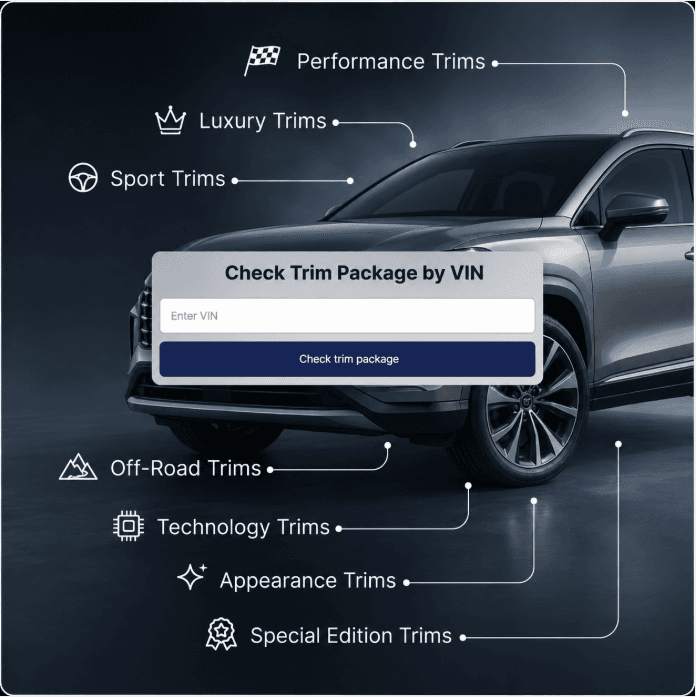
What the Trim and Packages Report Reveals
A trim level by VIN is a service that can be used to check a car's trim level by VIN to understand how it was configured in the factory. You may check the car’s trim level and optional packages to see its individual features, along with its price from its window sticker.
Factory-Original Trim
A vehicle’s trim determines much of its original equipment, styling, performance, and pricing. You can check trim level by VIN to identify the trim assigned to the vehicle when it left the factory.
Original Trim Name
Find the factory-designated trim, whether it is an entry-level version like LX or a higher-spec model such as Limited, Platinum, or Sport.
Position in the Model Range
See how the vehicle’s trim compares with other versions offered for the same model, from basic configurations to luxury or performance-focused trims.
Features Included With the Trim
Review equipment that came standard with the original trim, including safety features, interior technology, comfort equipment, and performance-related components.
Factory Option Packages
Optional packages can add several features to a vehicle without changing its main trim name. The window sticker can help identify packages selected when the vehicle was originally ordered.
Installed Package Names
Check the names of factory option packages associated with the vehicle’s original build.
Features Within Each Package
See the equipment included in each package, such as larger wheels, advanced driver-assistance features, upgraded audio systems, or appearance enhancements.
Original Package Cost
When pricing data is available, view the MSRP assigned to each factory-installed package at the time of production.
Individual Factory Options
Not every upgrade comes as part of a package. Some features can be selected separately during the original vehicle order.
Standalone Equipment
Identify individual options added to the factory build, such as a sunroof, towing equipment, navigation, premium seating, or other available upgrades.
Original Option Pricing
Check the listed MSRP for individual factory options when the original pricing information is available.
Compare the Vehicle With the Listing
By checking the trim level by VIN, it helps to determine whether the vehicle’s claimed configuration matches its original factory build.
Confirm the Advertised Trim
Compare the seller’s stated trim with the trim recorded to spot potential differences.
Check Listed Packages
Determine whether the packages mentioned in a vehicle listing were part of the original factory configuration.
Separate Factory Equipment From Later Additions
Factory records can help distinguish original equipment from accessories or modifications that may have been installed after the vehicle left the manufacturer.
Why Verify the Vehicle’s Trim and Factory Options?
A vehicle’s trim and original options can affect its equipment, features, and resale value. Before deciding whether you want to sell or purchase the vehicle, running a quick trim level check by VIN is crucial.
Here are the reasons why:
Buyers
Checking the trim and factory options before purchasing can reveal whether a vehicle matches its advertisement and asking price.
Pay the Right Price
Higher trims and desirable factory options can add significant value. Confirming the original configuration helps buyers compare the equipment with the seller’s asking price.
Confirm Advertised Features
A listing also mentions packages or upgrades that were never part of the original build. Checking the actual features is important to avoid scams.
Know What to Expect
Review the actual trim and options before viewing the vehicle to avoid misunderstanding and get a grasp of its technology, features, and performance.
Sellers
As a seller, it is important to describe the vehicle precisely to get buyers’ trust and to maintain listing accuracy. In addition, knowing the vehicle’s trim is important to help you set the right price.
Highlight Valuable Equipment
A higher trim, premium package, or desirable factory option can make a vehicle more appealing to potential buyers.
Improve Listing Accuracy
Using verified trim and option details makes it easier to create a complete listing without relying on assumptions or incomplete vehicle information.
Reduce Buyer Questions
Clear information about the original configuration can help buyers understand exactly what the vehicle includes before contacting the seller.
How Trim and Options Affect Value
The original configuration can influence how buyers view a vehicle and how it compares with similar models on the market.
Higher Trims Can Increase Value
Upper-level trims often include additional technology, comfort, safety, and performance equipment that can affect resale prices.
Desirable Packages May Add Appeal
Performance, luxury, technology, and appearance packages can make certain configurations more sought after than standard versions.
Avoid Incorrect Vehicle Descriptions
Misidentifying a trim or factory package can lead to inaccurate pricing and buyer disputes. Make sure to know the actual vehicle’s trim to avoid misunderstandings and disputes.
Real Case: How a Trim Level Check by VIN Helped a Buyer Avoid a Misrepresented Car
Robin wanted to purchase a used 2015 FORD F-150 from a private seller in Oklahoma. The advertised flyer stated that the trim is LARIAT; however, the price and specifications were slightly different than the other listing. Robin decided to get a window sticker to check the actual trim level and other information.
What Robin Found on the Window Sticker
Once Robin got the window sticker with the VIN, the car is an XLT instead of a Lariat. Here's what was found on the window sticker.
MSRP
When a vehicle has a different trim level, the MSRP varies.
Ford F-150 XLT
The XLT sits below the Lariat and focuses more on practical features and everyday utility. For the 2015 model year, its starting MSRP was $34,745.
Ford F-150 Lariat
The Lariat is a higher-level F-150 trim with more upscale equipment and a higher starting price. Its 2015 MSRP was $42,735, before additional options.
Interior Equipment
The factory trim also affects the materials, seating, and comfort features included in the vehicle.
Ford F-150 XLT
The XLT example came with Medium Earth Gray cloth 40/20/40 split front seats, reflecting its more utility-focused configuration.
Ford F-150 Lariat
The Lariat featured Black leather-trimmed bucket seats, giving the cabin a more upscale appearance and feel.
Packages and Options
Available powertrains, packages, and optional equipment can further separate one trim from another.
Ford F-150 XLT
The XLT can be configured with practical equipment and powertrain options, including the 5.0L V8.
Ford F-150 Lariat
The Lariat has a more refined configuration with options such as the 3.5L EcoBoost, upgraded entertainment equipment, and additional upscale features.
Fuel Economy
Fuel economy can also vary between trims due to differences in engines, drivetrains, and factory configurations.
Ford F-150 XLT
The 2015 F-150 XLT shown on the sticker had an EPA rating of 19 MPG combined, with 17 MPG city and 23 MPG highway.
Ford F-150 Lariat
The 2015 F-150 Lariat had an EPA rating of 20 MPG combined, including 18 MPG city and 23 MPG highway.
The Outcome
Robin decided not to purchase the vehicle from this seller because he lied about the car’s trim level. Always get a window sticker to compare two vehicles side by side and avoid scams
How to Find Trim Level by VIN
Many people might not know how to look up trim level by VIN. You may follow these simple steps to check the trim level in under a minute.
Step 1: Find the VIN
You can check the driver’s side door jamb, engine bay, or the vehicle’s paperwork, like the title, registration, or bill of sale.
Step 2: Enter the VIN
Once you have the VIN, enter it into the form above. Then, click the button to submit.
Step 3: Get the Window Sticker
Wait a few seconds for the sticker to generate. Then, check the preview page to see specifications and MSRP. You may proceed to payment to get the window sticker and examine the trim level.
Why Choose Detailed Vehicle History
Detailed Vehicle History helps identify a vehicle’s original factory configuration using its VIN. The window sticker provides useful details about the trim, packages, options, and original vehicle specifications.
Complete Trim and Package Details
View the factory trim level, installed packages, standalone options, and original MSRP information associated with the VIN.
Discover Factory Features
Review equipment that may not be clear from photos or vehicle listings, including safety features, premium audio, towing equipment, technology, and comfort upgrades.
Separate Factory and Aftermarket Equipment
Use the original factory information to distinguish manufacturer-installed equipment from modifications or accessories added after production.
Fast Process
Enter the VIN and access available window sticker information without a lengthy lookup process or dealership visit.
No Expiration Date
Once purchased, the window sticker does not expire. The sticker can be accessed again whenever needed and can also be downloaded or printed.
Affordable Option
Get detailed factory configuration information at a competitive price without depending on incomplete vehicle listings or limited free VIN lookup tools.
Common Trim Level by Brands
Knowing common trim names can help identify where a vehicle sits within its model lineup and what equipment it includes because each automaker has its own trim naming. Take a look at the table below to see examples of trim names by brand.
Brand | Common Trim Examples | Higher-Level/Premium Examples | Performance/Specialty Examples |
|---|---|---|---|
Ford | XL, XLT, STX | Lariat, King Ranch, Platinum | Raptor, Tremor, Limited* |
Chevrolet | LS, LT, Custom | RST, Premier, High Country | Z71, ZR2 |
Toyota | LE, SE, XLE | Limited, Platinum, XSE | TRD Pro, GR, TRD Off-Road |
Honda | LX, Sport | EX-L, Touring | Si, Type R |
KIA | LX, LXS, S | EX, SX, SX-Prestige | GT-Line, GT, X-Line |
Hyundai | SE, SEL | Limited, Calligraphy | N Line, N |
Porsche | Base, T | S, GTS | Turbo, Turbo S, GT3, GT4, GT |
Nissan | S, SV | SL, Platinum | NISMO, PRO-4X, Rock Creek |
Is This Really the Trim the Seller Claims?
A higher trim can mean a higher price, but vehicle listings are not always accurate. Examine the car window sticker to see the exact trim, packages, and options that were actually included.
FAQs on Trim Level by VIN
Can you tell trim level by VIN?
Yes. A 17-digit Vehicle Identification Number contains coded information, with characters 4 through 8 often representing details such as the vehicle line, engine, body style, and other attributes. However, VIN coding varies by manufacturer, so a specialized tool such as Detailed Vehicle History can help identify the vehicle’s trim and provide access to its window sticker.
How to identify the trim of a car?
To identify a car’s trim level, check the badges on the trunk, doors, or fenders, review the registration or owner’s manual, or enter the 17-digit VIN into Detailed Vehicle History for a trim-level lookup.
What is a car trim level?
A car trim level is a specific configuration of a particular vehicle model. It can determine the vehicle’s pricing, interior materials, technology, safety equipment, and exterior features. While different trims may share the same basic platform, entry-level versions typically include fewer features, while higher trims add more premium equipment.
What package is my car by VIN?
Your car's factory package is coded into the VIN, but it isn't always readable at a glance since manufacturers use their own coding systems. To find the exact package, enter the 17-character VIN into a decoding service such as Detailed Vehicle History, which cross-references the VIN against manufacturer production data and returns the window sticker showing the specific packages, standalone options, and their factory pricing.
Can I tell what options a car has by VIN?
Yes, a VIN can often help identify factory-installed options and packages, although the amount of available information varies by manufacturer and lookup service. The standard 17-digit VIN contains core vehicle details such as the make, model, model year, and engine, while manufacturer records and window sticker data may provide more specific information about installed equipment and packages.
How to check options by VIN number?
To check a vehicle’s factory options and installed equipment, enter the 17-digit VIN into a specialized VIN lookup service like Detailed Vehicle History, check the manufacturer’s vehicle portal when available, or request a window sticker lookup.