
Vehicle Ownership History Lookup by VIN
Looking to find a vehicle owner by VIN to quickly see how many owners a car had and where it was registered?
Our Owner Check by VIN tool provides detailed reports that include ownership history, number of owners, ownership duration, and dates when the vehicle changed hands, along with title status, service history, and more.
Note: Personal names and contact details remain private in compliance with the DPPA.
How VIN Owner Lookup Works?
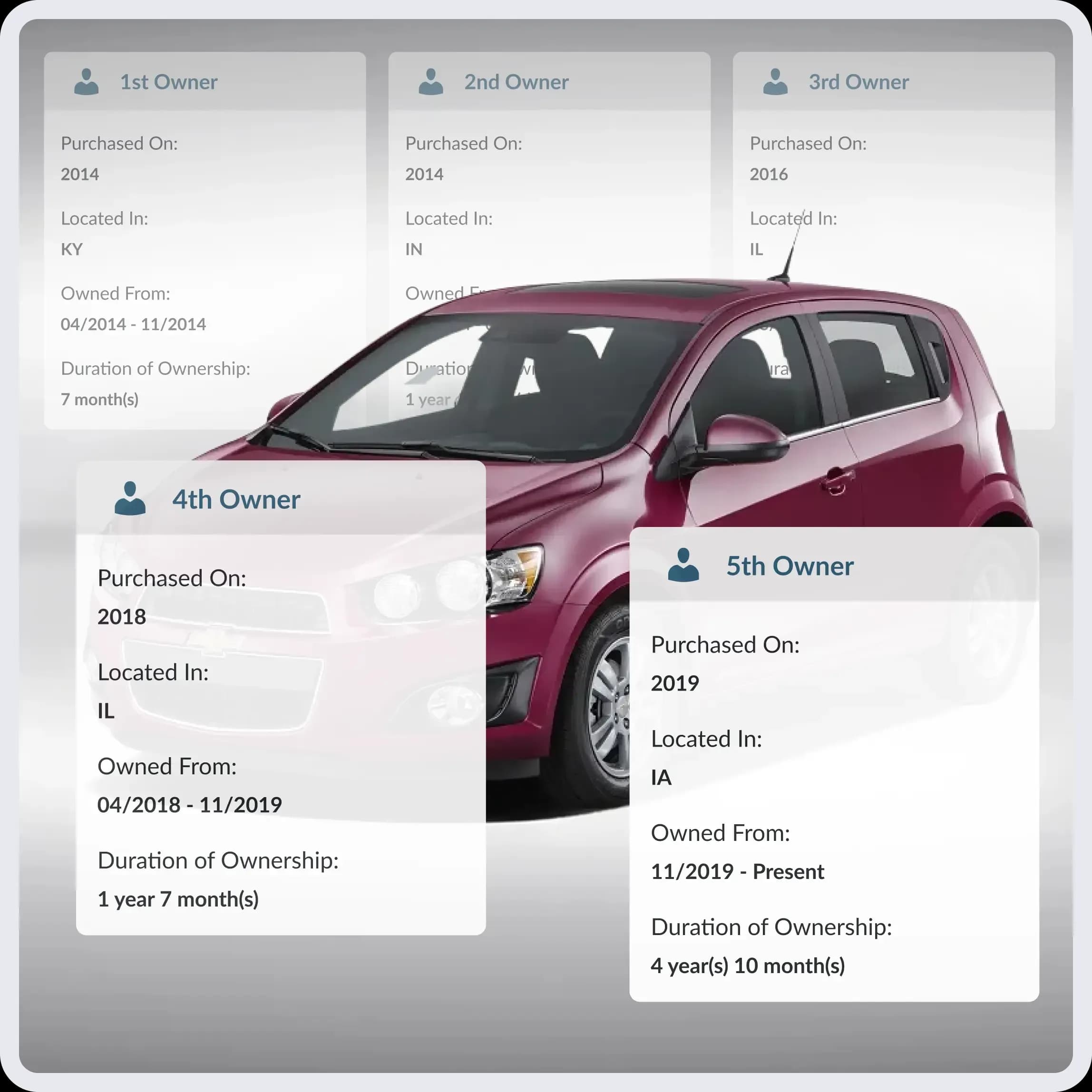
The VIN owner lookup tool is a service that gets you the comprehensive information of the vehicle's title and past ownership history, such as the past owners and the states where the vehicle was registered.
It also reveals information, including the dates of ownership changes, along with the duration of ownership.
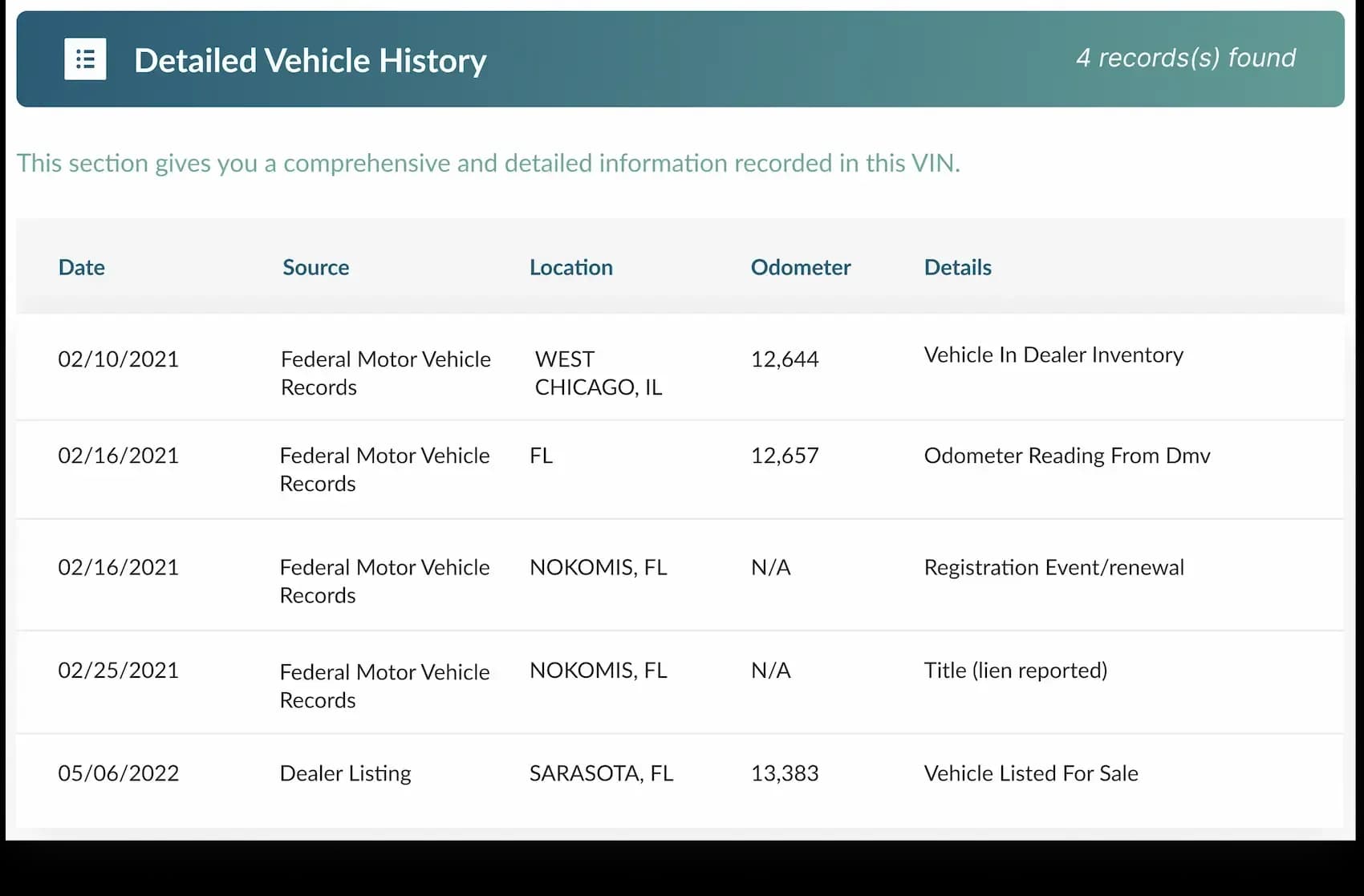
The report also includes details related to title registration with dates that can suggest ownership changes, usually available in the "Detailed Vehicle History" section under "Registration/ Event Renewal."
What Is a VIN and Why Does It Matter
The Vehicle Identification Number (VIN) is a 17-digit number that identifies a certain vehicle. Each digit represents details such as the manufacturer, assembly plant, engine type, and serial number. The VIN distinguishes one vehicle from another, even among identical models, makes, and trims, making it essential for verifying specifications, ownership, registration, and insurance records.
Besides identifying vehicle specifications, a VIN can also help trace ownership history. Once you've successfully found the vehicle owner by VIN, you'll get information about how many past owners the vehicle had, previous registration location, ownership duration, and the year of purchase. However, privacy laws prevent access to the previous owner's full name.
Limitations on Accessing VIN Owner Data
The Driver's Privacy Protection Act (DPPA) was enacted in 1994 to keep personal vehicle information private in the United States. This law does not allow people to see a vehicle owner's personal details, like name, contact information, and address, through a VIN search.
Only certain groups, like the police, insurance companies, or licensed investigators, can get this information for official reasons.
For regular car buyers, this means that finding a car owner by VIN has limits. Still, it's possible to find useful details about a car's past.
By using our VIN check tool, buyers can see the vehicle's accident history, title status, odometer records, and more. This helps them make safer and smarter buying decisions while following privacy laws.
What Information Can You Get from VIN Owner Lookup
To check vehicle ownership by VIN, simply enter the VIN in the form above to generate a detailed vehicle history report. The VIN owner check report includes:
Number of Previous Owners
See how many people have owned the car and whether it has changed hands frequently.
Ownership Duration
View how long each owner kept the vehicle, along with purchase and resale dates.
Registration Location
Discover where the car was registered. The report includes an interactive map showing each location clearly.
Year of Purchase
Learn when the current or previous owner bought the car to understand the ownership timeline better.
Why is it Important to Check a Vehicle Owner by VIN?
Checking the vehicle's past owner by VIN is important to oversee any kind of information about the vehicle in the past, like accident history, title, and more.
Verify Previous Ownership
Buyers should be informed how many past owners the vehicle has had. Fewer owners means the car is properly taken care of, fewer transfer ownership records, and less wear and tear.
Check for Title Issues
An owner VIN lookup can uncover title problems, and to avoid getting a vehicle that has bad title records. On a report, you can file Salvage or rebuilt titles, Flood or fire damage, Lemon or junk titles
Understand Maintenance and Usage Patterns
Knowing ownership duration gives clues about: How long each owner kept the car, Whether it was regularly maintained or flipped quickly
Detect Stolen or Fraudulent Vehicles
A VIN lookup helps confirm if the car is stolen, cloned, or illegally resold. This part is crucial so you do not end up buying a stolen or fraudulent vehicle.
Negotiate a Fair Price
Ownership and title data affect value. For example, a one-owner car with a clean history is usually worth more than a car that has had many owners.
Evaluate Trust in the Seller
If the seller's story doesn't match the ownership history, it's a red flag. Buyers use the report to verify the seller's claims before paying or signing.
Confirm the Vehicle's Origin
VIN lookups can reveal where the car was first sold or registered; useful for spotting imported vehicles or regional differences in usage (e.g., snow/salt damage).
Plan for Registration or Insurance
Some states or insurers require a full ownership history to calculate risk or verify that the vehicle can be legally registered.
Make Better Buying Decisions
Knowing how many people have owned a car and for how long helps you judge its reliability. A vehicle with many owners in a short time could signal recurring problems, while one with long-term ownership usually indicates proper care.
Verify Previous Ownership
Ownership checks can help you see any hidden red flags that weren't disclosed, such as frequent title changes, salvage titles, or unpaid liens. These issues may affect the car's safety, value, or ability to register.
Encourage Transparency and Trust
When both buyers and sellers have access to ownership records, the transaction becomes clearer and more honest. It helps prevent misinformation or disputes over a car's past.
Understand Resale Value
Cars with fewer owners and a clean title often keep a higher resale value. Checking the history helps you estimate whether the vehicle is worth the asking price.
Example of Owner Information by VIN
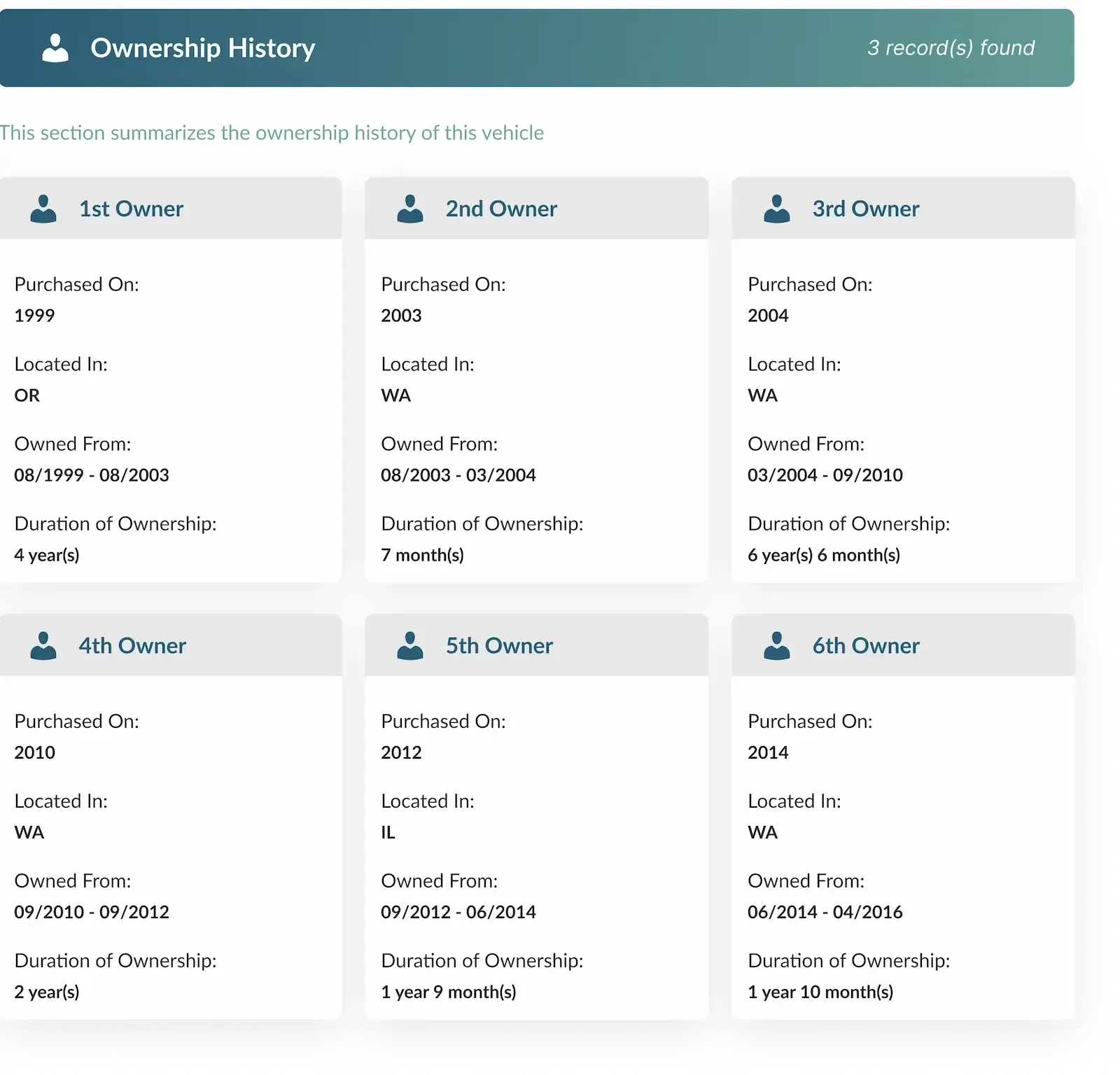
First Owner (Oregon)
Bought the car in 1999 and kept it for about four years before selling it in 2003.
Second Owner (Washington)
Bought the car in 2003 and kept it for around six months before selling it in August 2004.
Third Owner (Washington)
Bought the car in 2004 and kept it for about six and a half years before selling it in 2010.
Fourth Owner (Washington)
Bought the car in 2010 and kept it for two years before selling it in 2012.
Fifth Owner (Illinois)
Bought the car in 2012 and kept it for roughly a year and a half before selling it in 2014.
Sixth Owner (Washington)
Bought the car in 2014 and kept it for one year and ten months before selling it in 2016.
How to find the vehicle owner by VIN using our tool
Finding the vehicle's owner by VIN is easy; you just need to fill in the form with the VIN.
Find the VIN
First of all, you will need to find the VIN of the vehicle you want to check. Refer to the section above to find the VIN.
Fill in the Form
Click on the form above, then write down the VIN. After that, hit the button to submit the VIN.
Get the Report
Wait for a few seconds to get the report generated. Check the preview page, then proceed to payment to get the full vehicle history report.
Where to Find a VIN Number
Every vehicle has a VIN, and finding it is usually simple. The VIN is printed on different parts of the vehicle and also appears on official documents. If you can't find it on the car's body, check the paperwork that comes with the vehicle.
On the Vehicle
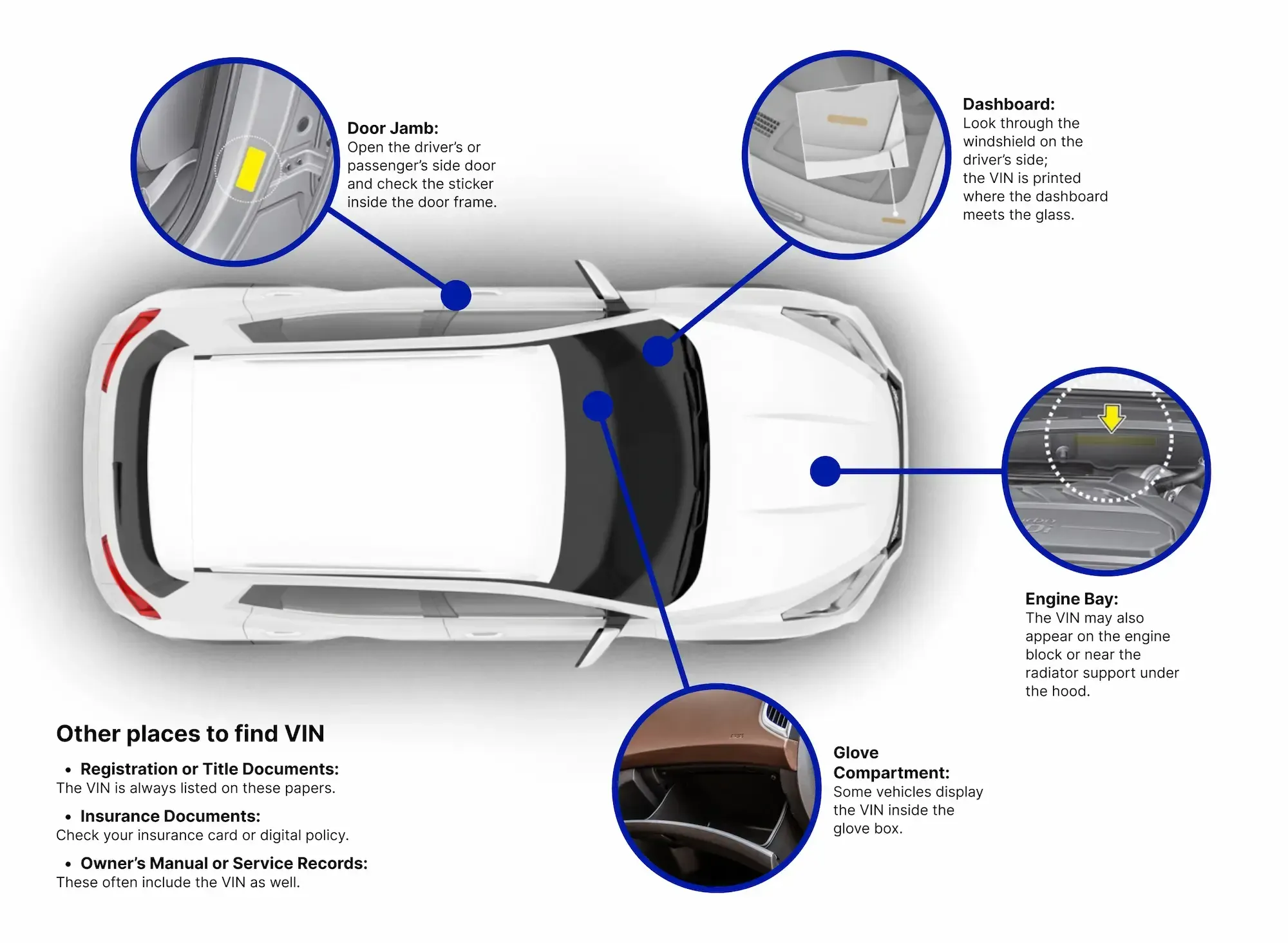
You can find the VIN printed or engraved in several spots on the car:
- Dashboard: Look through the windshield on the driver's side; the VIN is printed where the dashboard meets the glass.
- Door Jamb: Open the driver's or passenger's side door and check the sticker inside the door frame.
- Engine Bay: The VIN may also appear on the engine block or near the radiator support under the hood.
- Glove Compartment: Some vehicles display the VIN inside the glove box.
Other Resources
If the VIN isn't visible on the car, check the vehicle's paperwork or digital records:
- Registration or Title Documents: The VIN is always listed on these papers.
- Insurance Documents: Check your insurance card or digital policy.
- Owner's Manual or Service Records: These often include the VIN as well.
More than Owner Information: Get the Full Vehicle History
Finding a vehicle owner by VIN is simple and easy, but how about finding the other information about the vehicle?. Our service is not limited to merely checking who owns a vehicle, but also helps you reveal other useful information before buying or selling a used vehicle.
Lien Check
Before you buy a used vehicle, ensure that the lien/loan record is cleared off by the previous owner. Make sure the vehicle is free from financial issues.
Title Check
Check if the vehicle has a bad title, like a lemon or salvage, before you decide to purchase the unit.
Flood Check by VIN
Use the VIN to find out if the vehicle was flooded. Be aware of buying a flooded vehicle, as it could be dangerous.
Accident Check by VIN
Discover if the vehicle was in a collision with our accident check by VIN tool. Avoid buying a vehicle that has an accident history, even if it's one.
Service History by VIN
Look into the vehicle's service record before you decide to sell/buy a used vehicle. Make sure that the vehicle complies with its service schedule.
Warranty by VIN
Learn how much time or mileage remains on the original coverage, including roadside assistance, corrosion protection, and other warranty plans.
Auction History by VIN
Run the auction history by VIN to examine if the vehicle was ever sold at an auction. Get up to 10 photos of the vehicle during the auction.
Salvage VIN Check
Find the truth about whether the vehicle carries a salvage title with our salvage VIN check service.
Stolen VIN Check
Making sure that the vehicle has never been stolen is just as important. Use our stolen check by VIN to help run a solid background check on the vehicle's legality.
Market Value by VIN
View the actual vehicle's value by VIN to help you set the right buying or selling price.
Mileage Records
Get the actual vehicle's odometer with the check car mileage by VIN. Make sure that the odometer has never been rolled back.
Recalls Check by VIN
The recalled vehicle has serious issues that can affect passengers and driving performance. Use the recall check by VIN to see if it was recalled and resolved.
What if there is no VIN?
No problem! Our check vehicle owner tool not only covers VIN, but also the license plate number. Use our license plate owner lookup, and you'll get the same vehicle history report that details the vehicle's past owners.
Check Vehicle Owner by VIN for All Vehicle Types
FAQ About Owner Lookup by VIN
Is Owner Lookup Legal?
No, personal owner details such as full name or address cannot be accessed due to privacy laws like the Driver's Privacy Protection Act (DPPA). However, our lookup tool still provides useful ownership-related information, including where the vehicle was registered, the year of purchase, and general ownership history.This gives insight into the car's background without revealing any private information.
Does a VIN Show Personal Information?
A VIN does not directly show personal information. However, it's still considered personal information because it can be linked to vehicle records that identify the owner. The VIN mainly shows details about the car's make, model, and history. To access someone's name or address using a VIN, you would need access to state or insurance databases, which are not open to the public.
How to find the registered owner of a vehicle?
To find a vehicle's registered owner, the VIN can be checked by using a Detailed Vehicle History's VIN to owner lookup tool. In official cases, such as accidents or hit-and-runs, law enforcement can access ownership records. However, privacy laws limit public access, so searching for an owner's name through a license plate or VIN is not allowed unless there is a valid legal reason.
How Long Does a VIN Owner Lookup Take?
A VIN owner lookup is instant if you use an online VIN check tool that generates the result within seconds. However, the information you will be getting from the VIN check will not include the vehicle's current and past owners' names due to privacy laws. Rather, the service will help you see the vehicle's history, like title status, theft records, and more. If you want to get the full vehicle history report, you will need to get the paid report.
How to check the current owner by vehicle VIN?
With our VIN owner lookup service, you can access detailed information about a vehicle's ownership history. This includes where the vehicle was registered, how long each owner kept it, and whether it was used personally, leased, or for commercial purposes, giving you valuable insights into the vehicle's life.However, due to U.S. privacy laws, specifically the Driver's Privacy Protection Act (DPPA), you cannot access the current owner's name or personal details through the VIN.
Can you look up a vehicle owner by license plate?
We do not show names or addresses, so the service stays within legal privacy rulesYou generally can't get a vehicle owner's name or address from a license plate because the Driver's Privacy Protection Act (DPPA) protects personal data and does not allow to reveal of information about the owner, but the car owner check tool can lookup any US license plate number and get information including past owners, location, ownership duration, title issues and more.
How can ownership history affect a vehicle’s value?
A vehicle’s ownership history plays a major role in determining its worth on the used car market. Cars with fewer owners and clean title records often sell faster because buyers feel more confident about their condition. With DetailedVehicleHistory.com’s VIN check, you can see how many times the car has changed hands and whether it was properly maintained over time. A comprehensive vehicle history report gives you the full picture, helping you negotiate a fair price with confidence.
How many previous owners is considered too many for a used vehicle?
Most used car buyers feel comfortable with one to three previous owners. Beyond that, the car may have had inconsistent maintenance or undisclosed issues along the way. There is no set rule, but a high number of owners in a short time can raise questions. Running a full vehicle history report by VIN helps you understand the complete ownership timeline and decide if the car is still a good buy.
Does a single-owner vehicle mean better condition?
A single owner car is highly prized because it usually receives consistent maintenance and uniform driving care. However, one driver could still skip routine garage visits or abuse the vehicle on the road. You should always look at the full picture rather than guessing the condition. That is why it is smart to check the detailed used vehicle history report, which includes owner records along with service history, accident reports, and title information.
Can owner records show if a vehicle was used for commercial or fleet purposes?
Yes, owner records in a full car history report can reveal if a vehicle was previously registered to a business, government agency, or fleet company. Fleet vehicles and commercial cars often rack up high mileage quickly and may have received only basic upkeep. Knowing this before you buy helps you set realistic expectations about wear and tear.
How do ownership changes across states affect vehicle history?
When a vehicle changes hands across different states, its history can get harder to track because each state keeps its own registration and title records. Some sellers take advantage of this to hide past accidents, title issues, or mileage discrepancies. A comprehensive vehicle history report pulls data from multiple state databases so you get a clear picture no matter where the car has been registered. This is especially important for used car buyers doing an out-of-state vehicle purchase.
Can frequent ownership changes be a red flag when buying a used car?
Rapidly changing titles over a short period is one of the biggest warning flags in the automotive market. It often indicates that multiple people bought the car, discovered a massive mechanical defect, and quickly sold it to someone else. Before buying, use DetailedVehicleHistory.com’s VIN lookup tool to review the complete ownership timeline and identify any patterns that seem unusual.
How can owner records help detect potential odometer fraud?
Owner records are one of the most useful tools for catching odometer rollback fraud. When you compare the reported mileage at each ownership transfer, large drops or inconsistencies become easy to spot. Odometer fraud costs American car buyers billions of dollars every year, and a detailed vehicle history report with owner data is your best defense. If the numbers do not line up across owners, that is a strong signal to walk away from the deal.
Can ownership history indicate rental or rideshare usage?
Yes, ownership records can show if a vehicle was previously registered to a rental car company or a rideshare fleet operator. These vehicles are often driven hard by many different people and may have higher than average wear on the interior and mechanical parts.